


13 Honest Ways to Live With Purpose When You Have No Idea What Yours Is
Somewhere beneath the busyness, beneath the routines and obligations and the accumulation of days that blur into weeks, most people carry a quiet, persistent ache. Not depression, exactly. Not a crisis. Just a low-level feeling that something is missing, that life is happening to them rather than being chosen by them.
If that feeling sounds familiar, you are not broken, and you are not behind. You are experiencing one of the most common and most human conditions there is: living without a clear sense of purpose.
Most conversations about purpose make it worse before they make it better. They treat purpose as something you either have or don’t, something you must fully discover before you can begin. Follow your passion, they say. Find your calling as if purpose were a buried object waiting to be dug up by the right person at the right moment.
What follows is a different approach entirely. None of it requires you to have anything figured out first. All of it is available to you right now, today, wherever you happen to be standing.
1. Ask Who You Want to Become, Not What You Want to Do

“What is my purpose?” is a question vast enough to swallow years without producing a single useful answer. A far more honest question, and one that tends to produce real movement, is this one: who do you secretly want to become?
Most people carry a private image of themselves at their best. Someone more courageous, more creative, more present with the people they love. Someone who finally backs themselves, speaks up, or slows down enough to actually feel their own life. That image surfaces in moments of envy, late-night reflection, and quiet admiration for people who seem to be living with freedom you do not yet feel.
Purposeful living, at its most practical, is the daily practice of closing the gap between who you are today and who that private image shows you. You do not need to become that person overnight. You just need to start making decisions that the person would make.
2. Lead With Your Values, Not Your Passion
Passion in most cases comes after commitment not before. You develop it by doing things repeatedly getting better and finding meaning in the process.
Waiting for passion to arrive before you start anything is a little like waiting to feel motivated before going to the gym. For most people, the feeling follows the action, not the other way around. Values, on the other hand, are accessible right now, without a revelation. Freedom, fairness, creativity, connection, and growth do not require a dramatic life event to identify. You just need to pay attention.
Sit with three questions honestly: What makes you genuinely angry? What do you lose track of time doing? What would you do if no one paid you and no one was watching? Your answers will not hand you a purpose statement. But they will give you a compass. And when you do not yet know the destination, a compass is exactly what you need.
3. Do the Thing You Keep Almost Doing

Most people have something they keep returning to without ever actually starting. An idea that shows up in journals more than once. A course they have looked up repeatedly but never enrolled in. A project that has been almost ready to begin for longer than they care to admit.
That persistent pull is not random. Your subconscious flags what matters by returning to it across different moods, seasons, and circumstances. Fear keeps most people from starting or the belief that the timing is not right yet, or the worry that trying might prove it does not work, and then what?
All of that is understandable, and none of it changes the fact that the thing you keep almost doing is very likely one of the most important things you could actually do. You do not need to commit to it forever. Start with one hour. Open the document. Make the call.
4. Move First, Find Clarity Second
Clarity rarely arrives before action. Waiting for it is one of the most common ways people stay stuck, and it makes complete sense that making a move when you are unsure feels risky. But psychologists who study behavioral activation have found that motivation and insight tend to follow action rather than precede it.
Consider how many people discovered direction entirely by accident, by trying something, failing, adjusting, and eventually landing somewhere that felt right. They did not think their way there. They moved their way there. Take the class. Apply for the thing. Have the conversation. Certainty is not the requirement. Willingness is.
5. Run an Energy Audit on Your Own Life
Some things feel exciting in theory but draining in practice. Others feel unremarkable in theory but quietly energizing when you are actually doing them. That second category deserves far more attention than most people give it.
For one or two weeks, keep a brief note after each activity or interaction. Did it leave you feeling more alive or less? Over time, a pattern forms that no amount of thinking about your life can produce. For people who have spent years in survival mode or in the habit of people-pleasing, this kind of self-awareness takes patience. What lights you up is still in there. It just needs a little space to surface.
6. Let Discomfort and Envy Point the Way
Feeling restless and persistently off is a signal worth examining rather than suppressing. Dissatisfaction, when you look at it carefully, tends to be highly directional. Rather than sitting with a vague sense of emptiness, get specific. What precisely feels hollow? Which parts of your days do you dread? What do you find yourself secretly envying in other people?
Envy gets a bad reputation but it’s a remarkably honest compass. When you feel that pang watching someone pursue something with freedom and aliveness, that feeling is not telling you that you are lacking. It is telling you what you want. Write it down without judgment. Treat it as data. Over time, your dissatisfaction stops feeling like a problem and starts feeling like a map that points toward the life that would actually feel like yours.
7. Reframe Purpose as a Direction, Not a Destination
One of the heaviest things people carry is the belief that purpose is a single, fixed, dramatic thing a calling so specific and clear that everything snaps into place the moment you find it. No wonder so many people feel like they are failing at something before they have even started.
Purpose evolves. What drives you at 25 may look almost unrecognizable at 45, and that is not failure. What matters far more than finding a perfect answer is choosing a direction. A general orientation toward meaning, toward the things that feel most alive and most aligned with who you are, is enough to begin with. You do not need the full map. You just need to know which way to face.
8. Bring “Someday” Into This Week
Most people carry a version of someday. Someday, they will travel more. Someday, they will start the business, learn the language, and write the book. Every day those things get deferred is an actual choice, not a neutral pause. That is hard to hear, and it is worth hearing.
Overthrowing your entire life overnight is not the answer. Finding the scaled-down version of someday and bringing it into this week is. Cannot quit your job to travel? Plan a solo trip for next month. Cannot write a novel yet? Write for fifteen minutes after dinner. Each small move sends you a message: this matters, and you are treating it that way. That shift from “someday” to “now, in whatever form I can manage” is already an act of purposeful living.
9. Build Days That Reflect Who You Want to Be

Viktor Frankl, the psychiatrist and Holocaust survivor, wrote something that cuts through most modern noise about purpose: “It did not really matter what we expected from life, but rather what life expected from us.”
Purpose, in Frankl’s view, is not something you locate and then act on. It is something you respond to daily through how you conduct yourself and what you actually do. Even without knowing your overarching direction, intentionality is available right now. Five minutes of reflection before reaching for your phone. Full presence in a single conversation. One act of generosity without expectation of return. Small habits, repeated consistently, shape a meaningful life long before the bigger picture becomes clear.
10. Create Space for Purpose to Surface
A mind running on a constant loop of regret, comparison, and anticipation has very little room to hear itself. And yet, connecting with purpose requires exactly that the ability to hear yourself clearly. Gratitude and presence are not soft lifestyle additions. They are foundational to self-knowledge.
Brief, consistent practices make a real difference. Take a short walk without your phone. Writing down three specific things you are grateful for, not vague ones, but specific, like a good conversation or a moment of unexpected ease. Purpose tends to surface in the gaps between busyness. Creating even small amounts of mental spaciousness gives it somewhere to land.
11. Stop Optimizing and Start Showing Up
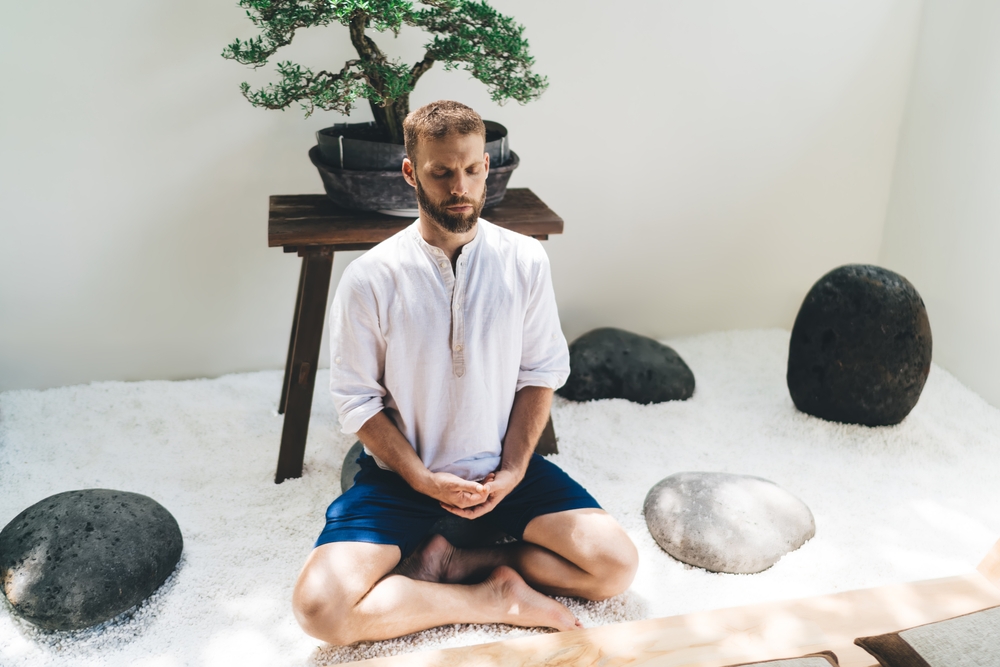
Reading another book on habit formation, rebuilding your morning routine for the third time, tracking every metric available, all of it feels like progress. And yet, somehow, the sense of meaning never quite arrives. Self-improvement can become a sophisticated form of avoidance. Optimizing your life keeps you busy enough to avoid confronting the deeper, messier question of what you actually want your life to be.
Ask yourself honestly whether your self-improvement habits are moving you toward a life that feels meaningful, or whether they are helping you feel productive so you do not have to sit with the discomfort of not yet knowing what that life looks like. At some point, purposeful living requires putting down the notebook and showing up to your own life imperfect, uncertain, and fully present.
12. Choose Your Hard

Staying where you are is not the safe option. Comfort zones do not feel hard, but the absence of forward motion accumulates its own cost, slowly, in ways that are difficult to see until years have passed. Living without purpose is hard. Living toward purpose is also hard, uncomfortable, uncertain, and sometimes frightening.
Choosing the difficulty that moves you in the direction of meaning tends to strengthen you over time. Choosing the difficulty of staying still tends to hollow you out. Both are hard. Only one of them is worth it.
13. Start Where You Are, With What You Have
None of these thirteen things requires purpose to be figured out first. Every single one is available right now, in whatever circumstances currently surround you. Purpose is not a reward waiting at the end of a long enough search. It is a practice, and like all practices, it begins in the moment you decide to start.
Start imperfectly. Start uncertainly. Start with one question, one hour, one small move in a direction that feels even slightly more alive than where you are standing right now.
Purpose Was Never Something You Find It’s Something You Build
Here is the truth that most conversations about purpose leave out: nobody wakes up one morning with a fully formed sense of meaning handed to them. Not the people who seem to have it all figured out. Not the activists, the artists, the entrepreneurs, or the teachers who appear to move through life with unusual conviction. Every one of them got there the same way by starting before they were ready, by paying attention to what kept pulling at them, and by choosing, again and again, to move in the direction of what felt most alive.
Purpose is not a discovery. It is a construction. You build it through the questions you ask yourself, the small actions you take before you feel certain, some days you bring into this week, and the daily choices you make to close the gap between who you are and who you privately want to become.
None of that requires a revelation. None of it requires perfect conditions or ideal timing or a life free from uncertainty and doubt. It requires only this: a willingness to treat your one life as something worth showing up for, starting with the hours you have available today.
You do not need to know where you are going to begin walking. You do not need to see the whole staircase to take the first step. What matters is that you stop waiting for the moment when everything becomes clear, and instead start moving toward the version of your life that, even now, you can feel calling to you from somewhere just ahead.