

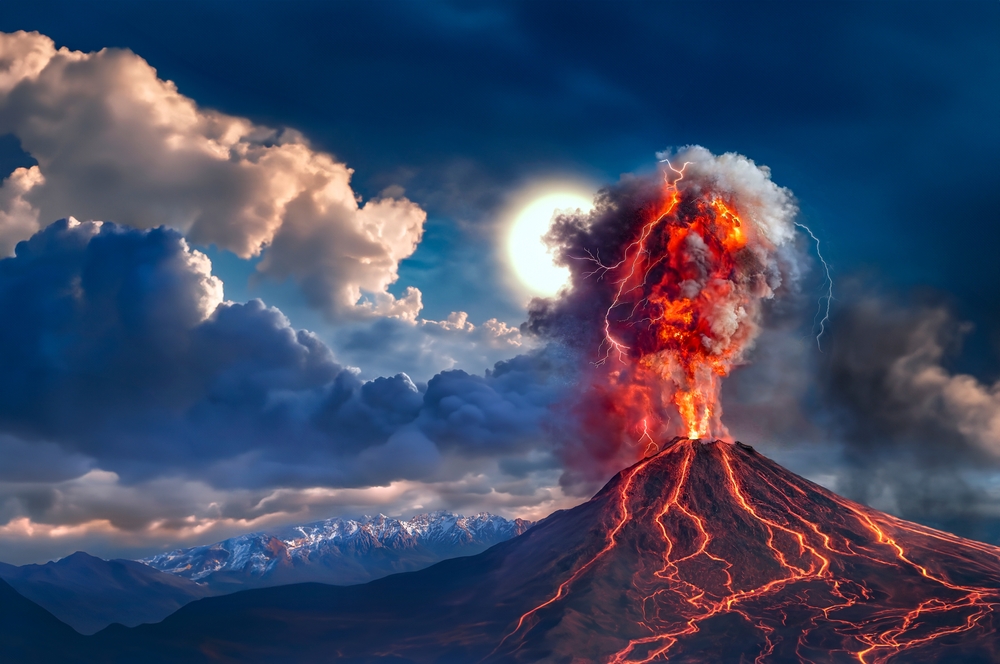
The Volcano That Turned the Sun Blue in 1831 Has Finally Been Identified
In the summer of 1831, people across parts of the world noticed something unsettling in the sky. The Sun didn’t look the way it usually did. Instead of its familiar bright yellow glow, many people reported seeing it in strange shades of blue, purple, and even green.
At the same time, the weather seemed completely out of place. Summer felt cold. Rain fell for days. Crops struggled to grow, and food shortages began to appear in some regions.
Scientists eventually realized that a massive volcanic eruption must have caused these strange events. But for nearly 200 years, one big question remained: Which volcano was responsible?
Now, researchers believe they have finally solved the mystery. A remote volcano on an isolated Pacific island appears to be the source of the eruption that cooled the planet and changed the color of the Sun in 1831.
The Summer of 1831
Historical records from the early 1800s show that something unusual was happening with the climate in 1831.
People across Europe and other parts of the Northern Hemisphere wrote about gloomy skies, constant rain, and temperatures that felt far colder than normal.
One of the most famous accounts came from German composer Felix Mendelssohn. While traveling through the Alps that summer, he described weather that felt more like winter than the middle of the year.
In his journal, he wrote about the strange conditions around him:
- Heavy rain: Storms seemed to last for long stretches of time.
- Unexpected cold: Temperatures dropped enough to make summer feel like winter.
- Snow on nearby hills: Snow appeared where it normally wouldn’t during that season.
At the time, no one understood what was causing these strange weather patterns. Today, scientists know the answer likely began thousands of miles away with a powerful volcanic eruption.
The Year the Sun Changed Color

One of the strangest parts of the 1831 event was the appearance of the Sun.
Many observers reported that the Sun looked completely different. Instead of its normal color, people saw it glowing in unusual shades.
Reports mentioned several colors:
- Blue
- Purple
- Green
This wasn’t an illusion or a trick of the eyes. The change was caused by tiny particles released during the volcanic eruption.
When a large volcano erupts, it can send huge amounts of sulfur dioxide gas high into the atmosphere. There, the gas forms tiny particles called aerosols.
These particles float high above the Earth and interact with sunlight. They scatter light in different directions and filter certain colors, which can make the Sun appear different when viewed from the ground.
This same effect has been seen after other major volcanic eruptions. For example, after the famous eruption of Krakatoa in 1883, people around the world reported dramatic sunsets and unusual colors in the sky.
But the 1831 eruption didn’t just create strange skies. It also cooled the planet.
Scientists estimate that temperatures in the Northern Hemisphere dropped by about 1 degree Celsius (1.8°F).
That may sound small, but even a small change in global temperature can disrupt weather patterns and agriculture.
A Mystery That Lasted Nearly 200 Years
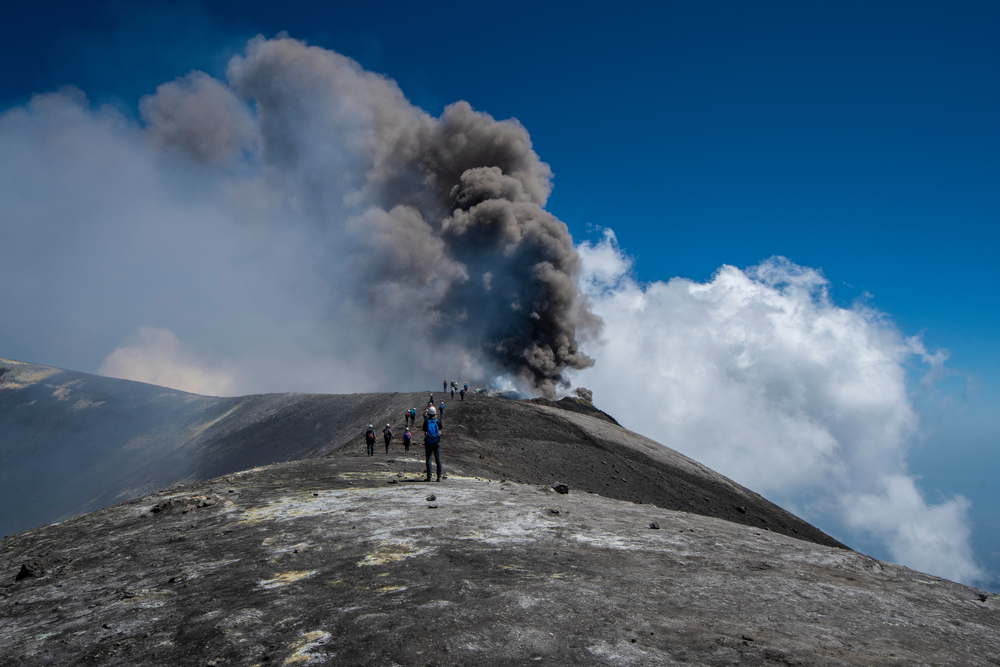
For decades, scientists knew that a volcanic eruption must have caused the climate changes of 1831. The challenge was figuring out where the eruption actually happened.
There were no clear historical records of a major eruption that year. No detailed eyewitness reports. No confirmed volcano.
This puzzled researchers for generations.
Some scientists believed the eruption likely came from a volcano near the equator, since tropical eruptions often affect the global climate.
One volcano that received attention was Babuyan Claro in the Philippines. For a long time, it was considered a possible candidate.
However, the evidence never fully lined up.
The real clues were hidden far away in frozen ice.
Clues Hidden Inside Polar Ice
To solve the mystery, researchers turned to ice cores collected from Greenland.
Ice cores are long cylinders of ice drilled from glaciers and ice sheets. Each layer of ice represents snowfall from a specific year, almost like pages in a history book.
When volcanoes erupt, they send ash and sulfur into the atmosphere. Some of those particles eventually settle onto ice sheets and become trapped inside the layers.
By studying these layers, scientists can learn about volcanic eruptions that happened hundreds or even thousands of years ago.
When researchers examined Greenland ice from around 1831, they found something interesting.
The ice contained large amounts of sulfur and tiny pieces of volcanic ash.
These fragments were incredibly small—about one-tenth the width of a human hair—but they contained valuable information.
The chemical makeup of volcanic ash acts like a fingerprint. By comparing ash from ice cores with ash from known volcanoes, scientists can sometimes identify the exact volcano responsible.
This technique helped researchers narrow down the search.
The Breakthrough That Connected All the Clues

After years of investigation, scientists found a match.
The chemical signature of the ash trapped in Greenland ice perfectly matched samples from Zavaritskii volcano, located on Simushir Island in the remote Kuril Islands between Russia and Japan.
The discovery came from a team of researchers led by volcanologist William Hutchison from the University of St Andrews.
When the team compared the ash samples side by side, the numbers matched almost perfectly.
Hutchison described the moment as a “eureka” moment in the lab. After years of searching for the answer, the evidence finally lined up.
The eruption from Zavaritskii volcano appears to have released around 13 million metric tons of sulfur into the atmosphere.
That massive cloud of particles spread around the Northern Hemisphere, blocking some sunlight and cooling the climate.
The Forgotten Volcano That Changed the Climate
Part of the reason the eruption remained a mystery for so long is the location of the volcano itself.
Simushir Island sits in the Kuril Islands, a chain of volcanic islands stretching between Russia and Japan.
The island is extremely remote and largely uninhabited. Thick fog often surrounds the area, and very few people have lived there permanently.
Because of this, there were almost no eyewitness accounts of the eruption in 1831.
In fact, the island later gained attention during the Cold War when the Soviet Union used one of its flooded volcanic craters as a secret submarine base.
Despite the island’s unusual history, its volcanic activity remained poorly understood for decades.
Scientists say the 1831 eruption likely had several environmental effects:
- Cooling temperatures across parts of the Northern Hemisphere
- Changing rainfall patterns in some regions
- Reducing crop yields due to weaker sunlight
These changes may have contributed to food shortages and famines reported in parts of India and Japan during the 1830s.
This Wasn’t the First Time a Volcano Changed the Climate
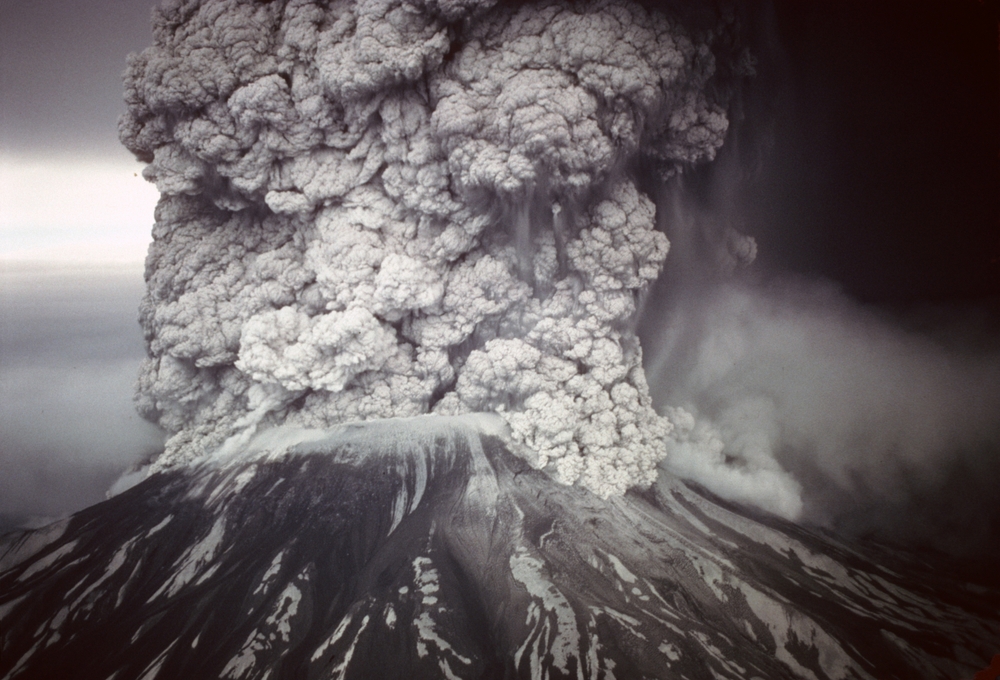
The 1831 eruption is just one example of how volcanoes can influence Earth’s climate.
Several other eruptions in history have had similar effects.
Here are a few well-known examples:
- Mount Tambora (1815): This eruption caused the “Year Without a Summer” in 1816, bringing cold temperatures and crop failures across parts of North America and Europe.
- Krakatoa (1883): The eruption created spectacular sunsets and atmospheric effects visible around the world.
- Mount Pinatubo (1991): One of the largest eruptions of the 20th century, temporarily lowering global temperatures by about 1°C.
These events show that volcanoes can influence the planet in ways that go far beyond their immediate surroundings.
Looking Back to Understand the Future
The discovery of the 1831 eruption’s source shows how much scientists are still learning about the planet.
Even a massive eruption capable of cooling the Earth and changing the color of the Sun remained unsolved for nearly two centuries.
Thanks to new technology and international research efforts, scientists were finally able to connect the clues hidden in ice cores with a remote volcano few people had ever heard of.
But the discovery also comes with a reminder.
Many volcanoes around the world remain poorly studied, especially those in remote regions. Events like the eruption of Zavaritskii volcano show that powerful natural forces can emerge from places we rarely think about.
By studying past eruptions, scientists hope to better understand how future ones might affect the planet.
Because if history has shown us anything, it’s that a single volcanic eruption can change the sky, shift the climate, and leave a mark on human history that lasts for centuries.
Source:
- Hutchison, W., Sugden, P., Burke, A., Abbott, P., Ponomareva, V. V., Dirksen, O., Portnyagin, M. V., MacInnes, B., Bourgeois, J., Fitzhugh, B., Verkerk, M., Aubry, T. J., Engwell, S. L., Svensson, A., Chellman, N. J., McConnell, J. R., Davies, S., Sigl, M., & Plunkett, G. (2024). The 1831 CE mystery eruption identified as Zavaritskii caldera, Simushir Island (Kurils). Proceedings of the National Academy of Sciences, 122(1), e2416699122. https://doi.org/10.1073/pnas.2416699122