

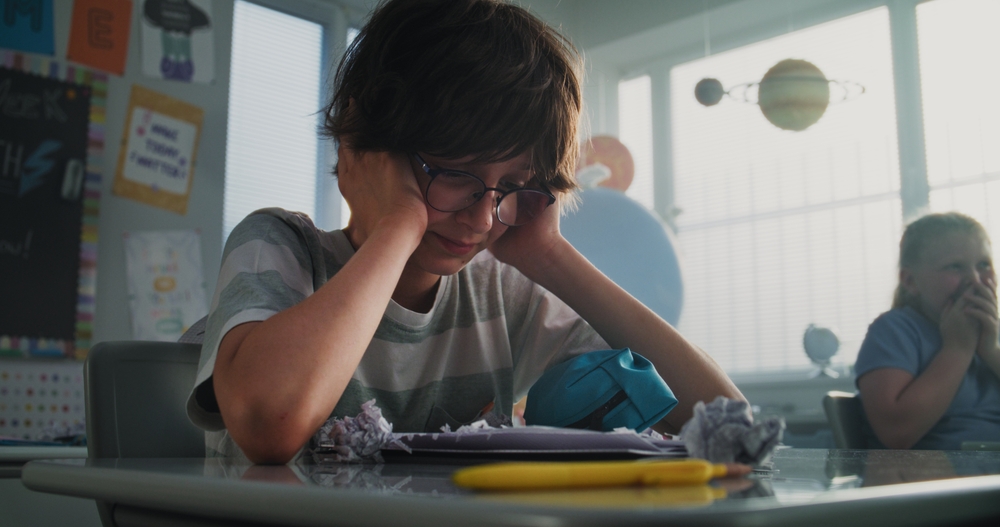
6th Grader Writes His Own Name In His Yearbook After Classmates Refuse — What Happened The Next Day Changed Everything
Sometimes the smallest moments reveal the deepest truths about who we are as human beings. The moments that stay with us are not always the loud ones. Sometimes they arrive quietly, tucked inside something ordinary, waiting for someone to notice.
A yearbook, for example, is supposed to be a celebration. It is a collection of names, memories, inside jokes, and signatures that quietly say, “You mattered here.” For many students, those pages represent more than ink on paper. They reflect friendship, belonging, and the simple reassurance that someone saw you during the year.
But for 12 year old Brody Ridder, that moment told a very different story.
When he brought his yearbook home from school in Westminster, Colorado, it held only a handful of signatures. One of them was his own. Beneath his name, he had written a message that was both simple and heartbreaking: “Hope you make some more friends. — Brody Ridder.”
In just a few words, the note revealed something far deeper than an empty page. It pointed to the quiet pain of feeling excluded, the kind of loneliness many young people experience but rarely know how to express.
Yet the story did not end with that message. What happened the very next day inside Brody’s school would transform that painful moment into something unexpected, offering a powerful reminder that even small acts of kindness can ripple through a community in ways no one sees coming.
The Pain Behind One Empty Yearbook
Brody Ridder had been attending the Academy of Charter Schools in Westminster since fifth grade after transferring for additional academic support. The move placed him in a new social environment that proved difficult to navigate. Over time, his mother Cassandra Ridder noticed that he was struggling not just with adjusting socially but with repeated bullying from classmates. She said some students pushed him and called him names, describing the situation plainly: “There [are] kids that have pushed him and called him names.” Even after the issue was raised with school administrators earlier in the year, she sensed the problem had not fully disappeared. In her words, “the teasing was still there.”
For Brody, those experiences shaped everyday school life in quiet ways. Building friendships became harder, and simple social moments carried more weight than they might for other students. By the end of the school year, when classmates were exchanging signatures in their yearbooks, the activity represented something meaningful to many students, a small confirmation that they were connected to the people around them.
When Brody Ridder, a sixth grader from Colorado, asked his peers to sign his yearbook, he got no takers.
— PIX11 News (@PIX11News) May 31, 2022
In fact, Brody even wrote a note to himself with a wish for the next school year: “Hope you make some more friends." pic.twitter.com/I3M1t0HRVX
When Brody approached classmates and asked if they would sign his book, the response made the situation painfully clear. “They told me no,” he later recalled. “It made me sad.” For his mother, hearing that response revealed how deeply the isolation had affected him. Reflecting on the moment, she said the rejection ran against the values she tries to teach at home. “We try to teach kindness in our family, and not seeing any kindness from students in his class was appalling to me,” she said.
A Mother Decides To Speak Up
After seeing the message her son had written in his own yearbook, Cassandra Ridder felt she had reached a moment where staying silent no longer felt like the right response. Rather than treating the incident as a private family struggle, she decided to bring attention to it in a way she hoped would encourage reflection among other parents. She shared a photo of Brody’s yearbook message in a private Facebook group for families connected to the school, not to single out individual students but to start a broader conversation about how everyday behavior among classmates can affect children who already feel isolated.

Ridder later explained that she believed her son would understand why she chose to speak up. “I knew he would be completely okay with it. Brody has always told me he wants to be part of the solution.” Her intention was to encourage parents to talk with their children about empathy, accountability, and the long term impact that exclusion or teasing can have on a young person’s sense of belonging. Research on school climate has repeatedly shown that peer rejection and social isolation can significantly affect student well being and academic confidence, an issue widely documented by organizations such as the U.S. Department of Health and Human Services’ bullying prevention initiative.
By choosing to speak openly, Ridder reframed a painful moment as an opportunity for awareness. Instead of allowing the incident to remain an unseen experience inside one family, she invited a community of parents to reflect on how small daily interactions among students shape the culture of a school.
When Older Students Stepped In
Among the students who became aware of the situation was 17 year old Joanna Cooper. After her mother sent her a screenshot of Cassandra Ridder’s post, Cooper immediately felt that ignoring it was not an option. She later said she decided right away that she would “get people and we’re going to sign his yearbook” because “no kid deserves to feel like that.” Her reaction came from a place of memory and empathy. Like many teenagers, she remembered how much social belonging mattered during middle school and how small gestures among classmates could carry emotional weight far beyond the moment.
Cooper explained that yearbook signatures often function as quiet signals of friendship and inclusion among students navigating the complicated social world of adolescence. “Signing someone’s yearbook was all the rage,” she said while reflecting on her own experiences. “That people would tell him no and deny him a signature, it just hurt my heart.” Motivated by that perspective, she began reaching out to friends and classmates, organizing a plan to visit Brody’s classroom the following day so they could personally write supportive messages in his yearbook.
Her response reflected a form of peer intervention that researchers say can play a meaningful role in reducing bullying and social isolation. Studies on school climate have found that when students actively support peers who are being excluded, it can shift group behavior and encourage empathy within the wider student body. Cooper’s decision to act demonstrated how a single student choosing compassion can influence others to do the same.
The Kindness Movement That Spread Through The School
The response did not come from just one group of students. Others who learned about Brody’s situation began thinking about how they could help as well. Among them was Simone Lightfoot, an 11th grader who recognized a familiar story in what had happened. Reflecting on her own experiences when she was younger, she explained why the situation resonated so strongly with her. “When I was younger, I was bullied a lot like him,” she said. “If I could do one little thing to help this kid feel a little better, I’d be more than willing to.”

Younger students felt the same sense of responsibility. Maya Gregory, an eighth grader at the school, said the story reminded her of moments earlier in her own life when support never arrived. “No one helped me when I was in that situation,” she said. “So I wanted to be there for him.” As word spread among students across grade levels, the idea of offering encouragement began to circulate organically among peers who had never spoken directly with Brody before.
When the next school day arrived on May 25, students from different grades began entering Brody’s sixth grade classroom to write messages in his yearbook. Many simply wanted to add their name or a few words of encouragement, while others shared contact information so he would know he had people he could reach out to. By the end of the day the pages that had once been nearly empty were filled with more than 100 signatures and supportive notes, along with a small gift bag that students brought for him.
The Ripple Effect Of One Act Of Kindness
The impact of that moment did not end with the students who chose to step forward. It also changed the behavior of some of the classmates who had originally remained distant. As older students entered the room and began filling Brody’s yearbook with encouraging messages, several students in Brody’s own class got up from their seats and added their names as well. Joanna Cooper later pointed to that moment as evidence that compassion can spread quickly once someone is willing to model it in public.
What unfolded in that classroom also reflected a larger truth about how social behavior works in schools. Children often take cues from the people around them, especially in moments where belonging and group acceptance feel important. When kindness became visible, it created a different standard for how students could respond to a peer who had been excluded. In that sense, the older students did more than comfort Brody. They helped reshape the atmosphere in the room, if only for a moment, by showing that empathy could be expressed openly rather than withheld.
School administrators saw that moment as part of a broader challenge many students have been facing. Brent Reckman, chief executive at the Academy of Charter Schools, said, “A lot of students are struggling with peer relationships and social skills. It’s up to us to figure out how to help kids and families with it, but it’s a challenge faced by all schools right now.” He added, “It can be really tough to be a teenager.” At the same time, he made clear that the students’ response offered something worth paying attention to. “I was really impressed with how our students stepped up when they saw a peer in need.”
The Quiet Power Of One Small Act
Brody Ridder’s story shows how quickly the direction of a moment can change when someone decides to act with empathy. What began as a quiet example of exclusion became a visible demonstration of compassion once a few students chose to respond differently. Their actions did more than comfort one classmate. They showed other students what kindness looks like in practice and how easily social norms can shift when someone is willing to lead with it.
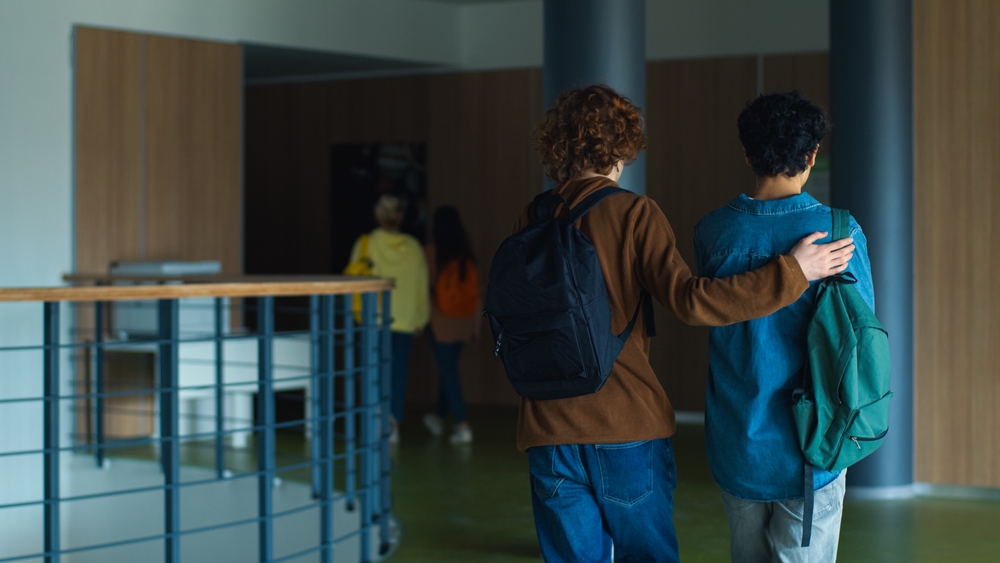
It is also a reminder that belonging often hinges on the smallest gestures. A name written in a yearbook, a few encouraging words, a moment of standing beside someone who feels alone can carry far more meaning than the person offering it might realize. Brody’s yearbook began the day as a symbol of isolation. By the end, it became something else entirely. Proof that even in places where cruelty sometimes appears, compassion can still find its way onto the page.
Featured image from Shutterstock