


Life often shifts quietly before it shifts dramatically. For many people, major health changes begin with mild discomforts that seem harmless. A headache that lingers. A moment of dizziness that passes. A feeling that something is off but not enough to disrupt the day. For Micheal J., a 26 year old diesel mechanic, those early signs began as a subtle nausea he experienced during what should have been a normal family getaway. Within weeks, those symptoms escalated into a diagnosis that would change the entire course of his life.
His journey has captured widespread attention because it highlights something many of us overlook. The early signs of serious illnesses can be quiet. They can mimic everyday stress or fatigue. And they often emerge at the most unexpected times. Through Micheal’s story, supported by clinical insights from neurosurgeon Dr. Jay Jagannathan and the experiences of other patients, we gain a clearer picture of what early symptoms can look like, why they matter, and how listening to our bodies can make a difference.
This viral deep dive brings together medical context, personal resilience, and important lessons drawn from Micheal’s experience. It explores the subtle symptoms that signaled his tumor’s growth, the emotional and medical journey that followed, and the importance of paying attention to signs that something is not right.
The First Subtle Signs That Something Was Wrong
Micheal’s story begins in February, during a family trip to Minneapolis. He visited the Mall of America, enjoyed a hockey game, and spent time with loved ones. Everything felt normal until he woke up one morning feeling suddenly and intensely nauseous. The nausea felt strange, unlike anything he connected to food or motion sickness. It passed, but then returned. And with every new episode, he began wondering what was triggering it.
Once he returned home to Sioux City, the symptoms escalated. Micheal began experiencing dizzy spells whenever he tried to lie flat. He described the sensation as the world spinning uncontrollably. As a diesel mechanic, much of his work required lying on a creeper under trucks. Each time he rolled out from beneath a vehicle, he had to rush to a trash can. What was once normal routine had turned into moments of disorienting imbalance.
Initially, his doctor suspected a common explanation: dislodged ear crystals affecting balance. Medication helped a little, but the dizziness never fully resolved. And then a new, more noticeable symptom appeared.
By late February, Micheal realized the right side of his face was weakening. He struggled to blink on that side and could no longer smile properly. Concerned, his doctor referred him to an ENT specialist in South Dakota. During that visit, the ENT discovered eye nystagmus, a condition where the eyes make rapid, uncontrollable movements when looking sideways.
This finding prompted the suggestion for an MRI. However, the scan did not happen until April, giving the tumor time to grow in silence.
These early symptoms aligned with what neurosurgeon Dr. Jay Jagannathan describes as common but often overlooked early signs of brain tumors. Persistent dizziness, unexplained nausea, vision disturbances, and changes in facial movement can indicate pressure on specific areas of the brain. According to Dr. Jagannathan, symptoms like these are frequently dismissed as stress or fatigue, which is why early detection is difficult yet critical.
The Diagnosis That Reshaped His Life
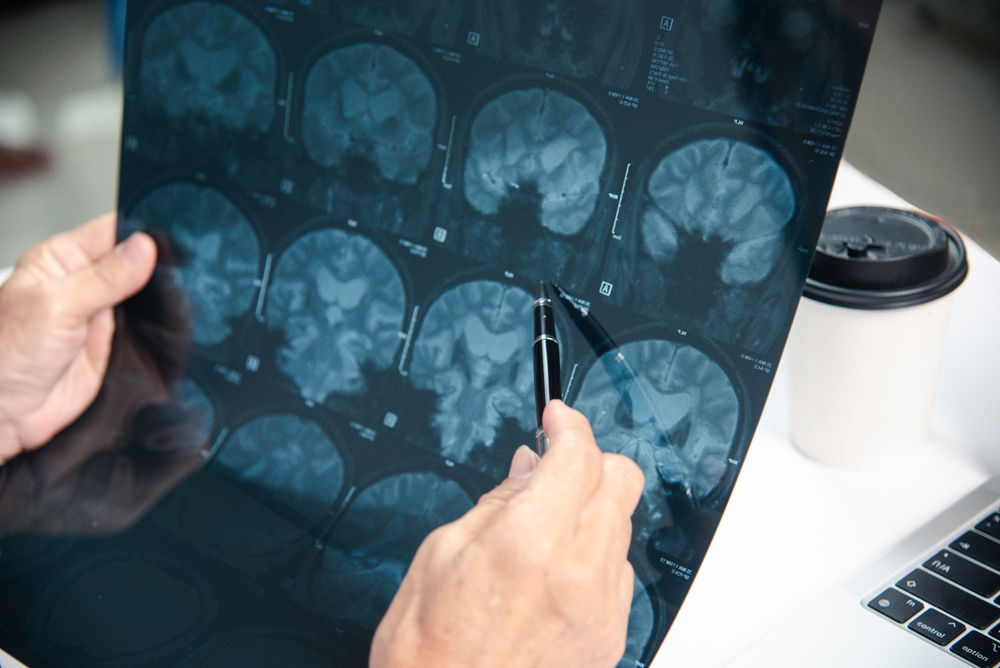
When Micheal finally underwent imaging in Sioux City, doctors discovered a mass in his brain. But the exact nature of the tumor was unclear. With limited neurosurgical resources available locally, he was transferred to Mercy Hospital for further evaluation. A second MRI suggested the need for immediate surgery, but uncertainty about the tumor’s precise location caused doctors to hesitate.
Micheal was then sent to Omaha for more advanced imaging. It was here that specialists identified the truth. The tumor was not just near the brain stem. It was inside it.
Doctors diagnosed Micheal with a diffuse midline glioma, also known as a DMG. This type of tumor is extremely aggressive and classified as grade 4. What makes it especially dangerous is the way it grows. Instead of forming clear borders like some tumors do, a DMG blends seamlessly into healthy brain tissue. Removal is impossible without causing catastrophic damage.
The brain stem controls essential functions like breathing, swallowing, movement, balance, and vision. Any attempt to surgically remove a tumor fused within this area would risk shutting down these systems.
Learning this left Micheal numb. He quietly removed the medical equipment attached to him and told his mother he needed a walk. With his wife and best friend by his side, he walked to a nearby church. Only then did the emotional weight of the diagnosis finally settle in.
Why Subtle Symptoms Should Not Be Ignored

Many of Micheal’s early symptoms resembled issues that could be explained by far more common conditions. Nausea, dizziness, and headaches, especially when mild, can result from stress, dehydration, or lack of sleep. Facial weakness might be linked to nerve inflammation. Eye nystagmus can be associated with inner ear problems.
According to Dr. Jagannathan, this is exactly why early signs of brain tumors often go unnoticed. He highlights five key warning signs that should prompt medical evaluation even if they appear mild.
- Persistent headaches that worsen over time or feel unusual
- Sudden vision changes, including blurriness or double vision
- Cognitive difficulties like memory lapses or trouble concentrating
- Personality or mood shifts that do not match normal patterns
- Seizures, tingling, or numbness without an obvious cause
Micheal experienced several of these signs. The dizziness, facial weakness, and eye movements were all connected to his brain stem, where the tumor was growing. For many DMG patients, early symptoms are described as focal, meaning they relate directly to the area of the brain affected.
Even when symptoms feel dismissible, specialists emphasize that new, persistent, or unusual changes should lead to evaluation. Early imaging can significantly improve chances for timely treatment.
A Mother’s Instinct and a Life Saving Second Opinion

After Micheal’s initial diagnosis in Omaha, he and his family returned to Sioux City. While doctors explained that the tumor was inoperable and extremely serious, his mother refused to accept that there were no other options. She reached out to friends with cancer experience, and all of them pointed toward the Mayo Clinic in Rochester.
The next day, she invited Micheal to breakfast at a local diner. Over their meal, she urged him to seek a second opinion. He agreed, and that same afternoon they drove more than four hours to Mayo’s emergency department.
At Mayo, the on duty neurosurgeon took his case seriously and connected him with Dr. Parney, a leading figure in complex neurosurgery. Within days, they scheduled a biopsy to determine the tumor’s nature more precisely.
The biopsy came with risks. Micheal understood that he faced a small chance of complications, including facial paralysis or even death. He signed the necessary papers and underwent the procedure.
When he woke up, he immediately noticed the aftereffects. Part of his face was paralyzed. His jaw had weakened. His right eye would not fully close. His left arm was numb from the shoulder to his fingertips. These symptoms were life altering, yet he retained mobility, speech, and swallowing abilities. For that, he was grateful.
Biopsies can provide critical information for treatment decisions. In Micheal’s case, they confirmed the aggressive nature of the tumor and guided the next steps in his care.
Choosing a Treatment Strategy Through a Clinical Trial
Traditional treatment for diffuse midline glioma involves six straight weeks of radiation. This approach can offer temporary tumor shrinkage or stabilization, but it often comes with intense side effects. For tumors located in the brain stem, the risks are even higher due to the sensitivity of surrounding tissue.
Micheal’s radiologist at Mayo presented him with two options. He could pursue the standard six week radiation course or participate in a clinical trial designed to minimize neurological damage. The trial involved two week rounds of radiation followed by observational periods. If MRI scans showed progression, another two week round would follow.
When his mother asked the radiologist which option he would choose for his own child, he recommended the clinical trial. Micheal agreed.
The first two week round was challenging. Micheal experienced intense nausea, dizziness, pressure in his head, and hair loss at the back of his scalp where radiation targeted the tumor. Doctors warned him that the tumor might swell temporarily after treatment, which could worsen symptoms before improving.
Over time, however, he began noticing positive changes. His dizzy spells became less frequent. His eye nystagmus improved. He remained mobile and independent, which was a major victory for someone undergoing brain stem radiation.
The Emotional Weight of an Inoperable Diagnosis

One of the hardest parts of Micheal’s journey has been coming to terms with the fact that his tumor cannot be surgically removed. Many brain tumor patients find hope in knowing that a mass can be taken out, even if it later returns. For Micheal, that option simply does not exist.
Online support groups introduced him to others whose tumors could be removed entirely. He felt happy for them but also struggled emotionally. It was difficult to accept that something harmful was inside him with no possibility of extraction.
With time, prayer, and guidance from loved ones, he moved toward acceptance. He reminded himself that he had lived in his body for 26 years and that this tumor had only been present for a short time. He told himself that he would outlive it, not the other way around.
How Cancer Changed His Perspective on Life
Cancer often reshapes the way people see the world, and Micheal is no exception. Before his diagnosis, he was caught in a familiar routine from home to work and back again. Days blended together.
Now he takes time to appreciate small moments. He goes for walks around the large truck lot at work, noticing things he never paid attention to before. Simply being able to walk is a gift he no longer takes for granted.
Micheal had always dreamed of becoming a pilot. His vision issues paused that plan, but he still intends to pursue it when his vision improves. If anything, the diagnosis pushed him to prioritize his dreams instead of postponing them.
Hope used to be a casual word for Micheal. Now it is an anchor that keeps him grounded. He wakes up each day fueled by the belief that he has more life to live, more memories to make, and more people to love.
He and his mother use humor to cope, sometimes joking that they hope to bury each other first. It may sound dark, but for them, it is a way of staying connected and facing fear together.
Lessons From Micheal and Other Survivors
Micheal’s journey aligns with insights shared by countless brain tumor survivors. Their stories, combined with clinical guidance, highlight several important lessons.
- Pay attention to symptoms that feel unusual or persistent.
- Seek medical evaluation when something feels off, even if it seems small.
- Trust your instincts and advocate for yourself.
- Pursue second opinions when necessary.
- Lean on support systems including family, friends, and community.
- Understand that hope and resilience can exist alongside fear.
Medical experts note that while symptoms alone cannot diagnose a brain tumor, early evaluation can make a significant difference in treatment planning. Awareness encourages action.
A Reflection on Strength, Awareness, and Moving Forward
Micheal’s story is a powerful reminder that life can shift quietly before it shifts dramatically. Subtle symptoms should not be ignored. His experience encourages all of us to listen more carefully to our bodies, seek answers when something feels wrong, and advocate for our own health.
Through clinical trials, family support, and a grounded sense of hope, Micheal has found meaning even in uncertainty. His willingness to share his story helps others recognize early warning signs and encourages deeper conversations about brain health.
His message is simple. Life is precious. Notice the small things. Appreciate moments while you have them. And never underestimate the power of hope, even in the face of overwhelming odds.