Are Catholics Really the Clearest Thinkers on Earth or Is Something Deeper at Work
Some individuals seem to navigate life with an uncommon steadiness. Their minds are not just quick but clear. Their words come from somewhere deeper than opinion or impulse. This clarity is not about intellect alone. It is about orientation. A way of being that is anchored in stillness, compassion, and purpose. Across traditions, such clarity is often born not in the mind, but in the spirit.

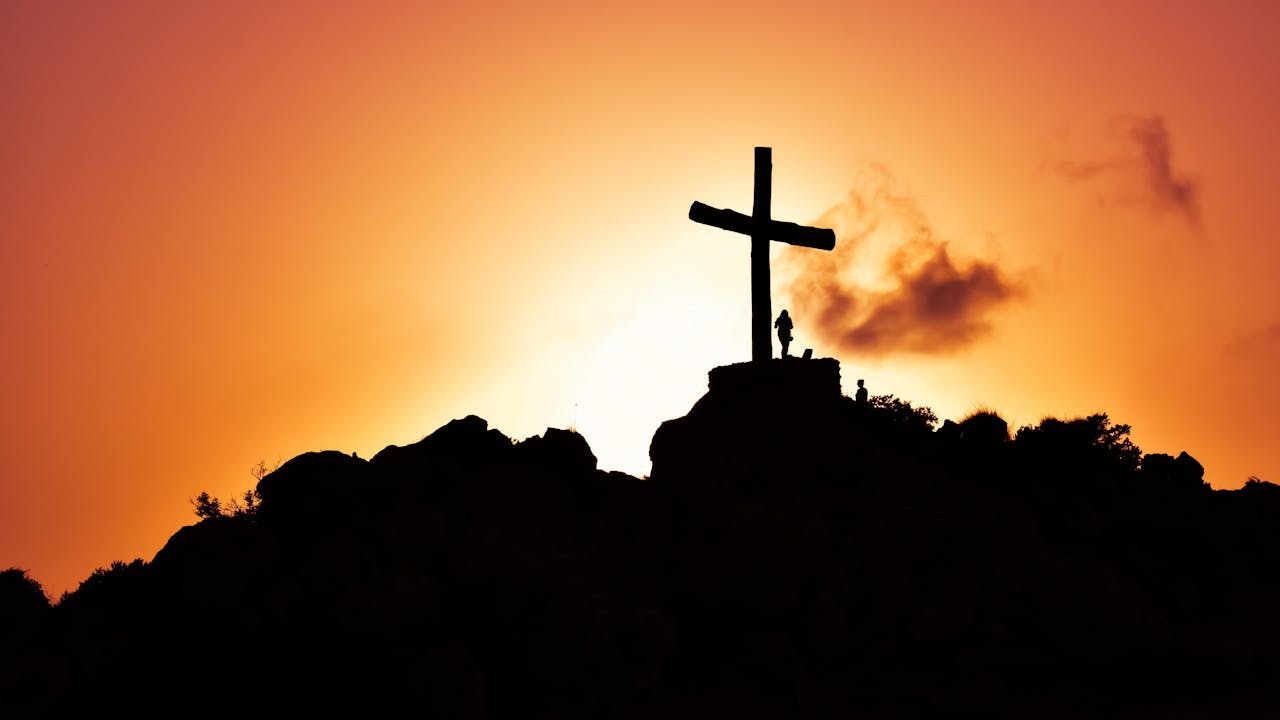
Recently, a bold idea resurfaced that places Catholicism at the center of this conversation. It asks whether Catholics might be among the clearest thinkers on earth. Not because of superiority in intelligence, but because of how the tradition shapes thought through ritual, reflection, and deep moral structure. While the question might sound provocative, it opens the door to something more profound. It invites a closer look at how centuries of spiritual discipline could sharpen not just beliefs, but perception itself.
The Ancient Symbols That Still Speak Today
Long before the invention of science or psychology, human beings were already asking the biggest questions. What drives us? What destroys us? What saves us? In sacred texts like the Book of Daniel, answers were offered not through instruction manuals but through symbols. The vision of four beasts rising from turbulent waters was not meant to entertain or confuse. It was a spiritual mirror. It reflected what human nature can become when left unchecked and what it must confront to be transformed.
Modern scholars often describe these beasts as metaphors for ancient empires, yet another perspective has quietly endured within the hearts of contemplative traditions. It sees those beasts not only in history but in humanity itself. They represent the different forms our inner life can take when shaped by power, ego, fear, or even compassion. When read this way, scripture becomes a guide not for predicting events but for understanding the human soul.
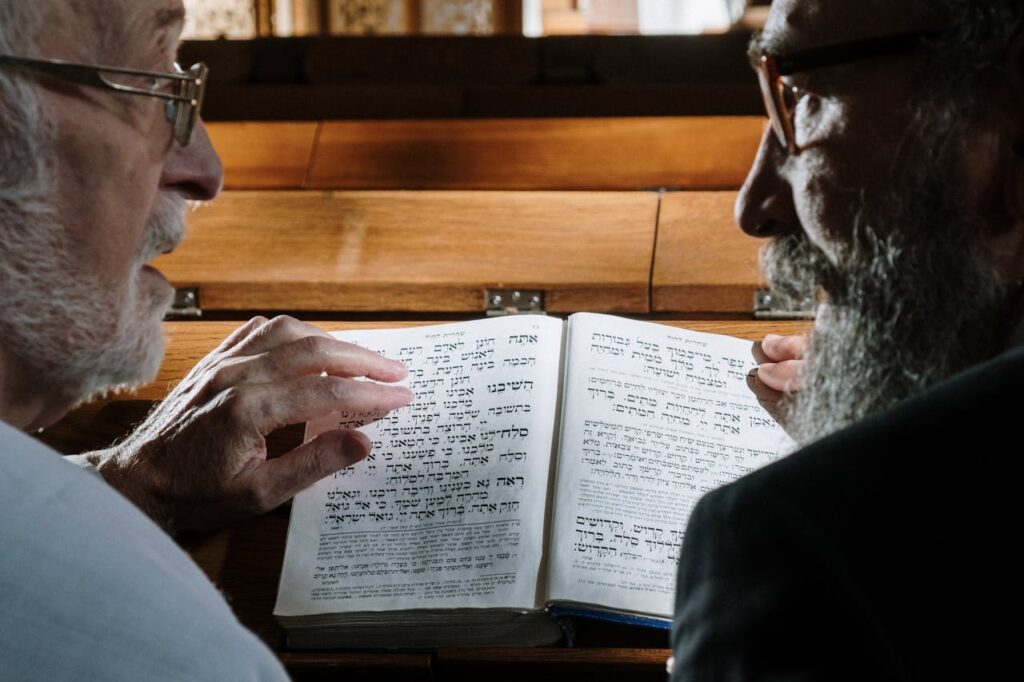
One academic reflection titled Metaphors in the Prophetic Literature, published by Brill, explores how symbolic language in prophetic texts was always meant to stir introspection, not just describe politics. Symbols invited the reader to change from within, not point fingers outward. Through this lens, the bold claim about Catholic clarity takes on a deeper tone. It is not about claiming intellectual superiority. It is about the tradition’s long history of training the mind and spirit to see past illusion and into meaning. Prayer, ritual, and reflection are not just acts of devotion. They are disciplines that shape how one perceives reality itself.
When the Inner Compass Points True
There is a kind of wisdom that does not come from reading more books or achieving more goals. It rises instead when a person’s beliefs, choices, and values begin to move in harmony. This is not the same as being calm all the time or having life perfectly figured out. It is about alignment. It is the quiet power that emerges when the inner life is no longer divided. What once felt scattered begins to settle into something whole. That sense of spiritual clarity does not silence all noise, but it makes the signal stronger. It becomes easier to tell the difference between what is meaningful and what is merely distracting.
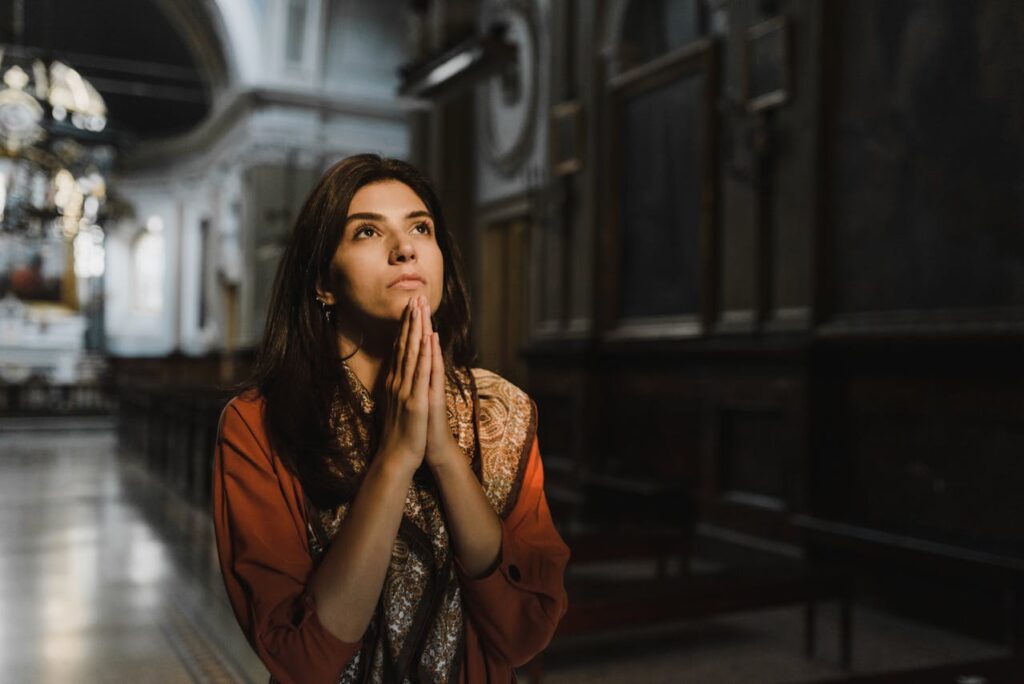
Studies in the field of psychology are beginning to catch up with what spiritual teachers have long practiced. A peer-reviewed study published in Psychology of Religion and Spirituality found that people who consistently engage in contemplative or devotional habits report a greater ability to make meaning and respond adaptively during times of stress. Their clarity does not come from control but from connection. Over time, this kind of orientation builds a stable inner compass. Whether through reflective reading, silence, prayer, or intentional living, it becomes a way of staying internally rooted even as the world around shifts. This clarity is not about perfection. It is about coherence. It is about being able to recognize what is in alignment with one’s highest self and what only pulls the mind into confusion or distraction.
The Dialogue That Clears the Mind
For centuries, people have turned to prayer not just to speak to something greater but to return to themselves. In a world that constantly demands attention, prayer invites stillness. It becomes more than a spiritual ritual. It becomes a way to make sense of inner chaos. When practiced regularly, prayer offers structure to the mind’s emotional landscape. It helps individuals reflect on their choices, reorder their priorities, and place their struggles within a larger moral story. This narrative process is not about escaping reality. It is about grounding it in meaning.
Beyond its psychological depth, prayer leaves an imprint on the body. The slowed breathing, the repetitive rhythm of words, the physical posture of humility all engage the parasympathetic nervous system, allowing the body to come down from its stress response. A study published in the Journal for the Scientific Study of Religion confirmed that frequent prayer can activate brain regions responsible for emotional regulation and attention control. This means prayer is not only a comfort. It is a form of neurobiological alignment that quiets mental noise and supports emotional balance over time.
Prayer also taps into something deeply relational. For many, it feels like a conversation, not just a monologue. That sense of divine connection engages the same neural pathways involved in human trust and attachment. This helps explain why people often describe feeling emotionally anchored through prayer, even in seasons of uncertainty or solitude. Clarity, in this context, does not come from thinking harder. It comes from being held by something greater. From the sense that one is not navigating life alone, but accompanied by a presence that listens and restores.
The Power Hidden in Repetition
Repetition can seem mindless from the outside. Saying the same prayers, lighting the same candles, tracing the same steps in a chapel or on a rosary bead. But within the structure of repetition lies one of the mind’s greatest tools for clarity. Neuroscience has shown that repeated patterns create stable neural pathways. What we do often becomes what we default to. And when those patterns are intentional and value-driven, they do more than form habits. They form perception.
In spiritual traditions like Catholicism, repetition is not used to numb but to attune. It trains attention. It conditions the mind to notice subtle shifts in thought and emotion. Over time, these rituals stop feeling like obligation and begin to act like anchors. In moments of chaos, they remind the body how to slow down. In seasons of doubt, they give the mind something steady to return to. This is not just emotional comfort. It is cognitive conditioning. It is building a mental structure where clarity can return, not by force, but by familiar rhythm.
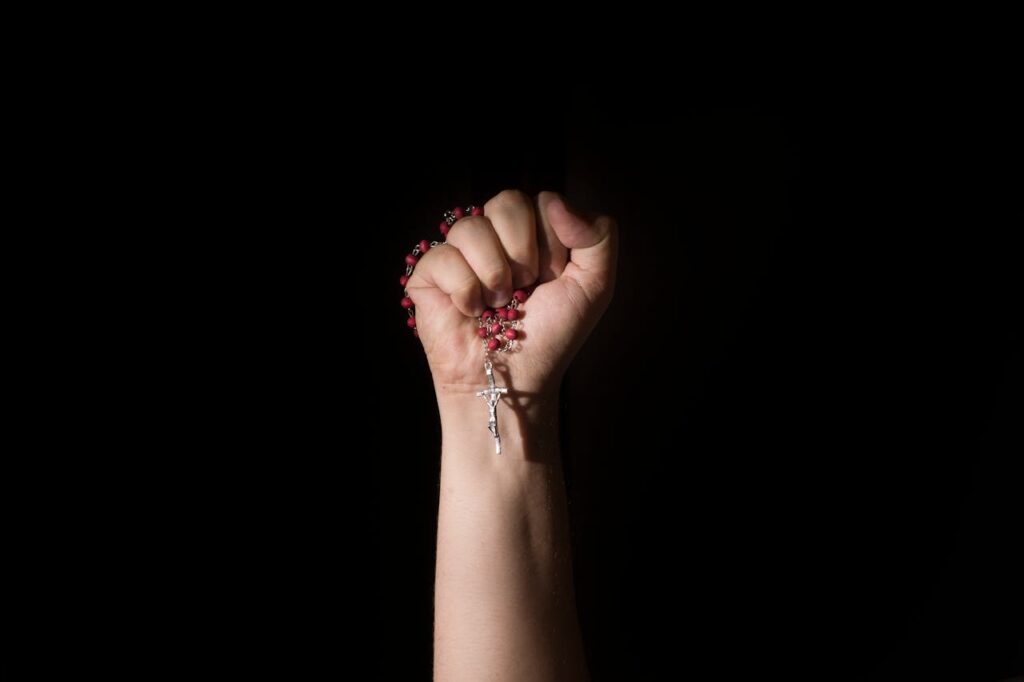
The modern world often teaches that freedom means escaping structure. But ancient traditions suggest something different. That true freedom is not the absence of form but the mastery of it. Through repetition, the mind learns not just to react but to reflect. And from that reflection, something sharper and more rooted begins to emerge.
Why Sacred Spaces Help Clear the Mind
Physical environment has always shaped spiritual experience, whether consciously or not. In Catholicism, churches are designed not just for community but for contemplation. The high ceilings, the candlelight, the quiet acoustics, and the stained glass windows that soften the light all work together to alter perception. These are not merely aesthetic choices. They are architectural tools that invite a shift in consciousness. When the external environment slows, the mind often follows.
Studies in environmental psychology confirm that sensory surroundings influence emotional regulation and cognitive function. Exposure to low stimulation environments, particularly those with symmetry, nature based design, or ritual significance, has been shown to reduce stress and enhance attention. This supports long standing practices that use sacred space to encourage spiritual focus. The setting becomes part of the message. It reinforces stillness. It helps ground the body, which in turn grounds the mind.
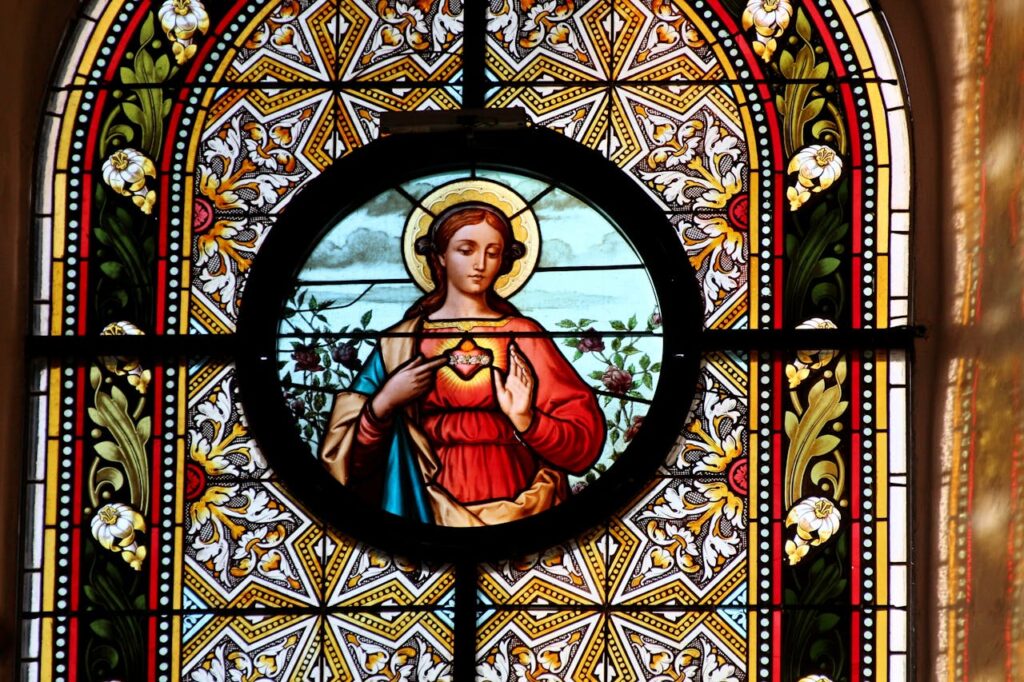
Even beyond traditional religious settings, people often report mental clarity in spaces like forests, oceans, or quiet sanctuaries. The shared factor is intentional design. Catholic tradition formalized what many already sense intuitively. Where we are shapes how we think. And when the space is sacred, the mind becomes quiet enough to notice what was always waiting to be heard.
Clarity Is Not Claimed It Is Cultivated
In a world that often confuses noise with knowledge, clarity has become rare. But spiritual traditions remind us that the clearest thinking is not forged in argument. It is shaped in silence, nurtured through ritual, and refined by a deep sense of purpose. Catholicism, like many enduring traditions, offers a path that is not about being right but about being rooted.

The practices explored here are not quick fixes or intellectual trophies. They are invitations to see with more than the eyes and understand with more than the mind. Whether through sacred space, symbolic language, or disciplined prayer, clarity emerges as a byproduct of alignment. It is not a claim of superiority. It is the result of devotion. And in a time that pulls thought in every direction, that kind of centered vision is more than powerful. It is essential.
Featured Image from Pexels