


Prophet Reveals the Exact Date and Method of Humanity’s End
We often walk through life assuming that tomorrow is guaranteed, treating time as an infinite resource that can never be depleted. But there is a startling claim circulating that puts a hard stop on our timeline, marking the year 2026 as the final curtain call for civilization. This isn’t just a story about a rock falling from the sky; it is a profound accusation against the state of the human heart. It presents a scenario where our survival is tethered not to our technology, but to our ability to find peace, forcing us to confront the uncomfortable possibility that the greatest threat to our existence might actually be ourselves.
The Countdown to 2026

In the year 2000, a book titled The Religion of God presented a stark ultimatum to the world. Its author, Riaz Ahmed Gohar Shahi, claimed that a comet was on a collision course with Earth, sent as a divine response to the proliferation of nuclear weapons and global conflict. He warned that humanity had roughly twenty-five years to change its ways before facing extinction. For his followers at the Messiah Foundation International, that clock runs out in 2026.
The narrative here is intense. It suggests that the survival of the species depends entirely on our ability to stop fighting. The organization insists that the only force capable of diverting this “mammoth comet” is the immediate adoption of world peace. It connects human morality directly to cosmic consequences, suggesting that our anger and greed are magnetic enough to pull destruction right out of the sky.
Science, however, tells a completely different story. Astronomers who monitor the darkness for near-Earth objects have found zero evidence of this threat. Telescopes show that the nearest known comet is safely drifting about 170 million miles away. There is no physical data to support the idea of an impact next year.
Despite the lack of scientific proof, the prediction strikes a nerve. It resonates not because the sky is falling, but because the ground feels unstable. The prophecy serves as a metaphor for a world that feels like it is spinning out of control. It forces a conversation about whether the real danger comes from the stars or from our own backyards.
A World Already Ending
A year after making his prediction, Shahi vanished in September 2001 without a trace. While his physical whereabouts remain a mystery, the philosophy he left behind grew into a specific worldview held by the Messiah Foundation International. This group argues that no amount of human ingenuity or advanced technology will be enough to save the planet. While scientists discuss deflection strategies for potential asteroids, these followers believe the root cause of the danger is not physical but spiritual.
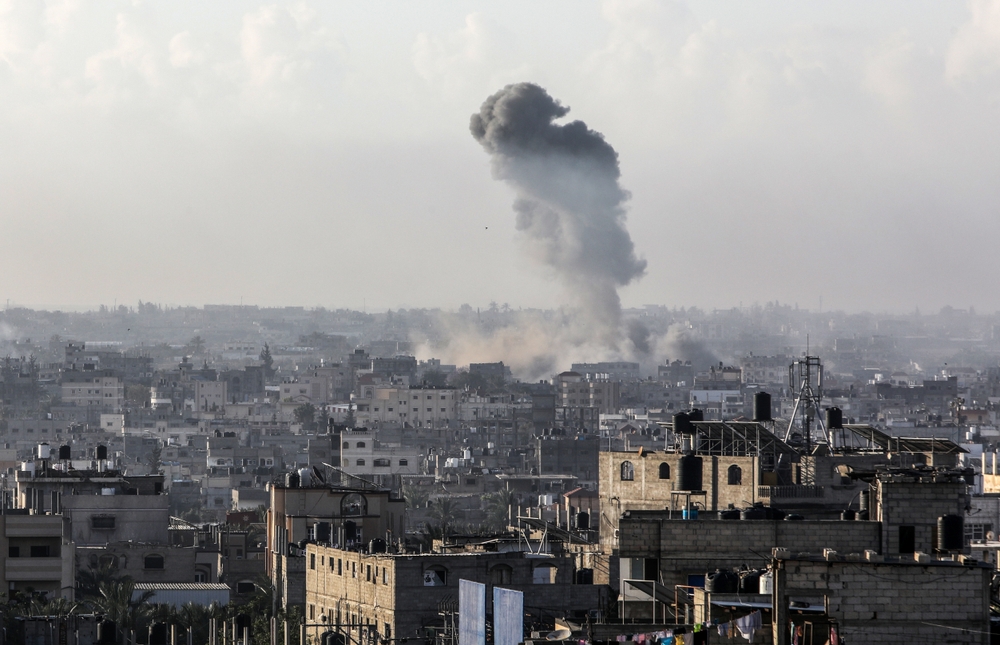
The evidence they point to is found on the nightly news rather than in telescopes. They cite the escalating geopolitical tensions between East and West and the looming threat of a global conflict. The argument extends to the visible suffering across the globe. With mass civilian casualties recorded throughout 2025 in regions like the Congo, Sudan, and Gaza, the claim is that human life has fundamentally lost its value.
This perspective suggests that the “end times” are already here, manifested through our collective behavior. Natural disasters and dwindling resources are viewed as symptoms of a deeper sickness. The fear is not just that a comet is coming, but that we have lost the moral standing to deserve saving. When suffering becomes the order of the day, faith in humanity begins to crumble long before any collision occurs.
The Calm at the End of the World
When faced with an expiration date, the human instinct usually leans toward chaos. If the world were truly ending in a matter of weeks, the typical response might involve panic or a descent into hedonism. Many would choose to drown their sorrows in alcohol or give in to despair. It is easy to imagine a society unraveling as people stop caring about consequences because there is no future left to protect.

However, the followers of Riaz Ahmed Gohar Shahi present a startling alternative. Despite believing the apocalypse is inevitable and imminent, they have not resorted to running around screaming. Instead, they are actively working to expand the Messiah Foundation International with the specific goal of fostering world peace. This reaction defies the standard logic of doom.
The organization operates on the belief that peace is not just a noble ideal but a survival mechanism. They argue that the only way to redirect the incoming destruction is to fundamentally change how humans interact with one another. While the prophet himself vanished mysteriously in 2001, his followers continue to push for unity rather than resignation. They are betting on the idea that the collective human spirit has the power to alter the course of destiny. In the face of annihilation, they chose responsibility over recklessness.
Our Own Impact Event
Look away from the sky for a moment and look in the mirror. The prophecy claims a comet was sent specifically because of nuclear weapons and global conflict over material things. This point highlights a danger that does not require a telescope to see. The threat of self-destruction is not a mystical prediction. It is a tangible reality housed in silos and submarines across the globe.

History shows that civilizations often crumble from within before they are conquered from without. The obsession with power creates a different kind of impact event. When nations prioritize weaponry over well-being, the foundation of society begins to crack.
Scientists confirm that the skies are clear of rocky debris, but the geopolitical landscape is cluttered with tension. The prophecy suggests humanity has limited time to solve world peace. Whether that timeline is literal or figurative, the urgency remains valid. Waiting for an external sign to force us into kindness is a dangerous game. The proliferation of hate acts just like a celestial body hurtling toward the planet. It gathers speed and mass until the collision becomes unavoidable. We do not need a prophecy to tell us that a world at war with itself cannot sustain itself for long. The true catastrophe might not be a rock hitting Earth, but humanity hitting rock bottom.
The Deadline is Now

It is a strange tragedy that humanity often needs a deadline to find its humanity. We tend to wait for a diagnosis, a disaster, or a date on the calendar to finally prioritize what matters. The science says the skies are empty of danger, but our streets are full of it. The prophecy of 2026 offers a stark reminder: if we knew the world was ending, our petty conflicts would vanish instantly. We would forgive quickly. We would love deeply. We would not care about borders or bank accounts.
So, why wait? Why does it take a phantom comet to force a conversation about peace? The power to save the world does not lie in redirecting a rock in space. It lies in redirecting the human heart. You have the choice today. You can live in fear of what might come, or you can take responsibility for what is already here.

Treat the person next to you with the kindness you would offer if you knew you only had weeks left. Fix the relationships that are broken. The world does not end when a comet hits. It ends when we stop caring about one another. We have the technology to destroy ourselves, but we also have the capacity to heal ourselves. Do not wait for the sky to fall to be a good person. Be that person now. If we can foster peace without the threat of Armageddon, we save ourselves from the only destruction that truly matters. The clock is ticking, not on the planet, but on our potential. Use the time wisely.
Featured Source Image: Sarkar Gohar Shahi on Facebook