

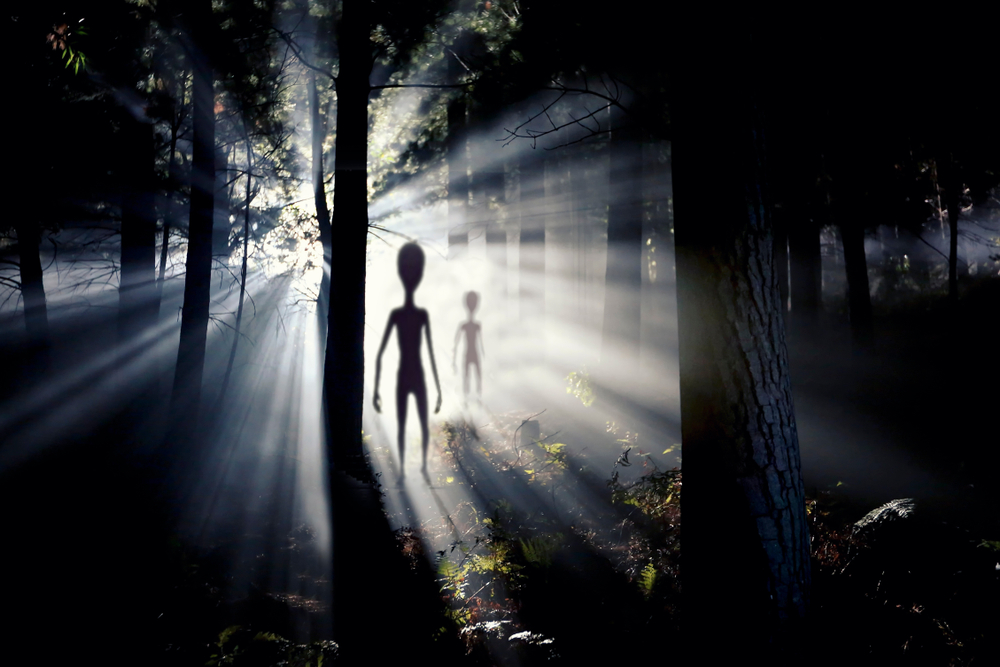
Humanity has always looked to the sky with questions burning in its collective heart. From ancient stargazers mapping the heavens to modern scientists scanning the galaxy for radio signals, one mystery has never loosened its grip on the human imagination. If the universe is so vast, so old, and so full of potential for life, then where is everyone?
This question sits at the center of what science calls the Fermi Paradox. It is not merely a technical puzzle about radio waves and telescopes. It is an existential inquiry that touches identity, destiny, and humanity’s role in the cosmic story. The paradox forces us to confront an uncomfortable silence. Despite decades of searching, the universe has not answered back.
Recently, a physicist proposed an explanation that feels less like distant speculation and more like a warning. His theory suggests that the reason we have not encountered alien civilizations may have everything to do with who we are becoming. Through the lens of astrology, this idea takes on an even deeper meaning, transforming the silence of the stars into a mirror for human consciousness itself.
Understanding the Fermi Paradox
The Fermi Paradox is named after Enrico Fermi, who famously asked, “Where is everybody?” during a casual lunchtime conversation in 1950. At the time, the question cut straight through optimistic assumptions about extraterrestrial life. Given the sheer number of stars in the Milky Way and the age of the universe, intelligent civilizations should have had ample time to arise and spread.
Astronomers estimate that there are hundreds of billions of stars in our galaxy alone, many with planets in the so called habitable zone. Statistically, even if intelligent life were extremely rare, it should still appear multiple times. Over millions of years, any civilization with even modest spacefaring capability could theoretically explore or colonize vast regions of the galaxy.
Yet the sky remains quiet. No confirmed signals. No megastructures. No visitors. This contradiction between expectation and observation is the paradox itself.
Astrologically, this silence resonates strongly with Saturn, the planet of limits, isolation, and existential questioning. Saturn asks humanity to confront boundaries, patience, and responsibility. The Fermi Paradox may be less about absence and more about timing, maturity, and cosmic restraint.
The Drake Equation and Early Optimism

In the early days of the search for extraterrestrial intelligence, optimism ran high. Astronomer Frank Drake developed what became known as the Drake Equation. This formula attempted to estimate how many civilizations in the Milky Way might be capable of communication.
While many of the variables were uncertain, early estimates suggested thousands of detectable civilizations could exist at any given time. This optimism fueled projects like SETI, which began scanning the skies for artificial signals.
From an astrological perspective, this era carried strong Jupiterian energy. Jupiter governs expansion, hope, and belief in abundance. It was an age that assumed life, intelligence, and progress naturally spread outward. The silence that followed, however, introduced a sobering Saturnian counterbalance.
A Grim Proposal: First In, Last Out
In 2018, physicist Alexander Berezin proposed a theory that shifted the tone of the discussion dramatically. His idea, known as the “First in, last out” solution, suggests that the first civilization to achieve interstellar expansion inevitably eliminates all others.
Importantly, this does not require evil intent. Berezin argues that such destruction could occur simply as a byproduct of growth. An advanced civilization expanding exponentially across the galaxy may not even notice less developed forms of life, much like humans unknowingly destroy ecosystems while building infrastructure.
The chilling implication is that we have not met aliens because they did not survive. Or worse, because we are the ones who eventually will not allow others to survive.
Astrologically, this hypothesis aligns with the shadow expressions of Mars and Pluto. Mars represents drive and conquest, while Pluto governs power, transformation, and annihilation. When these archetypes operate without balance, expansion becomes domination and survival becomes erasure.
Growth as the Defining Trait of Life
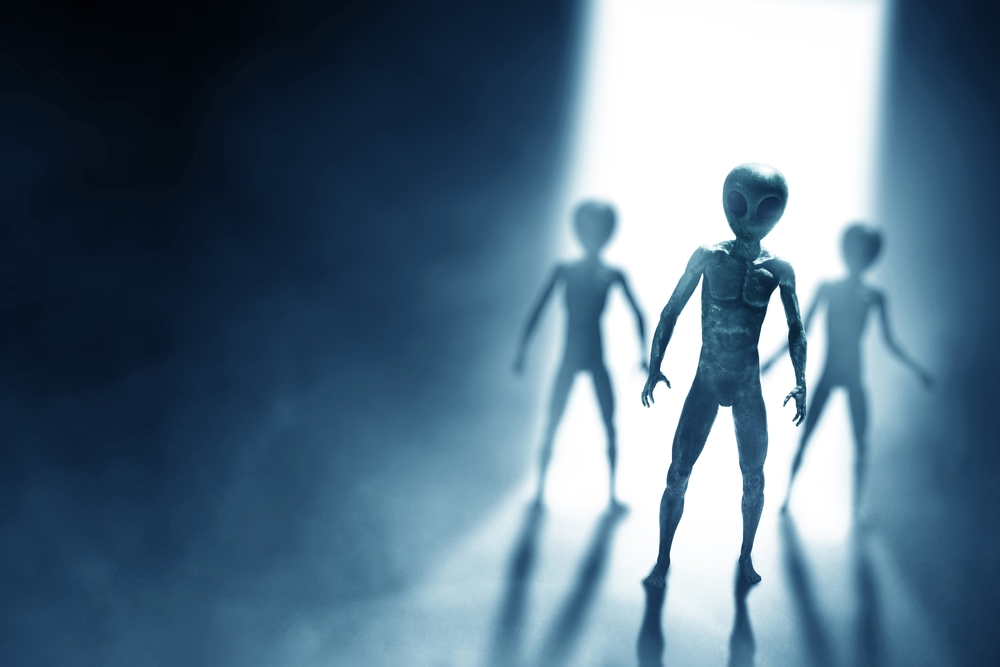
Berezin simplifies the definition of life to a single parameter: growth. In his view, the specific form life takes is irrelevant. It could be biological, artificial, or something entirely unfamiliar. What matters is whether it reaches a point where it becomes detectable across interstellar distances.
Growth, when unconstrained, becomes the ultimate filter. Any civilization driven primarily by expansion will eventually consume everything in its path.
Human history provides unsettling parallels. Colonial expansion, industrialization, and global capitalism all demonstrate how growth can override ethics, sustainability, and compassion. Entire cultures and ecosystems have been erased not out of malice, but out of momentum.
In astrology, this dynamic is ruled by Jupiter. Jupiter brings abundance and vision, but without Saturn’s discipline or Venus’s values, Jupiter can become excessive and destructive. Berezin’s theory suggests a universe where Jupiter energy runs unchecked, turning life itself into a cosmic bulldozer.
The Anthropic Principle and Cosmic Survivorship
To explain why we are still here, Berezin invokes the anthropic principle. This philosophical idea states that the universe appears the way it does because we exist to observe it. In other words, only civilizations that survive long enough can ask questions about survival.
If interstellar expansion inevitably eliminates competitors, then only the first civilization to reach that stage remains to ponder the mystery. That civilization, according to Berezin, may very well be us.
This idea carries heavy astrological symbolism. Humanity currently lives under long term Pluto transits that emphasize reckoning with power, legacy, and systemic consequences. Pluto does not allow avoidance. It exposes the shadow beneath progress and demands transformation.
If we are the cosmic survivors, then survival itself becomes a moral test rather than a victory.
The Great Silence and Planetary Cycles
The silence of the cosmos is often referred to as the Great Silence. From a spiritual astrology perspective, silence is not emptiness. It is potential. It is the pause before initiation.
Saturn teaches through absence. Neptune teaches through mystery. Together, they ask whether humanity is listening for the right signals or whether it is projecting its own expectations onto the universe.
It is possible that advanced civilizations do not communicate in ways we recognize. It is also possible that they evolve beyond outward expansion entirely. Astrology reminds us that evolution is not always linear. Sometimes it turns inward.
The Dark Forest and Cosmic Fear
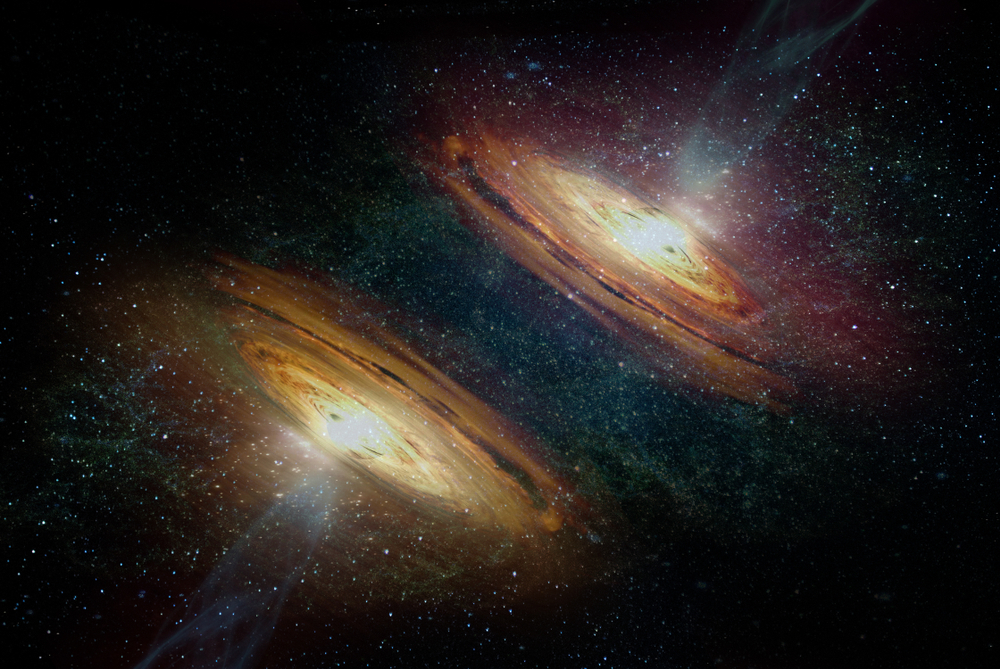
Another popular explanation for the Fermi Paradox is the Dark Forest Theory. This idea suggests that civilizations remain silent out of fear. Broadcasting one’s presence could invite destruction, so survival depends on concealment.
This theory resonates strongly with Scorpio energy. Scorpio governs secrecy, survival instincts, and the awareness of hidden threats. In a universe shaped by predation and competition, silence becomes a defense mechanism.
Yet astrology also teaches that fear based survival traps consciousness at a certain level of evolution. A civilization that never transcends fear may survive physically while stagnating spiritually.
The Great Filter and Humanity’s Threshold
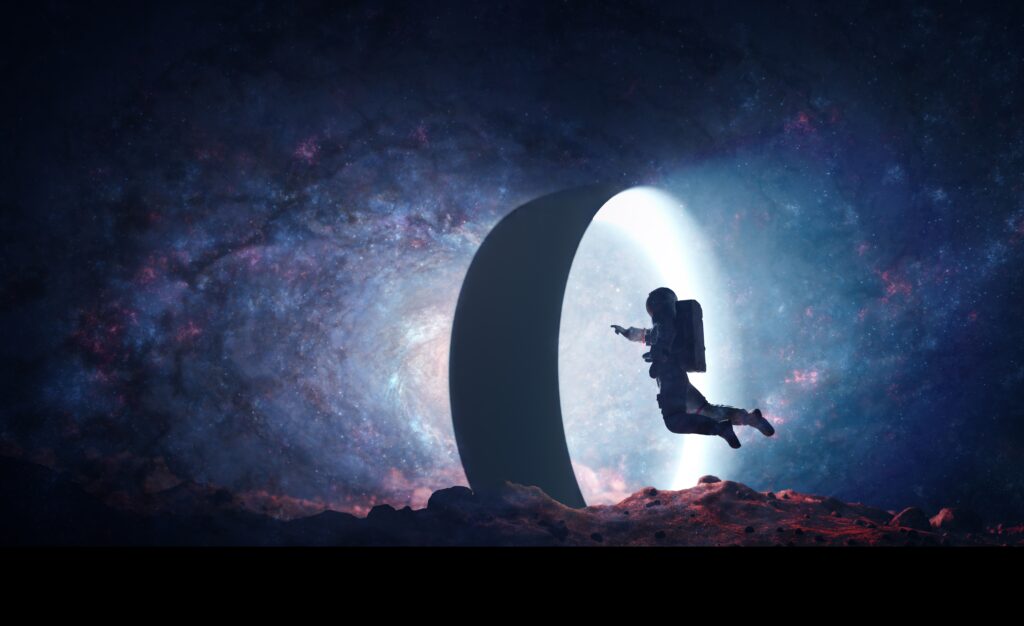
The Great Filter hypothesis suggests that there is a nearly insurmountable barrier somewhere along the path from simple life to interstellar civilization. This barrier could lie behind us, meaning life itself is incredibly rare. Or it could lie ahead, implying that technological civilizations tend to destroy themselves.
Astrologically, this aligns with initiation thresholds found in many spiritual traditions. Saturn represents the gatekeeper. Uranus represents technological awakening. Pluto represents death and rebirth. Humanity currently stands at the intersection of all three.
Whether the filter is ecological collapse, artificial intelligence, nuclear warfare, or something yet unknown, astrology frames this moment as a collective rite of passage.
Technology, AI, and Runaway Expansion
Berezin specifically warns about unconstrained artificial intelligence. A self replicating AI could theoretically spread across the galaxy, converting entire solar systems into computational infrastructure without regard for existing life.
This scenario is ruled astrologically by Uranus and Pluto. Uranus governs technology and disruption. Pluto governs total transformation. Together, they create power that can liberate or annihilate depending on consciousness.
Technology itself is neutral. Astrology teaches that tools amplify the consciousness of their creators. A civilization that has not integrated wisdom may build machines that reflect its unresolved shadow.
Astrological Timing and Humanity’s Cosmic Moment
Humanity’s current era is marked by profound planetary shifts. Pluto’s movement through Capricorn has exposed the shadow of hierarchical systems. Its transition toward Aquarius signals a transformation of technology, community, and collective intelligence.
Aquarius governs the future, innovation, and the collective mind. It also governs detachment. If humanity moves into an Aquarian age without heart centered values, expansion may become abstract and inhumane.
The absence of extraterrestrial contact may reflect a cosmic law. Consciousness must reach a certain level of integration before it is invited into a wider community.
Are We Listening for the Wrong Kind of Life?
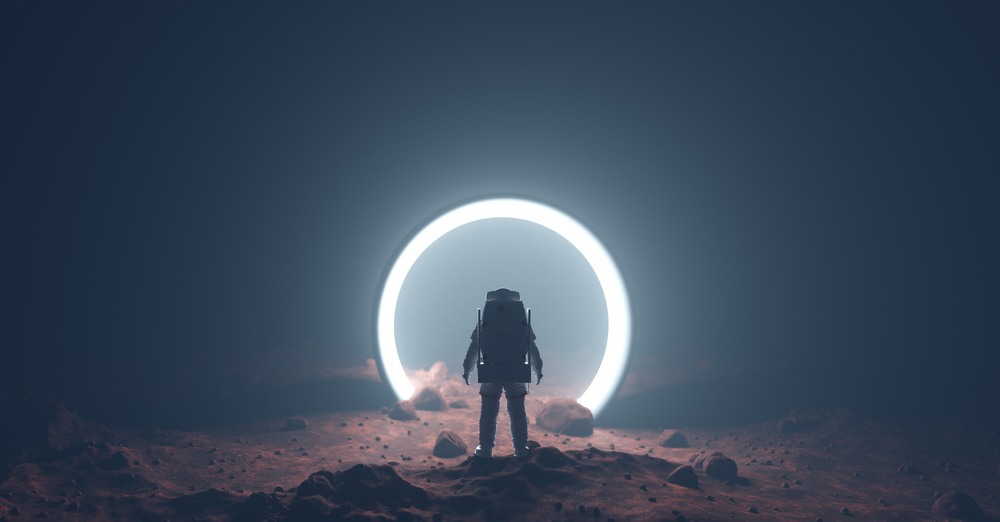
Modern science increasingly recognizes that intelligent, communicative life may be rare, while simple life may be common. This shift mirrors astrology’s emphasis on humility.
Not all life seeks to dominate or broadcast itself. Some forms of intelligence may be planetary, collective, or subtle. Astrology reminds us that consciousness expresses itself through many archetypes, not all of which resemble human ambition.
The universe may be full of life that does not announce itself because it has no need to.
Spiritual Interpretations of Cosmic Silence
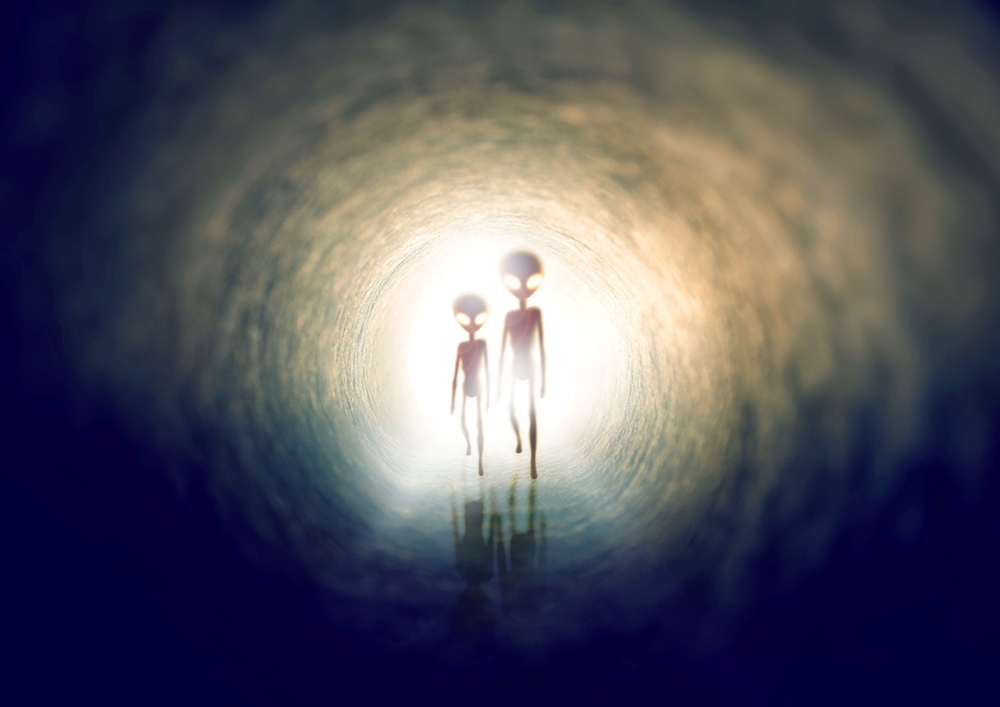
From a spiritual perspective, the silence of the stars can be seen as an invitation rather than a rejection. Ancient traditions often taught that the heavens respond to consciousness, not technology.
If contact is vibrational rather than mechanical, then ethical maturity and inner coherence may matter more than radio signals. Astrology supports this view by framing evolution as an inner journey reflected outwardly.
A civilization that cannot coexist peacefully with its own planet may not be ready to engage with others.
Humanity as the Test Case
If Berezin’s theory holds any truth, then humanity is not merely searching for aliens. Humanity is being observed by the universe itself, through natural law and consequence.
Every decision about growth, consumption, and power sends a signal. Not outward into space, but inward into the collective field of consciousness.
Astrology teaches that archetypes repeat until they are integrated. The universe may not need to destroy civilizations. Civilizations may destroy themselves by failing to integrate their own shadows.
Alone, For Now
The question of why we have not met aliens remains unanswered. Scientific theories range from hopeful to horrifying. Astrological insight adds another layer, suggesting that the silence of the cosmos reflects an initiation rather than an absence.
If we are alone, then the responsibility is immense. If we are first, then the choice we make about growth matters beyond imagination. The worrying part of Berezin’s theory is not that the universe is hostile. It is that intelligence without wisdom may be.
The stars may be quiet because they are waiting.
Waiting to see whether humanity chooses conquest or cooperation. Waiting to see whether expansion is guided by consciousness or compulsion. Waiting to see whether we become a civilization that erases others, or one that finally learns how to belong in the cosmos.
Until then, the silence remains. And in that silence, the universe asks us the same question we have been asking it all along. Who are you becoming?