

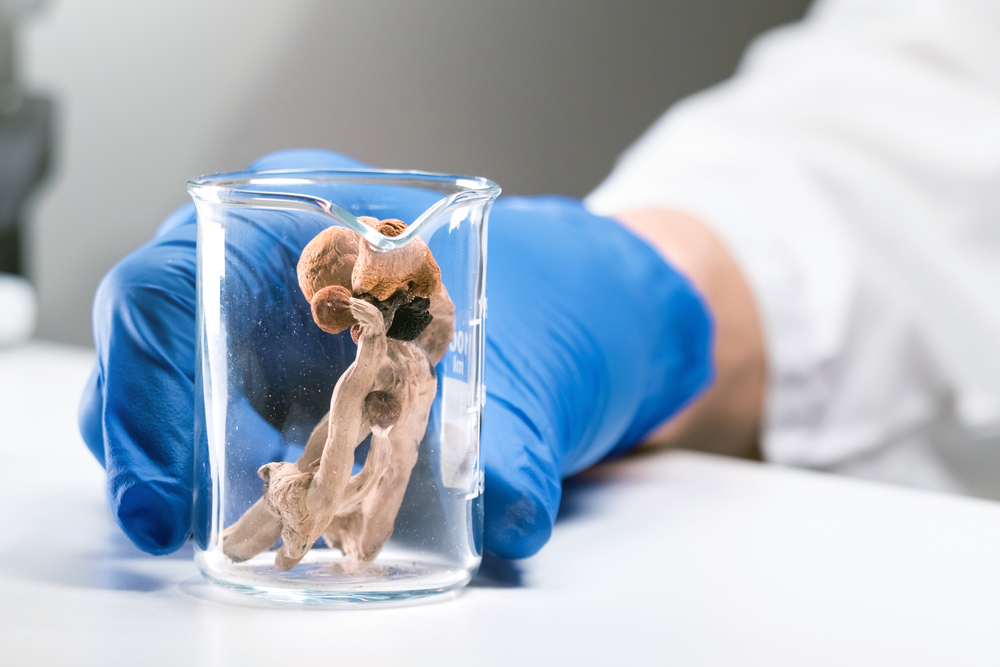
Study Finds Psilocybin Alters Brain Circuits Linked to Depressive Thought Patterns
Depression is often described as a disorder of mood, but for many people living with it, the more accurate description is a disorder of thought. Days are shaped by repetitive mental patterns, intrusive memories, and negative self talk that feels impossible to interrupt. This mental looping, known clinically as rumination, can make even small tasks feel overwhelming and can persist despite medication, therapy, or lifestyle changes. For decades, scientists have searched for ways to help the brain escape these deeply ingrained patterns rather than simply dampening symptoms.
New research is now offering one of the clearest biological explanations yet for why psilocybin, the psychedelic compound derived from magic mushrooms, continues to show promise in depression studies. Using advanced brain tracing techniques in mice, researchers have demonstrated that psilocybin appears to physically alter how brain circuits communicate with one another. Instead of reinforcing rigid internal feedback loops linked to depressive thinking, the drug seems to weaken them, potentially allowing the brain to adopt more flexible and adaptive patterns. These findings may help explain why psilocybin has produced rapid and lasting improvements in some people during clinical trials.

Image Credit: Shutterstock
Rumination and the Brain’s Feedback Loops
One of the most damaging aspects of depression is rumination, where negative thoughts repeat themselves with little variation or relief. This is not simply a bad habit of thinking but a neurological process in which certain brain circuits become overly reinforced through constant use. Over time, these circuits can dominate mental activity, making it difficult for new perspectives or emotional states to take hold.
Alex Kwan, a biomedical engineer at Cornell University, explains the importance of these loops in understanding depression. “Rumination is one of the main points for depression, where people have this unhealthy focus, and they keep dwelling on the same negative thoughts,” he says. According to Kwan, these feedback loops are not abstract concepts but measurable patterns of neural connectivity that can become self sustaining.
When these loops remain active, the brain tends to prioritize internal negative narratives over external information. This can make positive experiences feel muted or irrelevant while reinforcing feelings of hopelessness and self blame. Breaking or weakening these circuits has therefore become a key target in the search for more effective depression treatments.
Using a Virus to Map Brain Connectivity
To understand how psilocybin affects these feedback loops, researchers employed a highly unusual but powerful tool: a specially engineered rabies virus. In its natural form, the rabies virus spreads between neurons by crossing synapses, which makes it uniquely suited for tracing neural connections. Scientists modified the virus so that it could safely mark pathways without causing harm.
“Here we use the rabies virus to read out the connectivity in the brain,” Kwan explains. The modified virus carried fluorescent proteins that allowed researchers to visualize which neurons were connected and how signals traveled between different brain regions.
In the study, mice were given either a single dose of psilocybin or a placebo. One day later, the engineered virus was introduced. After a week, researchers examined the fluorescent trails left behind. By comparing the two groups, they were able to identify precise differences in how brain circuits had been rewired.
Image Credit: Shutterstock
What Changed Inside the Brain
The scans revealed that psilocybin caused significant shifts in how different regions of the brain communicated. Areas involved in sensory processing became more strongly connected to regions responsible for taking action. This suggests that the brain may become more responsive to external stimuli rather than remaining locked in internal thought patterns.
At the same time, connections within the cortex were reduced. In humans, this region is associated with higher order thinking and is believed to play a major role in negative thought feedback loops. By weakening these internal connections, psilocybin may reduce the brain’s tendency to recycle the same negative ideas.
Rather than producing uniform changes across the brain, psilocybin appeared to selectively reshape specific circuits. Some neurons formed new connections, while others reduced their existing ones. This targeted rewiring supports the idea that psilocybin promotes flexibility rather than simply increasing or decreasing overall brain activity.

Image Credit: Shutterstock
Why the Effects May Last
One of the most striking features of psilocybin therapy is how long its effects can persist. Unlike traditional antidepressants that must be taken daily, psilocybin has been associated with improvements lasting weeks or even months after a single guided session. Previous work from Kwan’s laboratory showed that these structural brain changes could endure over time.

Image Credit: Shutterstock
The new findings help explain this durability. By altering the underlying architecture of neural circuits, psilocybin may change how the brain processes thoughts long after the drug has left the body. Strengthened pathways linked to perception and action, combined with weakened rumination loops, could allow healthier patterns to become the new default.
This mechanism also aligns with reports from patients who describe feeling mentally reset after psilocybin therapy. Rather than suppressing emotions, the experience may help the brain reorganize itself in a way that supports more adaptive thinking.
Brain Activity Shapes Where Rewiring Happens
Another key discovery from the study is that brain activity itself appears to influence where psilocybin’s effects occur. The researchers found that circuits already active during exposure to the drug were more likely to be reshaped. This suggests that psilocybin does not work in isolation but interacts with what the brain is already doing.
This insight opens the door to combining psychedelics with other interventions. Techniques such as magnetic stimulation, psychotherapy, or guided cognitive tasks could potentially be used to activate specific circuits during treatment, increasing the likelihood that those pathways are rewired.
According to the research team, “By reducing some of these feedback loops, our findings are consistent with the interpretation that psilocybin may rewire the brain to break, or at least weaken, that cycle.” This approach could eventually allow clinicians to target the neural roots of depression with greater precision.

Image Credit: Shutterstock
What This Means for Depression Treatment
Depression affects more than 300 million people worldwide and remains one of the leading causes of disability. Many patients struggle with treatments that produce unwanted side effects, take weeks to work, or fail altogether. The need for alternative approaches has therefore become increasingly urgent.
Psilocybin represents a shift in how depression is understood and treated. Instead of focusing solely on chemical imbalances, this research frames depression as a condition marked by rigid neural patterns. Addressing those patterns directly could help people who have not responded to existing therapies.
The researchers caution that these findings come from studies in mice and must be confirmed in humans. Still, they help explain results already seen in clinical trials and observational studies, and they support what many participants report subjectively: a sense of being freed from repetitive, negative thinking.

Image Credit: Shutterstock
A Cautious but Promising Path Forward
Psilocybin is not yet a mainstream medical treatment, and it is not suitable for everyone. Careful screening, professional guidance, and controlled settings are essential. However, studies like this provide a deeper understanding of why psychedelic therapies may work when other options do not.
The findings also suggest an exciting future direction for mental health research. “Our study hints at an exciting avenue for future research to combine neuromodulation with psychedelics to precisely target [and rewire] specific circuits,” the researchers conclude. This could lead to more personalized and effective treatments.

Image Credit: Shutterstock
For people who feel trapped in cycles of depressive thought, the idea that the brain can be physically reshaped offers a powerful message. Rather than being permanently broken, the mind may be capable of change at a fundamental level, given the right tools and the right conditions.
Featured Image Credit: Shutterstock