


What a Harvard Scientist Thinks Mathematics Reveals About God
Sometimes the biggest questions do not announce themselves loudly. They arrive quietly, when you pause long enough to notice the order beneath the noise. The way the universe follows rules we did not write, the way patterns repeat from the smallest particle to the largest galaxy. At some point, curiosity shifts into something deeper. You stop asking how things work and start asking why anything works at all.

That shift is what has pulled so many people into a recent conversation at the crossroads of science and belief. Not because someone claimed to have found God in an equation, but because mathematics itself keeps revealing a universe that is strangely precise, almost intentional in its structure. What follows is not an attempt to settle an ancient debate, but an invitation to sit with the tension. To explore what science can explain, where it must remain silent, and why that silence continues to stir something meaningful within us.
When the Universe Walks a Narrow Path
One way scientists try to understand our universe is by looking at the rules it lives by. Not opinions or beliefs, but numbers that quietly govern everything from the birth of stars to the chemistry inside your body. These numbers are known as physical constants, and what makes them remarkable is not just that they exist, but that they fall within ranges that allow anything at all to form. It is this narrow window of possibility that Dr. Willie Soon, an astrophysicist and aerospace engineer, has pointed to as worthy of deeper reflection.
Consider what this means in practical terms. Gravity has just the right strength to pull matter together without collapsing everything into chaos. The rate at which the universe expands allows galaxies to form instead of flying apart too quickly. The masses of fundamental particles align in a way that makes stable atoms and chemical bonds possible. According to established scientific models, even modest shifts in some of these values could result in a universe with no stars, no chemistry, and no long term structure capable of supporting life as we know it.
It is this sensitivity that Dr. Soon references when he speaks about fine tuning. Some interpret this balance as a sign that the universe appears carefully calibrated, while others urge restraint, noting that identifying balance does not explain its origin. What science can say with confidence is that the universe operates within delicate constraints. How those constraints came to be, and what they ultimately signify, moves the discussion beyond measurement and into interpretation. The fine tuning argument lives in that space, not as a conclusion, but as an invitation to ask whether the order we observe is the result of chance, necessity, or something deeper still.
When Mathematics Leads Before Evidence Follows
Paul Dirac approached science with a different kind of trust. He believed that mathematics was not just a way to describe reality after the fact, but a guide capable of revealing it ahead of time. For him, a successful theory needed more than experimental agreement. It needed internal harmony. If the mathematics was elegant and consistent, he believed nature would eventually confirm it.
That conviction shaped his work in 1928, when he tried to reconcile quantum mechanics with Einstein’s theory of relativity. The equation he derived solved a theoretical problem, but it also pointed to particles that had never been observed. Rather than dismissing those implications, Dirac accepted them, allowing the mathematics to speak for itself. History would later show that this faith in structure over convenience was justified.

Dirac reflected on this relationship between mathematics and the physical world in a 1963 Scientific American article titled “The Evolution of the Physicist’s Picture of Nature.” He wrote, “It seems to be one of the fundamental features of nature that fundamental physical laws are described in terms of mathematical theory of great beauty and power, needing quite a high standard of mathematics for one to understand it.” He continued, “One could perhaps describe the situation by saying that God is a mathematician of a very high order, and He used very advanced mathematics in constructing the universe.”
Read carefully, these words were not meant to settle theological questions. They expressed wonder at a deeper mystery, that abstract symbols created by the human mind can map onto the universe with such precision. Dirac’s insight continues to resonate because it captures a boundary science often reaches, where explanation remains powerful, yet meaning remains open.
Why Anything Exists at All
One of the quietest mysteries in modern science begins with a simple expectation that never came true. According to our best understanding of the early universe, the Big Bang should have created matter and antimatter in nearly equal amounts. These two forms are opposites, and when they meet, they cancel each other out completely. If balance had been perfect, everything would have vanished into energy long before stars, planets, or people had a chance to exist. Yet here we are, in a universe made almost entirely of matter.
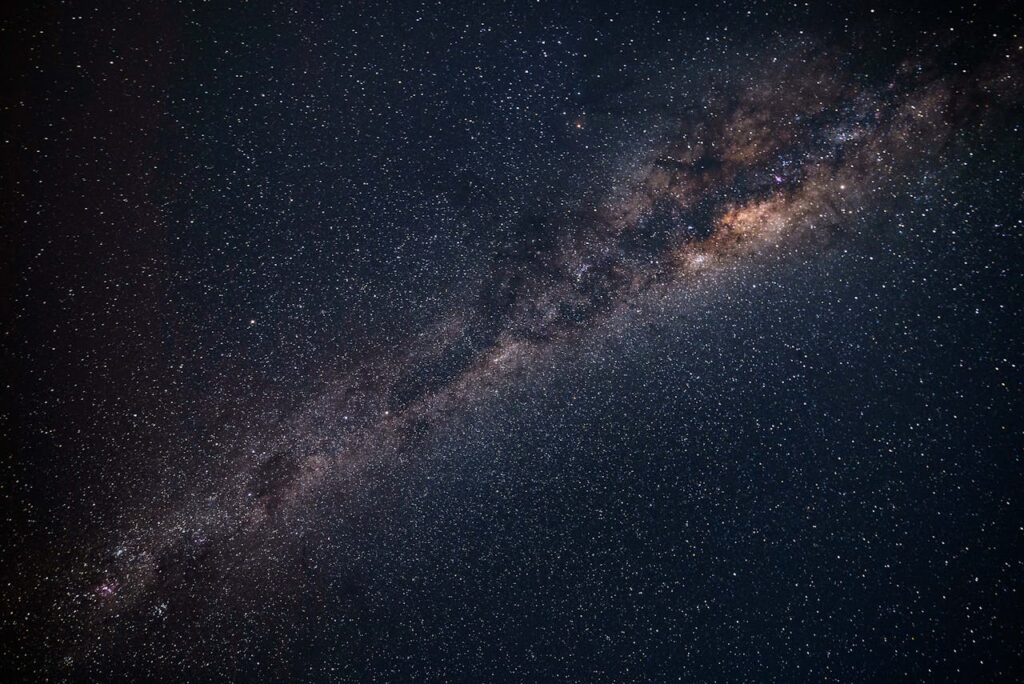
This imbalance is not a small detail. Matter dominates overwhelmingly, and that dominance is the reason galaxies formed, chemistry became possible, and life emerged at all. Physicists call this puzzle baryon asymmetry, and it remains one of the most actively studied questions in cosmology. Experiments using particle accelerators and observations of the early universe continue to search for mechanisms that could explain how matter gained the upper hand. CERN, one of the world’s leading physics research centers, has emphasized that despite decades of investigation, the reason for this imbalance is still unknown.
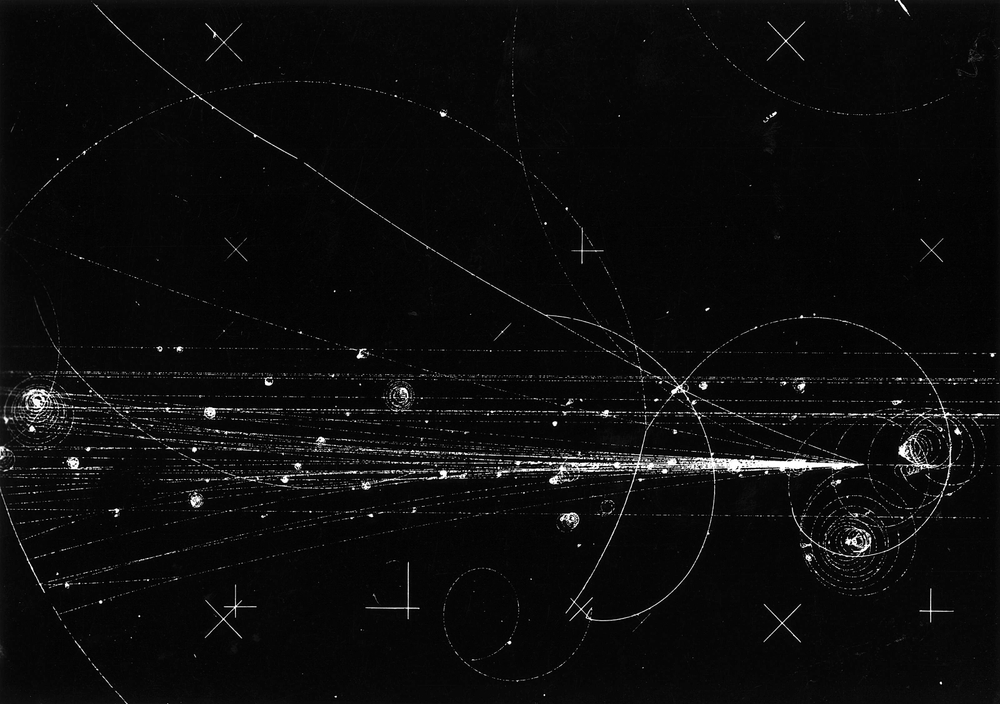
What matters just as much as the mystery itself is how science responds to it. Mainstream physics does not treat the matter antimatter imbalance as evidence of intention or design. Instead, it treats it as a signal that our understanding is incomplete. The question is not framed as why the universe chose matter, but how physical processes might have allowed it to prevail. This distinction reflects a broader principle of science, which seeks explanations grounded in testable mechanisms, even when the answers remain out of reach. In that space of uncertainty, the mystery endures not as a conclusion, but as an open invitation to keep asking how existence became possible at all.
What We Do With What We Do Not Know
There is a moment in every honest search for truth when answers stop arriving and responsibility begins. Science can map the universe with astonishing clarity, but it cannot tell us how to live inside that knowledge. Belief can offer meaning, but it cannot replace careful inquiry. Somewhere between certainty and doubt is a space where maturity is tested, not by what we claim to know, but by how we respond to what remains unresolved.
This is where conversations about God and mathematics often become revealing. Some people rush to conclusions, eager to close the gap between mystery and meaning. Others retreat into dismissal, uncomfortable with questions that do not fit neatly into equations or experiments. Both reactions miss something important. Uncertainty is not a failure of understanding. It is a condition of growth. The ability to hold unanswered questions without forcing them into ideology is what allows wisdom to develop alongside knowledge.

What matters most is not whether mathematics proves or disproves anything metaphysical, but how we let discovery shape our humility. Each breakthrough in physics reminds us that reality is larger than our current explanations. Each unanswered question invites restraint, curiosity, and responsibility in how we speak about truth. When we learn to treat mystery not as a threat, but as a teacher, science and belief stop competing for authority and begin pointing us toward the same discipline. Pay attention. Stay honest. And recognize that the search itself carries meaning, even when certainty remains out of reach.
The Question That Refuses to Leave Us
In the end, this conversation is less about proving anything and more about noticing what the universe keeps inviting us to consider. Science shows us patterns, consistency, and laws that hold across unimaginable distances and times. It gives us tools to explore reality with precision and discipline, but it does not tell us what to do with the wonder those discoveries create. That moment of wonder is where many people pause, not because they have reached an answer, but because they sense that understanding alone does not exhaust meaning.
What we choose to do in that pause matters. We can rush to certainty, or we can learn to live with questions that stretch us. The universe may never hand us a final explanation for its existence, but it continues to offer something just as powerful, an opportunity to think more deeply, live more humbly, and remain open to truths that unfold over time. When we stop demanding closure and start paying attention, the question itself becomes a guide, reminding us that curiosity, when held with care, can be a form of wisdom.
Featured Image from Shutterstock