


What a Viral AI Family Image Says About Us
Artificial intelligence has a reputation for being futuristic, imaginative, and surprisingly human-like. From writing poems to generating realistic portraits, AI tools increasingly feel capable of understanding us. That illusion shattered for many people this week after a lesbian couple shared the unexpected result of a simple, heartfelt request.
They asked AI to imagine what their future family might look like. What came back was not just wrong, but revealing. The image included a man who was not part of their relationship, turning a personal, hopeful prompt into a viral example of how shallow AI understanding can be beneath the surface.
The image spread quickly online, sparking conversations far beyond one couple’s experience. It raised questions about bias, inclusivity, and the gap between visual realism and genuine understanding in artificial intelligence.
The Prompt That Started It All
The couple’s request was straightforward. They wanted to see a creative depiction of themselves as a future family, something playful and meaningful that reflected their relationship and hopes. Like many users, they trusted AI to interpret the context they provided and build something aligned with it.
Instead, the generated image defaulted to a traditional nuclear family structure. Two women appeared alongside a man who had no place in their real lives or imagined future. The result felt jarring, not because it was malicious, but because it ignored the most fundamental detail of the prompt.
What was meant to be a moment of joy turned into confusion. The couple shared the image online, partly out of disbelief and partly because they sensed something larger at play. They were right.
Why the Image Went Viral So Quickly

The reaction was immediate. Thousands of people recognized the problem instantly, not as a one-off glitch, but as a pattern they had seen before. Comment sections filled with a mix of frustration, humor, and concern.
Some users laughed at the absurdity. Others expressed anger or disappointment. Many LGBTQ+ users shared similar experiences, saying AI tools often struggled to represent families, relationships, and identities that fall outside traditional norms.
The virality came from relatability. This was not an abstract technical failure. It was a deeply human moment where technology failed to see people as they are.
What AI Actually Does When You Ask for a Family
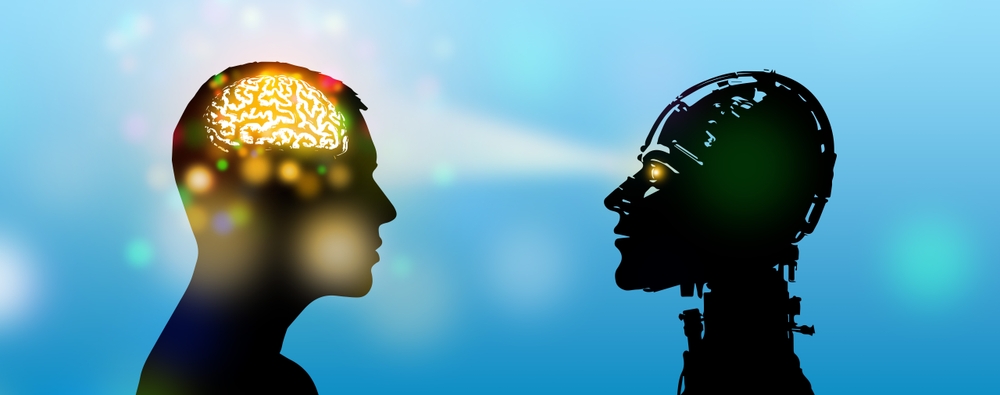
Despite how natural AI outputs can feel, these systems do not understand relationships, love, or identity. They do not grasp what a family means on an emotional or social level. Instead, they predict what comes next based on patterns in data.
When asked to generate an image of a family, AI pulls from countless examples in its training material. Historically, those examples overwhelmingly depict families as a mother, a father, and children. Even when prompts specify otherwise, the statistical weight of that pattern can override nuance.
In this case, the AI did not choose to include a man. It defaulted to what it has seen most often. The result exposes a key limitation: realism in appearance does not equal understanding.
Training Data and Historical Bias
Artificial intelligence reflects the world it is trained on. That world, at least in recorded media, has long centered heterosexual, traditional family structures. Same-sex families exist in the data, but they are vastly outnumbered.
This imbalance matters. When AI is asked to imagine something ambiguous or socially complex, it tends to fall back on the most common patterns available. That often means reinforcing outdated norms.
Some commentators noted that the image felt like a reflection of centuries-old assumptions about family. Not because the AI believes in them, but because it has absorbed them statistically.
The Illusion of Neutral Technology
One of the most persistent myths about artificial intelligence is that it is neutral. In reality, AI systems inherit the biases, gaps, and blind spots of human-created data.
The viral image reminded many people that technology does not exist in a vacuum. It is shaped by history, culture, and power structures. When those structures exclude certain groups, AI reproduces that exclusion.
This does not mean AI is intentionally discriminatory. It means that neutrality is impossible when the source material is uneven.
How Realism Masks Shallow Understanding
The generated image looked convincing. The lighting, expressions, and composition resembled a real family photograph. That realism made the error more unsettling.
People often assume that if something looks right, it must be right. AI exploits that assumption unintentionally. The more realistic the output, the easier it is to forget that there is no comprehension behind it.
The image was not a misunderstanding in the human sense. It was a statistical guess that happened to look polished.
Reactions From the LGBTQ+ Community
For many LGBTQ+ users, the image struck a nerve. Representation is not just about visibility. It is about being accurately seen.
Some users said the moment felt familiar, like filling out forms that only allow one mother and one father, or seeing media portray families that never look like their own. The AI image became a symbol of that broader experience.
Others emphasized that while the mistake was frustrating, it was also useful. It revealed exactly where AI still falls short and why human oversight remains essential.
Developers Respond and the Bigger Conversation
While the viral moment was driven by users, it quickly caught the attention of people working in tech and AI ethics. Discussions resurfaced about how models are trained and how prompts are interpreted.
Experts pointed out that improving inclusivity is not just about adding more diverse images. It requires better contextual understanding, clearer guardrails, and constant evaluation.
Some argued that AI should ask clarifying questions when prompts involve personal or social nuance. Others said that responsibility ultimately lies with developers to anticipate these gaps.
Similar Incidents That Show a Pattern

This was not the first time AI defaulted to a traditional structure despite specific instructions. Users have reported similar outcomes when generating images of:
• Same-sex couples
• Single-parent families
• Multigenerational households
• Families with non-binary parents
Each incident reinforces the same lesson. When context becomes complex, AI often reverts to the safest statistical assumption.
Why This Matters Beyond One Image
At first glance, this might seem like a harmless mistake. No one was physically harmed. No policy was violated. But representation has real-world consequences.
AI tools are increasingly used in education, marketing, healthcare, and storytelling. If they consistently misrepresent certain groups, those distortions scale quickly.
The image matters because it reflects who technology assumes belongs.

Can AI Become More Inclusive Over Time
Many experts believe it can. Progress depends on several factors:
• More diverse training data
• Better prompt interpretation
• Ongoing evaluation by diverse human teams
• Clear accountability from companies
Change is possible, but it is not automatic. It requires intention.
A Reflection on Progress and Caution
Artificial intelligence is advancing rapidly. Its outputs grow more polished every year. But polish should not be confused with wisdom.
The viral image served as a pause button. It reminded people that behind every impressive result is a system guessing its way forward.
Until AI can truly understand context, identity, and nuance, human judgment remains irreplaceable.
What AI Bias Really Reflects

It is tempting to frame moments like this as purely technical failures. Flawed data. Incomplete training. Algorithms that need fixing. While all of that is true, it is also incomplete.
AI bias is not created in isolation. It is inherited.
Artificial intelligence learns from human artifacts. Books, images, films, advertisements, records of how we have described ourselves for generations. When those artifacts overwhelmingly present one version of family, one version of normal, one version of belonging, AI simply echoes them back.
In that sense, bias in AI is not a machine problem. It is a mirror. It reflects humanity’s unfinished inner work around inclusion, identity, and imagination.
The Family Archetype We Still Live By
For centuries, the dominant family archetype has been remarkably narrow. Mother. Father. Children. Variations existed, but they were rarely centered, archived, or celebrated.
That archetype did not just shape laws and institutions. It shaped stories. Fairytales. Religious texts. Schoolbooks. Family albums. Over time, it became embedded in the collective consciousness as default rather than one possibility among many.
When AI reaches for an image of family, it is not inventing that archetype. It is retrieving it.
The surprise people felt was not that the AI produced a man. It was that, in a world that feels more diverse than ever, the old template still surfaced so easily.
Lived Identity Versus Inherited Templates
This is where the emotional weight of the story truly lives.
The couple who prompted the image were expressing a lived identity. Their reality. Their relationship. Their future as they understand it.
The AI responded with an inherited template.
That tension exists far beyond technology. Many people spend their lives navigating the gap between who they are and who they are expected to be. Between identities lived internally and stories handed down externally.
AI did not create that tension. It revealed it.

Technology as a Reflection of Human Evolution
We often talk about technological progress as if it is separate from human growth. Faster systems. Smarter models. More powerful tools.
But technology evolves at the pace of the stories we feed it.
If our collective narratives lag behind our lived realities, our tools will reflect that lag. No matter how advanced they appear.
This is why realism in AI outputs can feel unsettling. The surface looks modern. The underlying assumptions can be ancient.
Redefining Family, Belonging, and Identity
Moments like this are not just critiques. They are invitations.
They invite us to ask what stories we are still telling, consciously or unconsciously. Whose lives are centered in our cultural memory. Whose families are archived, celebrated, and normalized.
Redefining family does not require erasing tradition. It requires expanding the frame.
Belonging grows when more stories are allowed to exist side by side, without one being treated as default and others as exceptions.

Progress Requires More Than Better Tools
There is a tendency to believe that the solution is purely technical. Better datasets. More diverse inputs. Smarter safeguards.
Those matter. But they are not enough.
Progress also requires better stories. Stories that reflect how people actually live, love, and build families today. Stories that are visible enough to become part of the collective memory that future systems learn from.
Deeper awareness must accompany innovation.
A Motivational Call Forward
The viral image shocked the internet because it revealed a gap. Not just in AI, but in us.
Closing that gap is not the job of engineers alone. It belongs to storytellers, educators, families, and individuals who choose to live visibly and authentically.
Every shared story expands the dataset of humanity.
Every redefined norm makes it easier for the next generation, human or artificial, to imagine a wider world.
Technology will continue to mirror us. The question is what we choose to show it.