

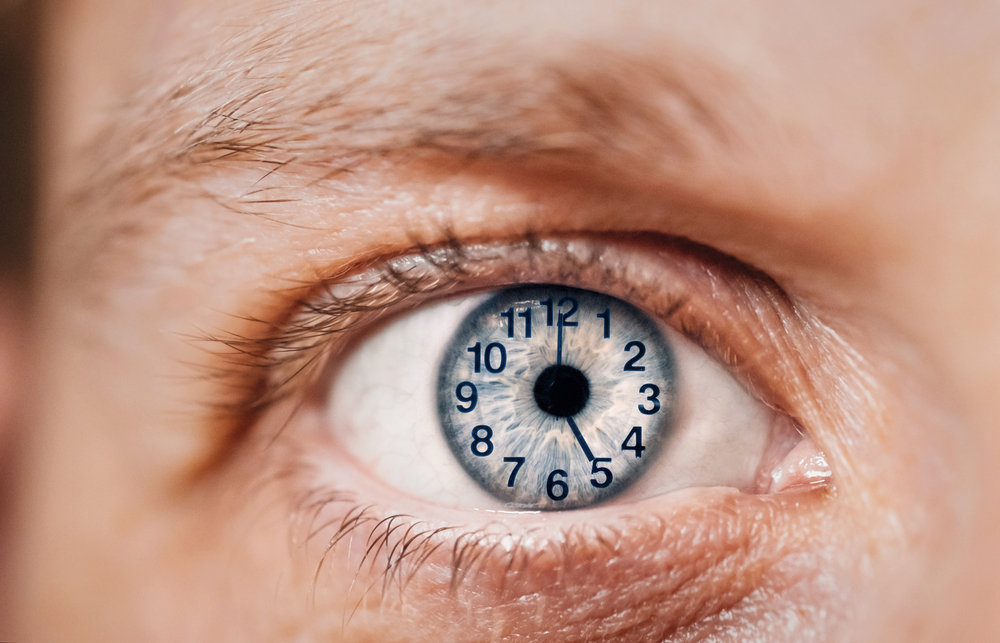
There is a moment that seems to arrive quietly for many adults. You hear a song from a decade ago and are stunned that it feels recent. You realize a major life event happened far longer ago than you thought. Years begin to stack up with an unsettling smoothness, as if time itself has quietly pressed the fast-forward button.
This experience is so widespread that it feels almost universal. People across cultures, professions, and lifestyles report the same sensation. Childhood felt slow and expansive. Adulthood feels compressed. The weeks pass quickly, the months blur together, and entire years seem to vanish before we have fully registered them.
For a long time, this phenomenon was explained away as nostalgia or sentimentality. But modern neuroscience, psychology, and cognitive science now suggest something far more interesting. The feeling that time speeds up with age is not an illusion. It is a predictable outcome of how the human brain changes over the lifespan and how experience itself is processed.
Recent research has begun to reveal that time perception is not controlled by a single internal clock. Instead, it emerges from attention, memory, novelty, neural signaling, and meaning. As these elements shift with age, our experience of time shifts with them. Understanding why this happens does more than satisfy curiosity. It reveals how deeply perception shapes reality and hints that we may have more influence over our experience of time than we once believed.
The Brain Does Not Measure Time Like a Clock
Humans often assume that the brain tracks time in a mechanical way, similar to a stopwatch ticking away inside the mind. In reality, the brain has no dedicated timekeeping organ. Instead, it constructs a sense of time indirectly through experience.
Moments feel long or short depending on how much information the brain processes during them. When many sights, sounds, emotions, and thoughts are registered, time feels rich and extended. When fewer details are processed, time feels thin and compressed.
This is why a single minute in a stressful situation can feel endless, while hours spent absorbed in a familiar activity can pass unnoticed. Time perception is not about duration. It is about density.
As people age, the way the brain handles information gradually changes. These changes are subtle, but over years and decades, their effects compound. The result is a powerful shift in how time is experienced.
A Closer Look at the Aging Brain and Time Perception

One of the most revealing studies on this topic came from researchers analyzing brain scans collected through the Cambridge Centre for Ageing and Neuroscience, a large project examining how the brain changes across adulthood. Participants between the ages of 18 and 88 were scanned while watching an eight-minute episode of the television series Alfred Hitchcock Presents.
This specific clip was chosen because it reliably synchronizes brain activity across viewers. In other words, most people process its events in a similar way. That consistency allowed researchers to compare how brains of different ages segmented and interpreted the same unfolding narrative.
Using functional MRI data and a computational method designed to detect shifts in neural activity, the scientists discovered a striking pattern. Younger brains transitioned between distinct states of activity more frequently. Older brains remained in the same state for longer periods.
In simple terms, the brains of older adults appeared to register fewer separate events during the same amount of time. Each neural state lasted longer, and fewer boundaries were detected between moments.
This finding offers a powerful clue. If the brain divides experience into fewer segments, time would feel shorter in retrospect. With fewer mental markers, the passage of time becomes smoother and more compressed.
Neural States, Events, and the Experience of Time
To understand why this matters, it helps to think of experience as a sequence of internal snapshots. Each snapshot represents a meaningful change in what is happening, a shift in context, emotion, or attention.
In younger individuals, these snapshots occur frequently. New environments, unfamiliar sensations, and heightened attention lead to rapid transitions between mental states. Time becomes filled with events.
As the brain ages, it becomes more efficient. It learns which details are essential and which can be safely ignored. This efficiency supports functioning, but it also means fewer details are registered as distinct events.
The study’s authors suggested that this reduction in neural state transitions may be linked to a process called neural dedifferentiation. As the brain ages, patterns of activity become less specialized. Regions that once responded selectively to specific stimuli begin to respond more broadly.
This generalization may make it harder for the brain to clearly distinguish where one moment ends and another begins. When experiences blur together at the neural level, time itself appears to move faster.
An Ancient Idea with Modern Evidence
Interestingly, this idea aligns with philosophical insights that date back thousands of years. Aristotle proposed that time is perceived through change. The more changes we perceive, the longer time seems. The fewer changes we notice, the shorter it feels.
Modern neuroscience appears to support this ancient intuition. Time is not experienced as a steady stream. It is experienced as a sequence of perceived changes.
When change becomes less noticeable, time contracts.

Two Time Scales Living Side by Side
Another important piece of the puzzle comes from the idea that humans experience time on two levels. There is social time and psychological time.
Social time is linear and standardized. It is measured in hours, days, months, and years. Psychological time is subjective and nonlinear. It stretches and compresses depending on perception.
As people age, these two time scales drift further apart. A year represents a much smaller fraction of life at fifty than it does at five. Even without any neurological changes, this proportional difference alone can alter how long a year feels.
A single year is twenty percent of a five-year-old’s life. For a fifty-year-old, it is only two percent. The brain intuitively understands this ratio, and it influences perception.
This logarithmic scaling of time helps explain why earlier years feel expansive and later years feel brief, even when daily life is full.
Memory as the Architect of Time
Memory plays a central role in how time is experienced. When looking back on a period of life, the brain does not replay every moment. It reconstructs time using memorable events as anchors.
Periods filled with novelty, emotion, and change contain many anchors. They appear long in retrospect. Periods dominated by routine contain few anchors. They collapse into a blur.
This is why a single week-long vacation can feel longer in memory than several months of routine work. The vacation created many distinct memories. The routine did not.
As people age, life often contains fewer major milestones. Childhood and early adulthood are filled with first experiences. Later adulthood tends to involve maintenance rather than discovery.
Without frequent new landmarks, memory becomes smoother. Time feels as though it has accelerated, even if each day was lived fully while it happened.
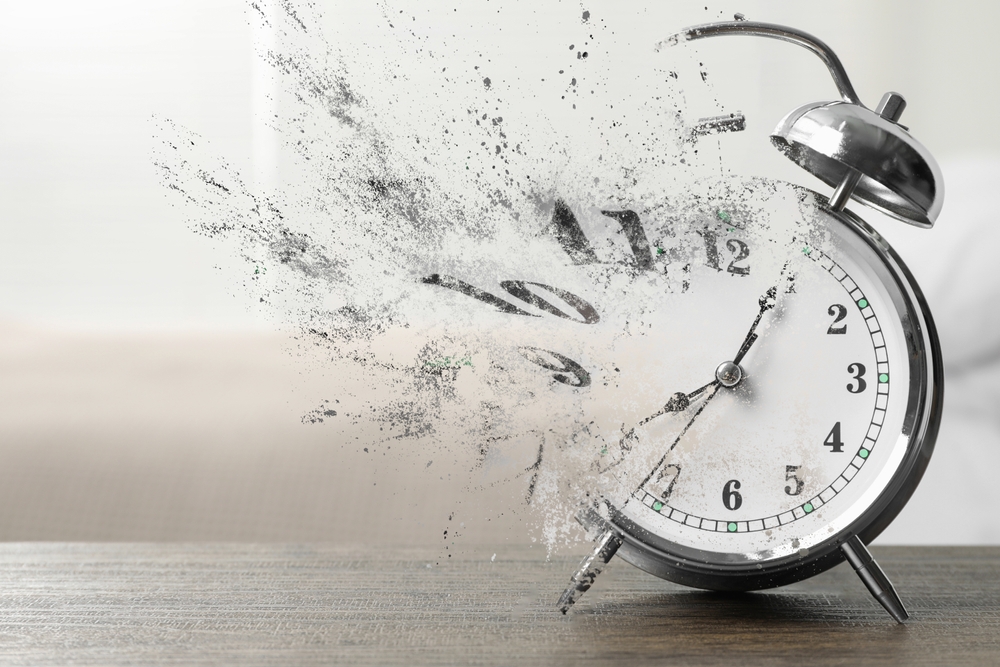
Routine, Autopilot, and the Compression of Time
Routine is not inherently negative. It provides stability and reduces cognitive load. But it also encourages the brain to operate on autopilot.
When the brain knows what to expect, it pays less attention. Less attention means fewer details are processed and stored. Fewer details mean fewer memories.
Looking back, weeks of routine collapse into a single impression. Months seem to disappear. Years feel shorter than they should.
Importantly, routine often does not feel fast in the moment. It feels fast only in retrospect. This is why people are often surprised by how much time has passed.
Attention, Distraction, and Modern Life
Attention is one of the most powerful influences on time perception. Focused attention expands time. Fragmented attention compresses it.
Children naturally give full attention to their surroundings. Adults divide attention across responsibilities, worries, and digital distractions. Phones, notifications, and constant stimulation fragment experience into shallow pieces.
Even when many hours are spent engaged with content, little of it may be deeply processed or remembered. This fragmented attention reduces the number of meaningful mental snapshots created each day.
The result is a shrinking sense of time, even in lives that are busy and full.

The Role of Sleep and Mental Fatigue
Sleep quality also influences how time is perceived. A well-rested brain processes information more efficiently. It notices details, forms memories, and maintains focus.
When sleep is poor, the brain struggles to encode experience. Days feel rushed and indistinct. Over time, this creates the impression that weeks and months vanished.
Modern lifestyles often interfere with sleep through stress, irregular schedules, and late-night screen use. These factors quietly accelerate the subjective passage of time.
Physical Changes in Neural Processing
There are also physiological changes that affect time perception. As the brain ages, neural communication becomes slightly slower. Signals take longer to travel across increasingly complex networks.
This does not make older brains less capable. In many ways, they are more selective and refined. But slower processing means fewer perceptual frames are generated per unit of time.
Some researchers compare this to a reduction in frames per second. With fewer frames, the mental movie of life appears to move faster.
This physical shift works alongside psychological and lifestyle factors, reinforcing the sense that time is speeding up.
Why Scientists Do Not Agree on a Single Explanation

Despite strong evidence, scientists do not agree on a single cause for time acceleration. Some emphasize neural changes. Others focus on memory, routine, or proportional time scaling.
Most now agree that no single factor explains the phenomenon. Time perception emerges from the interaction of biology, psychology, and lived experience.
It is shaped by how we think, what we notice, how we rest, and how we engage with the world.
Can Time Be Slowed Down?
While aging cannot be reversed, perception can be influenced. Research consistently shows that introducing novelty into life expands subjective time.
Learning new skills, traveling to unfamiliar places, changing routines, or even walking a different route to the store can force the brain to pay attention again.
Mindfulness also plays a powerful role. Paying deliberate attention to sensory experience increases the amount of information processed in each moment. Even familiar environments can feel richer when attention is renewed.
Social connection, creativity, and curiosity generate meaningful memories that act as anchors in time. These anchors stretch the past and make life feel fuller.
A Deeper Perspective on Time and Consciousness
From a broader perspective, these findings raise intriguing questions about consciousness itself. If time is experienced through perception, then time is not just something we move through. It is something we actively create.
The sense of time accelerating may be less about time running out and more about awareness narrowing. When attention contracts, time contracts with it.
This suggests that expanding awareness, not just filling schedules, may be the key to reclaiming time.
Living a Longer Life in the Same Number of Years
The feeling that time speeds up with age is not a failure of awareness. It is a natural outcome of how the brain adapts and how life evolves.
Time itself remains steady. Our relationship with it changes.
By staying mentally engaged, open to new experiences, and attentive to the present, it is possible to make time feel less rushed and more meaningful. The years may still pass, but they do not have to feel empty or invisible.
Each moment, when truly noticed and remembered, has the power to stretch time in its own quiet way.