

When an Ancient Pattern Helped Us Rethink the Future of Technology
There are moments in science when progress does not come from force, speed, or sheer complexity, but from listening more closely to patterns that have been whispering to us all along. This is one of those moments.
Recently, physicists ran an experiment that sounds almost poetic in its simplicity. They took the Fibonacci sequence, a number pattern many of us first encountered in school or through nature documentaries, and fed it into a quantum system using carefully timed laser pulses. What happened next surprised even them. The system did not just become more stable. It appeared to enter an entirely new phase of matter, one that preserved fragile quantum information far longer than expected.
At first glance, this may sound like an abstract breakthrough confined to laboratories and academic journals. But beneath the physics lies a deeper lesson about balance, resilience, and the way order can emerge without rigidity. And that lesson has something to say to all of us.
The Quiet Power of an Ancient Pattern
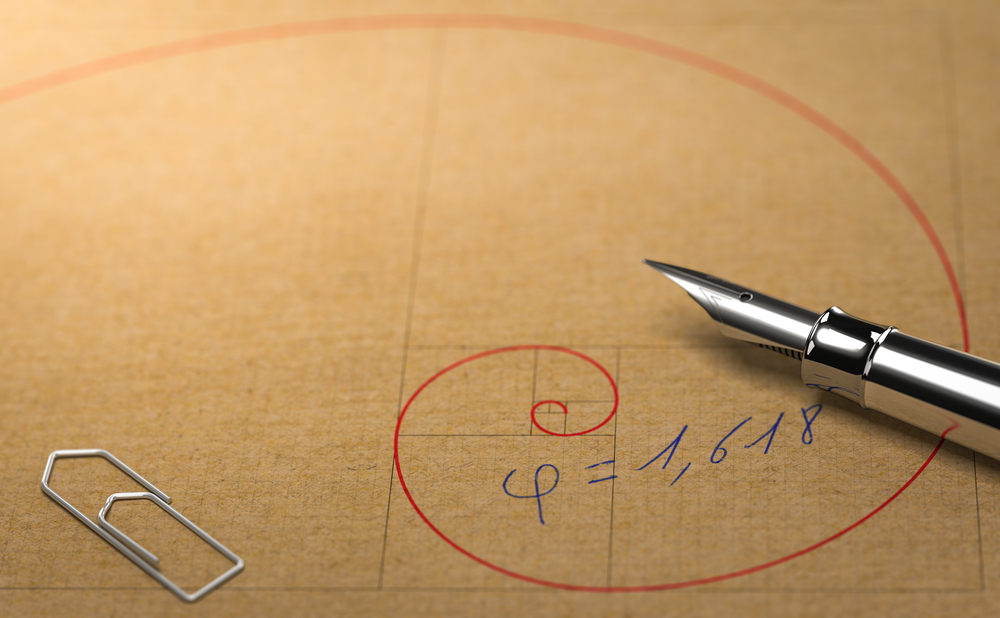
The Fibonacci sequence is deceptively simple. Each number is created by adding the two that came before it. Over time, this creates a pattern that never exactly repeats, yet never dissolves into randomness either. It is ordered, but not rigid. Predictable, yet alive.
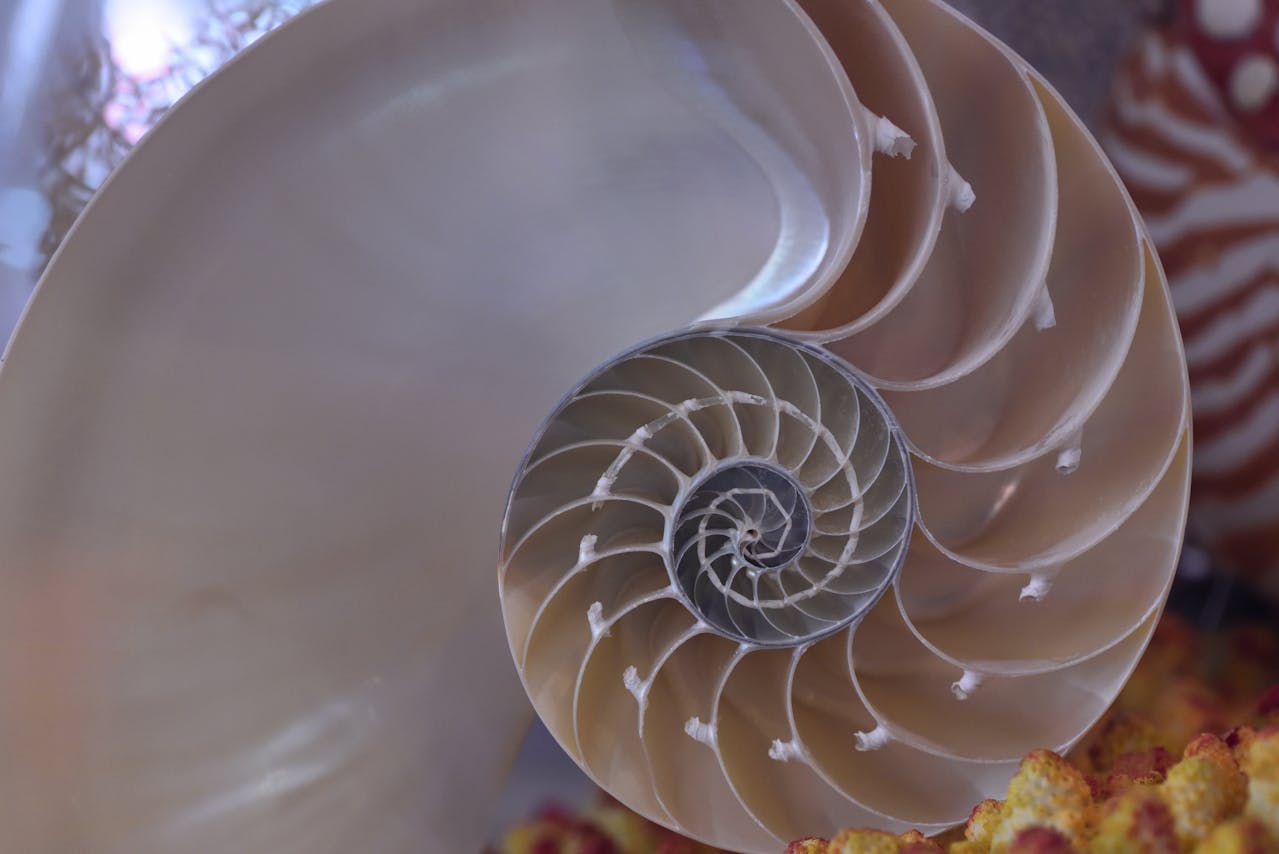
We see this pattern everywhere. In the spirals of seashells. In the branching of trees. In the arrangement of leaves that allows plants to capture sunlight efficiently. Nature seems to favor systems that are stable enough to endure, but flexible enough to adapt.

For centuries, the Fibonacci sequence was admired mainly for its beauty and mathematical elegance. Few would have guessed that it might one day help solve one of the most stubborn problems in modern computing. Yet this is precisely what drew physicists to it.
Quantum systems, like natural systems, struggle when forced into overly strict patterns. Too much order, and they become brittle. Too much randomness, and they fall apart. The Fibonacci sequence offered something rare: a rhythm that lives in the space between.
Why Quantum Computers Are So Fragile
To understand why this discovery matters, we need to understand the problem it addresses. Classical computers store information as bits — ones or zeros. Quantum computers use qubits, which can exist in multiple states at the same time. This allows them to explore vast numbers of possibilities simultaneously.
The promise is enormous. Quantum computers could one day help design new medicines, model complex chemical reactions, optimize global logistics, and tackle problems that overwhelm even the fastest classical machines.
But there is a catch. Qubits are extremely delicate. Heat, vibration, electromagnetic noise, or even tiny fluctuations in their environment can cause them to lose their quantum state. When that happens, the information they carry disappears.
This loss of coherence is the central challenge of quantum computing. Engineers can build qubits and manipulate them, but keeping them stable long enough to perform useful calculations has proven extraordinarily difficult. In many systems, quantum information survives for only fractions of a second.
Extending that lifespan by even a small amount is considered a major achievement.
A Small Experiment With a Big Insight
The experiment that changed the conversation involved just ten atoms arranged in a straight line. Each atom functioned as a qubit. Under normal conditions, the qubits at the ends of this chain could retain their quantum state for about 1.5 seconds. The researchers then introduced a subtle but radical change. Instead of applying laser pulses at evenly spaced intervals, they timed the pulses according to the Fibonacci sequence. The gaps between pulses followed the same non repeating yet ordered pattern found in the ancient number series. The result was dramatic. The qubits maintained their quantum state for approximately 5.5 seconds, nearly four times longer than before. In the world of quantum computing, that difference is profound.
According to the study’s lead author, Philip Dumitrescu, the explanation touches on something even more fundamental than hardware. “What we realized is that by using quasi-periodic sequences based on the Fibonacci pattern, you can have the system behave as if there are two distinct directions of time,” he explained in an interview with Gizmodo. In other words, the system was no longer being driven by a single, rigid clock. Time itself, as experienced by the qubits, became more complex and more forgiving.
When Time Refuses to Repeat Itself
Physicists describe the resulting behavior as a new phase of matter known as a temporal quasicrystal. This concept is distinct from anything previously discussed in this article because it is not simply about improved stability or longer lasting qubits. It represents a fundamentally different way a system can organize itself over time. Instead of following a repeating cycle or drifting into disorder, the system develops long range structure in its evolution without ever looping back on itself.
What makes this significant is how it reframes the role of time inside a quantum system. In conventional setups, repeating control sequences can unintentionally amplify the same imperfections again and again. Errors do not just occur. They echo. A temporal quasicrystal avoids this trap by ensuring that no moment in time is an exact copy of another. Because the system never retraces the same steps, small mistakes are less likely to align and compound.

In this experiment, the quasicrystal structure emerged specifically at the boundaries of the system, where quantum information is typically most vulnerable. These edges are often where coherence breaks down first. Here, however, the non repeating temporal order altered how disturbances propagated, preventing them from coherently stacking up in the same locations.
Dumitrescu described this effect in a press release associated with the study published in Nature, saying, “With this quasi periodic sequence, there’s a complicated evolution that cancels out all the errors that live on the edge. Because of that, the edge stays quantum mechanically coherent much, much longer than you’d expect.”
The key insight is not that randomness saved the system, but that carefully structured variation did. The temporal quasicrystal introduced diversity into the system’s evolution without sacrificing overall coherence. Time stopped behaving like a metronome and began acting more like a resilient landscape, one that absorbed stress instead of reflecting it back onto itself.
What This Means Beyond Physics
Although the experiment involved only ten atoms, its implications extend far beyond the laboratory. Stability remains one of the primary barriers preventing quantum computers from becoming practical tools that can operate reliably outside controlled research environments.
If Fibonacci based timing can be scaled to larger systems, it could significantly reduce the need for heavy error correction, which is currently one of the most limiting challenges in quantum engineering. Reducing that burden would move researchers closer to building machines capable of addressing complex real world problems that classical computers struggle to solve.
There is also a broader lesson embedded in this result. For decades, engineers have approached quantum control by imposing strict order. They rely on precise schedules, repetitive control sequences, and rigid timing in an attempt to suppress uncertainty.
This experiment suggests that such rigidity may itself introduce vulnerability rather than resilience.
Instead of forcing order, the researchers allowed structured unpredictability to guide the system. They adopted a pattern that mirrors how many natural systems maintain stability over time. The result was coherence without rigidity and structure without mechanical repetition.
A Mirror Held Up to Our Own Lives
When I read about this experiment, I could not help but see a reflection of how many of us try to live.
We are taught to optimize every minute, repeat the same routines, and eliminate uncertainty wherever possible. We chase stability by clinging to rigid schedules and fixed identities. And when life inevitably disrupts those patterns, we interpret it as failure.

But nature tells a different story. Growth does not come from perfect repetition. Resilience does not come from rigidity. Systems endure when they are allowed to adapt.
The Fibonacci sequence does not repeat, yet it remains coherent. Each step depends on what came before it, but it is not trapped by the past. That balance is what allows it to appear again and again in living systems.
Perhaps the lesson is that stability is not about control. It is about rhythm.
Ancient Wisdom, Future Technology
The Fibonacci sequence was described in the early thirteenth century, long before electricity, computers, or lasers. And yet here it is, shaping the future of one of the most advanced technologies humanity has ever attempted to build.
This discovery reminds us that progress does not always mean inventing something entirely new. Sometimes it means seeing old ideas with fresh eyes. Sometimes it means recognizing that the solutions we need have been quietly waiting for us to catch up.
As quantum research continues, scientists will test whether this approach works across larger systems and different types of quantum hardware. If it does, Fibonacci-based control may become a foundational technique for the next generation of quantum machines.
But even if you never touch a quantum computer, the deeper insight remains.
Order does not have to be rigid to be strong. Stability does not require sameness. And sometimes, the most powerful way forward is not to force life into a straight line, but to move with a pattern that knows how to bend without breaking.
That is not just a lesson for machines. It is a lesson for us.
Featured Image from Freepik