

Scientists Are Testing Whether Adults Can Regrow Lost Teeth
For most of our lives, we are taught to accept loss as final. A scraped knee heals. A broken bone repairs itself. But a lost tooth is treated as a closed chapter, a problem to manage rather than a system to restore. We adapt with replacements and workarounds, rarely questioning why the body stops short here, or whether it truly has to.

That question is now being tested in a very real way. In Japan, researchers have begun working with adults to see whether the human body still carries the ability to grow what it once did naturally. What was long dismissed as impossible is being examined with careful science and patience, raising a quiet but powerful question about how much potential the human body may still be holding back.
Why the Body Draws the Line at Teeth
The human body is often described as self healing, but that description hides an important truth. Healing is selective. Some tissues are built to repair and renew themselves throughout life, while others are not. Skin closes after injury. Bones rebuild themselves after a fracture. These systems are wired with constant blood flow, active repair cells, and feedback loops that sense stress and damage and respond accordingly.
Teeth operate under a different biological contract. Their hardest surface, enamel, is not living tissue and has no blood supply. Once it is damaged or worn away, the body has no mechanism to restore it. Beneath enamel sits dentin, which is alive but limited. Dentin producing cells can respond to irritation by laying down small amounts of protective material, but this response is defensive rather than restorative. It slows damage. It does not rebuild what has been lost.

The limits go deeper than surface repair. Tooth formation depends on specialized tissues and signals that are active only during early development. Once teeth erupt, those developmental programs shut down. The body does not keep them active in reserve, waiting for a future injury. Unlike bone, which remains in a constant state of remodeling, teeth are treated as finished structures.
There are also physical constraints. Teeth are anchored in the jaw, connected through ligaments that absorb force, and threaded with nerves and blood vessels concentrated in the pulp. When damage reaches deeper layers, the body prioritizes containment. Inflammation, infection control, or removal of the tooth protects surrounding tissue but leaves no path for regrowth. Over time, this biology shaped modern dentistry and public expectation. Tooth loss came to be seen as permanent not because restoration was never desired, but because the body itself appeared to have closed the door.
The Hidden Brake on Human Growth
Not everything the body stops doing is because it cannot continue. Sometimes it stops because it is told to. Growth in biology is controlled as much by restraint as by stimulation. During early development, the body relies on molecular signals to decide when enough is enough. Teeth are no exception. One of the proteins involved in setting that limit is called USAG 1, short for uterine sensitization associated gene 1, also known as SOSTDC1. Its role is not to build teeth, but to prevent excess formation once development reaches a certain point.
Tooth formation depends on a coordinated exchange of signals between tissues in the jaw, especially those involving bone morphogenetic proteins, commonly called BMPs. These signals guide where teeth emerge and how they take shape during early life. USAG 1 interferes with this process by weakening those signals. When it is active, it tells the system to quiet down. Over time, researchers began to see this protein less as a background player and more as a biological stop sign, one that may still be active even after tooth development is considered complete.
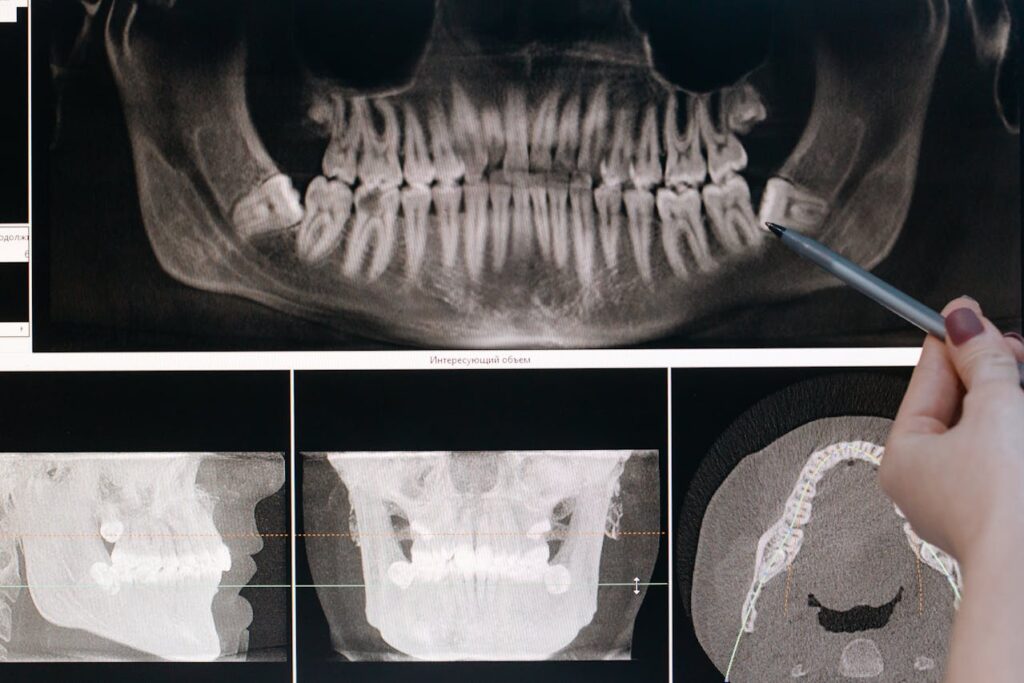
The experimental approach now moving into human testing is based on a precise intervention. Researchers developed an antibody designed to attach to USAG 1 and reduce its ability to interfere with BMP signaling. Antibodies are already used throughout modern medicine to target specific proteins with high accuracy. In this case, the goal is not to introduce new genetic material or artificial scaffolding, but to ease a natural restriction and see whether dormant tooth forming potential can reappear.
As Katsu Takahashi, head of dentistry at the medical research institute at Kitano Hospital in Osaka, said in an interview with The Mainichi, “We want to do something to help those who are suffering from tooth loss or absence. While there has been no treatment to date providing a permanent cure, we feel that people’s expectations for tooth growth are high.”
Where Possibility Meets Caution
When science moves from theory to people, the questions change. The first concern is no longer what might be possible one day, but what is safe to try today. That is the space this trial occupies. In September 2024, researchers began testing the drug in adults, not to prove that teeth can be fully restored, but to see whether the body can tolerate the intervention and respond to it at all. At this stage, success is measured quietly, through biological signals and careful observation, not dramatic outcomes.
The trial is being conducted at Kyoto University and Kitano Hospital with a small and tightly defined group of adult men who are missing at least one molar. This narrow selection is intentional. Early human studies are designed to reduce variability so researchers can clearly interpret what the body is doing in response to the drug. When developmental pathways are involved, caution matters. The goal is to understand the signal before expanding the audience.
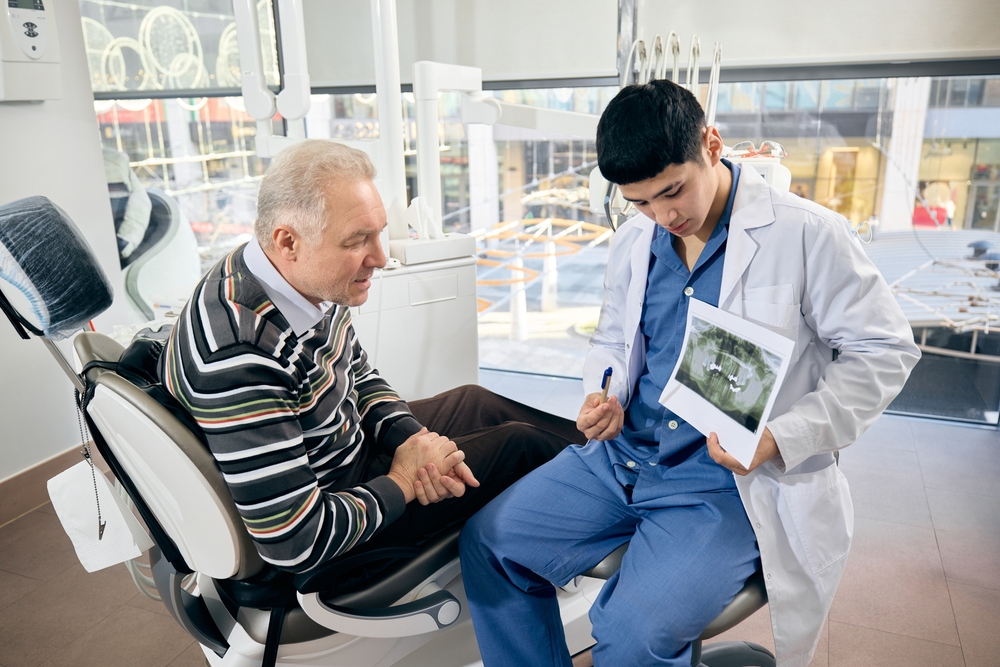
Participants receive the treatment through intravenous administration, allowing researchers to control dosage precisely and track how the antibody moves through the body. Throughout the study, investigators monitor overall health while also focusing on the jaw itself. Imaging and clinical examinations are used to look for any signs of new tooth structures and to observe whether those changes remain stable over time. At the same time, researchers watch closely for unintended effects, since altering growth related signals carries risks that must be understood before moving forward.
This phase is not meant to answer whether the treatment will restore full function or replace existing dental solutions. It is meant to answer a more fundamental question. Can this approach be used safely in humans, and does it activate the biological response researchers are hoping to see. Only if those answers are clear will future trials begin to explore durability, strength, and real world use.
What This Teaches Us About Growth and Patience
This research is not just about teeth. It is a reminder of how the human body and human progress actually work. Change rarely happens because something is forced. It happens when the right conditions are created and unnecessary barriers are removed. For years, tooth loss was treated as a final state, not because people lacked desire to heal, but because the body was following instructions it had learned long ago. Scientists did not invent a new tooth. They asked a better question about what might be holding growth back.
That lesson applies far beyond biology. Many people struggle with motivation and focus not because they lack ability or discipline, but because they are working against invisible limits they have never examined. Beliefs about what is too late, too hard, or no longer possible can quietly shut down effort before it begins. Just as this research looks at whether growth signals can still be activated later in life, individuals can look at where they may have accepted limits that no longer serve them.

The process behind this study also offers a model for daily progress. Researchers are not rushing toward dramatic results. They are moving carefully, testing safety first, paying attention to small signals, and allowing time for the system to respond. Applied to personal development, this translates to building consistency before chasing outcomes. Focus improves when attention is placed on creating stable routines. Motivation grows when effort is measured by what is within control today rather than by distant results.
There is also a deeper takeaway about patience and self trust. The body often retains more potential than we assume, even after long periods of inactivity. Skills, goals, and purpose can work the same way. Growth may slow or pause, but it is not always gone. By removing unnecessary pressure, creating supportive conditions, and staying consistent with small actions, people give themselves the best chance to reengage that potential. Progress, whether biological or personal, tends to follow preparation, not force.
The Possibility We Almost Forgot
For decades, tooth loss was treated as a line that could not be crossed. Biology seemed to say that some forms of damage were final, and medicine learned to work around that assumption rather than challenge it. This new research does not promise instant solutions, but it does something just as important. It reopens a question many had stopped asking about what the human body might still be capable of when long held limits are examined rather than accepted.
Across this story, a pattern emerges. Teeth do not fail to regrow because the body is careless or weak, but because growth is governed by signals, timing, and restraint. Scientists identified a protein that tells the system when to stop. They tested that insight carefully in animals. They moved slowly into human trials with caution rather than urgency. Each step reflects an understanding that real progress depends on respecting complexity, not rushing past it.

What makes this moment striking is not the promise of regrown teeth, but the mindset behind the work. Instead of forcing the body to behave differently, researchers are asking whether something that once worked can be allowed to work again. That shift mirrors how meaningful change often unfolds in life. Growth is not always about adding more effort. Sometimes it is about removing the quiet barriers that have been in place for years.
Whether or not this treatment reaches everyday use, it already offers something valuable. It reminds us that what feels permanent may simply be unexplored, that patience is not the opposite of ambition, and that progress often begins with the courage to question what we have been told cannot change.
Featured Image from Pexels