

Scientists Found a Tree Kangaroo for the First Time in 90 Years and the Photos Prove It
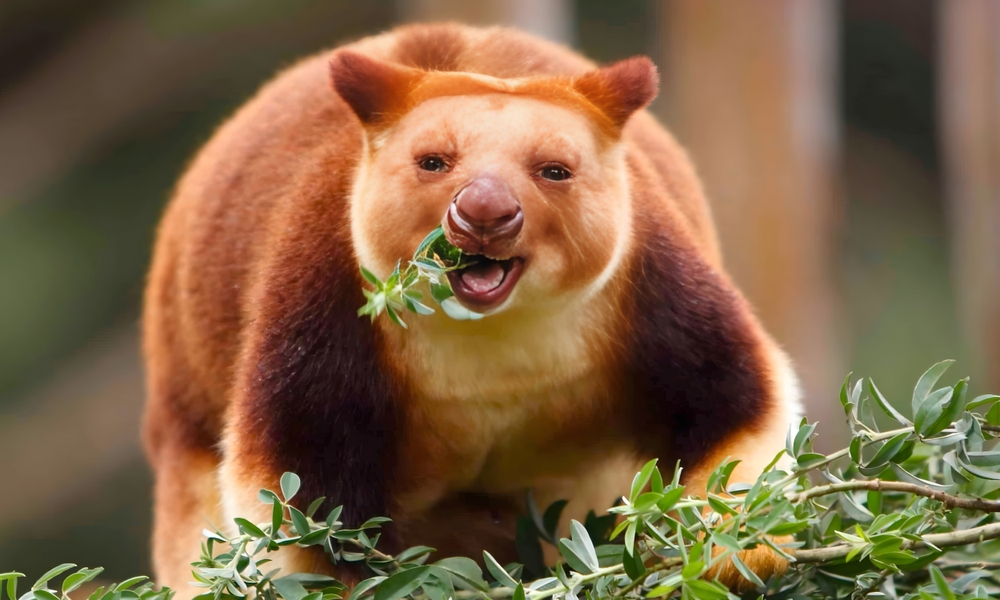
For nearly a century, the Wondiwoi tree kangaroo existed in a quiet scientific limbo, known only through a single animal collected almost one hundred years ago and never seen again. First documented in 1928, the species slowly faded from conversation as decades passed without sightings, photographs, or physical evidence that it still lived in the wild. As forests across New Guinea faced increasing pressure from hunting, land development, and industrial expansion, the absence of information became more troubling with each passing year. Many researchers came to believe the animal had likely gone extinct without notice, another rare species slipping away before science had the chance to understand it.
That assumption made what happened this past July all the more extraordinary. In one of the most remote mountain regions of West Papua, an amateur botanist searching not for animals but for rare plants unexpectedly encountered what scientists had failed to find for 90 years. The rediscovery did not come from satellite surveys, camera traps, or a large, well funded research expedition. Instead, it came from patience, physical endurance, and a willingness to venture into landscapes that remain largely untouched by modern exploration. What followed would not only change what scientists know about one of the world’s rarest mammals, but also highlight how fragile and irreplaceable these hidden ecosystems truly are.
A Species That Vanished After 1928
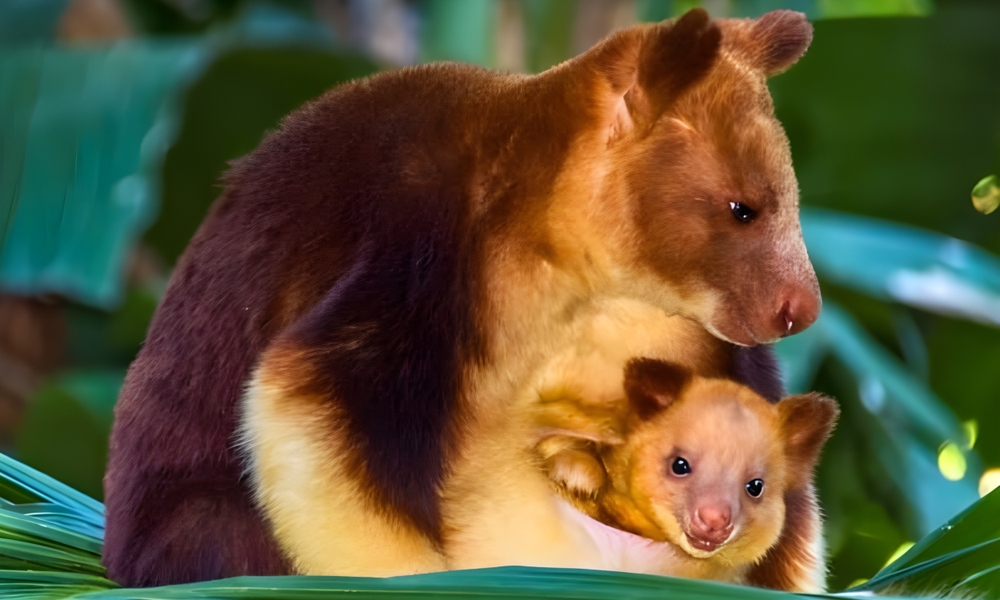
The Wondiwoi tree kangaroo was first recorded by biologist Ernst Mayr during an expedition to the Wondiwoi Mountains in 1928. At the time, Mayr described the animal as deeply unusual, noting that it did not resemble the familiar image of kangaroos that inhabit open plains. Instead, it appeared almost like a hybrid creature, blending traits of a monkey, a bear, and a marsupial adapted for life in the treetops. The single male specimen he encountered was later shot and sent to London’s Natural History Museum, where it became the only physical proof the species had ever existed.
After that moment, the animal disappeared completely from the scientific record. No further sightings were confirmed, and even anecdotal reports from local communities were rare and inconsistent. As years turned into decades, the lack of new evidence increasingly suggested the worst. In regions across New Guinea, many tree kangaroo species experienced population declines due to hunting and habitat loss, making it easy to assume the Wondiwoi species had suffered the same fate.
What made the disappearance especially concerning was how little scientists knew about the animal even at the time of its discovery. With no information on its behavior, diet, reproduction, or population size, researchers were left with nothing but speculation. The Wondiwoi tree kangaroo became one of the most poorly understood mammals in the world, its existence hanging on a single historical encounter.
The Expedition That Led to the Rediscovery
The rediscovery began not as a scientific mission, but as a personal pursuit driven by curiosity. Michael Smith, an amateur botanist from the United Kingdom, had spent years traveling to remote regions in search of rare plants, particularly orchids and rhododendrons. While exploring West Papuan mountains in 2017, he came across references to the mysterious tree kangaroo that had never been seen again, and the idea that it might still exist stayed with him.
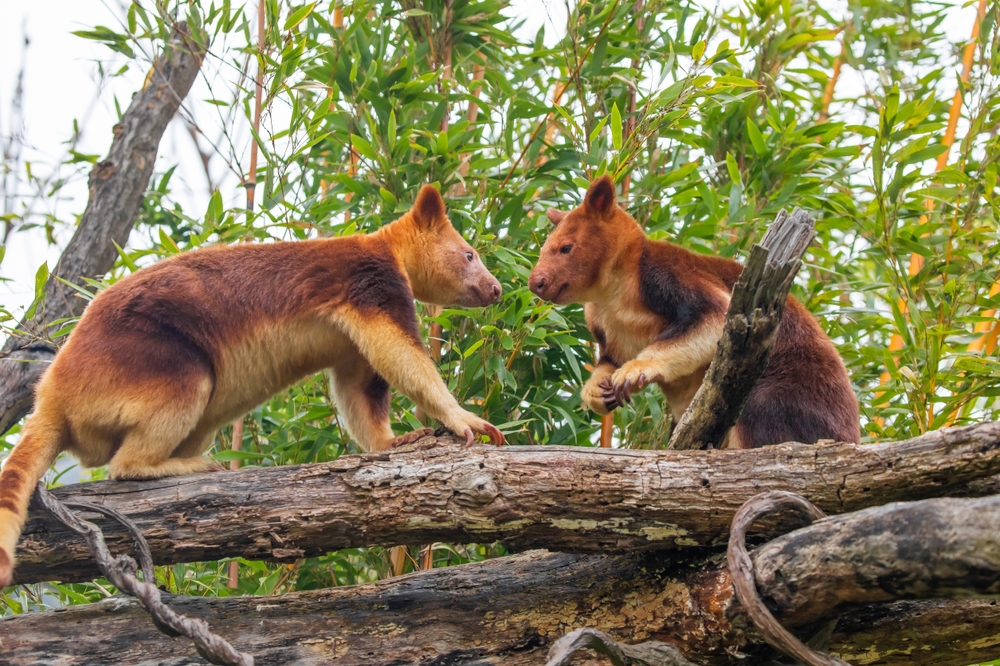
In July, Smith organized an expedition into the Wondiwoi Mountains alongside local Papuan porters, a hunter familiar with the terrain, and a university student with a shared interest in natural history. The journey was physically demanding, requiring the group to cut paths through dense bamboo forests at elevations between 4,900 and 5,600 feet. These forests are so thick and difficult to navigate that few people ever attempt to enter them, which has kept much of the region largely unexplored.
As the expedition progressed, the group began noticing signs that suggested the presence of a large tree dwelling animal. Scratch marks were visible high up on tree trunks, made by powerful claws capable of gripping bark. Scattered dung appeared along the forest floor, and the air carried a strong scent that Smith later described as a “foxy” smell. These clues suggested that something was living high above them, even if it remained out of sight.
The Moment the Animal Finally Appeared
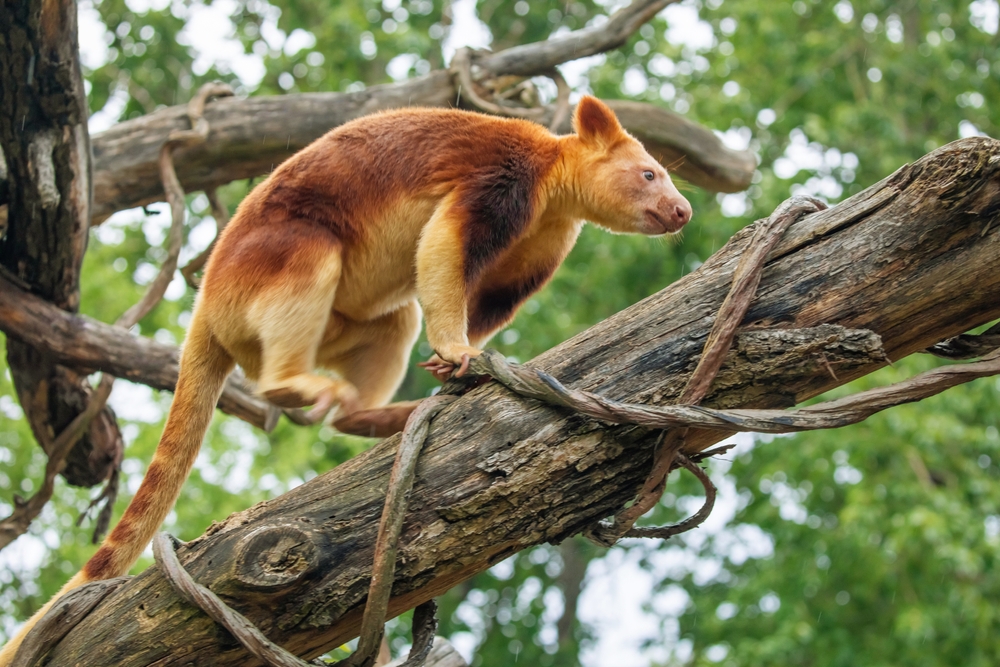
After days of searching without a direct sighting, the group began to descend, assuming the expedition might end without visual proof. It was during this moment of disappointment that the hunter guiding the group noticed movement high in the trees. Perched roughly 90 feet above the forest floor, partially hidden among leaves and branches, was a tree kangaroo watching from the canopy.
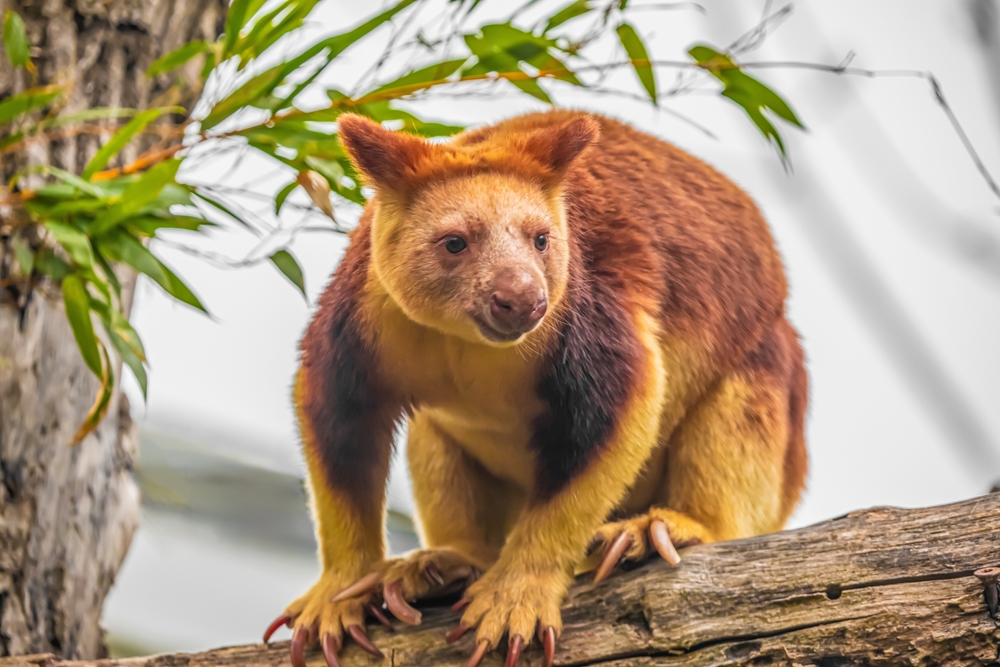
Smith scrambled to focus his camera, eventually managing to capture several photographs of the animal. The images were not perfect, but they clearly showed an animal that matched historical descriptions of the Wondiwoi tree kangaroo. For the first time ever, the species had been photographed alive in its natural habitat, providing evidence that it had survived nearly a century without being seen.
Reflecting on the discovery later, Smith emphasized how unexpected the moment felt. He explained that simply confirming the animal still existed was extraordinary in itself, adding, “All this just shows that you can find interesting things if you simply go and look.”
How Scientists Confirmed the Identity
Before announcing the discovery publicly, Smith contacted several experts specializing in tree kangaroos and marsupials. He wanted confirmation from scientists who had spent decades studying these animals before sharing the news with the world. Among those consulted were researchers from major museums and universities in Australia.
The experts closely examined the photographs, comparing the animal’s coat coloring, body proportions, and markings with the original specimen collected in 1928. University of Melbourne zoologist Tim Flannery stated that the images “leave little doubt” that the animal belonged to the long lost species. The distinctive coloring and isolation of the habitat made misidentification extremely unlikely.
Mark Eldridge of the Australian Museum emphasized how extraordinary the rediscovery was, saying, “It’s such a remote and difficult spot to access that I was uncertain we would ever know.” Roger Martin of James Cook University echoed the sentiment with humor, noting, “Only an intrepid Pom [Brit] in pursuit of rhododendrons would have persevered.”
Why the Kangaroo Stayed Hidden for So Long
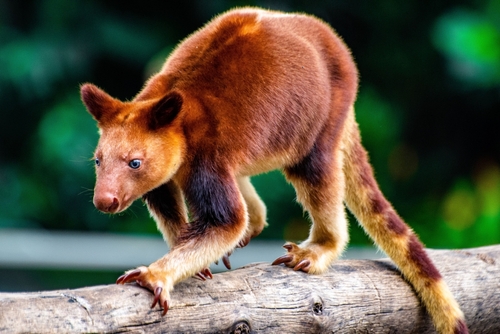
Tree kangaroos are uniquely adapted for life in the forest canopy. With muscular forearms, powerful claws, and long tails used for balance, they can climb and move through trees with remarkable ease. Despite weighing as much as 35 pounds, they are capable of remaining motionless for long periods, blending into foliage and shadows far above the forest floor.
In the case of the Wondiwoi species, geography played a critical role. The animal appears to be restricted to a very small area of mountainous forest that few humans ever reach. According to Smith, local hunters typically stop at lower elevations, as the bamboo forests higher up become extremely difficult to navigate.
That isolation may have been the species’ greatest protection. As Flannery observed, the widespread scratch marks and dung found during the expedition suggest the animal “is amazingly common in a very small area,” even though its total range may cover only a few dozen square miles.
New Hope Mixed With Serious Threats
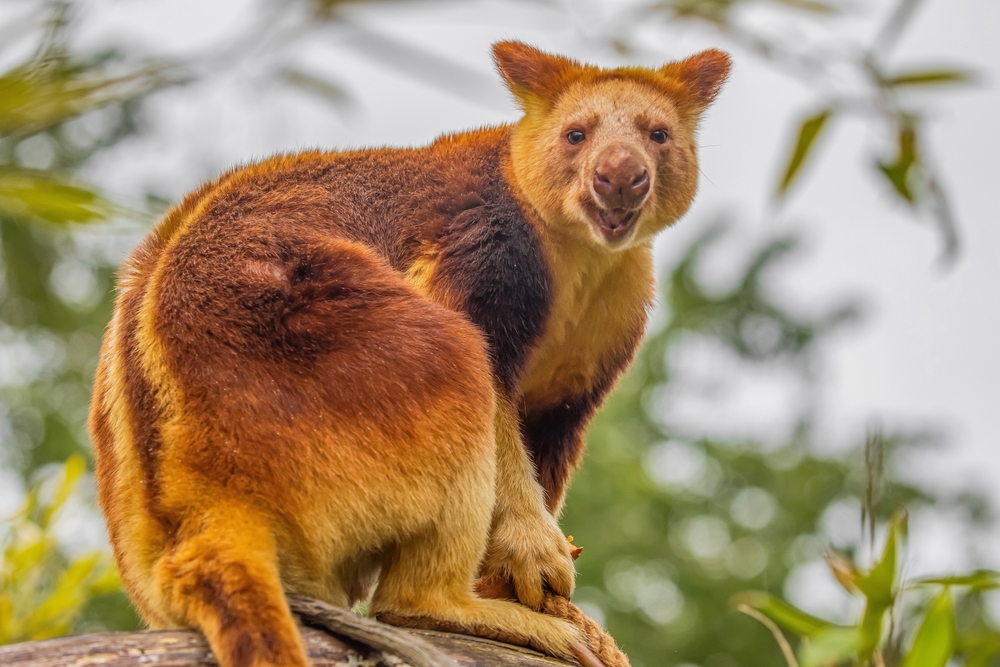
Although the rediscovery confirms the Wondiwoi tree kangaroo still exists, it does not mean the species is safe. Its extremely limited habitat makes it highly vulnerable to sudden environmental changes and human interference. A population confined to such a small area has little room to recover if its environment is disrupted.
Among the most serious concerns are poaching and a proposed gold mine that could overtake parts of the montane region where the kangaroo lives. Even limited industrial development could fragment the habitat that has allowed the species to survive unnoticed for generations.
Smith expressed deep concern about the future, warning that “the tree kangaroo is walking a tightrope at the moment,” adding that “it could be genuinely extinct within a few years if things go wrong.”
What the Rediscovery Means for Conservation
Beyond the excitement of rediscovering a lost species, the finding carries broader implications for conservation. It demonstrates how incomplete humanity’s understanding of biodiversity still is, even in an age of global mapping and satellite surveillance. Entire species can persist undetected when habitats remain largely intact.
The rediscovery also reinforces a simple lesson. When ecosystems are left undisturbed, wildlife often finds a way to endure. The Wondiwoi Mountains protected this animal not through active conservation, but through remoteness and limited human access.
Scientists now hope the discovery will strengthen arguments for protecting the region. As Eldridge noted, knowing the animal still exists provides “a great opportunity to gather more information, since we know virtually nothing about it, as well as to ensure its survival.”
A Final Reminder From the Forest
The reappearance of the Wondiwoi tree kangaroo offers a rare moment of optimism in environmental reporting, but it also carries a clear warning. Discovery alone does not guarantee survival. What happens next will determine whether this animal becomes a lasting symbol of resilience or a brief rediscovery before disappearing once again.
As Smith reflected on the journey, he challenged the idea that there is nothing left to find in the natural world, saying, “The general belief that there’s nothing more of interest to discover is quite mistaken.” At a time when environmental loss dominates global headlines, that reminder may be just as important as the animal itself.