


A Woman Says Her Heart Stopped for 32 Seconds and What She Experienced Is Making People Rethink Consciousness
Most of us live as if the end is an abstract idea, something distant and negotiable. We fill our days with noise and obligation, rarely stopping to ask what would matter if time suddenly became scarce. It often takes a rupture to interrupt that illusion. A medical emergency. A moment when the body fails. A brush with finality that forces awareness to sharpen all at once.

Stories of near death experiences tend to surface in those spaces. They capture attention not because they explain death, but because they unsettle the certainty we carry about consciousness and control. When someone claims their heart stopped and something continued, we instinctively lean forward. Not to verify the story, but to test our own assumptions about where awareness begins and where it ends.
But here is the question beneath every account. If the mind can generate clarity, meaning, and vivid experience at the edge of shutdown, what does that say about how we understand consciousness, fear, and the way we live while we still believe we have time?
When a Moment Rewrites a Life
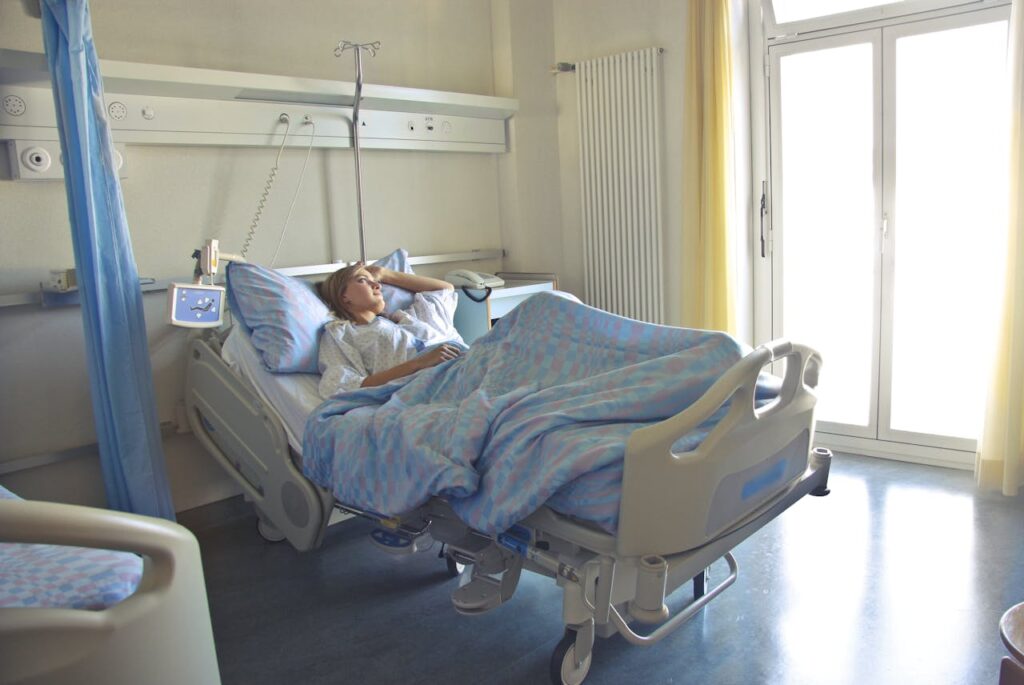
Some stories spread because they confirm what we already believe. Others spread because they interrupt us. Angela Harris’s experience belongs to the second category. In 2015, during a tilt table test meant to investigate unexplained fainting episodes, she says her heart stopped for about 32 seconds. What followed was not just a medical event, but a personal reckoning. In the years since, Harris has described that moment as the dividing line between who she was and who she became, eventually leading her to work as a spiritual coach.
On her website, Harris reflects on the impact of that experience in direct terms. She writes, “In 2015, life as I knew it was rocked by a near death experience that forever changed the trajectory of my life. This profound event served as a catalyst for a deep spiritual awakening, unveiling a truth about our existence that transcends the boundaries of the physical world.” For her, the experience was not something to analyze from a distance. It became a reference point for how she understood purpose, identity, and meaning.
In interviews, Harris has spoken about the imagery and impressions she recalls from those moments, including seeing deceased relatives and perceiving herself living other lives in unfamiliar forms. Speaking on The Other Side NDE podcast, she said, “I’m seeing myself living another life, a different life, in a different space as what a lot of people here would define as an alien, but is really just another soul on another planet doing the same things I’m doing here as a human.” She has also described glimpses of a future marked by conflict, population loss, and a return to smaller, localized communities. These details often draw the most attention, yet they are also where interpretation becomes most delicate, sitting at the intersection of personal meaning, memory, and belief rather than simple fact.
When Awareness Persists Under Pressure
When science approaches near death experiences, it does not begin with visions or meaning, but with the conditions surrounding the event. Moments such as cardiac arrest, seizures, strokes, or severe oxygen loss place the brain under extreme stress. During these states, normal neural regulation is disrupted, yet consciousness does not always disappear in a simple or uniform way. The intensity and realism people report afterward can be striking, but feeling real does not automatically place the experience outside the brain. It places it inside a brain operating at the edge of its limits.
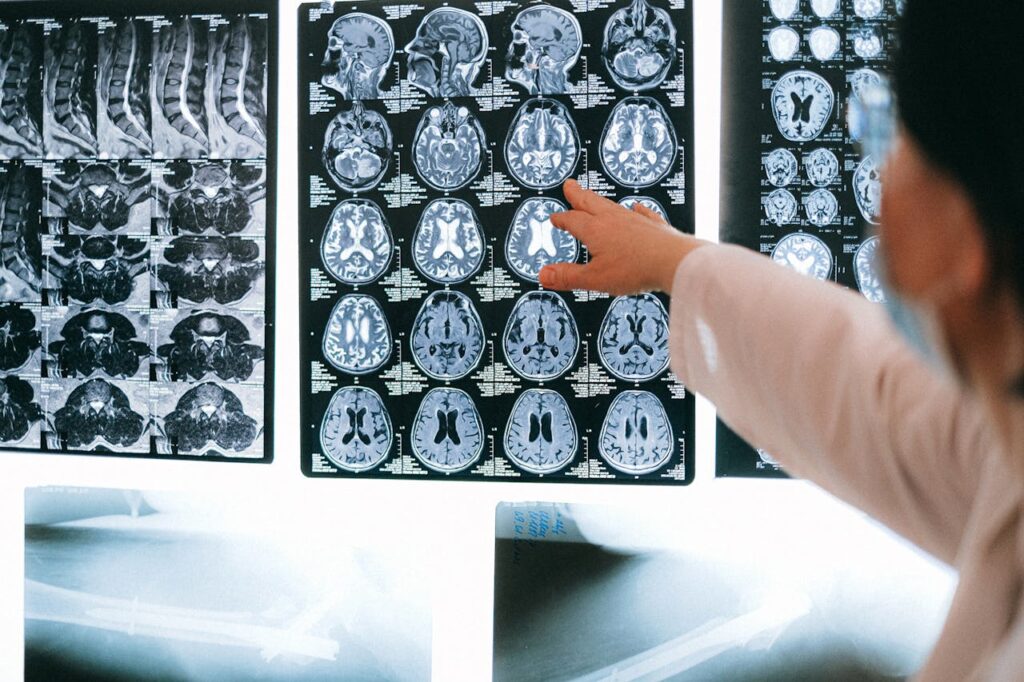
Research has shown that these experiences are not isolated or random. A study published in Frontiers in Psychology found that a notable portion of cardiac arrest survivors reported experiences that met established criteria for near death experiences. What makes these reports compelling is not just their frequency, but their structure. Many accounts share recognizable features while still reflecting the individual’s beliefs, expectations, and personal history. This combination of consistency and variation suggests that something systematic is happening, even if its interpretation differs from person to person.
What neuroscience can say with confidence is that the human brain is capable of generating complex inner experiences even when it is severely compromised. Under extreme conditions, perception can intensify rather than fade, producing vivid imagery, strong emotional presence, and moments of apparent clarity that feel unlike ordinary waking life. These states remind us that consciousness is not simply an on off switch. It is a dynamic process that can reorganize itself in unexpected ways when survival is no longer guaranteed.
When the Mind Fights to Make Sense of Collapse
When the brain is pushed to the edge of survival, it does not shut down quietly. Life threatening conditions such as oxygen deprivation, sudden loss of blood flow, or extreme physiological shock disrupt the systems that normally keep perception stable and ordered. In these moments, the brain shifts into a state of emergency processing. Signals misfire, chemical balances change, and perception loosens from its usual anchors. What follows is not randomness, but a different mode of operation shaped by urgency rather than routine.
Research in neuroscience shows that areas involved in memory, identity, and imagery can behave differently under these conditions. Regions that help us recognize ourselves, visualize scenes, and organize experience may become unusually active or disconnected from incoming sensory information. When the outside world fades or fragments, the mind often turns inward. This can produce experiences that feel expansive, emotionally intense, or detached from the body, not because the body has been left behind, but because the brain is no longer prioritizing ordinary sensory input.

What makes these experiences feel so convincing is that the brain is not a passive recorder. It is a storyteller. Even under extreme stress, it works to assemble sensation, emotion, and memory into something coherent. Familiar faces, meaningful symbols, and deeply held themes often surface because they are already woven into identity. In moments when survival is uncertain, the mind reaches for what it knows best, not to deceive, but to impose order on a situation where control has nearly vanished.
What Lingers After the Moment Passes
What often defines a near death experience is not the moment itself, but what follows it. Long after the medical crisis has ended, many people report changes that settle quietly into daily life. Fear of death may soften. Priorities may shift. Questions that once felt abstract begin to feel personal. These changes suggest that the experience continues working on the mind well after the body has recovered.
Research comparing memories of near death experiences with other forms of memory shows that these recollections tend to be vivid, emotionally charged, and remarkably stable over time. They are often remembered with a level of detail more commonly associated with significant life events than with dreams or imagined scenarios. This helps explain why people who have these experiences speak about them with such confidence. The memory does not fade or blur easily. It holds its shape.

At the same time, psychology reminds us that intensity does not equal proof. Experiences that carry strong emotional weight are more likely to be woven into identity. As people revisit these memories, talk about them, or reflect on their meaning, the story can deepen and evolve. This process is not deception. It is how the human mind makes sense of moments that disrupt its understanding of reality.
Recognizing this distinction matters. It allows the experience to be honored without turning it into a prediction or a claim about the future. The lasting impact of a near death experience is not that it reveals hidden knowledge, but that it reshapes how a person relates to life, fear, and meaning. In that sense, its influence is psychological and existential, grounded in how memory guides who we become rather than what we foresee.
Turning Awareness Into Daily Practice
What these stories ultimately point to is not death, but attention. When people come close to losing their lives, many describe a sudden clarity about what matters and what does not. From a well being perspective, that clarity is something we do not need a crisis to access. The lesson is not to live as if death is imminent, but to recognize how easily we drift into automatic patterns that dilute focus, motivation, and meaning. Near death experiences remind us that attention sharpens when distraction falls away, and that focus is often reclaimed when priorities are simplified.
Applied to daily life, this begins with intentional awareness. The brain responds to urgency by filtering noise and highlighting what feels essential. While most of us are not facing life threatening conditions, we can still create deliberate moments of focus by reducing constant stimulation, setting clear boundaries around work and rest, and engaging fully with one task at a time. Practices such as mindfulness, reflective journaling, or structured goal setting work not because they are spiritual trends, but because they train the mind to stay present and purposeful rather than scattered and reactive.

Motivation and achievement also benefit from this shift in perspective. Many people who report near death experiences describe a renewed sense of direction, not because they gained new information, but because fear loosened its grip. When fear of failure or uncertainty dominates, effort fragments. When fear recedes, energy consolidates. Translating this into everyday life means learning to question which fears are actually necessary and which are inherited habits of thought. By aligning goals with values rather than external pressure, drive becomes more sustainable and less dependent on constant validation.
At its core, the connection between these experiences and personal development is simple. Focus improves when we remember that time and attention are limited resources. Motivation strengthens when actions feel meaningful rather than compulsive. Well being deepens when we stop postponing the life we want to live. Near death experiences may arrive unexpectedly, but their most practical message is one we can apply now. Live deliberately, focus intentionally, and invest energy where it truly counts.
The Question We Are Meant to Live With
Near death experiences do not hand us answers wrapped in certainty. What they offer instead is a mirror. They reflect how fragile our assumptions are about control, time, and meaning, and how quickly those assumptions can dissolve when the body reaches its limits. Whether these experiences are interpreted through science, spirituality, or personal belief, their lasting power comes from how they reorganize attention. They pull focus away from distraction and toward what feels essential, reminding us that awareness itself is not guaranteed.

The real challenge is not explaining what happens at the edge of life, but deciding how we live before we reach it. If clarity can emerge when everything is stripped away, then the work is learning to access that clarity without crisis. Pay attention now. Choose deliberately. Live in a way that does not require a breaking point to remember what matters.