Father Builds 51 Million Theme Park So His Disabled Daughter Can Finally Belong
There are moments in life that quietly change everything. For Gordon Hartman, one of those moments happened beside a hotel swimming pool.
His daughter Morgan, then just 12 years old, approached a group of children in the water hoping to join their game. She could not communicate verbally in the same way other children could, and she lived with both physical and cognitive disabilities. The children did not know how to respond. One by one, they drifted away.
What might have seemed like a small social interaction to some became a defining turning point for her father. Hartman watched his daughter’s confusion and disappointment. He later described it as a lump in the throat moment. That day planted the seed for what would eventually become a 25 acre, $51 million ultra accessible theme park in San Antonio, Texas, designed so that children like Morgan would never again feel left out of play.
The Moment That Sparked a Movement
According to interviews with the BBC and other outlets, Hartman believed the other children did not act out of cruelty. They simply did not know how to interact with someone who communicated differently. That realization lingered long after the family returned home.
Hartman and his wife Maggie began searching for places where Morgan could feel fully included. They asked other parents where they took their children with special needs. They looked for spaces where everyone would feel comfortable, not just tolerated. What they discovered was unsettling. There was no theme park designed from the ground up with accessibility and inclusion at its core.
Morgan was born with physical and cognitive disabilities and, for years, remained undiagnosed. Her cognitive understanding was closer to that of a much younger child. Yet, as her father often says, she has always been full of warmth, smiles, and hugs. The problem was not her capacity for joy. The problem was the world’s capacity to include her.
That distinction became the foundation of Hartman’s next chapter.
Selling Success to Build Something Different
At the time, Gordon Hartman was a successful property developer in Texas. He had built a thriving homebuilding business and had achieved financial security that many entrepreneurs spend a lifetime chasing.
In 2005, he made a decision that surprised many in his professional circle. He sold his homebuilding companies and shifted his focus entirely. The proceeds helped establish the Gordon Hartman Family Foundation, a nonprofit dedicated to supporting people with disabilities.
Two years later, in 2007, construction began on what Hartman envisioned as the world’s first ultra accessible theme park. The chosen site was a former quarry in San Antonio. Instead of seeing a barren industrial space, Hartman saw possibility.
He did not attempt to design the park alone. He assembled a diverse advisory group that included doctors, therapists, parents of children with special needs, individuals living with disabilities, and individuals without disabilities. The goal was clear. The park had to work for everyone. Accessibility would not be an afterthought. It would be the starting point.
Hartman repeatedly emphasized one guiding principle: a place where everyone could do everything.
Building Morgan’s Wonderland
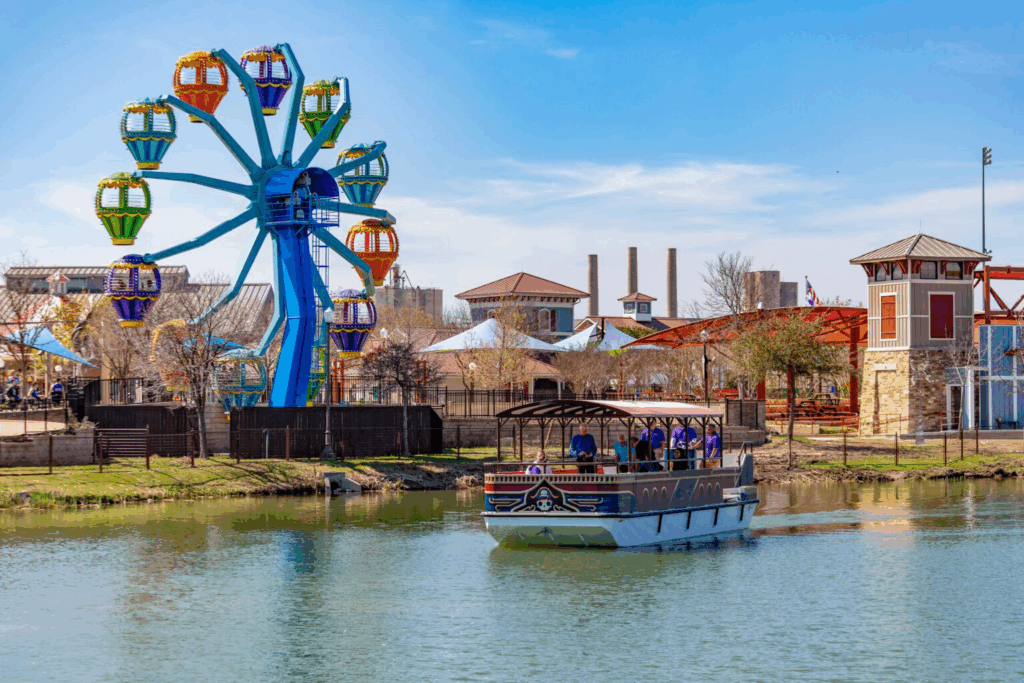
Image Credits: Website @Morgan’sWonderland
When Morgan’s Wonderland opened in 2010, it carried a price tag of $34 million. Every dollar reflected intentional planning.
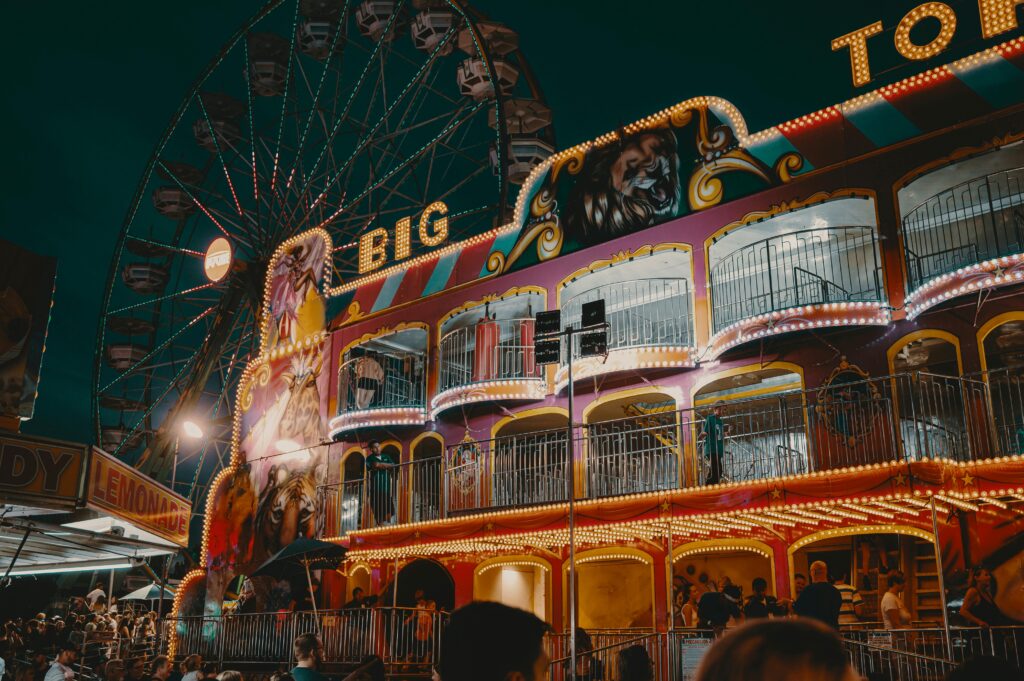
The park features attractions commonly found at traditional amusement parks. There is a Ferris wheel, a miniature train, an adventure playground, zip lines, and a carousel. The difference lies in the details.
Rides were designed to accommodate wheelchairs without requiring complicated transfers. The carousel includes specially built chariots that allow wheelchair users to rise and fall alongside traditional horses. Pathways are wide and smooth. Sensory friendly spaces provide calm environments for visitors who may feel overwhelmed.
For many families, the experience was unprecedented. Visitors often told Hartman it was the first time their child had been able to ride a Ferris wheel or board a train. Instead of watching from the sidelines, they were participants.
One of the most meaningful stories, however, unfolded close to home. When the park opened, Morgan herself was afraid of the carousel. She did not understand why the platform moved in circles or why the animals rose and fell. For three years, she worked at her own pace. First standing near it. Then sitting on a stationary animal. Eventually, allowing it to move.
Hartman later reflected that overcoming that fear was deeply significant. Small victories in play can translate into confidence in life. The park was not just entertainment. It was therapy, growth, and dignity wrapped into one space.
Expanding the Vision With Inspiration Island
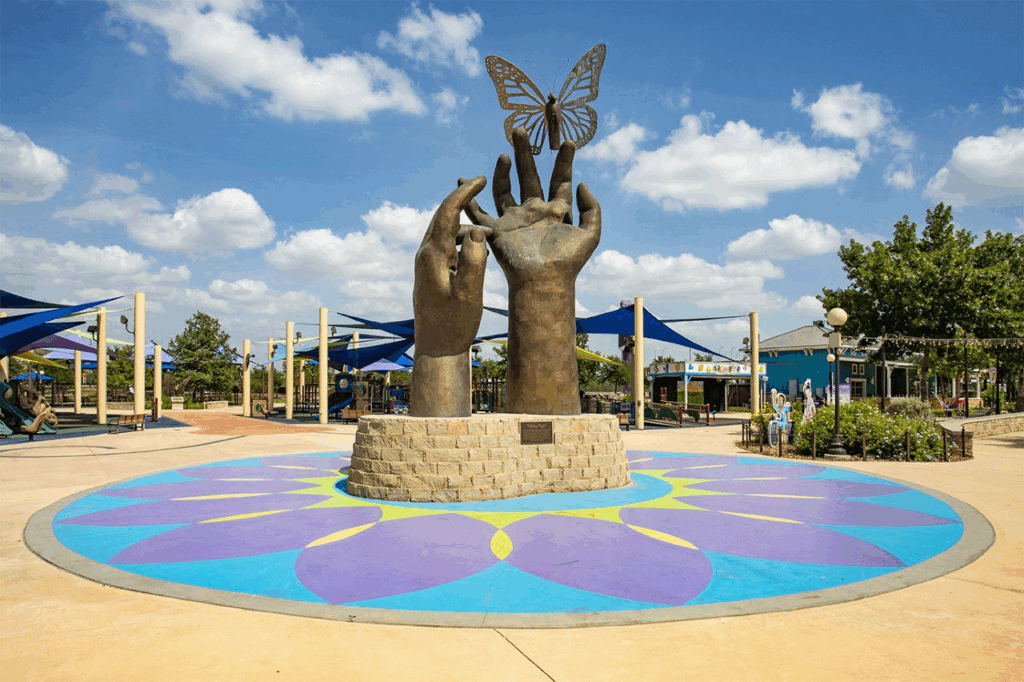
Image Credits: Website @Morgan’sWonderland
By 2017, another challenge emerged. Texas summers are famously hot, and traditional wheelchairs can become uncomfortable under intense sun. Attendance dipped during peak heat.
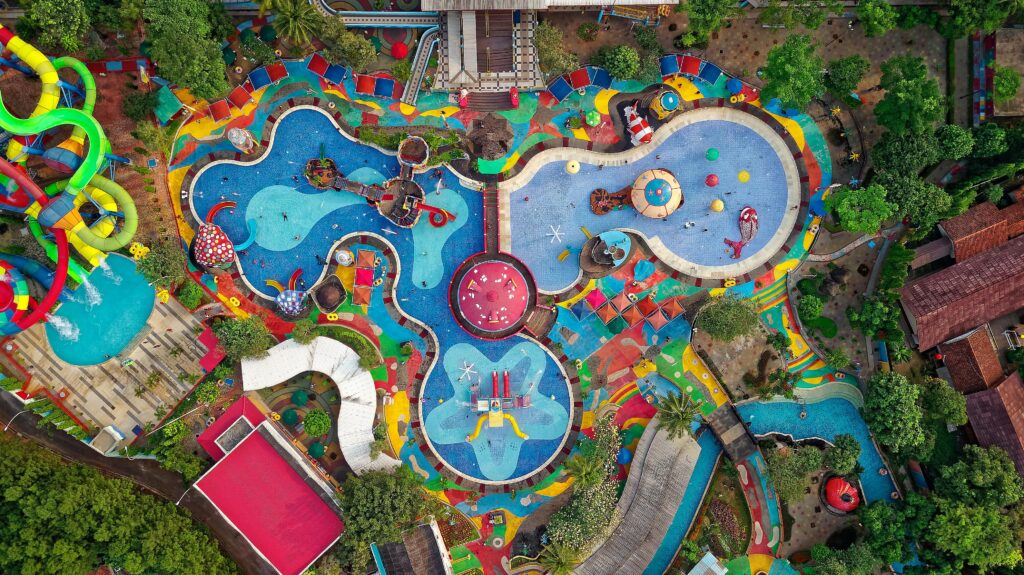
Hartman responded with another ambitious project. Morgan’s Inspiration Island, a fully accessible water park, opened at a cost of $17 million.
The water park includes five splash pads and more than two dozen attractions. Some areas use warm water to assist guests with muscular conditions. One of the most innovative features is the availability of waterproof motorized wheelchairs powered by compressed air rather than batteries. This allows visitors with mobility challenges to move safely through water attractions.
The addition was not simply about increasing attendance. It was about removing yet another barrier. Water play is a universal childhood experience, yet for many families with disabled children, it can feel inaccessible or unsafe. Inspiration Island changed that reality for thousands.
In interviews, Hartman described a father who once approached him at the water park, held his hand, and pointed toward his son. The boy, who had acute special needs, was playing in water for the first time. The father was in tears. That moment alone, Hartman suggested, justified the years of effort.
A Place for Everyone, Not Just Some
Despite being built with individuals with special needs in mind, Morgan’s Wonderland was never intended to be segregated.
Approximately three out of four visitors do not have disabilities. Families visit together. School groups attend. Children meet across differences that might otherwise keep them apart.
Hartman has often shared stories of children forming friendships across visible divides. One memory stands out. A girl in a wheelchair approached another girl without disabilities, and they began playing together naturally. No hesitation. No awkwardness. Just play.
That interaction captures the park’s broader mission. Inclusion is not simply about ramps and accessible rides. It is about shifting social norms. When children grow up playing side by side, difference becomes ordinary rather than intimidating.
Since opening, the park has welcomed visitors from all 50 states and from dozens of countries. Estimates from leadership connected to the organization suggest that millions have passed through its gates. For many, it represents the first vacation where no one in the family feels like an accommodation problem.
The Financial Reality Behind the Dream
Operating such a park is not cheap. Hartman has openly acknowledged that the organization expects to lose more than $1 million annually. Entrance is free for guests with special needs, ensuring that cost is not a barrier to participation.
The parks are partially supported through fundraising efforts and the Gordon Hartman Family Foundation. Hartman and his wife have personally donated over $100 million to causes connected to disability inclusion. They have also joined philanthropic pledges committing to donate the vast majority of their wealth.
Keeping ticket prices low for others is part of the philosophy. Accessibility, in Hartman’s view, must extend beyond physical design. Economic accessibility matters just as much.
This financial model reflects a long term commitment rather than a short term business venture. Hartman has stated that he is not focused on opening identical parks across the country. Instead, he collaborates with other organizations that wish to replicate the model, sharing expertise rather than franchising the concept.
Beyond Rides and Water Slides
The vision has continued to grow. Morgan’s Wonderland Sports opened to provide inclusive athletic opportunities. A camp program was launched, offering year round recreational experiences that include activities such as zip lining, horseback riding, archery, and swimming, all adapted for diverse abilities.
These expansions reflect an evolving understanding of inclusion. Play is essential, but so are sports, community, and skill development. For teenagers and adults with disabilities, opportunities often shrink after childhood. By broadening its scope, the organization aims to address that gap.
At the center of it all remains Morgan herself. Now an adult, she continues to visit the park. According to her father, she is something of a local celebrity when she arrives. Visitors recognize her name. They ask for photos. She greets them with the same warmth that inspired the project in the first place.
Hartman has said that Morgan understands the park is named after her, but she may not grasp its full impact. She does not see the statistics or the fundraising totals. She sees swings, sand zones, and familiar faces.
A Broader Lesson About Belonging
Stories like this often circulate online because they feel extraordinary. A father sells his business. He spends $51 million. He builds a theme park. The scale captures attention.
Yet the deeper story is not about money. It is about reframing disability not as a limitation to be pitied, but as a difference to be accommodated and respected.
Morgan’s Wonderland challenges a long standing pattern in public infrastructure. Too often, accessibility is reactive. A ramp is added after a complaint. A sensory room is carved out after an incident. Hartman’s approach inverted that sequence. He asked what would happen if inclusion were the blueprint rather than the retrofit.
For families of children with special needs, the park offers more than entertainment. It offers relief. Parents do not have to scan each attraction for potential obstacles. They do not have to apologize for their child’s behavior if sensory overload occurs. They are not constantly negotiating with staff about whether something is allowed.
That psychological ease can be transformative. It allows families to focus on what vacations are meant to provide: shared joy.
The ripple effects extend further. When non disabled children grow up playing alongside peers with different abilities, they internalize inclusion as normal. They carry that mindset into schools, workplaces, and communities.
In that sense, a single interaction at a hotel pool led to something far larger than a theme park. It sparked a living example of what thoughtful design and determined philanthropy can accomplish.
Gordon Hartman did not set out to become a symbol. He set out to solve a problem for his daughter. In doing so, he addressed a need shared by millions of families around the world.
The image of Morgan approaching other children in a pool still resonates because it is familiar. Many people have experienced exclusion in some form. Morgan’s Wonderland offers a counter image. Children running toward one another. Wheelchairs and sneakers moving side by side. Water splashing without barriers.
The park stands as a reminder that inclusion is not abstract policy language. It is concrete, built environment, intentional culture, and sustained commitment.
For Morgan, it began with the simple desire to play. For her father, that desire became a mission. For the millions who have visited, it has become proof that when spaces are designed for everyone, everyone benefits.