

She Painted a 67-Year-Old Elephant Bright Pink for a Photoshoot. Weeks Later, the Animal Was Dead
Something about Jaipur got under Julia Buruleva’s skin. Maybe it was the chaos of colour on every street corner, or the way elephants seemed woven into the fabric of daily life. Whatever it was, after just one week in Rajasthan’s capital, an idea took root in her mind. One she couldn’t shake.
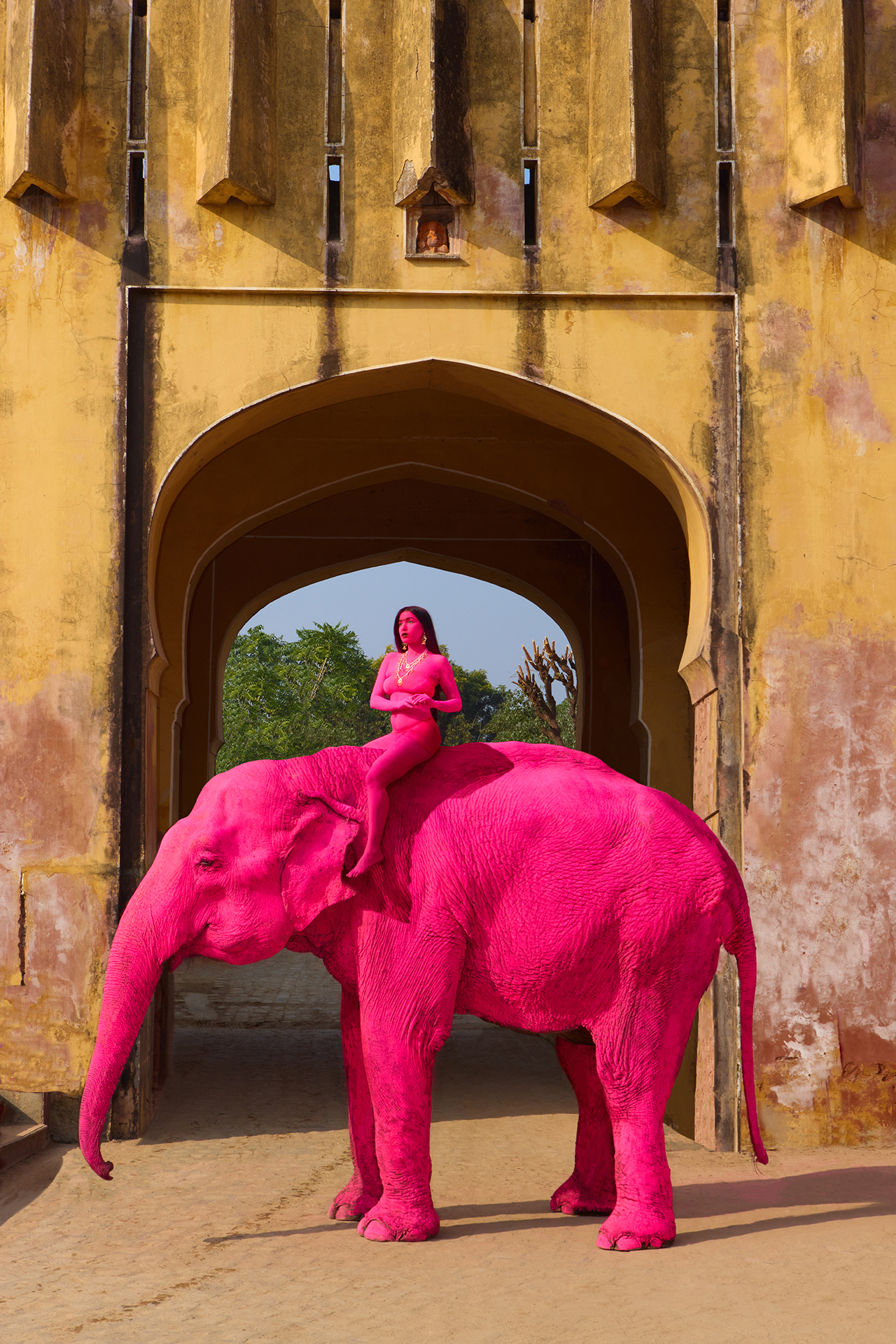
She wanted to paint an elephant pink. Not a canvas. Not a wall. A living, breathing, 67-year-old elephant named Chanchal.
What happened next would ignite a firestorm across social media, draw the attention of Indian forest officials, pull PETA India into the fight, and raise uncomfortable questions about where art ends and exploitation begins. But none of that was on Buruleva’s radar when she first started chasing her vision through the dusty streets of Jaipur.
Born from Sensory Overload
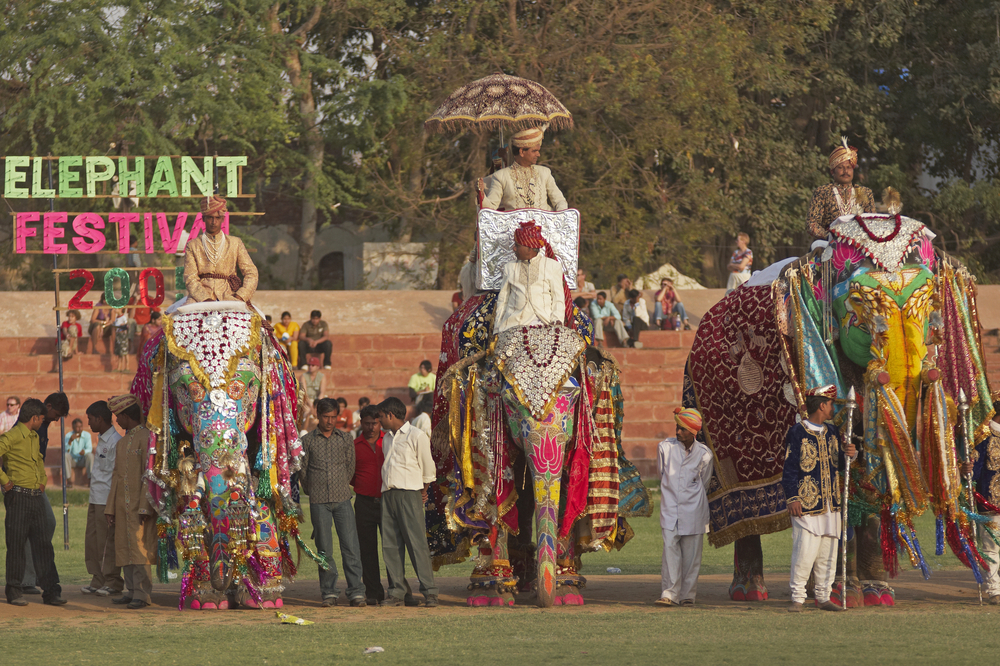
Buruleva, a 47-year-old conceptual photographer based in Barcelona, arrived in Rajasthan for a six-week creative trip. Elephants greeted her everywhere she looked, on building facades, carved into ornamental gates, and walking through traffic. She saw locals painting them in vivid colours for festivals and celebrations, a tradition deeply rooted in Rajasthani culture.
Pink, she decided, was the colour. Rajasthan’s most beloved shade. And she envisioned one solid bright pink elephant, posed against a set of classic Rajasthani gates, with a model painted to match. Simple enough as a concept. Executing it was a different story.
Four Visits Just to Get a Yes
Finding an elephant willing to participate, or rather an owner willing to cooperate, proved far harder than she expected. Buruleva toured several elephant farms, pitching her idea to sceptical managers. Most turned her away.
At the farm with the most receptive manager, she returned four times before anyone took her seriously. Scouting a location created its own headaches. She called it a nightmare, eventually settling on an abandoned Hindu temple that matched her creative vision. A model willing to be half-naked and painted pink added one more layer of difficulty to an already exhausting production. But Buruleva pushed through. She had come too far to abandon the idea.
Meet Chanchal
Chanchal was a female tusker, 67 years old, owned by a man named Shadik Khan in Jaipur. She had spent her life in captivity, part of a long tradition of elephants kept for rides, ceremonies, and tourist attractions across Rajasthan.
Her age matters here. India’s Ministry of Environment guidelines recommend that captive elephants be retired at 65. Chanchal was already two years past that threshold when she stood still for Buruleva’s camera.
Khan says the team used kaccha gulal, a coloured powder commonly applied to elephants and people during Holi celebrations. He claims the session lasted about 10 minutes and that the powder was washed off immediately afterward. Buruleva echoed his account, saying the shoot was brief, supervised by Chanchal’s handler, and that the elephant stayed calm and relaxed throughout.
In her own words, shared with an English newspaper, Buruleva stated, “The entire session was brief and conducted under the supervision of the elephant’s handler, who is responsible for its daily care and well-being.”
By the time the powder was rinsed away and the sun set on the abandoned temple, Buruleva had her images. She packed up and moved on. Chanchal went back to her life in captivity.
A Viral Spark
Months passed before the world saw what happened that day. On 18 February, Buruleva uploaded behind-the-scenes footage and the final images to Instagram. A bright pink elephant. A painted model. Crumbling temple walls frame the shot.
Reactions came fast and hard. Animal lovers tore into the post. Welfare groups called the shoot an act of cruelty. Actress Rupali Ganguly, who works with PETA, wrote directly to India’s Prime Minister demanding a nationwide ban on elephant rides. Comment sections are filled with outrage. Buruleva had expected admiration. She got a war.
A Death That Changed Everything
Here’s where the story turns darker. Chanchal had already died on 4 February 2026, two weeks before Buruleva even posted her images. But news of the elephant’s passing didn’t surface publicly until after the photos went viral.
Once it did, the internet drew a straight line between the photoshoot and Chanchal’s death. Activists blamed Buruleva. They blamed Khan. They blamed the Rajasthan forest department for allowing it to happen. Grief and anger fused into a single narrative: a foreign photographer killed an elderly elephant for the sake of art. Except that the narrative had a problem.
What Science Actually Showed
A postmortem examination told a very different story. According to the report reviewed by NDTV, Chanchal died at 3:30 pm on 4 February 2026 from cardiac arrest due to old age. Dr Arvind Mathur, a member of the postmortem panel, confirmed the findings directly, saying her death was entirely natural and had no connection to the gulal painting.
Ballu Khan, President of the Elephant Village Committee, also pushed back on the accusations, calling them baseless. He clarified that the photoshoot had taken place roughly a year before Chanchal’s death, a much wider gap than most critics assumed. Medical evidence supported one conclusion. Public opinion had already reached another.
Buruleva’s Defence
Facing a growing storm, Buruleva posted a clarification to her Instagram Story on 31 March. She accused critics of spreading misinformation and pointed to the timeline as proof that the shooting and death were unrelated events.
“I don’t know who started it, but from what I’ve been told, the elephant passed away recently due to old age and this is sad, but the photoshoot happened more than FOUR months earlier and had nothing to do with it,” she wrote.
Indian photographer Saurav Kumar jumped in to defend her publicly. He argued that the shoot had been carried out with the owner’s full involvement and consent, and that organic, non-toxic colours were used, the same kind applied during local festivals.
Buruleva also stressed that she understood the sensitivity around the issue. She asked people to separate situations where animals are genuinely harmed from cases where assumptions may not reflect what actually happened on the ground.
PETA India Turns Up the Pressure
If Buruleva hoped the postmortem results would quiet things down, PETA India had other plans. Dr Mini Arivandan, PETA India’s Senior Director of Veterinary Affairs, sent a formal letter to Buruleva with a clear demand. Either remove Chanchal’s commercial print from her website or donate all proceeds to elephant conservation in India. Buruleva was selling prints for over Rs 3 lakh per piece.
PETA suggested the money go toward its mechanical elephant project, or to genuine sanctuaries like Wildlife SOS or the Wildlife Rescue and Rehabilitation Centre, places where rescued elephants live unchained, free from weapons, and in the company of other elephants. If Buruleva chose to keep selling, PETA asked that each print carry a public message discouraging the use of captive elephants for rides or entertainment.
Questions the Postmortem Didn’t Answer
PETA’s letter stopped short of fully clearing the shoot. And the reasons were specific. Gulal had been applied near Chanchal’s eyes, ears, trunk, mouth, and genitals, all sensitive areas. PETA warned that coating an elephant’s skin in those regions can cause irritation, lead to accidental ingestion during grooming or feeding, trigger stress, and worsen pre-existing health conditions, even when the product is described as safe.
“It is not possible to wholly rule out the health impacts of the paint towards Chanchal’s demise,” the letter read. A clean postmortem didn’t necessarily mean a clean conscience, at least not in PETA’s view.
A Troubling Trail Behind the Owner
PETA India’s letter went further than the single photoshoot. It raised serious concerns about Shadik Khan himself. According to PETA, Khan appears to be the same person who previously owned an elephant named Malti. Malti was rescued following a PETA India campaign after being documented as severely beaten on multiple occasions, including once by eight men armed with sticks.
And the problems at Jaipur’s elephant tourism sites didn’t stop with Khan. In 2024, a Russian tourist ended up in the hospital after an elephant named Gouri, used for rides at Amer Fort, slammed her to the ground and broke her leg. PETA described a pattern of elephants kept on concrete, chained when not working, and controlled with weapons hidden beneath costumes and decorations. One photoshoot had cracked open a much larger wound.
An Investigation Begins
Rajasthan forest officials have now launched a formal investigation into the shoot. Authorities want to determine whether Buruleva obtained the appropriate permissions and whether animal welfare rules were followed during the session with Chanchal.
No conclusions have been announced yet. But the probe signals that the Indian government is taking the situation seriously, even if the postmortem ruled out foul play.
Where Art Meets Accountability
Buruleva set out to create a striking image. She succeeded. Pink powder on weathered grey skin, framed by ancient gates, captured in golden light. As a photograph, it works.
But art doesn’t exist in a vacuum. Chanchal was not a prop. She was a 67-year-old animal who had already lived past the age her own government recommended for retirement. She spent her final months in captivity, and her image now sells for thousands on a photographer’s website.
Whether the gulal hurt her body may never be fully settled. Whether the industry that made the shoot possible hurts elephants like her every single day is not up for debate. Jaipur’s pink elephant didn’t just go viral. She started a reckoning.