

China Just Built a $23 Million Escalator So Long It Takes 20 Minutes to Ride
Imagine stepping onto an escalator and realizing you won’t step off for more than 20 minutes. No coffee break is long enough to measure it. No quick scroll through your phone to pass the time. Just you, a moving staircase, and a slow climb that takes you up the height of an 80-story building while a mountain city unfolds beneath your feet.
Somewhere in southwestern China, this exact scene plays out thousands of times every day. Locals ride it to work. Porters haul cardboard boxes up its glass-lined path. Tourists point cameras at the sky, trying to capture something their phones simply cannot contain.
What they’re riding has a name that fits its almost mythical scale. And the story behind why it exists, how it got built, and what it means for the people who depend on it reveals something deeper than engineering. It reveals how a city refuses to let its mountains define what its people can reach.
Meet “Goddess” China’s Newest Engineering Marvel
Wushan County sits inside the sprawling Chongqing municipality, a region famous for steep terrain, futuristic architecture, and the quiet stubbornness of its residents. On February 17, 2026, a new structure opened to the public here, and it rewrote the rulebook for pedestrian transit. Locals call it “Goddess.”
The numbers alone sound fictional. Goddess spans 905 meters, just under 3,000 feet. It carries riders up 800 feet in elevation, roughly equal to an 80-story skyscraper. End to end, the ride takes about 21 minutes. The construction cost $23 million and took four years to finish.
State media declared it the world’s longest outdoor escalator, and nobody has stepped forward to challenge the claim.
But Here’s the Catch
Before you picture one impossibly long moving staircase humming up the side of a mountain, pause. Goddess is not a single escalator. It’s a connected system. Twenty-one individual escalators. Eight elevators. Four moving walkways. Several pedestrian bridges are stitched together into one continuous path. You ride, you walk a few steps, you ride again. The experience feels unbroken, but the engineering underneath tells a different story.
Huang Wei, head of the design team and an engineer at China Railway Eryuan Engineering Group, told the Financial Times, “As far as I know, there are no similar projects nationwide, either exceeding or equal to ours, either under construction or already started.” First of its kind, in his own words.
Why Chongqing Needed a Mountain-Climbing Escalator
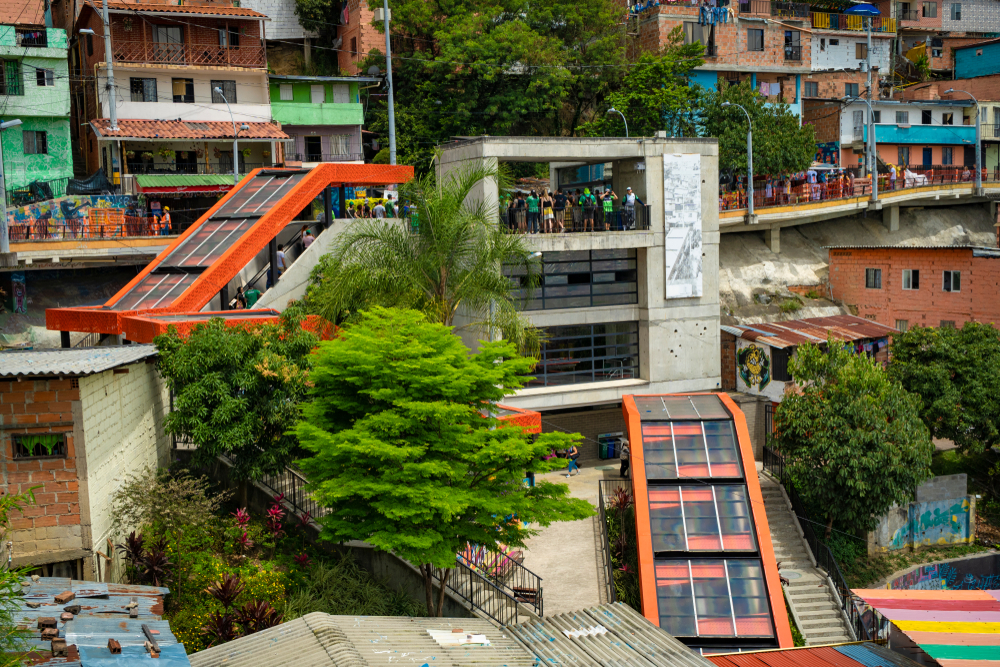
To understand why the Goddess exists, you have to understand the city it lives in. Chongqing gets called China’s “cyberpunk city” for good reason. Its skyline looks like something pulled from a science fiction film. Trains run through the middle of apartment buildings. Subway stations sit buried deeper than most bunkers. Roads curl and stack on top of each other in ways that make first-time visitors question which direction is up.
All of that chaos comes from one source. Mountains. The terrain is steep, relentless, and unforgiving. Buildings don’t spread out here. They climb. Public spaces get layered vertically because there’s nowhere else to put them. Walking from one part of the city to another can mean a workout that rivals a hike.
Du Ying, vice-president of existing installation business at Schindler China, summed it up with refreshing honesty. “If you didn’t have such high mountains, it would be impossible to make it that long.”
Before Goddess opened, people making this particular journey had two choices. Walk a long, steep staircase and arrive winded. Or drive, which could take up to an hour during rush hour, thanks to the congested streets winding through the mountain.
Neither option worked for the bangbang men hauling goods uphill. Neither worked for elderly residents. Neither worked for the thousands of commuters who just wanted to get home.
Four Years of Construction and a Tricky Build
Planning began in earnest in 2022. Officials considered trains. They considered cable cars. They debated, studied, and eventually landed on something simpler in concept but wildly ambitious in execution. An escalator system. But not just any.
Engineers faced problems that most builders never encounter. Underground pipelines packed the earth beneath the proposed route. The path had to be suspended above busy streets that couldn’t be shut down for construction. And the slope itself tested the limits of what moving staircases can handle. Average grade came in at 35 percent, with some sections climbing nearly 60 percent.
Rather than building one enormous structure that would dominate the skyline, engineers chose a modular design. Glass panels make the system feel lighter, almost floating, instead of heavy and industrial. Three viewing platforms dot the route, giving riders a chance to pause and look out over the Yangtze River.
For Huang and his team, this wasn’t just about moving people. It was about making that movement feel like part of the city rather than a scar across it.
Built by the Swiss, Engineered for the Mountains
Schindler, the Swiss company best known for elevators and escalators in skyscrapers around the world, manufactured the moving stairways in a factory north of Shanghai. Their Chinese arm has deep roots in Chongqing, having supplied around 1,400 escalators to the city’s metro system over the years.
That existing relationship mattered. Building something this unusual required a manufacturer who already understood the city’s vertical obsession. Schindler did.
Everyday Life Changed for Locals
Numbers tell one story. People tell others. Roughly 9,000 people ride Goddess every single day. A one-hour trip in one direction costs about 3 yuan, or 40 cents in US currency. During February’s Spring Festival alone, 450,000 people passed through the system.
Xie Hongmin, 44, was visiting from a nearby rural settlement when a reporter caught up with him. He said he hoped his own town would install something similar one day. His reasoning was as simple as it was human. “Walking is quite tiring,” he told the Financial Times.
Then there are the bangbang men. Porters who make their living carrying goods up and down Chongqing’s steep streets use bamboo poles, ropes, and sheer endurance. For decades, they’ve been the quiet backbone of commerce in the city’s hilliest districts. Ran Guanghui, 60 years old, was hauling bags of bras into a nearby mall when he spoke to reporters about the difference Goddess has made in his daily grind. His world, and the worlds of thousands like him, just got a little less brutal.
A Tourist Attraction Already
Goddess isn’t the first escalator in Chongqing to draw attention. Back in the 1990s, the city built the Crown escalator, which stretches more than 350 feet and remains one of the longest individual escalators in Asia. It’s become a landmark, a photo stop, a symbol of the city’s willingness to build things other cities wouldn’t dare attempt.
Goddess joins that tradition but operates at an entirely different scale. Visitors now travel specifically to ride it. Social media feeds fill with drone footage, first-person videos, and awestruck reactions from tourists trying to wrap their heads around what they’re seeing. A city that was already a destination for architectural curiosity just added another must-see attraction to the list.
How Goddess Stacks Up Against Other Escalator Records
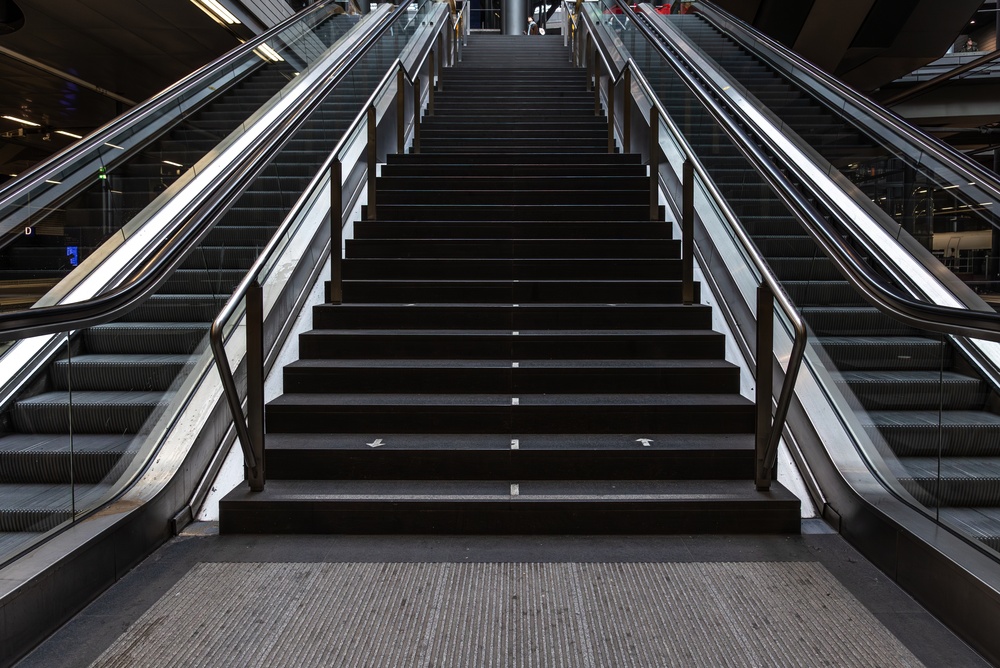
For fun, consider the other ends of the escalator record book. Guinness World Records lists the shortest escalator in the world at a mall in Japan. Its vertical height is just 32 inches. You could take a single step and reach the same destination.
In 2013, a German man named Guido Kunze set a different kind of record when he walked up 61,100 escalator stairs in the opposite direction. A feat of endurance that only makes sense if you love escalators more than most people love anything.
Goddess sits at the opposite extreme of the spectrum from the Japanese mall escalator. Where one makes you wonder why anyone bothered to build it, the other makes you wonder how anyone dared.
Part of China’s Bigger Infrastructure Push
Goddess didn’t appear in a vacuum. China has been pouring resources into ambitious infrastructure projects for years, particularly in inland regions that historically lagged behind coastal cities.
Last year, the country opened the Huajiang Grand Canyon Bridge in Guizhou. At around 2,050 feet above the Beipan River, it currently ranks as the highest bridge in the world.
Dan Wang, head of Eurasia Group’s China team, offered a straightforward explanation for why projects like these keep getting built. “I think infrastructure investment is still the most important driver for domestic investment,” he told reporters, adding that it remains something the government can directly control.
But ambition comes with risk. In August 2024, 12 workers died when a bridge collapsed in the northwestern province of Qinghai. Behind every marvel stands a cost, and behind every record-breaking structure stand workers whose safety depends on decisions made far above their heads. Goddess, so far, has been a success story. But the broader picture deserves honesty.
The Price Tag Still Isn’t Final
For now, Goddess operates in a trial phase. Officials will watch the data. How many people ride? At what times? For what distances? Once they have enough information, they’ll announce a final price structure.
Whatever that price ends up being, the deeper question isn’t economic. It’s philosophical. What does it mean when a city decides that getting its people up a mountain is worth four years of construction, $23 million, and a team of engineers willing to suspend glass and steel above busy streets?
It means somebody looked at the daily struggle of porters, commuters, grandmothers, and visitors, and said this is worth solving. Not around. Not with a shrug and a staircase. But directly, ambitiously, and with the kind of care that shows up when a society believes its people deserve to reach where they’re trying to go.
We all have our own mountains. Some of them are literal. Most of them are not. The slopes we climb daily are made of responsibilities, grief, doubt, and the thousand small fatigues that quietly wear us down.
Goddess is just an escalator. But it’s also a reminder that the steep climbs in our lives don’t have to stay unsolvable. Someone, somewhere, is willing to build something new. Maybe that someone is us.
And maybe the first step isn’t grand at all. Maybe it just looks like deciding that walking, in whatever form it takes, has been tiring for long enough.
Featured Image Source: Shutterstock