

She Wandered Into the Swamp Alone. What the Body Camera Caught Next Says Everything.
Monday afternoons in Tampa carry a particular kind of quiet. Kids play in yards, neighbors wave from driveways, and life moves at the unhurried pace of a residential street that has seen nothing truly alarming in a long time. For one family on Windbrush Avenue, that quiet was shattered without warning, somewhere between an ordinary moment and the next, when they looked around and realized their five-year-old daughter was gone.
What followed over the next several hours would test a family’s ability to hold themselves together, push a sheriff’s department to move faster than comfort allows, and produce a piece of body camera footage that is difficult to watch without feeling something loosen in your chest. Before any of that, though, there was just a parent standing in a doorway, staring at an empty yard, and beginning to understand that something had gone terribly wrong.
A Normal Afternoon Turns Into a Parent’s Worst Fear
Children wander. It is one of the fundamental anxieties of parenthood, and most of the time it resolves itself within minutes, a child found behind a couch or at a neighbor’s back door, oblivious to the small storm of fear they just caused. For families raising children with autism, that anxiety carries an additional weight. A child who may not respond to her name being called, who may not understand the danger of moving water or dense forest, who has no way to communicate her location to a stranger, represents a specific kind of vulnerability that parents of neurotypical children rarely have to fully reckon with.
On Monday, that vulnerability became real for a Tampa family when their five-year-old daughter, who has autism, walked away from her home in the area of the 5000 block of Windbrush Avenue and disappeared into the wooded, swampy terrain surrounding the neighborhood. Her parents did what any parent would do first. They checked with neighbors, moving door to door with the fragile hope that someone had seen her, that she had simply wandered next door and was sitting in someone’s kitchen eating a snack.
Nobody had seen her. “They went to the neighbors house, realized ‘no we haven’t seen her,’ now the panic starts to kick in,” Hillsborough County Sheriff Chad Chronister recalled to ABC News about what set off the search.
That moment of realization, when the ordinary explanation runs out, and the mind lurches toward darker possibilities, is something no parent should ever have to experience. For this family, it arrived fast, and with it came the knowledge that their daughter was somewhere out there, alone, in terrain that does not forgive hesitation.
Deputies Hit the Ground and the Air at the Same Time
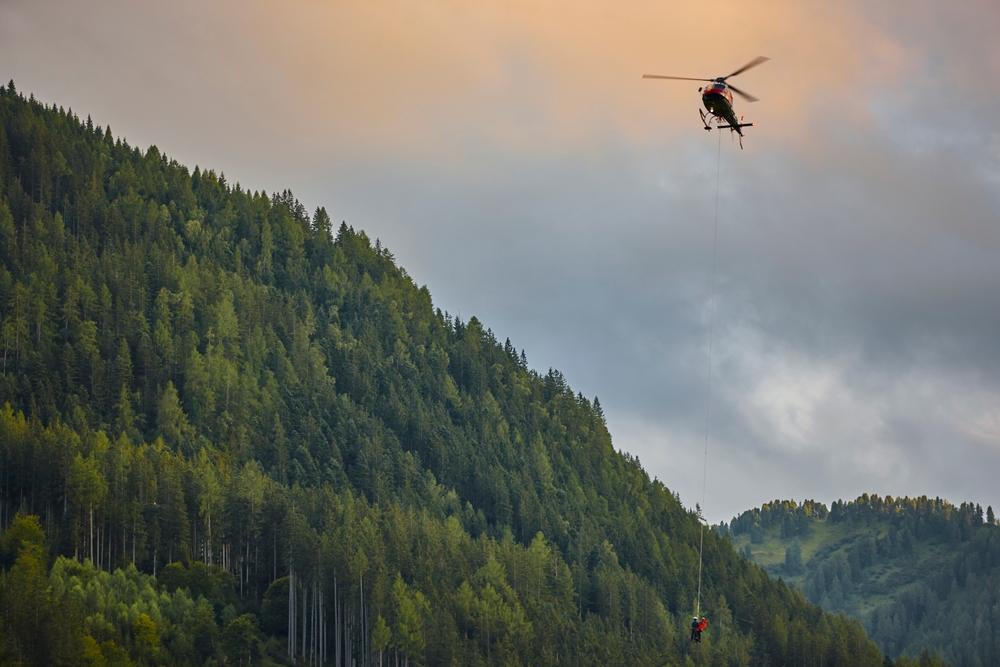
Hillsborough County Sheriff’s Office did not wait for the picture to become clearer before mobilizing. When a child with autism goes missing near wooded wetlands, clarity is a luxury nobody can afford to wait for. Deputies launched a dual operation almost immediately, sending teams on the ground into the surrounding area while scrambling the department’s aviation unit into the air above.
Speed in situations like these is not just about covering ground faster. It is about the gap between outcomes. A child moving toward open water in a swampy environment faces dangers that multiply with every passing minute. Fatigue, disorientation, the pull of water that looks calm from a distance and is anything but beneath the surface. Every decision made in those early minutes either narrows that gap or widens it, and the Hillsborough County Sheriff’s Office moved as though they understood exactly what was at stake.
Ground deputies fanned out through the heavily wooded terrain, working in coordination with the aviation unit overhead. Above them, the department’s aerial team carried a tool that would prove to be the difference between a search that goes cold and one that finds its target: a thermal imaging camera capable of detecting heat signatures through dense tree cover, across water, and through the kind of terrain that would make a visual search nearly impossible.
A Thermal Camera Picks Up Something Moving in the Trees
Thermal imaging works on a principle that does not care about visibility. It does not need clear sightlines or open ground. It reads heat, and a child’s body, small as it is, radiates enough of it to stand out against the cooler signature of water and vegetation. As the aviation unit swept across miles of swamp and forest, the camera scanned everything below.
And then it found something. A heat signature, small and moving, making its way through the wooded wetlands below. Aerial footage captured what the camera saw: a child walking through the trees, heading toward a body of water. Every second she moved in that direction raised the danger. Deputies in the air immediately got on the radio to the ground teams.
“Hey I think I got her in the woods, she might be able to hear your name if you call her now,” one deputy was heard saying from the aerial search. “She’s about 80 feet running. I got two deputies moving in that direction.”
Listen to that exchange, and what you hear is not just a radio call. You hear a team that has trained for exactly this moment, one that knows how to translate a heat signature into a set of coordinates, relay those coordinates to deputies on the ground, and do all of it without losing a single second to confusion or hesitation. Air and ground work as one system, guided by technology and held together by the kind of communication that only comes from genuine preparation. Ground deputies moved fast toward her location, guided in real time by the aerial team above.
Knee-Deep in a Florida Swamp, Then Lifted to Safety
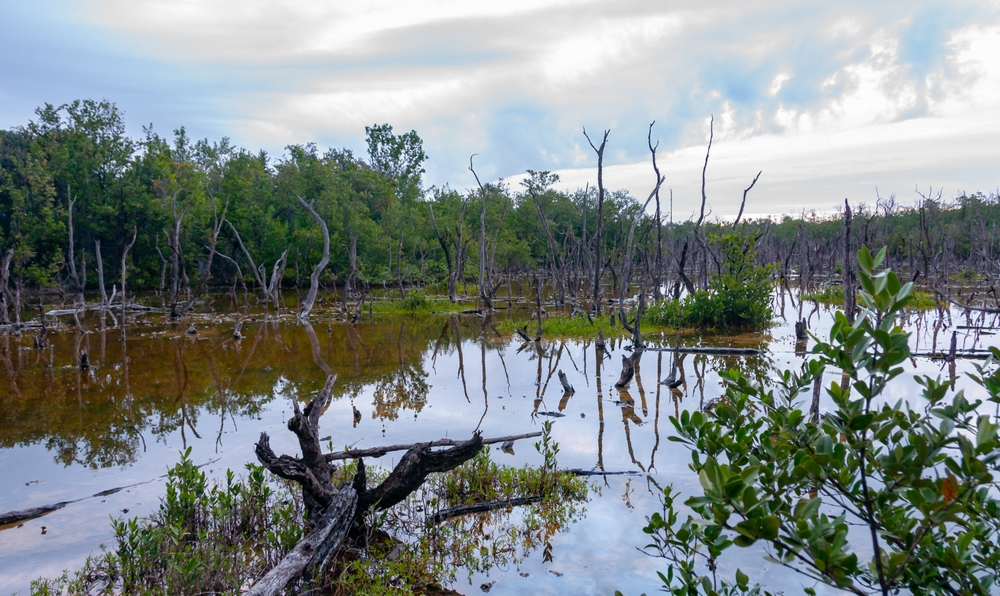
When ground deputies reached the coordinates, they found her. A five-year-old girl, standing knee-deep in the murky water of a Florida swamp, alone in a landscape she had no way of making sense of. She was not injured. She was frightened, disoriented, and surrounded by water and trees, but she was alive.
Deputies waded in and lifted her out. Body camera footage captured the entire rescue, from the aerial contact to the moment she was brought to solid ground, and watching it carries an emotional weight that is hard to put into words. It is a piece of footage that shows exactly what public service looks like when it works the way it is supposed to, when training meets technology, and both are pointed in the right direction at the right moment.
Sheriff Chronister did not minimize what the moment represented. “In situations like this, every second counts and its always rewarding to see this quick response for our deputies and to see such a positive outcome,” he said.
Behind that measured, professional statement is the reality that outcomes in missing child cases are not always positive. Deputies who work these searches know that. Every member of the aviation unit scanning that swamp with a thermal camera knew they were racing against something. Every ground deputy moving through the trees knew that the call they were hoping for, the one confirming a living child at a set of coordinates, was not guaranteed. When it came, it meant everything.
The Tools and Decisions That Brought Her Home

Rescues like this one do not happen by accident. A child found alive after wandering into a Florida swamp is not simply the product of good fortune, though a family’s prayers certainly played a role in how this family would later describe it. It is the product of deliberate preparation, coordinated response, and the kind of technology investment that pays dividends in moments exactly like this one.
Thermal imaging changed the math of this search. Without it, ground teams would have been working through dense, heavily wooded wetlands with limited visibility and no way to scan large areas at once. A visual search on the ground alone, in terrain like that, with a child who may not respond to her name, could have taken hours that were not available. From the air, with a thermal camera, the search took significantly less time and found its target before she reached deeper water.
Air-to-ground coordination did the rest. Knowing where a child is and getting deputies to that precise location are two different problems, and the Hillsborough County Sheriff’s Office solved both in sequence without losing the thread between them. Deputies in the air kept their eyes on her location and talked ground teams in with enough precision that when boots arrived, she was right where the camera said she would be.
Chronister credited his team’s rapid action for turning what could have been devastating into something the family could carry forward without grief: “Their quick action saved the day, turning a potential tragedy into a hopeful reunion. Their dedication shows what service and protection are all about here at the Hillsborough County Sheriff’s Office.”
Children with autism face specific risks during wandering incidents that go beyond what most people imagine when they picture a lost child. Many do not respond to their names. Many are drawn to water, a well-documented pattern among children with autism that makes proximity to any body of water a serious and immediate concern. Many cannot communicate their location to a stranger, even if that stranger is trying to help. All of those factors were present on Monday afternoon in Tampa, and all of them informed how quickly and how seriously the Hillsborough County Sheriff’s Office treated this call from the moment it came in.
The Program Every Autism Family Should Know About
After the rescue, officials pointed families toward a resource that deserves far more attention than it typically receives. Hillsborough County Sheriff’s Office operates a program called the Safety Net, designed for families raising children with autism or caring for elderly relatives who may be prone to wandering. Families can register their loved ones with the program, giving law enforcement a head start in any future search situation, from physical descriptions to behavioral patterns to information about where the person tends to wander.
Programs like this exist because wandering is not a rare event for families affected by autism. It is a documented, recurring risk that affects a large percentage of children on the spectrum at some point during childhood. Having a family’s information on file before an emergency happens, rather than collecting it in the middle of one, can make a measurable difference in how fast and how effectively a search gets underway.
If you are raising a child with autism, or caring for an elderly parent or grandparent who lives with dementia or any condition that increases the risk of wandering, finding out whether your local sheriff’s office or police department runs a similar program is worth doing before you ever need it. Registration takes minutes. What it buys you, in a worst-case moment, could be measured in something far more important.