


The Quiet Skill Men Were Never Taught
A growing conversation about male loneliness is asking a harder question than many people expect. What if some men are not only lacking connection, but also lacking the emotional tools that make connection possible?

That question can feel uncomfortable at first, especially in a culture that often turns men’s pain into a debate. Yet the most compassionate reading is also the most honest one: many boys were taught to survive by going silent, and many men are now paying the cost of that silence.
The Theory That Started A Hard Conversation
Dr. JJ Kelly, PsyD, also known as the punk-rock psychologist, brought renewed attention to the so-called male loneliness epidemic. The piece argues that the crisis may be less about men simply being alone and more about how men are taught to recognize, handle, and share their emotions.

Dr. Kelly’s central point is direct, and it is meant to challenge a system rather than condemn individual men. She says, “Here’s the gap I see over and over with men: they won’t name loneliness at all. They’re embarrassed by it. And if you can’t name the problem, you can’t solve it.” The sentence lands because it points to something deeper than social awkwardness. A man may feel abandoned, unwanted, afraid, or emotionally starved, yet call it anger, boredom, stress, or nothing at all.
Why Naming The Feeling Changes The Pattern
Emotional literacy is the ability to notice, name, understand, and express what is happening inside you. It is a learned skill, shaped by families, friendships, schools, conflict, heartbreak, repair, and honest conversation. A boy who hears “stop crying” often enough may learn to treat sadness as danger. A teenager mocked for opening up may learn that vulnerability costs him respect. An adult man can then carry those lessons into dating, marriage, parenting, and work.
This is where loneliness becomes harder to heal. The body may know the truth long before the mouth can say it, and shame often turns that truth into silence. Dr. Kelly explains, “Society has told men that the only emotion they’re allowed to validate is anger. Everything else, especially loneliness, gets coded as weakness. And everybody finds ‘shame’ uncomfortable. So now you’ve got men who are being shamed for their loneliness and running away from it. We are so far from problem-solving at that point.” When anger becomes the only approved language, pain has nowhere healthy to go.
What The Numbers Show About Male Friendship
This conversation did not appear out of nowhere. The Survey Center on American Life reported in its 2021 analysis, “Men’s Social Circles Are Shrinking,” that 55% of men reported having at least six close friends in 1990. By 2021, that figure had fallen to 27%. The same analysis found that 15% of men had no close friendships at all, compared with 3% in 1990.
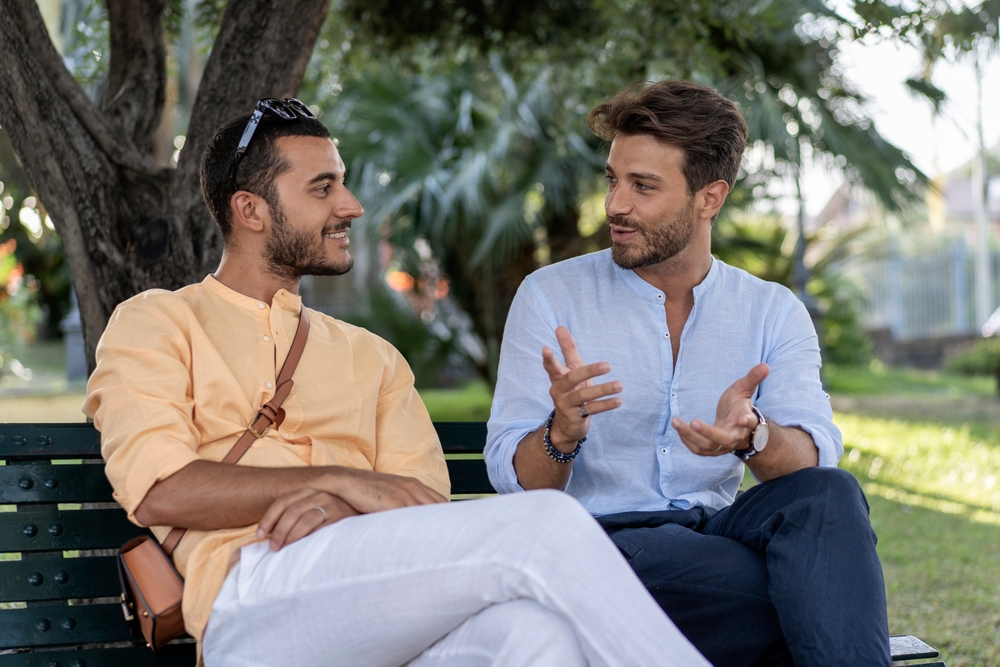
Those numbers describe more than a social trend. They describe a shrinking number of places where men can be seen without performing. Friendship is often where adults practice honesty without a script, yet fewer men seem to have those rooms available to them. When close friendship disappears, one person can start expecting a romantic partner to become therapist, best friend, emotional translator, and rescue team. That is too much weight for any relationship to carry.
How Masculinity Norms Can Shape Loneliness
A 2024 review in the American Journal of Men’s Health examined masculinity norms, loneliness, and social connectedness among men in Western societies. The review found that traditional norms emphasizing independence, invulnerability, emotional stoicism, and endurance can limit men’s ability to form meaningful social connections.
This does not mean masculinity itself is the problem. Courage, devotion, responsibility, discipline, and protection can be powerful when they serve life. The problem begins when manhood gets reduced to emotional disappearance. Many boys are praised when they need less. They are rewarded for being tough, quiet, independent, and easy to manage. Over time, the lesson becomes clear: having needs makes you a burden. A man may then crave closeness while feeling humiliated by the act of asking for it.
Emotional Intelligence Can Be Learned
A 2015 study examined prospective associations between loneliness and emotional intelligence among adolescents. The researchers reported links between understanding and managing emotions and loneliness for both boys and girls, while perceiving and using emotions were linked to loneliness in males only.

That finding matters because emotional intelligence should not be treated as a fixed trait. It can be practiced. A man can learn to name his body’s signals, recognize his triggers, ask better questions, repair harm, and stay present when another person is hurting. In VICE, Dr. Kelly says, “That’s where the real skill-building happens. Once you can map all of that, you’re no longer just reacting. You can actually choose a behavior that matches your values instead of just exploding, shutting down, or reaching for your phone (for example!).” That is not abstract self-help. That is daily relationship work.
What Men Can Begin Practicing Now
The goal is not to turn men into someone else. The goal is to help men become more honest versions of themselves. Connection rarely begins with a dramatic confession. It usually begins through repeated moments of emotional truth, offered with enough humility to let another person come closer.
A few practices can help rebuild the bridge between inner life and outer connection:
- Name One Feeling Per Day: Choose one honest word beyond “fine,” “busy,” or “stressed.” Try lonely, embarrassed, disappointed, peaceful, jealous, afraid, grateful, or hurt.
- Check The Body First: Notice where emotion appears physically. A tight chest, clenched jaw, heavy stomach, shallow breathing, or fatigue may carry useful information.
- Tell One Trusted Person The Truth: Share one real sentence with someone safe. Keep it simple and specific, such as “I have been feeling isolated lately.”
- Ask Before Fixing: When someone shares pain, ask whether they want advice or presence. Many relationships deepen when people feel heard before they are corrected.
- Repair Without Defending: When you hurt someone, listen carefully and take responsibility. A sincere repair teaches the nervous system that accountability can create closeness.
These practices are small, yet they ask for courage. Many men were never taught that emotional honesty could be a form of strength. The first honest sentence may feel awkward, but awkwardness is often the sound of an unused skill waking up.
Why Partners Cannot Carry The Whole Emotional Load
Dr. Kelly argues that partners, especially women in heterosexual relationships, can sometimes overfunction emotionally for men. In the article, she says, “Enabling is the ‘help that doesn’t help,’ More specifically, it’s doing for someone else what they are fully capable of doing for themselves. And when you (aka women) do that, you’re not being kind—you’re robbing them (aka men) of the courage points, the self-esteem points, the confidence that only comes from doing hard things yourself.”
There is a difference between support and rescue. Support says, “I am with you while you face this.” Rescue says, “I will face this for you.” Support strengthens both people, while rescue can create resentment in one person and helplessness in the other. A partner can love a man deeply without translating every silence, soothing every mood, or absorbing every emotional explosion. Love becomes healthier when both people are allowed to be responsible adults.
What A Healthier Culture Could Teach Boys
Individual growth matters, but culture shapes the soil where that growth begins. If boys are mocked for tenderness, they will not magically become emotionally fluent men. If fathers have no room to grieve, sons often inherit the same locked room. Schools, families, coaches, faith communities, and media all have influence here, because boys are always learning what kind of manhood gets rewarded.
A healthier culture would give boys models of manhood that include courage and tenderness in the same body. Boys need to see men apologize without humiliation, ask for help without collapse, cry without losing dignity, and love without control. This does not require abandoning strength. It requires expanding strength. A man who can face his loneliness directly is showing courage. A man who can listen without defensiveness is showing discipline. A man who can repair harm is showing leadership.

A Better Measure Of Strength
The male loneliness epidemic will not be healed by blaming men, mocking men, or excusing harmful behavior that grows out of pain. Healing asks for a deeper honesty. It asks men to build skills they may never have been taught, and it asks society to stop confusing emotional silence with maturity.
A man does not become weaker when he learns to name his loneliness. He becomes reachable, and in a disconnected age, becoming reachable may be one of the bravest things a person can do.
Featured Image from Shutterstock