

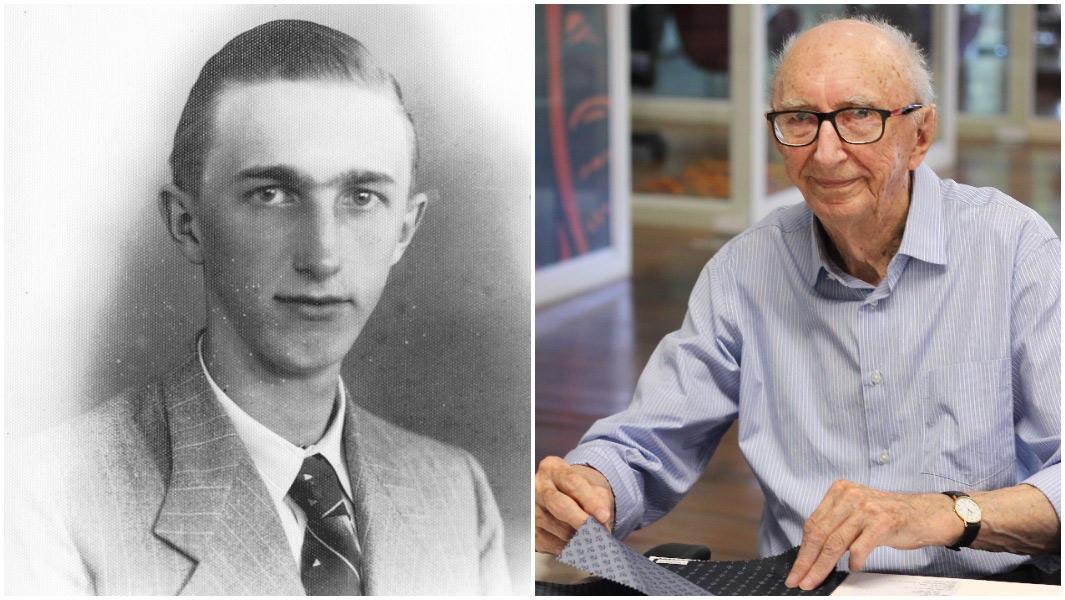
Meet The 100 Year Old Man Who Just Broke A World Record At Work
Think about the last time you opened your laptop and quietly wondered how much longer you could keep doing this. Maybe it was a Monday morning, maybe a Sunday night, maybe right after a meeting that should have been an email. Most of us measure our careers in chapters that close quickly. Two years here, four years there, a jump for a better title, another jump for a better salary, a side hustle on weekends because something inside us is restless.
Now imagine a man who walked into his first job before the Second World War began, before television entered most living rooms, before nine separate currencies passed through his country, and who is still walking into that same office today. Same employer. Same hallways, more or less. Same quiet pride in showing up.
He is 100 years old. He drives himself to work. He just broke a Guinness World Record that he already held until recently. How does a single person stay loyal to one company through a century of upheaval, growth, and constant reinvention? What does he know about work, about time, about purpose, that the rest of us are missing? Before we get to the headline number that earned him a place in history, you need to meet the barefoot boy who started it all.
A Barefoot Boy From A Small Brazilian Town
Walter Orthmann was born on April 19, 1922, in Brusque, a small town tucked into the Brazilian state of Santa Catarina. Brusque carried a deep German heritage, with families who had brought their language, customs, and work ethic across the Atlantic generations earlier. That detail will matter soon.
As a child, Walter walked barefoot to school in every kind of weather. Rain, mud, frost, sun. None of it kept him home. He arrived with sharp eyes and a sharper memory, the kind of student teachers remember decades later. He loved learning so deeply that even now, friends and coworkers describe his mental clarity as something close to a gift.
Life at home, however, was not easy. His family hit a hard stretch financially, and Walter, the oldest of five, understood what that meant for a boy his age in that era. School could wait. The family could not.
A Mother, A Mill, And A Shipping Assistant At Fifteen
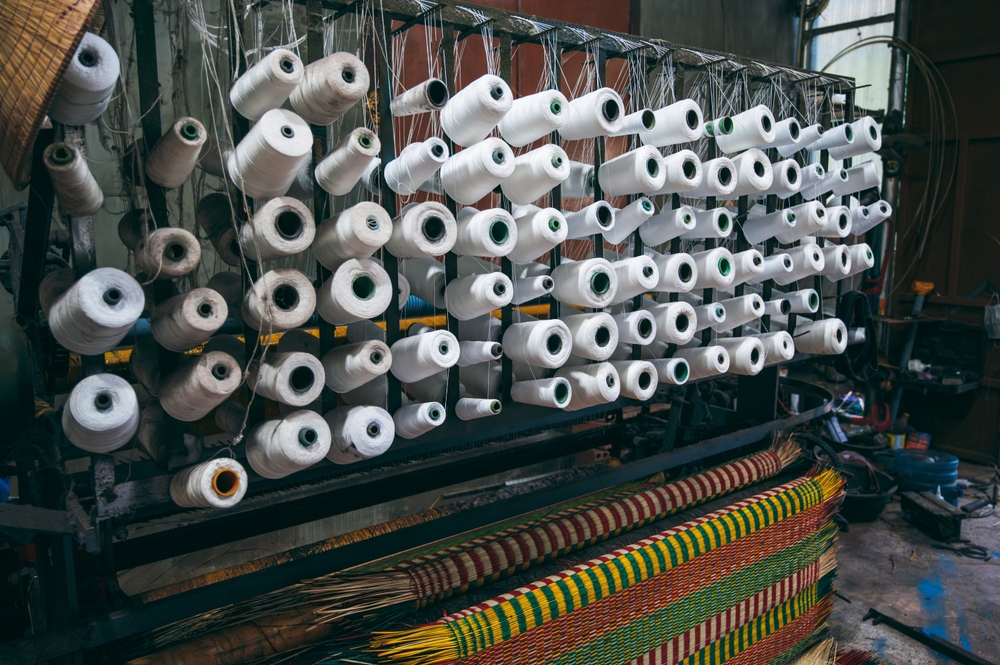
One day, his mother walked him to a nearby weaving mill in search of work. Walter was fourteen at the time, still a child by today’s measure, already a man by his own. The mill needed someone who could speak German fluently, and Walter, raised in a town full of it, fit the role within minutes of meeting them.
On January 17, 1938, he started his first day at a textile company called Industrias Renaux S.A., known today as ReneauxView. He was a shipping assistant, the kind of role most people remember only as a footnote in their career story.
Walter would turn it into the entire book. “Back in 1938, kids were expected to work to help support the family. As the oldest son of five, my mother took me to find a job at the age of 14.”
Hearing him say it now, almost ninety years later, the weight of those words lands differently. He did not see his early start as a tragedy or a sacrifice. He saw it as a beginning, a door opening at a moment when his family needed him to walk through.
Promotions Earned Through Curiosity, Not Ambition
What set Walter apart from his very first day was not raw talent or some hidden gift for textiles. It was his willingness to do more than what the job description asked. He paid attention. He learned the business from the ground up. He asked questions when others stayed quiet.
His employers noticed. He moved from shipping into sales, then climbed again into the role of Sales Manager. Each promotion came because he had earned it through visible care, not through pushing for it. One sales trip in particular became part of company folklore. Walter traveled to São Paulo for what most would consider a routine outing. “I was given the opportunity to work as a salesperson. I traveled to São Paulo and in less than one week I filled the production with orders equivalent of three month of work.” He said.
A single week of effort matched what a normal stretch took a quarter to deliver. The young man with the sharp memory and the barefoot childhood had quietly turned into one of the most effective people the company employed.
The Road Years And A Country Falling In Love With Itself

The 1950s opened a new chapter for Walter. His work began to take him across Brazil, into cities and small towns he had only read about as a boy. He met clients from different cultures, listened to stories from different regions, and slowly built a network of business contacts who slid into the category of true friends.
He loved being on the move. He loved the conversations on long trips. He loved the way each new place forced him to listen first and pitch second. That habit of learning from every room he entered became the quiet engine of his entire career.
Somewhere along the way, he picked up a business lesson that has aged better than any modern leadership book. Stay current. Adapt to whatever new world arrives. Do not cling to how things used to work just because they once did.
Nine Currencies And Eight Decades Of Change
Try to picture this one slowly. Walter has collected paychecks in nine different currencies during his time at ReneauxView. Brazil itself has rewritten its money more times than most countries have rewritten their constitutions, and Walter watched every shift roll through his payslip.
He has worked through dictatorship and democracy, through hyperinflation and stability, through typewriters and smartphones, through landlines and video calls. The world around his desk has rearranged itself again and again. He simply kept showing up, kept adapting, kept finding ways to be useful in whatever new version of the company emerged. That kind of steadiness is almost impossible to fake. It only grows in someone who genuinely loves what they do.
A Mindset Built Entirely On The Present

Ask Walter for the secret behind his record, and he will not hand you a five-step productivity plan. He will not talk about goal setting or vision boards. He will not tell you to plan harder for tomorrow. He will tell you the opposite. “I don’t do much planning, nor care much about tomorrow. All I care about is that tomorrow will be another day in which I will wake up, get up, exercise and go to work; you need to get busy with the present, not the past or the future. Here and now is what counts.”
Read that twice. There is a quiet philosophy buried inside it, one that modern thinkers have repackaged a hundred different ways. Walter just lives it. He treats each morning as the only morning that actually exists. He goes to work because going to work is what today contains, and today is the only thing he has ever truly owned.
For someone who built a record-breaking career, his lack of obsession with the future feels almost paradoxical. Yet that may be exactly the point. He never chased the record. He chased the day.
Two Milestones In One Unforgettable Month

April of 2022 handed Walter two reasons to celebrate. On the nineteenth of that month, he turned 100 years old. Coworkers, friends, and family gathered around him for a party most of us will only ever read about, a centenary marked not in a hospital or a quiet home but in the company of people he had shaped over decades.
Earlier that same year, on January 6, Guinness World Records had officially verified his 84 years and 9 days at the same employer as the longest career at a single company in human history. He had actually broken his own previous record, set back in 2019 at 81 years and 85 days. He was, in a sense, competing with no one but himself.
He calls the certification his proudest achievement, which is striking when you consider how much pride he could have claimed from any number of milestones over the decades.
Career Advice From A Man Who Has Earned The Right To Give It

When asked what younger workers should take from his story, Walter does not lecture. He offers a few quiet ideas that fit on a single page. Find work that motivates you. Choose an employer whose values match your own. Treat purpose, routine, and commitment as gifts rather than burdens. When you do what you love, time slips by without you noticing, and one day you look up and realize you built something that mattered.
He still exercises every single day. His memory remains sharp. He drives himself to the office because the office is his favorite place to be. No part of him treats work as a sentence to serve. There never has been. That, perhaps, is the real lesson hiding inside the headline.
What His Life Quietly Asks Of The Rest Of Us
Walter Orthmann never set out to break a world record. He set out to help his family at fourteen, fell in love with a job at fifteen, and kept showing up for almost nine decades. The trophy came as a surprise to him. Life did not.
In a culture that worships the next move, the next role, the next chapter, his story sits like a soft rebellion. He stayed. He paid attention. He learned. He adapted. He let one company become the canvas of an entire lifetime, and somehow that single act of devotion turned into a record no one is likely to break for a very long time.
So here is the question worth carrying away from his story. What would your own work look like if you stopped racing the clock and started living inside it? What might the next ten years hold if you treated today, just today, as the only assignment that actually matters? Walter would probably nod, smile, and tell you to stop overthinking it. Then he would grab his keys and head for the office.