


Firefighter With PTSD Builds ‘Fire & Ice Cream’ Truck to Save First Responders
Somewhere in California, a fire engine rolls through a neighborhood street, drawing children to the curb and pulling smiles from adults who had not expected to smile that afternoon. Nobody on board is fighting a fire. Nobody wears a breathing apparatus or pulls hose lines. A cheerful melody drifts from speakers, and a man leans out to hand ice cream to a crowd that keeps growing the longer he stays.
Douglas Satterfield spent decades running toward the worst moments of other people’s lives. He ran toward burning buildings, toward accidents, toward scenes that lodge permanently in the mind long after the shift ends and the uniform comes off. He gave that work everything he had, and for years, he believed that giving everything was the same as being fine.
He was not fine. What happened when the weight of those decades finally exceeded what one person can carry in silence brings us to a fire engine ice cream truck, a wife sitting on a porch each evening, and a mission that no job description could have predicted when Doug Satterfield first put on a firefighter’s uniform. Before we get to the truck, you need to understand what it took to build it, and what nearly had to be destroyed first.
A Career Built On Showing Up For Everyone Else
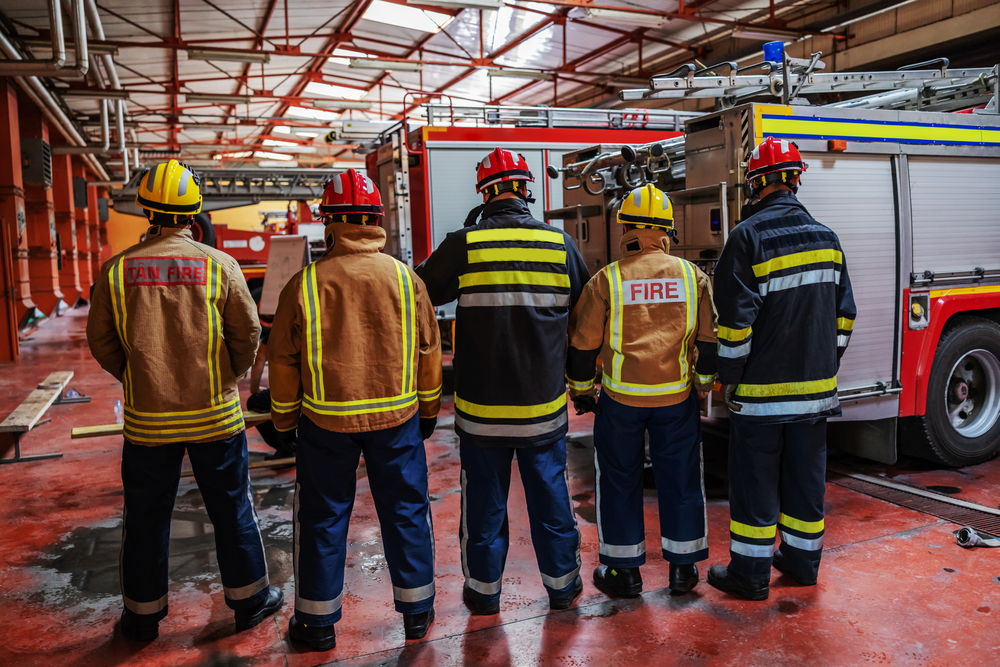
Douglas Satterfield served the Stockton, California community as an engineer, firefighter, and paramedic. He showed up for structure fires, medical emergencies, accidents, and every variety of crisis that communities produce around the clock without warning or schedule. He raised three children with his wife Lori while doing it, and by most external measures, his life looked like a success story already in progress.
What lived underneath that story was harder to see and harder still to name. First responder careers run at a register that most people never experience. Every shift asks a person to override natural human instincts toward self-preservation, to run toward what everyone else runs from, and to make fast, clear decisions inside situations designed to cloud everything. A nervous system asked to operate that way for years does not simply reset when the shift ends. It carries the residue of every call, every face, and every outcome into every ordinary moment that follows.
Doug had a word for it, though he only found that language later. He called it a backpack. Bills, family tension, and call after call after call, each one dropping another rock into a load that grew heavier with every passing year without anyone tracking the weight. Nobody hands a first responder a tool for measuring when the backpack has gotten too heavy to carry safely. Most of them never think to ask, because asking means admitting something the culture of that work rarely makes room for.
A Breakdown Nobody Saw Coming, Including Doug
In 2021, Douglas Satterfield had a mental breakdown. He received a PTSD diagnosis afterward, but during the breakdown itself, he had no language for what was happening and no awareness that anything had gone wrong at all. “I had no idea. I was living life. I was still enjoying the job, enjoying the calls, and our family was doing what I thought was great. I mean, we were surviving and no arguments or anything, but there’s just an underlying tension, and you just live at such a high level in life in this career. You’re always in a fight. You’re never in flight and that’s 24-7.” Doug said.
Read that last line carefully. Always in a fight. Never in flight. Around the clock, for years, while raising children and loving a wife and doing work that genuinely mattered, Doug’s nervous system never fully rested. He had no idea, and nobody around him knew either, at least not in any way they could name with confidence.
What eventually broke through was behavior he did not recognize as his own. An incident involving law enforcement, the kind of confrontation he would never have sought at any earlier point in his life, forced a moment of clarity that could not be walked back. Something had gone wrong at a level he could no longer dismiss, and the coping strategies he had been leaning on were, by his own description, very destructive.
Research cited by Texas A&M’s Dr. Anka Vujanovic shows that as many as one in ten first responders report PTSD experiences, nearly three times the rate found in the general US population. Suicide rates among first responders run comparable to rates documented among military veterans. Behind every number in those findings sits a person who learned too late, or never at all, that what they were carrying had a name and a path through it. Doug was close to becoming one of those numbers.
The Edge He Almost Went Over
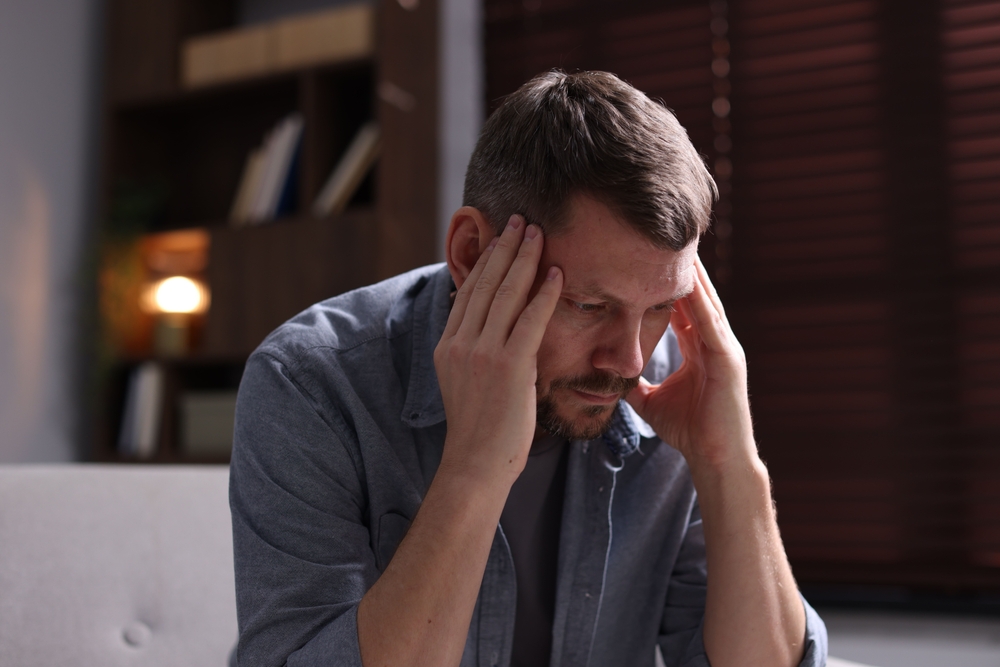
Asking for help did not come easily to a man built, professionally and personally, around being the one who helps. First responder culture runs on toughness, pride, and a deep reluctance to be seen faltering by the same community that depends on you to hold steady. Doug resisted. He leaned on coping strategies that made everything worse, kept adding rocks to the backpack, and hoped the straps would hold long enough.
“I was going to lose everything. And if I knew I was going to lose everything, I knew what the next step was going to be and that scared me. And so, I sought help, and thank God I did.” That decision, to ask for help at the exact moment fear became louder than pride, changed the direction of everything that followed. Doug found the West Coast Post-Trauma Retreat, known as WCPR, a volunteer-run organization staffed by clinical professionals and currently operating across California, Washington, Oregon, Kansas, and Indiana. Six days. A supported, structured space to set down the backpack, examine what had been packed inside it across years of service, and learn how to walk without the weight of every unprocessed call still pulling at the shoulders.
His family watched someone return from that retreat who felt different from the man who had left. His wife Lori described a shift in their communication that she had not anticipated. His son Reid, eighteen years old at the time, described the before and after with plain honesty. Years of accumulated weight had left marks on all of them, and after Doug did the hard internal work, something changed in the household that no amount of time alone could have produced.
A Mail Truck, A Facebook Listing, And An Idea That Kept Growing
Healing, once it takes root in a person’s body and daily life, tends to look for somewhere to go. Doug Satterfield found his direction on Facebook Marketplace, where an old mail truck sat waiting for whoever needed it next. He bought it, brought the idea home, and laid it in front of his wife.
“He came to me with this, he’s like, ‘I’m going to buy an ice cream truck,’ and I was like, ‘Okay, all right,’ but it just kept morphing and kept morphing and kept morphing and getting better and better and better.” Doug’s wife, said. Lori watched her husband pour himself into building something she could not have predicted at the outset, a fire engine ice cream truck, painted and styled to echo the vehicles that defined Doug’s career, designed to move through communities and draw exactly the kind of open, unguarded conversations that a brochure or a hotline never could. She tried to stay on the sideline and found it impossible. His vision kept growing, and she kept moving closer to it until she was no longer watching from the outside at all.
Every tip collected and a portion of every sale point in the same direction, toward funding other first responders and their spouses to attend the same WCPR retreat that Doug credits with saving his family and his life. He came out of that retreat feeling, in his own words, like he had a golden ticket. He left wanting to hand it to every colleague he had ever worked beside, calling his entire department, calling his chief, telling anyone who stayed on the line long enough that something real and accessible existed for them. Not everyone was ready to hear it. But some were, and some are always better than none.
Porch Therapy And A Family Put Back Together

Every evening now, Doug and Lori sit on their porch. Crickets and frogs fill the background. They talk about the day, and sometimes they reach further back into years they are still making sense of together. Lori can see those earlier years more clearly from this distance, and she says they were harder than she registered while living inside them.
Her husband was present in the house and absent from the room at the same time for years. Work consumed everything he had, and what arrived home each night was the depleted version of a man whose internal fight never stopped, regardless of what shift he was on. Their communication has now been rebuilt into something she describes with genuine warmth. Porch therapy, she calls it, and from the way she speaks about the crickets and frogs and the quiet evening air, neither of them treats it as anything less than essential.
Reid put the whole arc into a single sentence, calling his father’s change incredible after years of watching a man pour everything into a job that quietly pulled him away from the people waiting at home.
Done With Tragedies, Hunting Smiles
Doug Satterfield no longer fights fires in the traditional sense. He does not pull on a breathing apparatus or climb into a truck headed toward a burning building. But a different kind of fire still burns in communities everywhere, the kind that flares quietly inside people trained from day one to deny how badly they hurt, and to carry that denial as if it were a form of strength.
Ice cream disarms people in ways that almost nothing else does. Nobody raises their guard around a cone or a popsicle on a warm afternoon. Nobody performs toughness in a parking lot while cheerful music plays from a truck nearby. People relax, and when people relax, they sometimes say the true thing instead of the managed version, and sometimes the true thing is that they are not doing nearly as well as they have been leading everyone around them to believe.
Doug wants to be standing there when that moment arrives. He wants to hand someone something cold and sweet and begin the kind of conversation that leads, eventually, to a phone number, a retreat, and six days that can redirect the rest of a person’s life. He is done with tragedies, he says clearly, and now he is hunting for smiles instead.
At the time of publication, Doug and Lori were waiting on their county permit and already fielding requests for private events, with truck routes trackable on their website. First responders or families who want to learn more about WCPR can reach the organization at (415) 721-9789.
Every first responder who ever drove toward someone else’s worst day deserves someone willing to drive toward theirs. Doug Satterfield found an old mail truck on Facebook Marketplace, bought it without a complete plan, and decided to be that person anyway.