

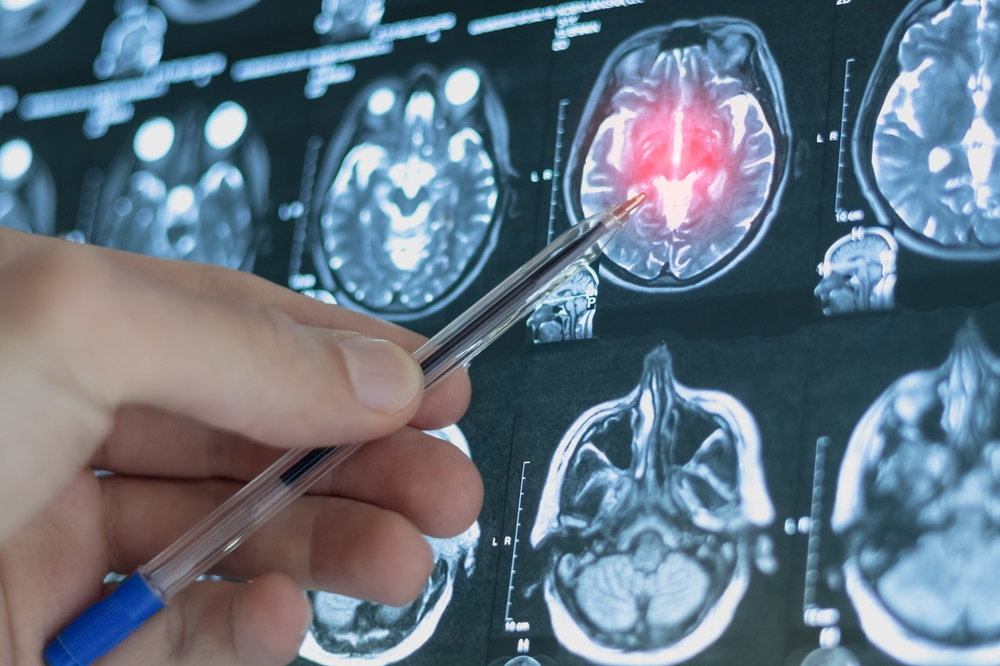
Scientists Found A Way To Give The Brain Some Of Sleep’s Benefits Without Falling Asleep
Anyone who has ever struggled through a busy day after a poor night’s sleep has probably imagined how useful it would be to get the restorative benefits of sleep without actually having to fall asleep. It sounds like the kind of futuristic concept usually reserved for science fiction, yet researchers are beginning to uncover evidence that some of the brain’s most important maintenance work may not be as tightly tied to sleep as previously believed. A new study suggests it could be possible to trigger certain sleep-related processes while remaining fully awake, allowing the brain to carry out part of its recovery work without shutting down completely.
The findings come from a team of neuroscientists investigating what happens during deep sleep and why it plays such a critical role in memory and brain health. By artificially creating a sleep-like state in a small part of a mouse’s brain, researchers found they could reproduce some of the same benefits associated with deep sleep. The stimulated mice appeared to show improved memory performance and reduced signs of mental exhaustion. While experts caution that this does not mean sleep is becoming optional anytime soon, the results offer an intriguing glimpse into a future where some of sleep’s restorative effects could potentially be accessed while people are still awake.
Researchers Wanted To Isolate One Of Sleep’s Most Important Functions
Scientists have known for decades that sleep serves a vital role in maintaining healthy brain function, but many of the underlying mechanisms remain surprisingly mysterious. One of the leading theories involves a process known as synaptic homeostasis, which helps the brain manage the enormous number of neural connections formed throughout the day. Every experience, conversation, task, and memory creates activity within the brain, generating new connections between neurons. Without some way of organizing and refining those connections, the brain could quickly become overloaded.
Researchers believe deep non-rapid eye movement sleep, commonly known as NREM sleep, plays a central role in this process. During this stage of sleep, the brain’s cortex repeatedly fires groups of neurons in synchronized bursts before temporarily shutting them down again. This pattern, known as slow-wave sleep activity, is considered one of the defining characteristics of deep sleep and is thought to help the brain strengthen important neural pathways while eliminating less useful ones.
Chiara Cirelli of the University of Wisconsin-Madison explained why scientists are so interested in this activity, saying, “This has been linked to synaptic homeostasis, and may be a key mechanism underlying sleep’s restorative functions.” Instead of studying sleep as a whole, researchers wanted to determine whether this specific process could be triggered independently while an animal remained awake.
The Experiment Was Inspired By Animals That Sleep With Half Their Brain
The idea behind the study may sound unusual, but nature already provides several examples of animals that can effectively sleep with only part of their brain at a time. Dolphins are among the most famous examples, allowing one hemisphere of their brain to rest while the other remains active enough to control breathing and remain aware of their surroundings. Similar behavior has also been observed in ducks and fur seals, which can maintain vigilance against predators while still obtaining some of the restorative effects of sleep.
Inspired by these animals, the research team designed an experiment to see whether they could artificially create a localized sleep-like state in mice. To achieve this, they genetically engineered mice so that certain neurons could be switched off using light. Scientists then implanted a probe into one side of the brain and kept the mice awake for five hours by introducing new objects and environments for them to explore.
Near the end of this period, researchers activated the light probe repeatedly for 30 minutes, creating a pattern that closely resembled the slow-wave activity normally observed during deep NREM sleep. The objective was straightforward but ambitious. They wanted to find out whether a small section of the brain could perform some of its sleep-related maintenance tasks while the rest of the animal remained awake.
One Side Of The Brain Appeared To Recover While Awake
After the stimulation period ended, the mice were finally allowed to sleep normally. Researchers then examined brain recordings to determine whether the artificial sleep-like activity had made any difference. What they discovered suggested that it had.
The side of the brain that received the stimulation showed significantly fewer signs of exhaustion than would normally be expected after several hours of wakefulness. In effect, that region appeared to have already completed part of the recovery work typically associated with deep sleep. The findings suggest that at least some restorative processes can occur independently of the broader sleep state under the right conditions.
Cirelli described the outcome by saying, “Because that small part of the brain did its decluttering while awake, it no longer needed extra deep sleep afterwards.” For sleep researchers, this was one of the most intriguing observations in the entire study because it suggests that certain functions normally associated with sleep may be more flexible than previously believed.
While the experiment only affected a small area of the brain, the results provide new evidence that specific patterns of neural activity may be responsible for some of sleep’s restorative effects rather than sleep itself being the sole requirement.
The Memory Tests Produced Another Surprising Discovery
The researchers also wanted to know whether inducing this artificial sleep-like activity could improve memory performance. To test the idea, they placed mice inside a square box lined with carpet that felt identical on both sides. The animals were allowed to explore the environment before being divided into three separate groups.
One group was allowed to sleep normally. A second group was deprived of sleep for an hour. The third group was also deprived of sleep but received the artificial deep-sleep stimulation while awake. The following day, researchers changed the texture on one side of the box and observed how the mice reacted when they returned to the environment.
Because mice are naturally curious and tend to investigate unfamiliar surroundings, the amount of time spent exploring the new texture served as a measure of memory performance. The sleep-deprived mice that received no stimulation struggled to distinguish between the familiar and unfamiliar sides. However, both the well-rested mice and the sleep-deprived mice that received the artificial stimulation spent noticeably more time investigating the new area.
The results suggested that the stimulation helped preserve memory function despite the lack of normal sleep. For scientists studying learning and memory, this finding may prove just as significant as the evidence showing reduced exhaustion within the stimulated region of the brain.
Why Scientists Have Been Searching For Sleep Shortcuts For Years
The dream of obtaining some of sleep’s benefits without actually sleeping has attracted researchers for decades. Modern society places enormous demands on people’s time, and sleep deprivation has become increasingly common across many professions. Scientists have therefore spent years exploring ways to reduce the cognitive effects of sleep loss while maintaining mental performance and productivity.
Various approaches have been investigated over the years. Some studies have focused on medications designed to promote alertness, while others have examined brain stimulation technologies that might enhance cognitive performance. Although some of these methods can temporarily improve focus or wakefulness, none have successfully reproduced the restorative processes that naturally occur during sleep.
Researchers now understand that sleep performs multiple functions simultaneously. During a typical night, the brain is involved in memory consolidation, emotional regulation, neural maintenance, information processing, and a range of other biological activities that are still not fully understood. The latest study is notable because it focuses on one specific mechanism rather than attempting to replicate sleep as a whole.
That distinction could prove important in future research. Scientists may not need to replace sleep entirely to provide meaningful benefits. Instead, they could potentially target specific processes that help the brain recover more efficiently during waking hours.
What Sleep Still Does That Researchers Cannot Replicate
Despite the excitement surrounding the findings, experts stress that no one should interpret the study as evidence that sleep can be replaced. Human sleep is an extraordinarily complex biological process involving coordinated activity throughout the brain and body. Scientists are still uncovering many of the reasons why sleep remains essential for long-term health and survival.
Current research suggests sleep contributes to a wide range of critical functions:
- Memory formation and consolidation
- Emotional regulation
- Immune system support
- Hormonal balance
- Metabolic health
- Learning and cognitive performance
Many of these functions involve interactions between different stages of sleep. Deep NREM sleep and rapid eye movement sleep each appear to serve unique purposes, and researchers still do not fully understand why the brain cycles between them throughout the night.
Vladyslav Vyazovskiy of the University of Oxford believes the findings are promising but cautions against assuming sleep can ever be completely replaced. “It should be possible, at least in theory and to some extent, to replicate these results in our species,” he said. He added, “It would be fascinating to explore whether artificially inducing [this activity] during waking [hours] in humans can result in a subjective feeling of being more refreshed and rested afterwards.”
He also pointed to one of the biggest unanswered questions in sleep science, saying, “Sleep is of two kinds, NREM and REM, and we still do not know what it is about the alternation of these two states that makes sleep complete.”
Human Trials Could Be The Next Step
The research team is already looking ahead to future studies involving people. Rather than relying on genetic engineering and implanted probes, scientists hope to investigate whether similar effects can be produced using non-invasive techniques such as transcranial electrical stimulation. If successful, such approaches could potentially influence specific patterns of brain activity without requiring surgery or invasive procedures.
Many challenges remain before any practical applications become reality. Researchers first need to determine whether the same mechanisms operate in humans and whether the effects can be reproduced safely and consistently. Even if those hurdles are overcome, scientists will still need to establish exactly which benefits can be replicated and which remain dependent on natural sleep.
For now, the findings represent an important step toward understanding one of the brain’s greatest mysteries. Sleep remains essential, but this study suggests that some of its restorative powers may be more flexible than anyone previously imagined. The possibility of helping the brain recover while remaining awake is still far from becoming an everyday reality, yet researchers may have uncovered a pathway that could reshape sleep science for years to come.
Sources:
- Driessen, K., Squarcio, F., Tononi, G., & Cirelli, C. (2025). Induction of cortical ON/OFF periods in awake mice fulfills sleep functions. Nature Neuroscience. https://doi.org/10.1038/s41593-026-02318-9
- Thompson, T. (2026b, June 8). You could get some of the benefits of sleep without having to nod off. New Scientist. https://www.newscientist.com/article/2529507-you-could-get-some-of-the-benefits-of-sleep-without-having-to-nod-off/