

Norway Sets a New Global Standard for Forest Protection
Every year, vast stretches of forest disappear to make way for farms, cattle ranches, roads, and commercial development. From the Amazon to Southeast Asia, trees that took centuries to grow can vanish in a matter of days, taking wildlife, carbon stores, and entire ecosystems with them.
Against that backdrop, Norway made a decision that stood apart from the rest of the world. It became the first country to commit to a nationwide policy that removes deforestation from its government supply chains, signaling that economic growth does not have to come at the expense of forests. The move was more than an environmental promise. It challenged governments and businesses around the world to rethink how everyday products reach consumers.
A Historic Commitment to Deforestation-Free Supply Chains
Norway’s announcement marked the first time a national government committed itself to ensuring that its public procurement policies would no longer support products connected to deforestation.
In practical terms, this means that Norwegian government agencies would refuse to award contracts to companies whose products are linked to the destruction of forests through clear-cutting. Commodities such as palm oil, soy, beef, and timber, all industries that have long been associated with forest loss in many parts of the world, became central to the country’s new approach.
The policy fulfilled a promise Norway first made during the United Nations Climate Summit in New York in 2014. Alongside Germany and the United Kingdom, Norway pledged to encourage deforestation-free supply chains through sustainable public purchasing practices.
Two years later, that commitment became official government policy.

While several multinational companies had already begun removing products tied to deforestation from their supply chains, Norway became the first country to adopt the principle at a national government level. That distinction made the announcement significant far beyond its own borders.
Rather than banning logging within Norway itself, the policy targeted demand. The country recognized that purchasing decisions made thousands of miles away can directly influence whether forests continue standing or disappear.
For environmental groups, this represented a major shift in thinking.
Instead of focusing only on protecting forests after they are threatened, Norway sought to reduce the economic incentives that drive their destruction in the first place.
Why Forests Matter Far Beyond Their Borders
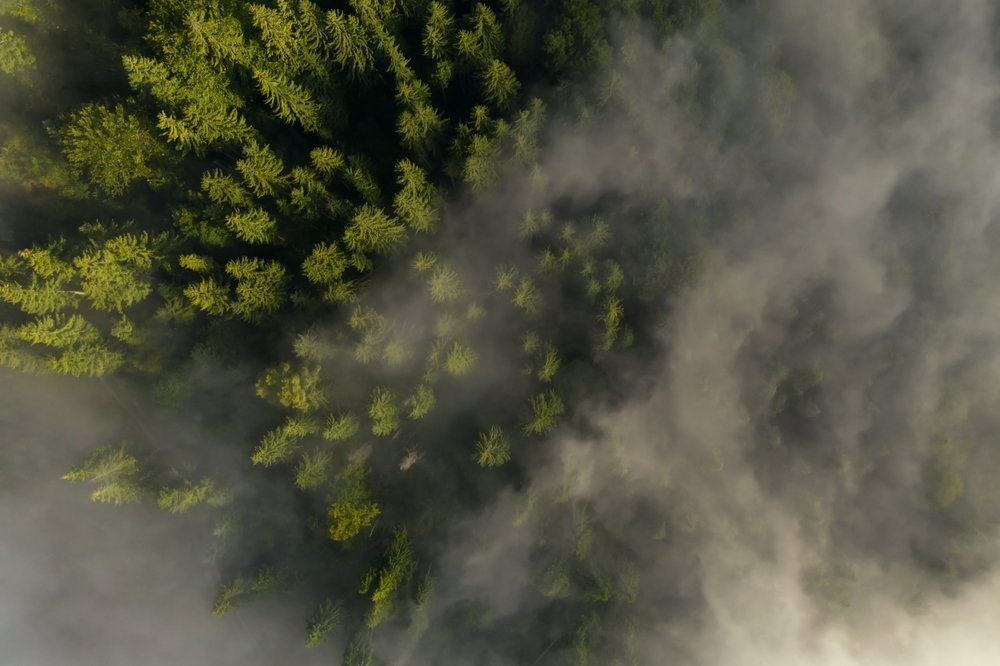
Forests are often described as the lungs of the planet because they absorb carbon dioxide and release oxygen through photosynthesis. While the phrase is familiar, its importance has only grown as climate change accelerates.
According to conservation organizations, forests cover roughly 31 percent of Earth’s land surface. They regulate rainfall, stabilize temperatures, reduce soil erosion, filter freshwater, and store enormous amounts of carbon that would otherwise enter the atmosphere.
Their role extends well beyond climate regulation.
Around 1.6 billion people rely on forests for food, medicine, fuel, clean water, clothing materials, and shelter. Indigenous communities have lived within these ecosystems for thousands of years, developing cultures and traditions that remain deeply connected to the land.
Wildlife depends on forests just as heavily.
Nearly 80 percent of terrestrial plants and animals live in forest ecosystems. Tropical rainforests alone contain millions of species, many of which have yet to be identified by scientists. Every time a forest disappears, countless animals lose their habitat, while some species edge closer to extinction.
The impact is rarely limited to one location.
Removing large areas of forest changes regional rainfall patterns, affects river systems, increases flood risks, and raises temperatures across surrounding landscapes. These effects often extend into neighboring countries, making deforestation a global concern rather than a local issue.
Scientists have also warned that continued forest loss weakens one of humanity’s strongest natural defenses against climate change.
Trees act as long-term carbon reservoirs. Once they are cut down or burned, much of that stored carbon is released back into the atmosphere as carbon dioxide, one of the primary greenhouse gases responsible for global warming.
This is why efforts to protect forests are increasingly viewed as climate policies rather than simply conservation measures.
Agriculture Remains the Biggest Driver of Forest Loss
Deforestation rarely happens without an economic reason.
Across many tropical regions, forests are cleared because the land beneath them is valuable for agriculture. Expanding cattle ranches, soybean plantations, palm oil production, and commercial timber harvesting continue to place enormous pressure on some of the world’s most biodiverse landscapes.
The numbers illustrate the scale of the challenge.
Between 2000 and 2011, commodities including beef, palm oil, soy, and wood products accounted for roughly 40 percent of tropical deforestation and about 44 percent of the associated carbon emissions across countries such as Brazil, Indonesia, Malaysia, Argentina, Bolivia, Papua New Guinea, and Paraguay.
Palm oil has become one of the most widely discussed examples.
Found in thousands of products ranging from chocolate and cosmetics to soaps and processed foods, palm oil is an exceptionally productive crop. However, large-scale plantation development has often come at the expense of tropical rainforests, particularly in Indonesia and Malaysia.
Soy follows a similar pattern.
Although much of the world’s soybean harvest feeds livestock rather than people directly, expanding soy production has contributed to forest clearing in South America, especially within areas bordering the Amazon rainforest.
Beef production has had an even larger footprint.
Across parts of South America, forests have frequently been cleared to create pasture for cattle. In many cases, land is first stripped of trees before remaining vegetation is burned, releasing massive quantities of carbon into the atmosphere.
Timber harvesting presents another challenge.
Illegal logging continues to threaten forests across multiple continents, while unsustainable harvesting practices can leave ecosystems fragmented even when complete clearing does not occur.
Norway’s policy acknowledges that governments purchasing these products hold significant influence.
If enough buyers insist on sustainable sourcing, companies face stronger incentives to prove that their products are not linked to newly cleared forests.
Deforestation Comes With a Heavy Climate Cost

Forest destruction affects far more than scenery.
When healthy forests are removed, the consequences ripple through climate systems, biodiversity, and local communities for decades.
One of the most immediate impacts is greenhouse gas emissions.
Living trees absorb carbon throughout their lifetime, locking it away in trunks, roots, branches, and soil. Once forests are burned or cleared, much of that stored carbon returns to the atmosphere.
Researchers estimate that deforestation contributes around 15 percent of global greenhouse gas emissions, making it one of the largest human-driven sources of carbon pollution after the burning of fossil fuels.
The effects do not stop there.
Without tree cover, soils become more vulnerable to erosion. Rivers carry greater amounts of sediment, reducing water quality and increasing flood risks downstream.
Regional weather patterns can also change.
Large forests release moisture into the atmosphere through transpiration, helping generate rainfall both locally and across neighboring regions. Removing extensive forest cover can reduce rainfall, creating conditions that make future droughts more severe.
This creates a dangerous cycle.
Drier conditions increase wildfire risks, while fires release even more carbon into the atmosphere and further reduce forest resilience.
Scientists have warned that some ecosystems could eventually reach tipping points where they become unable to recover naturally.
The Amazon rainforest illustrates this concern.
Having already lost a significant share of its original forest cover over recent decades, researchers continue monitoring whether parts of the ecosystem may shift toward drier savanna conditions if deforestation continues unchecked.
Protecting forests, therefore, serves multiple purposes at once.
It helps stabilize the climate, preserves biodiversity, safeguards freshwater systems, and supports millions of people whose livelihoods remain closely connected to healthy ecosystems.
Norway Had Already Built a Reputation for Forest Conservation

The country’s landmark procurement policy did not emerge overnight.
For years, Norway had invested heavily in international efforts aimed at slowing forest destruction, particularly in tropical regions where biodiversity and carbon storage are greatest.
Its partnership with Brazil became one of the most widely recognized examples.
In 2008, Norway committed approximately $1 billion to help Brazil strengthen protection of the Amazon rainforest. The funding supported conservation initiatives designed to reduce illegal deforestation while encouraging more sustainable land management.
The results attracted international attention.
Within seven years, Brazil reduced Amazon deforestation by roughly 75 percent compared with earlier levels. Environmental organizations described it as one of the largest emissions reductions achieved anywhere during that period.
The environmental benefits extended well beyond Brazil.
Protecting tens of thousands of square miles of rainforest prevented billions of tons of carbon dioxide from entering the atmosphere while preserving habitat for thousands of plant and animal species.
Former United Nations Secretary-General Ban Ki-moon praised the Brazil-Norway partnership as an example of the kind of international cooperation needed to address global environmental challenges.
Norway has also supported conservation efforts in countries including Indonesia and Liberia, recognizing that protecting forests often requires financial partnerships between wealthier nations and countries that contain much of the world’s remaining tropical forests.
These investments demonstrated that Norway’s deforestation policy was part of a broader environmental strategy rather than an isolated announcement.
By combining international funding with changes to its own purchasing policies, the country sought to influence both the supply and demand sides of the global deforestation problem.
A Policy Designed to Influence Global Markets

Norway’s decision extends beyond its own borders because the country participates in an interconnected global economy. Every government contract, whether it involves construction materials, food supplies, office furniture, or consumer goods, sends a signal to producers about what buyers expect.
When governments insist on sustainably sourced products, suppliers face growing pressure to examine every stage of their production process. Companies that once relied on commodities linked to recently cleared forests may find themselves excluded from valuable public contracts unless they can prove their supply chains meet stricter environmental standards.
This market-based approach has gained momentum over the past decade.
Businesses increasingly recognize that consumers, investors, and governments are paying closer attention to where products originate. Certification programs, satellite monitoring, and digital tracing technologies have made it easier to identify whether timber, palm oil, soy, or beef comes from responsibly managed sources.
The challenge, however, remains significant.
Many supply chains stretch across multiple countries and involve numerous intermediaries before products reach retailers or government buyers. Verifying that every link is free from deforestation requires cooperation between producers, exporters, manufacturers, and regulators.
Norway’s policy does not solve every one of these problems overnight, but it helps shift expectations across international markets.
As more buyers adopt similar standards, environmentally responsible production becomes increasingly valuable while destructive practices become harder to justify economically.
Biodiversity Was Another Major Focus
Climate change often dominates discussions about forests, yet biodiversity carries equal importance.
Rainforests contain an extraordinary variety of life. Scientists estimate that millions of species inhabit these ecosystems, many of which remain undiscovered. New insects, amphibians, plants, fungi, and microorganisms continue to be identified every year, demonstrating how much remains unknown.
Each forest cleared for agriculture or development risks eliminating species before they have even been documented.
Habitat fragmentation presents another growing concern.
Even when portions of a forest remain standing, roads, farms, and infrastructure can divide habitats into smaller isolated sections. Animals that once moved freely across vast landscapes suddenly face barriers that limit access to food, breeding areas, and genetic diversity.
Large mammals such as jaguars, orangutans, elephants, and countless bird species are particularly vulnerable because they often require extensive territories to survive.
Norway recognized these broader environmental concerns when developing its national biodiversity strategy.
Alongside its procurement commitments, the Norwegian parliament requested that biodiversity become a greater consideration in investment decisions through the Government Pension Fund Global, the world’s largest sovereign wealth fund.
The fund already considered climate-related risks when evaluating investments. Expanding its focus to biodiversity acknowledged that environmental sustainability cannot be measured solely through carbon emissions.
Healthy ecosystems provide benefits that extend far beyond climate regulation.
Pollination, clean water, fertile soils, disease control, and stable food systems all depend on functioning natural environments. Protecting forests therefore supports economic resilience as much as ecological health.
Can Other Countries Follow Norway’s Example?
Norway’s announcement immediately prompted discussion about whether similar policies could be adopted elsewhere.
Every country operates under different economic circumstances. Nations with large agricultural sectors, extensive timber industries, or significant export markets may face more complex political and economic challenges when introducing comparable measures.
Even so, the underlying principle remains widely applicable.
Governments purchase enormous quantities of goods every year. From schools and hospitals to military equipment and infrastructure projects, public procurement represents a powerful economic tool.
Using that purchasing power to reward sustainable production offers an opportunity to influence global supply chains without relying solely on new environmental regulations.
Several governments have since strengthened their own commitments to responsible sourcing, while international organizations continue encouraging deforestation-free trade agreements.
Financial institutions have also become more active.
Banks, pension funds, and investment firms increasingly evaluate environmental risks when deciding where to invest. Companies associated with illegal logging or unsustainable land clearing now face greater scrutiny from investors concerned about long-term financial and reputational risks.
Technology is also improving transparency.
Satellite imagery allows forests to be monitored in near real time, making it easier to identify illegal clearing activities. Combined with advances in supply chain tracking, these tools are giving governments and businesses better information than ever before.
Progress remains uneven, but Norway’s decision demonstrated that national policy can help reshape international expectations.
Forest Protection Is Becoming an Economic Issue
For decades, environmental protection was often portrayed as being in conflict with economic development.
Today, that view is gradually changing.
Businesses increasingly recognize that environmental degradation creates financial risks. Extreme weather events, declining agricultural productivity, water shortages, biodiversity loss, and climate-related disasters all carry enormous economic costs.
Forests play a central role in reducing many of these risks.
They regulate water supplies that support farming and hydroelectric power. They protect soils from erosion. They reduce flood intensity by absorbing rainfall. They provide raw materials for industries when managed sustainably.
Destroying forests may generate short-term profits, but the long-term costs are often borne by governments, businesses, and communities.
Norway’s procurement policy reflects a broader shift toward recognizing natural ecosystems as valuable infrastructure rather than unused land waiting for development.
International organizations have repeatedly emphasized that achieving climate goals will require both rapid reductions in fossil fuel emissions and stronger protection of natural carbon sinks such as forests, wetlands, and mangroves.
Neither strategy can succeed on its own.
Reducing emissions while allowing forests to disappear would weaken one of Earth’s most effective natural systems for removing carbon dioxide from the atmosphere.
Protecting forests while continuing unchecked fossil fuel use would also fall short.
Both efforts must work together if global climate targets are to remain within reach.
A Signal That Leadership Can Start With One Country
Norway’s decision did not end global deforestation, nor was it intended to.
Forest loss continues across many regions, driven by growing demand for food, timber, minerals, and expanding infrastructure. Millions of hectares of forest still disappear each year, placing increasing pressure on wildlife and accelerating climate change.
Yet major environmental progress often begins with individual policies that gradually influence others.
The country’s commitment demonstrated that governments can use their purchasing power to support responsible production rather than environmental destruction. It also showed that climate action is not limited to cutting domestic emissions. Choices about imports, investments, and supply chains can have consequences that reach far beyond national borders.
Norway had already backed those principles through years of international investment in rainforest conservation. By aligning its procurement policies with those broader efforts, it strengthened a message that protecting forests requires action at every stage of the global economy.
The world’s forests remain under immense pressure, but they also remain among the planet’s greatest allies in addressing climate change, preserving biodiversity, and sustaining millions of lives. Norway’s decision serves as a reminder that meaningful environmental leadership is not always measured by the size of a country, but by the example it chooses to set.