

Ancient Human DNA Carries the Memory of People Who Left No Living Descendants
There is a strange comfort in believing that something of us will always remain. A name, a story, or a trace carried forward in someone else’s blood. We often hold on to the idea that even when we are gone, we are not entirely erased. Yet science occasionally offers a quieter and more unsettling truth. Sometimes entire peoples live, adapt, and endure for thousands of years, only to disappear so completely that nothing of them survives in the bodies of those who come after.

That is what researchers have uncovered on the high plains of Colombia. Not a metaphor and not a myth, but genetic evidence of a human lineage that existed for millennia and then vanished without leaving living descendants. The finding is scientific in nature, but its implications extend far beyond the laboratory. It invites reflection on how we understand continuity, memory, and the fragile threads that connect one generation to the next.
This is not only a story about ancient DNA. It is a story about impermanence, about how identity is shaped, and about what it truly means to belong.
A Forgotten Chapter Written in Bone and Teeth
The discovery comes from years of careful genetic work conducted by an international team of scientists from the University of Tübingen, the Senckenberg Center for Human Evolution and Palaeoenvironment, and Colombia’s Universidad Nacional. Their findings were published in Science Advances and reported by Phys.org, marking the first time ancient human genomes from Colombia have ever been fully analyzed.
Researchers examined genetic material from 21 individuals found at five archaeological sites on the Bogotá Altiplano, a high plateau nearly 3,000 meters above sea level. These remains span almost 6,000 years of human presence, reaching back long before written history and ending shortly before Spanish colonization.
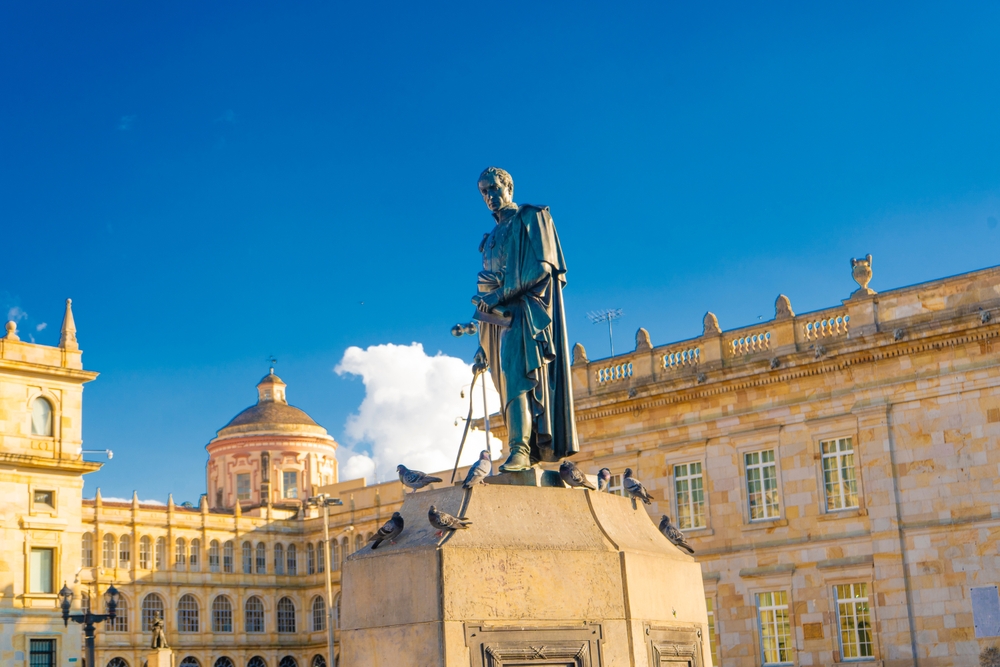
The oldest remains came from a site called Checua, just north of present day Bogotá. The people who lived there were hunter gatherers, part of an early wave of humans who entered South America from the north and spread rapidly across the continent.
As Professor Cosimo Posth of the University of Tübingen explained, “These are the first ancient human genomes from Colombia ever to be published.”
But what made this discovery extraordinary was not just its age. It was what came next.
A Lineage That Did Not Continue
When scientists compared the Checua genomes to later populations from the same region, they expected to see at least some genetic continuity. That is what researchers have observed across much of South America, even when cultures, tools, and traditions changed. Instead, they found something almost unheard of.
“Our results show that the Checua individuals derive from the earliest population that spread and differentiated across South America very rapidly,” said Kim Louise Krettek. But when the team examined individuals from the Bogotá region who lived around 2,000 years ago, the genetic signature of the Checua people was gone.
“We couldn’t find descendants of these early hunter gatherers of the Colombian high plains,” Krettek said. “The genes were not passed on. That means in the area around Bogotá there was a complete exchange of the population.” In simple terms, the people of Checua did not mix genetically with those who came after them. Their lineage ended.
According to the study, a second migration from Central America later populated the region, bringing new technologies like ceramics and introducing Chibchan languages that are still spoken in parts of Central America today.
Andrea Casas Vargas of the Universidad Nacional de Colombia noted how rare this finding is. “That genetic traces of the original population disappear completely is unusual, especially in South America,” she said.
For thousands of years, people lived on that land. Then, silently, they were replaced.
The Checua People and the Questions We Cannot Yet Answer
A separate investigation added further detail to the story. Colombian scientists fully sequenced ancient DNA from remains excavated near Bogotá, confirming that the Checua people represent a previously unknown human lineage.
“When we started to compare with other individuals from other parts of the Americas, we found that the individuals from the Pre ceramic Period found here in the Cundiboyacense plateau have a lineage that hasn’t been reported,” said Dr. Andrea Casas of the National University’s Genetics Institute. “It’s a new lineage.”
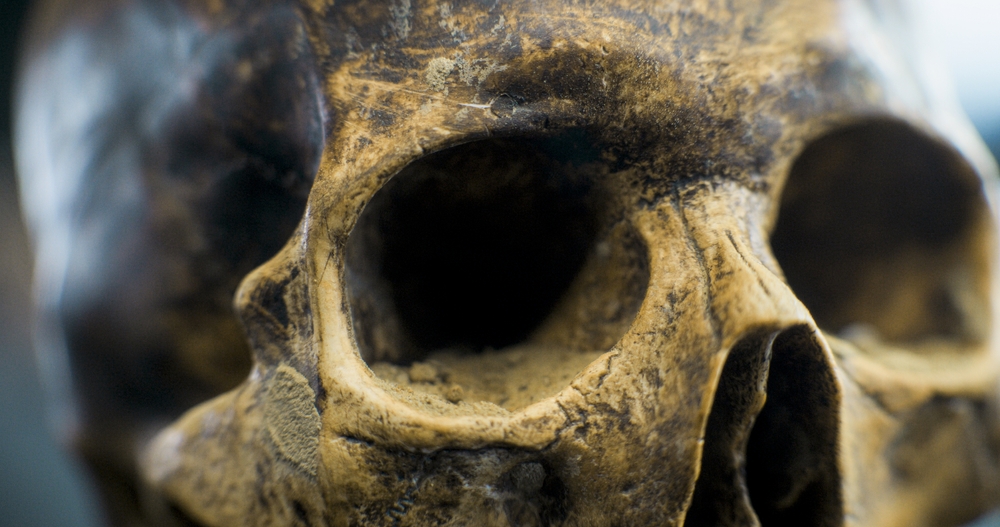
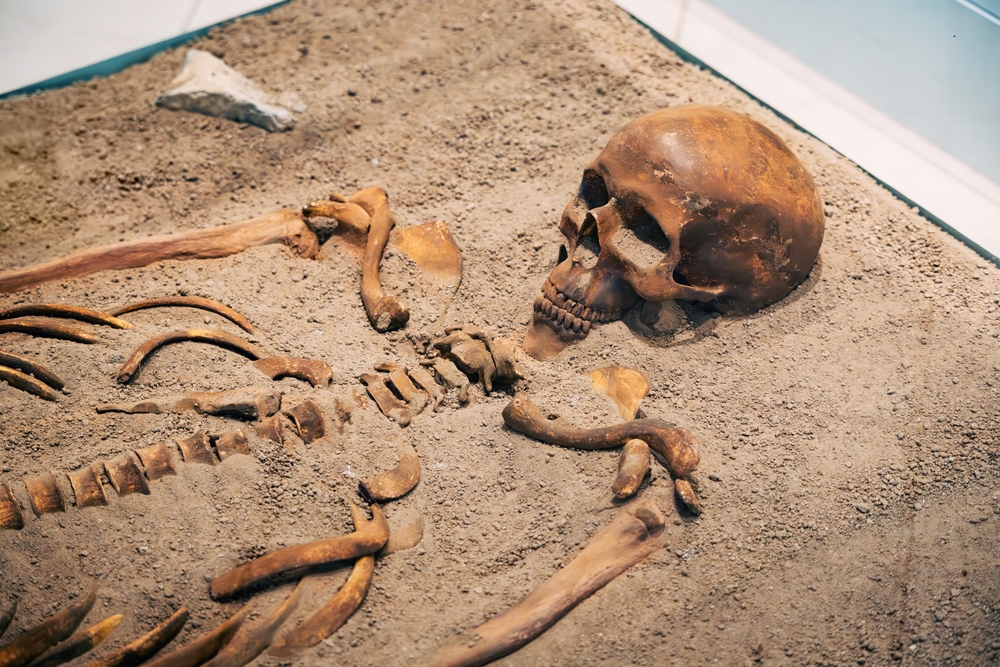
The Checua remains include partial skeletons from around 30 individuals and one mostly intact skull. According to Dr. Jose Vicente Rodriguez, a professor of physical anthropology, the skull was noticeably more elongated than those of later populations found in the region.
The bones also carry signs of everyday struggle. Unlike later skulls that show evidence of cavities, the Checua skull showed abscesses in the upper jaw, suggesting tooth loss caused by infection. Their diet, researchers believe, may have been shaped by volcanic eruptions that damaged surface crops and pushed people toward root vegetables like potatoes and tubers.
As for why the Checua disappeared, scientists are careful not to speculate beyond the evidence. Climate pressures, disease, or food scarcity may have played a role. But the truth is, no one knows for sure.
“We work with the remains that are available,” Casas told Reuters. “Perhaps in a few years we’ll find other remains and they will shed some light on this lineage.”
When Genetics Is Not Identity
Discoveries like this carry emotional weight because they sit at the intersection of science and self understanding. When ancient lineages are identified, it can feel as though genetics is making a statement about belonging or legitimacy. This is why the researchers approached their work with care. Genetic data, if misread, can easily be mistaken for a judgment about identity rather than what it actually is, which is one limited record of human history.
Before concluding their work, the research team engaged with the Guardia Indígena Muisca, whose cultural history is deeply tied to the Bogotá high plains. As Professor Cosimo Posth explained, “Questions about history and origins touch upon a sensitive area of the self-perception and identity of the Indigenous population.” That awareness shaped how the findings were communicated, emphasizing responsibility over authority.
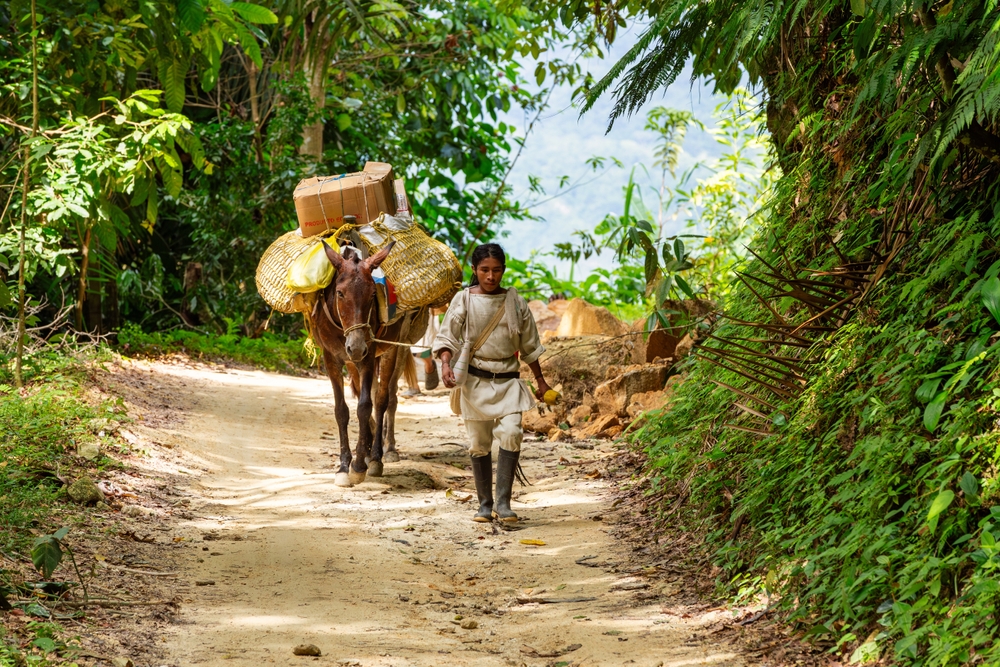
Posth made this boundary explicit when he said, “The genetic disposition must not be viewed as equal to cultural identity.” Genetics can trace ancestry and migration, but it cannot account for language, belief, social bonds, or the lived meanings that define a people. Culture is sustained through practice and memory, not molecules, and it can endure even as genetic lineages change.
The danger, then, is not in the science itself, but in allowing genetic information to stand alone. When treated as one piece among archaeology, oral tradition, and community knowledge, genetics deepens understanding without reducing identity to biology. The lesson here is restraint and humility, recognizing that science can illuminate the past without claiming ownership over who people are.
The Limits of What We Can Ever Know
One of the most important aspects of this discovery is not what it reveals, but what it leaves unresolved. Despite advanced sequencing techniques and careful analysis, the genetic record remains incomplete by nature. Ancient DNA survives only under specific conditions, and what researchers recover is shaped as much by chance as by intention. Entire populations may leave behind only fragments, and those fragments can never fully reconstruct lived experience, social structure, or historical causality.
This limitation is not a failure of science, but a boundary it openly acknowledges. The researchers involved have been careful to distinguish between evidence and inference, resisting the urge to turn absence of data into certainty. When scientists say they do not know exactly why the Checua lineage disappeared, that restraint reflects methodological rigor rather than uncertainty of purpose. It recognizes that human history is influenced by intersecting factors such as environment, movement, health, and adaptation that do not leave uniform traces in the genetic record.

Understanding these limits matters because it guards against overinterpretation. Genetic findings can clarify patterns of migration and replacement, but they cannot on their own explain intention, resilience, or meaning. Accepting what cannot be known is part of responsible scholarship. It ensures that discoveries deepen understanding without closing off inquiry, and that the past remains something we approach with care rather than finality.
What This Discovery Asks of Us
It is easy to read this story as something distant, framed by ancient bones and timelines that feel far removed from modern life. Yet the longer one sits with it, the more personal it becomes. An entire human lineage lived on this land for thousands of years. They adapted to altitude and climate, navigated scarcity, raised families, and buried their dead. Then, over time, they were replaced, leaving no living descendants to carry their genetic signature forward.
What remains is not DNA, but remembrance through inquiry. Their existence survives because scientists chose to look back with care, and because communities were consulted with respect. This discovery reminds us that survival alone does not guarantee remembrance, and that genetic continuity is not the same as cultural meaning.
The deeper question this research asks is not what happened to them, but what responsibility we carry while we are here. Science shows us that permanence is never promised. Meaning, however, is something we actively create through how we live, how we treat one another, and how consciously we engage with the present. Memory does not live only in genes. It also lives in choices, in stewardship, and in the awareness that being temporary does not make our lives insignificant.
Featured Image from Shutterstock