


Chicago Mail Carrier Notices One Small Change That Ends Up Saving an 89-Year-Old Woman’s Life
Most people pass a mailbox without giving it a second thought. It is part of the scenery, quietly collecting letters, bills, birthday cards, and advertisements before the cycle begins again the next day. For the people who deliver that mail, though, those small routines become familiar over time. They notice the houses where someone is always waiting at the door, the porch where a newspaper disappears within minutes, or the elderly resident who never misses a morning walk to the mailbox. Those patterns rarely seem significant until one day they suddenly change. In one Chicago neighborhood, an untouched pile of mail became more than an unusual sight. It became the silent warning that an elderly woman who had faithfully collected her mail every day was no longer able to do so, setting in motion a chain of events that would ultimately save her life.
The person who noticed was not a family member, a neighbor, or a close friend. It was the mail carrier who had spent years walking the same streets and getting to know the people behind each address. What began as a professional responsibility had gradually grown into something far more personal through simple greetings and everyday conversations. Those brief moments built a level of familiarity that made one missing routine impossible to ignore. Long before emergency responders arrived, compassion had already made the most important decision. Someone chose to pay attention when it would have been much easier to assume everything was fine.
An Ordinary Delivery Route Became Something Much More
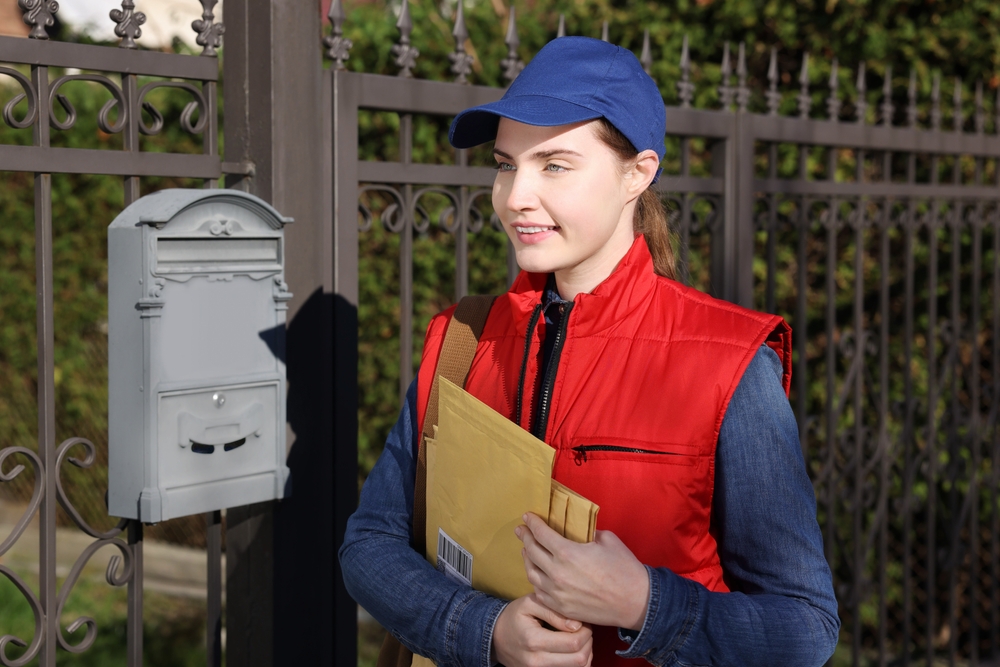
Shonda Lemon has worked as a mail carrier for the United States Postal Service in Chicago for eight years. During the last four years, she regularly delivered mail to 89-year-old Helen Iwanski, who lived alone. Their interactions were never lengthy, yet they became an important part of each other’s daily routine. Lemon greeted Helen whenever she saw her and often stopped for short conversations while making her deliveries. Over time, those moments created a genuine friendship built through consistency rather than extraordinary events.
As Helen grew older, Lemon began making small adjustments to help her. She wrapped rubber bands around Helen’s mail so the bundle would be easier for her to grip. It was a thoughtful gesture that reflected the kind of attention many people reserve for family members rather than customers. Speaking about the relationship they developed over the years, Lemon said, “We gained a nice, little, personal relationship with one another.”
That connection meant Lemon understood Helen’s daily habits better than most people. She knew Helen lived alone, had no children living with her, and had not traveled in years. She also knew that collecting the mail was something Helen did every day without fail. Those details may have seemed ordinary to someone else, but together they formed a picture of what normal looked like. When normal suddenly disappeared, Lemon immediately sensed that something was wrong rather than dismissing it as a coincidence.

When Three Days Passed Without Anyone Collecting the Mail
The first day passed quietly. Helen’s mail remained in the mailbox. Lemon noticed it but continued her route, thinking there might be a simple explanation. The second day brought the same sight. The stack of mail had grown, and there was still no sign of Helen. By the third day, concern had replaced uncertainty. Years of delivering to the same home had taught Lemon that this was completely out of character. Helen had always collected her mail, and she had never left packages sitting outside overnight.
The situation became even more troubling because Lemon knew Helen’s circumstances. She lived by herself, had no children checking in on her each day, and rarely left home. Those details replayed in Lemon’s mind as she stood outside the house looking at the untouched mail. Rather than convincing herself that someone else had already checked on Helen, she trusted the feeling that something was wrong. Reflecting on that moment, Lemon explained, “Those factors alone is what triggered me to know that there was something wrong, especially when she left her parcels on the porch overnight.”
Lemon immediately contacted police and requested a wellness check on January 14. Officers arrived at Helen’s home within minutes and entered the residence to see whether she was safe. Inside, they found the 89-year-old woman lying on the floor. She had suffered a fall several days earlier and had been unable to get back on her feet or call for help. Alone in her home without food or water, she had spent days waiting for someone to notice that she had disappeared from the routine she had followed for years. What appeared to be an ordinary pile of uncollected mail had become the only sign that she needed urgent help.

A Call That Ended in Tears of Relief
Waiting for news after calling emergency services was an emotional experience for Lemon. She knew something was wrong but had no idea how serious the situation might be. Every passing minute carried the possibility of heartbreaking news. When officers finally told her that Helen had been found alive, the relief was overwhelming. The weight of imagining what the elderly woman had endured during those days alone became impossible to hold back.
Describing that moment, Lemon said, “I began to cry, because it was a rejoicing moment for me, knowing that I had assisted her in sparing her life. And, ya know it was just the pain and thought of what she may have been going through for those three days on the floor.” Her words captured both the joy of knowing Helen had survived and the heartbreak of realizing how close the situation had come to ending differently.
Helen was admitted to Advocate Lutheran General Hospital in Park Ridge, Illinois, where doctors began treating her before she was transferred to a rehabilitation center to continue recovering. Her condition steadily improved as she regained strength, giving her family time to reflect on how narrowly they had escaped an unimaginable loss. Without Lemon’s willingness to act on what others might have dismissed as a small detail, Helen may not have been found until it was too late.

A Family’s Gratitude Went Far Beyond Words
When Helen’s family learned what had happened, they were faced with the reality that a simple act of attentiveness had changed everything. Authorities contacted her niece, Mary Mason, after Helen had been taken to the hospital, bringing news that was both frightening and deeply reassuring. The thought of an elderly relative spending several days alone after a fall is one no family wants to imagine, yet they also knew the outcome could have been far worse had Lemon ignored the warning signs.
Mason did not hesitate to express what Lemon’s actions meant to their family. Speaking about the woman who had cared enough to stop and ask questions instead of continuing her route, she said, “She’s one of God’s children and she was looking out for another one of his kids. Shonda is just a very thoughtful and caring person.” Her words reflected more than gratitude. They acknowledged that compassion often arrives through people who never expect recognition for what they do.
Helen also wanted to thank the person who had refused to overlook the unusual silence at her home. Mason shared her aunt’s message, saying, “My Aunt Helen Iwanski sends her love and appreciation to Shonda for being there for her. She said she will be forever grateful for Shonda caring enough to call the police. My family continues to pray for Shonda and want nothing but the best for her always.” While Helen focused on recovering at a rehabilitation center, her family never lost sight of the fact that every day of healing had been made possible because someone chose to act instead of waiting for someone else to do it.

Compassion Is Often Hidden Inside Ordinary Jobs
As news of the rescue spread, many people described Lemon as a hero. The attention was overwhelming for someone who believed she had simply responded the way anyone should when another person might be in danger. She never viewed the situation as an extraordinary achievement because caring for the people along her route had always been part of who she was, even if it was never listed in her job description.
Reflecting on the public response, Lemon said, “I was just being who I am on a daily basis. I’m always concerned about my elderly customers, especially those that live alone.” In another interview, she explained why she struggled with the title of hero, saying, “I don’t look at myself as a hero. I just look at myself as one of God’s children looking after his other kids. That was my blessing for the day, that she was okay.” Those words reveal a perspective rooted in humility. Rather than seeing herself as someone extraordinary, she saw herself as another person with a responsibility to care for those around her.
The United States Postal Service later praised Lemon’s actions, noting that mail carriers become deeply familiar with the communities they serve. Because they walk the same routes every day, they often recognize changes that others might never notice. Over the years, postal employees have alerted emergency responders to fires, assisted lost children, helped injured residents, and identified medical emergencies simply because they knew what was normal for the neighborhoods they visited. Their work delivers far more than letters. It quietly strengthens the connections that help communities care for one another.

Paying Attention May Be One of the Greatest Gifts We Can Offer
Before returning to work, Lemon spent time reflecting on everything that had happened. She did not describe the experience as a remarkable act of courage or a once in a lifetime event. Instead, she saw it as proof that people still have the ability to care for one another in meaningful ways, even through the simplest daily interactions. The lesson she carried away was not about recognition or praise. It was about remaining present enough to notice when someone else might need help.
Sharing what the experience taught her, Lemon said, “At the end of the day, we’re a village, and we need each other to look out for one another. This is more than a job for me. It’s more of a community, it’s more of a village, and I’m just thankful that I paid attention to these circumstances and was able to spare this woman’s life.” Her words offer a perspective that reaches beyond one neighborhood in Chicago. They speak to the quiet responsibility people share every time they become part of someone else’s daily life, whether as a neighbor, delivery driver, cashier, teacher, or friend.
Many older adults choose to live independently because it allows them to remain connected to the homes and communities they have known for decades. Independence can bring dignity and comfort, but it can also mean that subtle changes are noticed only by those who cross paths with them regularly. A familiar face who says hello every morning, a neighbor who notices unopened curtains, or a postal worker who recognizes an untouched mailbox may become the first person to realize something is wrong. Those observations often happen long before family members have reason to worry.

Helen Iwanski continues to recover, surrounded by the gratitude of a family that knows how different this story could have been. Her recovery began because one person refused to dismiss a small detail that others might never have noticed. Sometimes compassion does not arrive with dramatic speeches or extraordinary sacrifice. Sometimes it appears in the form of someone who simply knows your routine well enough to recognize your absence, and who cares enough to knock on the door when the silence lasts a little too long.