

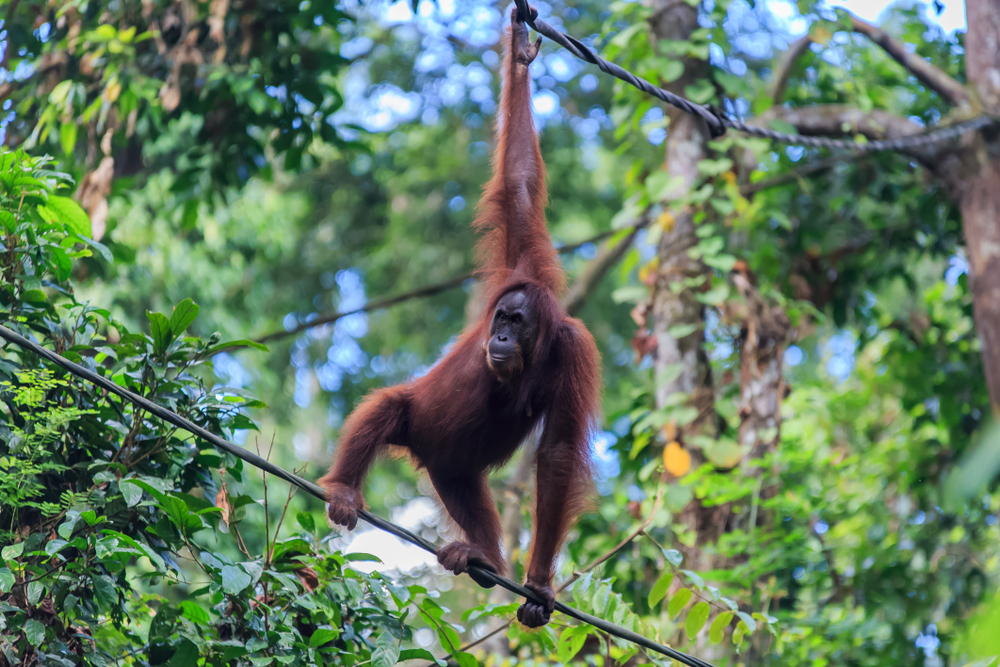
First Video of Endangered Orangutan Using Rope Bridge to Cross Road Marks a Major Conservation Win
High above a busy asphalt highway in North Sumatra, an ancient forest was quietly suffocating. A vital new road had brought modern survival and connection to remote villages, but it also sliced a fragile ecosystem right down the middle, trapping a critically endangered species on opposite sides of an invisible wall.
It looked like an impossible standoff between human development and the natural world. Yet, the solution to this massive fracture did not require billions of dollars or complicated technology. The answer arrived suspended quietly in the canopy, waiting for a single, courageous step to prove that progress and preservation can truly coexist.
Healing the Divide in North Sumatra
The dense, vibrant canopy of North Sumatra, a place teeming with life. For years, the Lagan-Pagindar road sliced right through this ancient habitat, serving as a vital lifeline for local villages but creating a dangerous barrier for wildlife. This ribbon of asphalt split a fragile population of about 350 critically endangered Sumatran orangutans into two isolated groups. When a landscape is fragmented, isolation breeds vulnerability. Without a way to safely cross, these magnificent primates faced genetic bottlenecks, a slow march toward functional extinction.
But human ingenuity stepped in to heal the rift. In 2024, conservationists from Tangguh Hutan Khatulistiwa and the Sumatran Orangutan Society suspended simple rope bridges high above the traffic. It was an invitation for nature to reconnect. For two long years, the ropes hung empty of orangutans, testing the patience of everyone monitoring the camera traps. Other animals scurried across, but the forest guardians remained hesitant.
Then came the breakthrough. A young male orangutan approached the edge, observed his surroundings, gripped the ropes with deliberate care, and successfully navigated the artificial canopy. He became the very first of his kind documented crossing a public road in this manner. It was a profound moment of triumph. Helen Buckland, chief executive of the Sumatran Orangutan Society, captured the gravity of the event, stating, “Seeing this young male orangutan confidently cross the road using the canopy bridges is a huge milestone for conservation, proving that it is possible to stitch this fragmented landscape back together.”
The Power of Patience
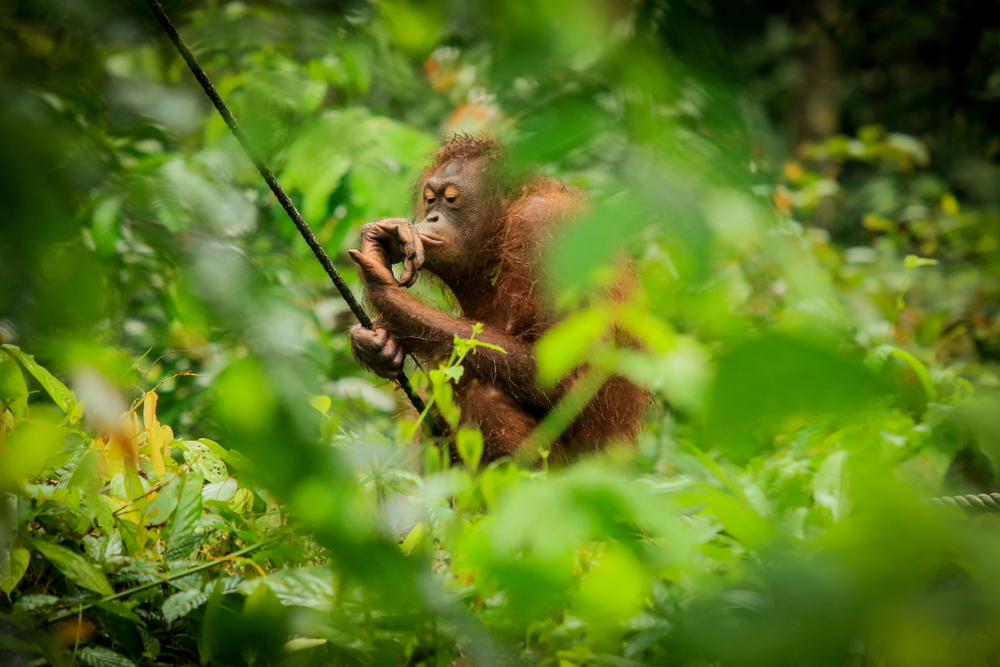
Nature moves at its own pace. Before the young male orangutan took his historic steps, those rope bridges were far from empty. For two full years, hidden camera traps recorded a steady stream of jungle traffic. Plantain squirrels dashed across the lines. Long-tailed macaques and agile gibbons swung freely from one side of the road to the other. These smaller, faster animals adapted quickly to the new pathways.
But the orangutans held back. As the largest tree-dwelling mammals on Earth, they carry immense weight, both physically and intellectually. They do not rush into the unknown. Instead, they lingered at the forest edge. They built nests near the ropes, quietly watching the artificial structures and the noisy public road below. They tested the tension of the lines, pulling the ropes and stepping back.
Erwin Alamsyah Siregar, the executive director of the Indonesian conservation group Tangguh Hutan Khatulistiwa, explained this cautious behavior. He noted, “They observe. They don’t rush. They watch, they try, they retreat. Only when they’re certain it’s safe do they move.”
There is a profound lesson in this caution. A fast-paced modern culture constantly praises instant results and reckless speed. But the orangutan reveals the quiet power of deliberate observation. Jumping into a new situation without understanding the risks often leads to failure. Real growth sometimes looks like absolute stillness. It involves studying the environment, testing the waters, and building trust in a new path.
When Less Is Truly More
The conservationists at Tangguh Hutan Khatulistiwa did not wait for a perfect, high-tech miracle. They looked at the gap in the trees and chose the most basic tool available: rope.
To reconnect the divided forest, they used just 200 meters of heavy-duty line for each bridge. A small team installed the crossings in less than five days. They did not build a massive concrete overpass. They simply tied sturdy knots and let the structures sway naturally in the wind.
That modest setup was all it took to save a critically endangered species from being trapped forever.
Helen Buckland, the chief executive of the Sumatran Orangutan Society, highlighted the beauty of this approach. She stated, “These canopy bridges demonstrate that human development and wildlife don’t have to be at odds. Sometimes, the simplest solutions are the most effective.”
This truth applies to every area of daily life. When a relationship breaks down, you do not always need a grand, dramatic gesture to fix it. Sometimes, a sincere apology is the rope bridge that reconnects two people. When you feel overwhelmed by a massive goal, you do not need to map out the entire ten-year plan today. You just need to build one small, actionable habit.
Do not let the size of an obstacle convince you that the answer is out of reach. Look for the simplest tool right in front of you.
Modernization Without Annihilation
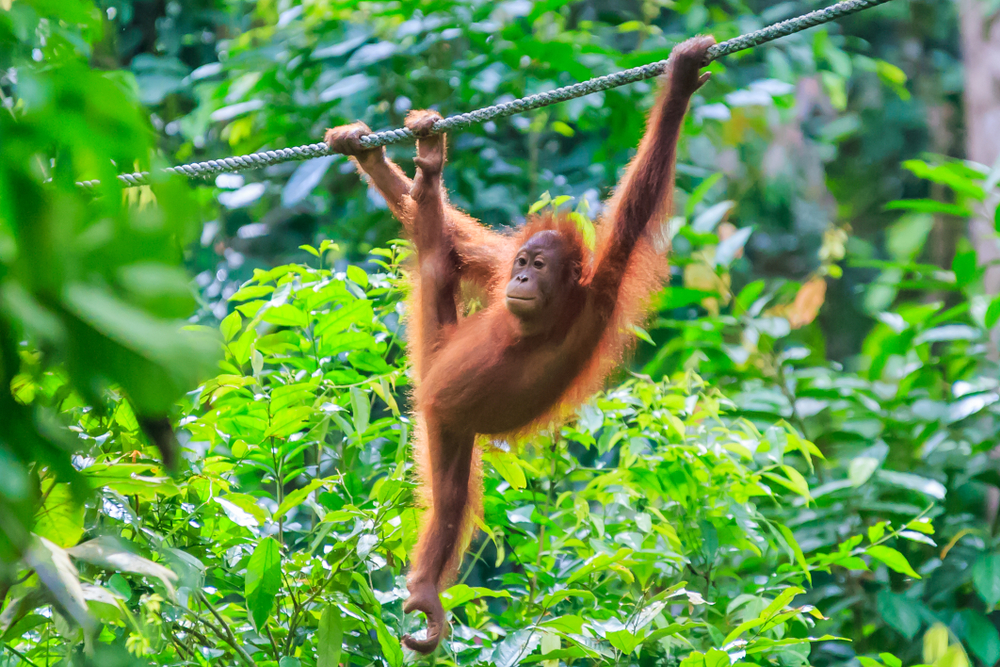
A false narrative exists that progress demands destruction. Society constantly hears that for humanity to move forward, nature must step back. The paved Lagan-Pagindar road in the Pakpak Bharat district seemed to prove this point. Remote villages desperately needed that asphalt to reach hospitals, schools, and essential government services. Human survival and education are undeniably vital. But when the road was upgraded, it widened the gap in the trees, leaving the apes stranded.
It looked like a classic zero-sum game: a win for human development meant a total loss for the forest ecosystem.
The rope bridges shattered that myth entirely. Franc Bernhard Tumanggor, the district head of Pakpak Bharat, recognized the immense value of this delicate balance. He stated, “Witnessing a Sumatran orangutan confidently crossing that bridge is living proof that we need not sever the forest’s lifeline in order to build our communities’ own. This is the message Pakpak Bharat wishes to share with the world: that modernisation does not have to mean destruction.”
This principle extends far beyond the jungles of Indonesia. People apply the same destructive “either/or” mentality to their daily lives. A person might believe they must sacrifice their mental health to achieve career success. Another might think they must abandon their personal dreams to care for their family.
Those are false choices. True progress never requires tearing down the very foundation that keeps a life grounded. Instead of accepting a tragic trade-off, look for ways to honor both needs. Build a connection between ambition and well-being. It takes creativity and intentional effort, but coexistence is always possible. You do not have to burn down the forest to pave a road to success.
Build the Bridge

A solitary orangutan gripping a simple rope high above a highway is more than just a fleeting news story. It is living proof that broken systems can be repaired. The deep cuts in the natural world are healing right now because a few dedicated people decided to tie a knot and cast a line. That is a massive win for the rainforest, but the lesson hits much closer to home.
Look at the everyday gaps in daily life. Families sit in the exact same living room but exist in completely different worlds. Big dreams stay locked away, separated from a normal routine by a giant wall of fear. Just like those isolated patches of jungle in Sumatra, staying stuck on one side means growth stops completely. Isolation always destroys potential.
Do not wait for a perfect, complicated plan to fix a broken situation. Find the simplest tool available today. Reach out to a friend after years of silence. Take one tiny, awkward step toward a passion left behind. Build the bridge. It might feel shaky at first, and that is completely normal. A better future does not start when the bridge is finished. It starts the very second the rope is thrown.
Featured Image Source: Shutterstock