

Everyone Is Listening for Alien Life — But What If the First Signal Is a Cry for Help?
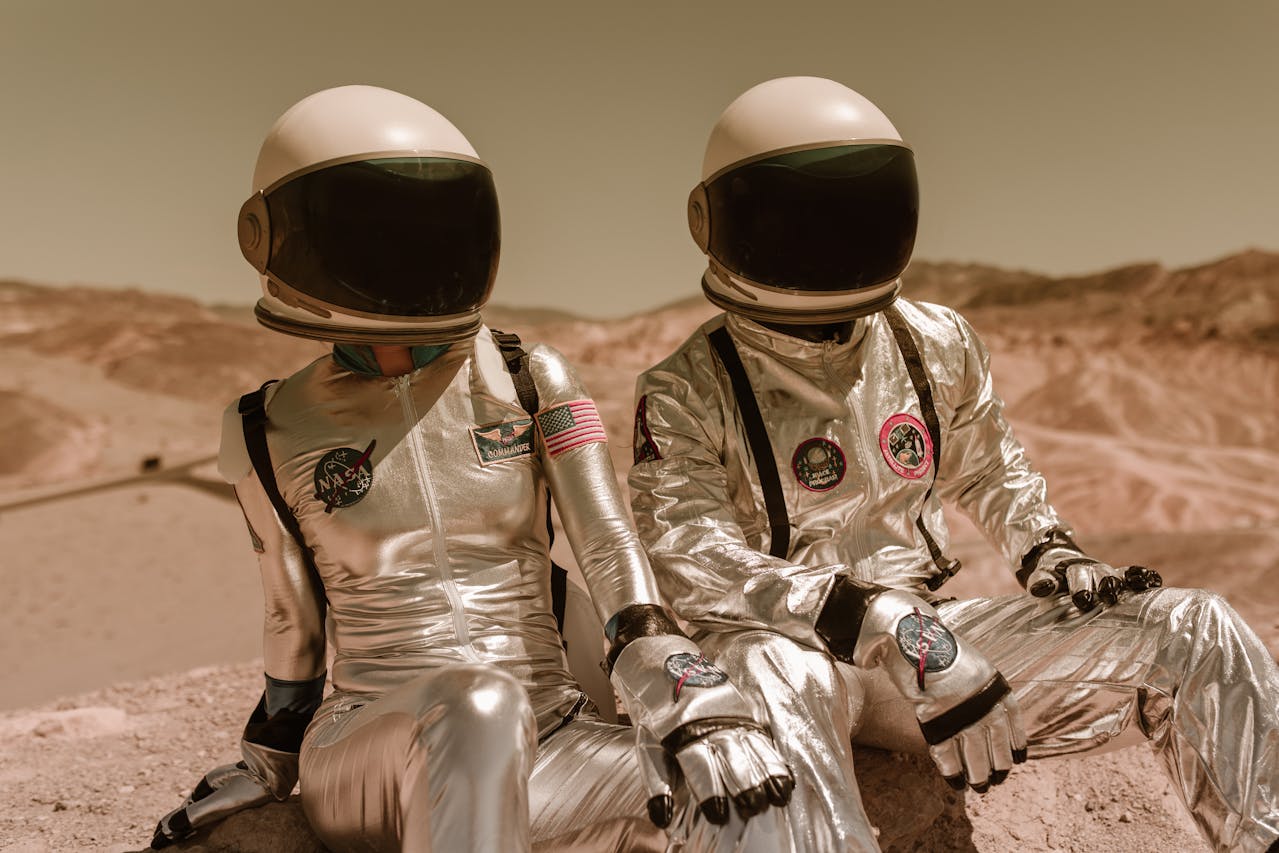
For as long as we have looked up at the night sky, we have wondered whether we are alone. That question has shaped religions, inspired science fiction, and driven decades of serious scientific research. Somewhere, beyond the reach of our telescopes and our certainty, we imagine another intelligence quietly waiting, calm, advanced, and ready to greet us when the time is right.
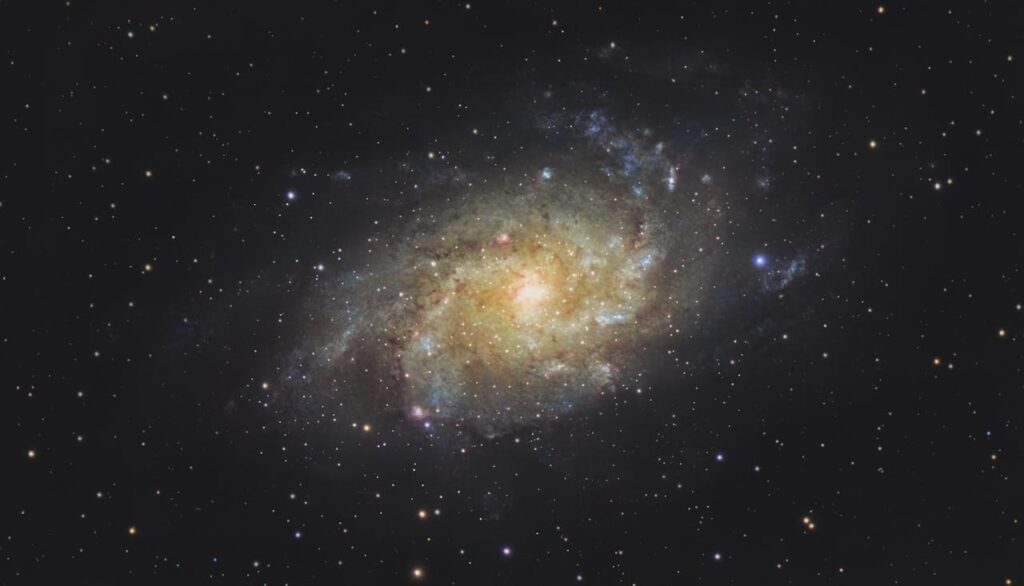
But what if that picture is wrong?
What if the first time we hear from another civilization, it does not come as a gentle hello, but as a shout, a distortion, a burst of noise that feels chaotic, unsettling, and impossible to ignore? Recent research suggests that when the universe finally speaks to us, it may do so at its loudest, and that message may tell us as much about ourselves as it does about them.
Rethinking First Contact
Much of our cultural imagination assumes that extraterrestrial intelligence would reach out deliberately, carefully crafting a message meant to be understood. This assumption has guided how scientists search for alien life, often focusing on orderly, repeating radio signals that resemble intentional communication.
However, new research challenges that idea. According to coverage in Universe Today and The Times of India, astronomer David Kipping argues that humanity’s first detection of alien intelligence is unlikely to come from a stable, flourishing civilization. Instead, it may come from one that is highly visible precisely because it is unstable.
Kipping’s research, titled The Eschatian Hypothesis, is set to appear in the Monthly Notices of the Royal Astronomical Society. In it, he explains that the first examples we discover in astronomy are rarely typical. They are usually extreme,objects or events that stand out because they are unusually bright, energetic, or disruptive.
“If history is any guide, then perhaps the first signatures of extraterrestrial intelligence will too be highly atypical, ‘loud’ examples of their broader class,” Kipping writes in the paper, as quoted by Universe Today.
Why Loud Signals Get Found First
Astronomy has always been shaped by detection bias. We don’t discover what is most common first; we discover what is easiest to see.
The history of exoplanet discovery illustrates this clearly. The first planets ever found outside our solar system weren’t Earth like worlds orbiting calm, sun like stars. They were planets orbiting pulsars,highly energetic, rapidly spinning remnants of dead stars. These systems were detected not because they were common, but because pulsars emit incredibly precise signals that made any disturbance obvious.
As Universe Today notes, the NASA Exoplanet Archive now contains more than 6,000 confirmed exoplanets, yet fewer than ten orbit pulsars. The early discoveries gave a misleading impression, simply because extreme systems announce themselves more loudly.
Kipping argues that the same principle applies to extraterrestrial intelligence. Civilizations that are quiet, stable, and long lived may be nearly invisible to us. But civilizations undergoing crisis,burning vast amounts of energy, altering their atmospheres, or broadcasting chaotic emissions,could stand out against the cosmic background.
Supernovae, Collapse, and Cosmic Noise
To explain the idea further, Kipping points to supernovae. These stellar explosions can briefly outshine entire galaxies. They are rare, short lived, and catastrophic,but they are also easy to detect.
In his paper, Kipping writes that the first confirmed detection of an extraterrestrial civilization is most likely to be “one that is unusually ‘loud’ (i.e., producing an anomalously strong technosignature), and plausibly in a transitory, unstable, or even terminal phase.”
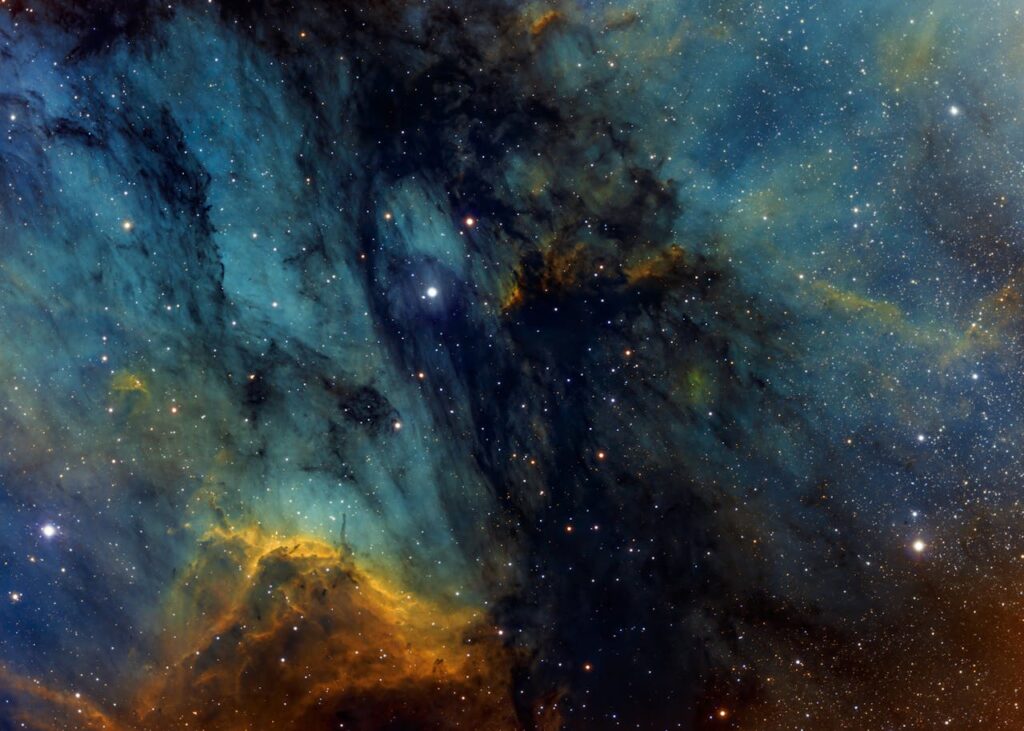
This loudness could come in many forms: intense radio emissions, extreme energy use, atmospheric pollution detectable across interstellar distances, or sudden fluctuations that don’t match known astrophysical processes. According to The Times of India, many of these signals might initially appear as noise,distorted, static filled, and easy to dismiss.
The uncomfortable implication is this: we may first notice intelligent life not at its peak, but at its breaking point.
An Uncomfortable Mirror: What We’re Broadcasting
One of the most sobering aspects of the Eschatian Hypothesis is what it suggests about us.
Kipping points out that human civilization may already be producing detectable technosignatures. Climate change, rising carbon dioxide levels, industrial pollution, and massive energy consumption all alter Earth’s atmosphere in measurable ways. From a distant vantage point, these changes could signal a civilization pushing against its own limits.
As Universe Today explains, some scientists have suggested that these environmental markers could be interpreted by extraterrestrial observers as signs of instability or decline. In other words, Earth itself may already be “loud.”
This reframes the search for alien life into something more personal. It forces us to ask not only who might be out there,but what story we are telling about ourselves through the traces we leave behind.
Changing How We Listen
If the Eschatian Hypothesis is correct, then traditional search strategies may be too narrow. Focusing only on neat, repeating signals could mean overlooking the very signs most likely to reveal alien intelligence.
Kipping argues for broader, more flexible approaches. In practical terms, he writes, “the Eschatian Hypothesis suggests that wide field, high cadence surveys optimized for generic transients may offer our best chance of detecting such loud, short lived civilizations.”

Observatories such as the Vera Rubin Observatory and the Sloan Digital Sky Survey already monitor the sky continuously, watching for sudden changes in brightness, motion, or spectrum. These tools are well-suited to detecting anomalies that don’t fit neatly into existing categories.
“Rather than targeting narrowly defined technosignatures,” Kipping writes, researchers should prioritize “broad, anomalous transients , in flux, spectrum, or apparent motion , whose luminosities and timescales are difficult to reconcile with known astrophysical phenomena.”
The Risk of Misinterpretation and False Positives
Another critical implication of the Eschatian Hypothesis has received far less attention: the danger of misreading what we detect. If the first signals we encounter are loud, chaotic, and short lived, then they may sit uncomfortably close to the boundary between intelligence and natural phenomena. Astronomy is already filled with examples of signals that initially defied explanation, only to later be traced back to previously unknown but entirely natural processes.
Fast radio bursts offer a cautionary parallel. When they were first discovered, their extreme brightness and millisecond duration sparked speculation about artificial origins. Over time, careful observation revealed that at least some of these bursts come from magnetars, highly magnetized neutron stars capable of producing extraordinary energy releases without any involvement of intelligence. The lesson is not that scientists were foolish to speculate, but that novelty often arrives before understanding.
Kipping’s argument raises the stakes of this problem. If we expect the first technosignatures to be atypical and unstable, then the margin for error becomes thinner. A civilization in crisis may produce emissions that resemble astrophysical noise, while unfamiliar natural phenomena may masquerade as technological activity. Distinguishing between the two requires patience, repeated observation, and restraint, especially in an era where public attention can race ahead of scientific certainty.
There is also a deeper human risk here. A premature declaration of alien intelligence, followed by a retraction, could erode public trust in science and distort how future discoveries are received. The search for extraterrestrial life therefore demands not only better instruments, but better judgment. Listening carefully also means knowing when not to speak too soon.
What Discovery Would Mean for Us
If humanity’s first encounter with alien intelligence comes through a loud, chaotic signal, it will likely be unsettling. It may not feel like a triumph or a celebration. It may feel more like overhearing a distant crisis unfolding across the cosmos, a moment where discovery and unease arrive together.
There is wisdom in that discomfort, because it strips away comforting illusions. It reminds us that intelligence, no matter how advanced, is not a guarantee of endurance. Civilizations can become technologically powerful while remaining fragile, capable of extraordinary achievements yet vulnerable to the consequences of their own choices. Like stars that blaze intensely before exhausting their fuel, advanced societies may become most visible precisely when they are least stable.
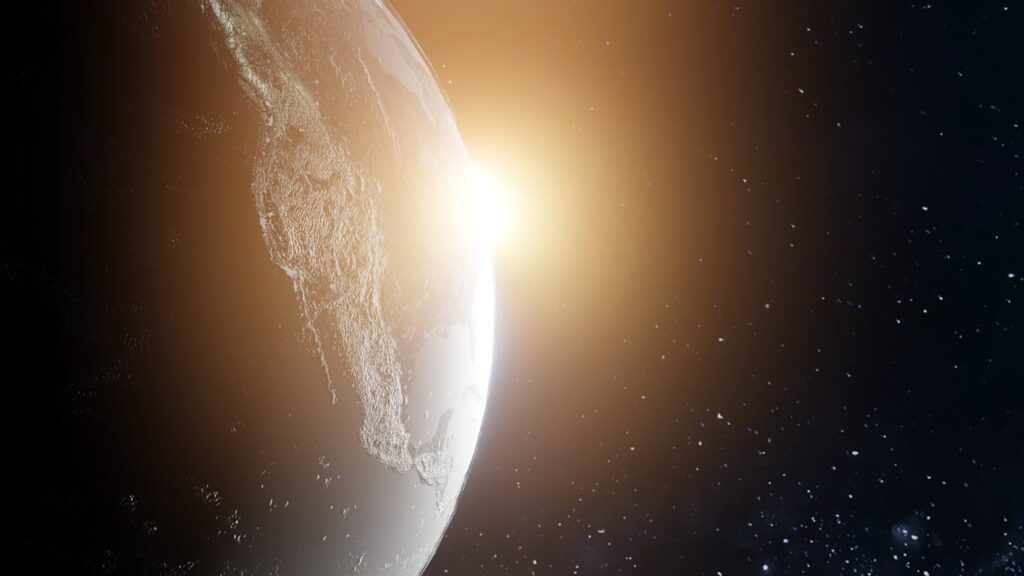
Seen this way, the noise is not just a signal from elsewhere. It is a lesson encoded in the physics of survival. The search for life beyond Earth is not only about finding others who exist, but about understanding which trajectories allow civilizations to persist and which ones lead toward collapse. Discovery becomes a form of foresight.
If the universe is loudest at the edge of breakdown, then listening carefully is more than a scientific exercise. It is an opportunity for reflection. What we hear in that distant chaos may help us recognize the warning signs in ourselves, and decide whether we continue broadcasting instability or learn how to quiet the forces that threaten our own future.