


Florida Teen Helps Free Endangered Smalltooth Sawfish Trapped For Years
A routine day on the water turned into a once in a lifetime rescue when a Florida teenager reeled in something no one expected. What began as a simple afternoon fishing trip in the calm stretches of Lower Tampa Bay slowly transformed into a dramatic wildlife intervention that few could have predicted. Friends and family initially assumed it was just another story about a big catch, but within hours it became clear that this moment would ripple far beyond a single boat.
The seven foot smalltooth sawfish had reportedly been trapped in a confined area for years, navigating a shrinking and increasingly hazardous habitat. According to local reports from Fox 13 News and MySuncoast, the fish’s eventual rescue required coordination between wildlife experts, marine researchers, and quick thinking community members who understood the urgency of the situation. At the center of it all was a young fisherman who refused to ignore what he had discovered and chose responsibility over recognition.
This is not just a feel good fishing story shared across social media feeds. It is a powerful reminder of how fragile marine ecosystems can be, especially in rapidly developing coastal regions like Florida. The rescue has also brought renewed attention to the endangered status of the smalltooth sawfish and the broader environmental challenges facing Tampa Bay, including habitat fragmentation, water quality concerns, and human driven coastal change.
The Catch That Changed Everything
When the teenager cast his line into the waters of Lower Tampa Bay, he expected an ordinary day filled with patience and quiet anticipation. Instead, he found himself struggling against a powerful and unfamiliar force that pulled with a weight and resistance unlike anything he had experienced before. What initially felt like a snag quickly revealed itself to be something alive and extraordinarily strong.
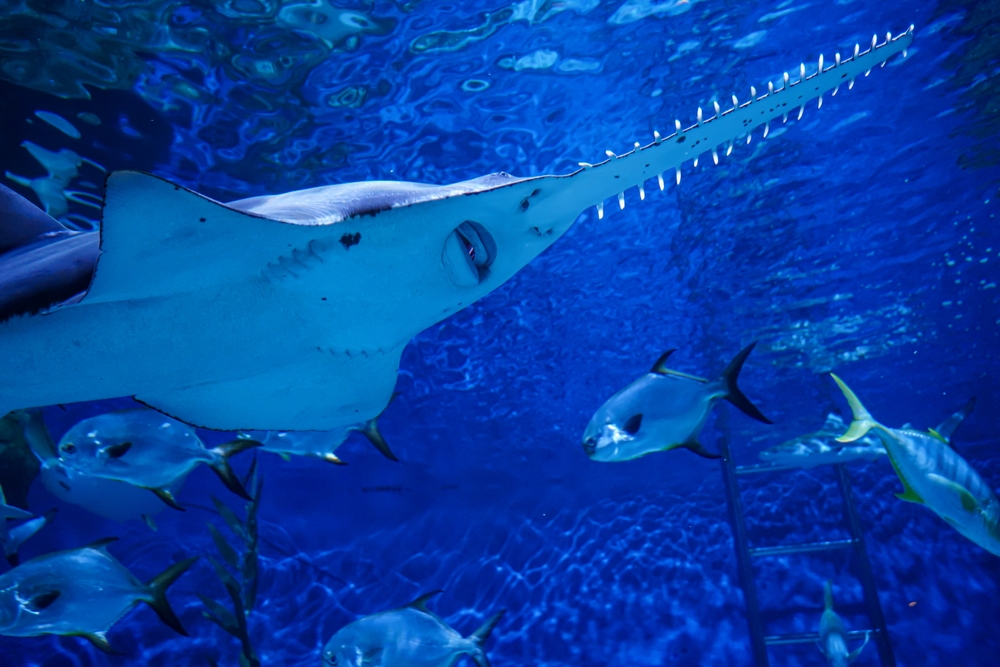
The fish that surfaced was a massive smalltooth sawfish measuring around seven feet in length, its body moving with a mixture of strength and visible strain. Its distinctive rostrum, the long saw like snout lined with teeth, immediately signaled that this was a rare and protected species rather than a typical recreational catch. According to Fox 13 News, the young fisherman quickly realized the seriousness of the situation and made the mature decision to alert authorities rather than attempting to handle or pose with the fish.
Witnesses described the moment as both thrilling and deeply concerning, especially as the scale of the animal became clear. The sawfish appeared disoriented and confined within a limited section of Bishop Harbor, raising questions about how long it had been restricted to that space. Reports from Seven Seas Media indicate that marine experts believe the animal may have been trapped in the area for years due to environmental changes, sediment buildup, or structural barriers that limited its natural movement.
What could have been a dangerous or tragic encounter instead became a turning point for everyone involved. By reaching out for professional help and prioritizing the animal’s wellbeing over personal excitement, the teenager set into motion a rescue operation that would soon involve biologists, conservationists, and local agencies working together to ensure the fish’s survival and safe relocation.
Why The Smalltooth Sawfish Is So Rare
The smalltooth sawfish is not just an unusual looking fish with a dramatic appearance. It is one of the most endangered marine species in the United States, and its survival represents decades of conservation effort. Once common in coastal waters across the Gulf of Mexico and along the Atlantic coastline, its population has declined dramatically over the past century due to a combination of environmental pressures and human activity.
Habitat loss has played a major role in this decline, particularly in shallow estuaries and mangrove lined shorelines that serve as nursery grounds for young sawfish. Coastal development, dredging projects, and water pollution have steadily reduced these critical habitats, fragmenting ecosystems that once supported thriving marine life. As detailed by MySuncoast, even minor environmental disruptions can severely impact sawfish survival because they rely on very specific habitats during different stages of their life cycle.
Another significant threat has been accidental capture in fishing gear, which remains a challenge despite legal protections. Although intentional harvesting is illegal and the species is federally protected, sawfish are often unintentionally caught in nets or on recreational lines. Their distinctive rostrum easily becomes entangled, making escape difficult and sometimes fatal, particularly if fishers are unaware of proper release protocols.
Conservation efforts over the last two decades have offered a glimmer of hope, with researchers documenting gradual population stabilization in certain regions of Florida. The species is protected under federal law, and scientists closely monitor known habitats through tagging programs and sighting reports. The rescue in Tampa Bay highlights how critical community awareness is in supporting these efforts and preventing further population decline at a time when every individual animal counts.

The Rescue Operation In Bishop Harbor
Once authorities were alerted, marine biologists and wildlife officials moved quickly to assess the situation and determine the safest course of action. According to reports from Fox 13 News, experts evaluated the sawfish’s size, stress level, and physical condition before initiating a carefully coordinated plan. Handling such a large and delicate species requires specialized training, patience, and equipment designed to minimize harm.
The team worked methodically to reduce stress on the animal, recognizing that prolonged struggle could compromise its health. Sawfish are particularly sensitive during capture and transport, and improper handling can cause serious internal injury or damage to their rostrum. Experts ensured that the rostrum was protected from impact and that the fish remained submerged as much as possible during the process to preserve oxygen flow and reduce trauma.
Bishop Harbor, while scenic and popular among boaters, had become a problematic environment for the sawfish over time. Environmental shifts, sediment accumulation, and possible structural barriers may have limited its ability to move freely into deeper and more suitable waters. Relocating the fish to a safer and more connected habitat within Tampa Bay was ultimately seen as the most responsible option for its long term survival.
After a coordinated effort involving multiple agencies and trained personnel, the sawfish was successfully transported and released into a more appropriate habitat within the bay. Observers described the moment of release as emotional and quietly triumphant, as the fish swam away with steady strength. That final image offered reassurance that the rescue had likely given the endangered animal a renewed and meaningful chance at life.
The Bigger Environmental Picture
This rescue story is undeniably uplifting, yet it also underscores deeper environmental concerns that extend beyond a single species. Florida’s coastal ecosystems face mounting pressures from rapid development, climate change, nutrient runoff, and increased boating activity. Each of these factors alters the delicate balance that species like the smalltooth sawfish depend upon for breeding, feeding, and migration.
Water quality is a particularly pressing issue in Tampa Bay and surrounding waterways. Nutrient runoff from agriculture, stormwater systems, and urban expansion can trigger harmful algal blooms that reduce oxygen levels and block sunlight from reaching underwater vegetation. Such conditions can restrict the movement of species, degrade essential habitats, and create pockets where marine animals become trapped or stressed.
Conservationists emphasize that isolated rescues, while important and inspiring, must be paired with systemic environmental protections that address root causes. Restoring mangrove forests, improving wastewater management, and implementing sustainable coastal planning are all critical steps in ensuring that endangered species can thrive without constant human intervention. These long term solutions require collaboration between policymakers, scientists, and local communities.
The teenager’s quick thinking has sparked renewed conversation about local stewardship and shared responsibility. Community members are being reminded that protecting wildlife is not solely the responsibility of researchers and environmental agencies. Everyday actions such as responsible fishing practices, proper waste disposal, reducing fertilizer use, and supporting conservation initiatives can collectively create lasting change that benefits entire ecosystems.

What We Can Learn From One Teenager’s Actions
At its heart, this story is about awareness, maturity, and the willingness to act responsibly under pressure. The young fisherman could have ignored the significance of his catch, panicked, or mishandled the situation in pursuit of a memorable photo. Instead, he chose to prioritize the wellbeing of a vulnerable and protected animal over personal excitement or recognition.
His decision highlights the importance of understanding local wildlife regulations and recognizing protected species when encountered. Knowing when to step back and contact authorities can mean the difference between harm and rescue, especially when dealing with endangered marine life. Education and awareness empower everyday citizens to become unexpected allies in conservation efforts.
The rescue also demonstrates the power of collaboration between individuals and institutions. Scientists, local officials, media outlets, and one observant teenager each played a meaningful role in achieving a positive outcome. When communities and experts work together with shared purpose, even complex environmental challenges can be addressed with efficiency and compassion.
Perhaps most importantly, this story invites personal reflection about the choices we make in everyday moments. How often do we underestimate our ability to make a difference simply by paying attention and acting responsibly. Whether it involves protecting marine life, advocating for environmental policies, or educating others, individual decisions can ripple outward in ways that protect entire ecosystems for generations to come.
A Moment Of Hope For An Endangered Species
For the smalltooth sawfish released back into safer waters, the future is uncertain but brighter. Its survival contributes to the fragile recovery of a species that has endured decades of decline. Each rescued individual strengthens the possibility of a more stable population.
Researchers will likely continue monitoring sawfish activity in Tampa Bay and surrounding regions. Data gathered from sightings and rescues provide valuable insight into habitat use and migration patterns. These findings inform conservation strategies that extend far beyond a single incident.
The viral video of the rescue has also amplified public interest. Stories like this resonate because they combine suspense, compassion, and tangible impact. They remind viewers that wildlife conservation is not an abstract concept but a lived reality unfolding in local waters.
As Florida continues balancing growth with environmental preservation, moments like this serve as powerful reminders of what is at stake. The teenager who made the catch of a lifetime did more than reel in a rare fish. He helped rewrite the ending of its story.
Featured Image Credit: Photo by David Clode | Unsplash