


Here’s How Long You Should Really Hold a Plank According to Science
We are used to measuring strength by endurance. How long you can last. How much discomfort you can tolerate before your body gives in. The plank fits perfectly into that way of thinking, which is why it has become a go to exercise in gyms, workouts, and online challenges. No equipment. No movement. Just you and the floor, waiting for the clock to decide when you are strong enough.
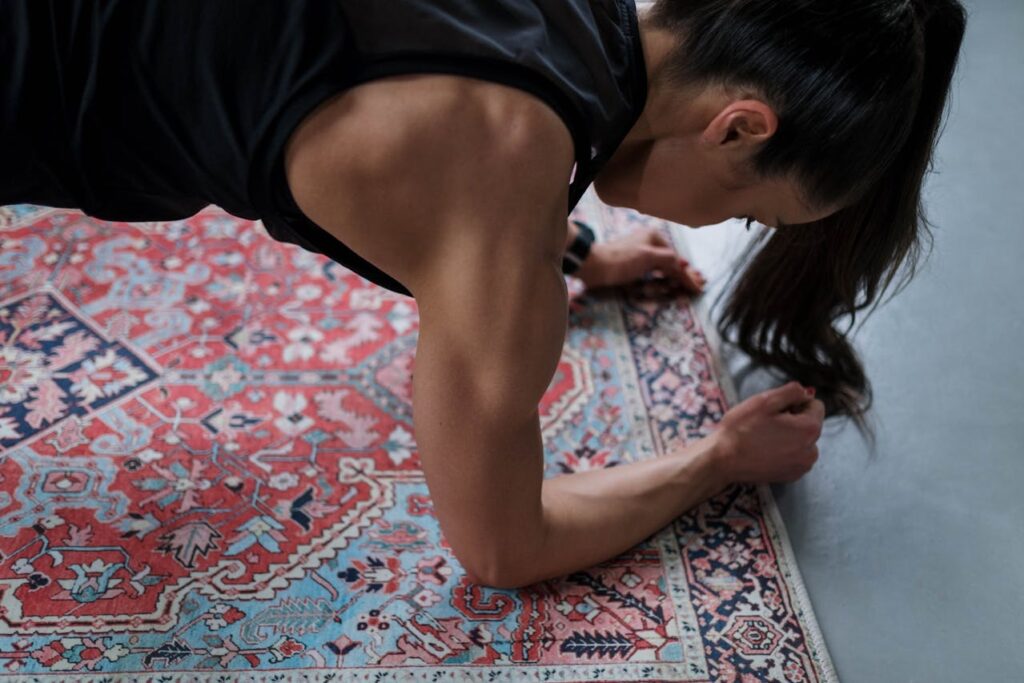
But when time becomes the goal, something important gets overlooked. The body does not experience a plank as a number. It experiences it as a series of adjustments, breath by breath, muscle by muscle, moment by moment. Science shows that what matters most is not how long the position is held, but how the body organizes itself while holding it. Muscle coordination, breathing patterns, and spinal control shape the outcome far more than sheer duration.
When attention shifts away from the stopwatch and toward what the body is actually doing, the plank stops being a test and starts becoming a teacher. Research gives us a clearer picture of where the exercise supports strength and where it quietly begins to work against it. That shift changes not just how long we hold a plank, but why we hold it in the first place.
The Quiet Work Your Body Is Doing
When most people think about the plank, they picture abs tightening and muscles burning. But what is really being trained goes deeper than that. A plank asks the body to stay still while gravity tries to pull it apart. To meet that demand, muscles across the front, sides, and back of the torso engage at the same time, not to create movement, but to prevent it. The spine stays neutral because the body learns how to organize strength as a system rather than as isolated parts.
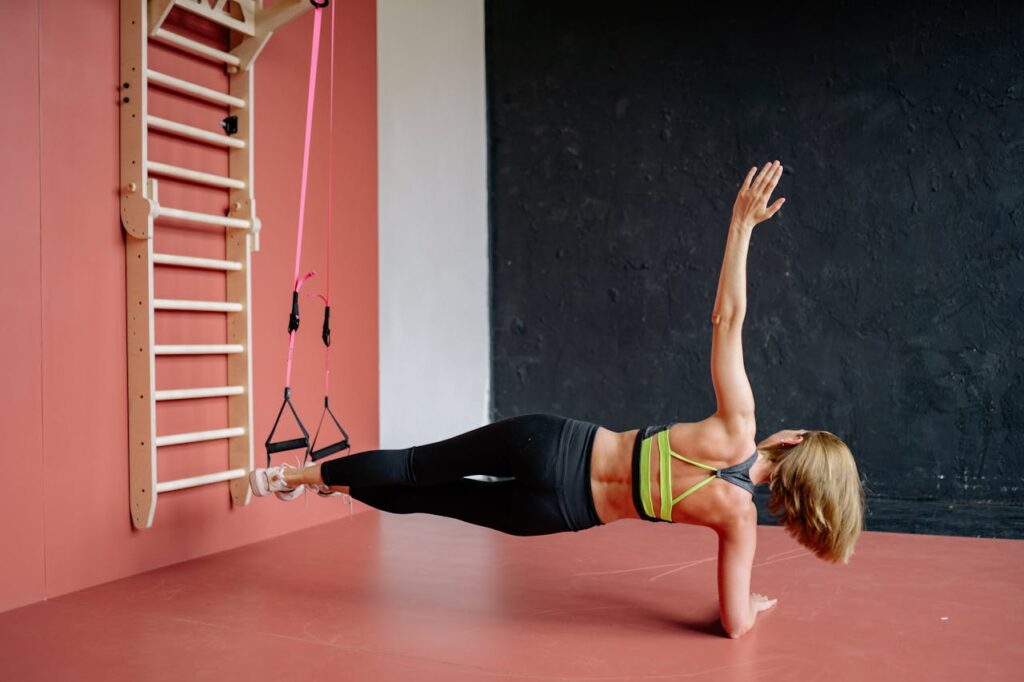
Scientific research helps explain why this matters. A review of trunk stabilization exercises published in Healthcare shows that plank variations activate a broad range of trunk muscles simultaneously instead of focusing on one area in isolation. This kind of shared effort allows the body to control unwanted movement at the spine while maintaining alignment. In other words, the plank trains cooperation, not just contraction.
That cooperation shows up far beyond the floor. Every time you stand for long periods, lift something heavy, or sit upright without collapsing, the trunk is doing similar work. The plank reinforces the body’s ability to hold itself together under load, which is why it is used in athletic training and physical rehabilitation alike. It teaches the body how to stay stable while the rest of life keeps moving around it.

When Pushing Harder Starts Working Against You
We are taught to believe that effort is proven by how long we can endure discomfort, but the body does not reward effort blindly. During a plank, strength depends on coordination, and coordination depends on clarity. As fatigue builds, the nervous system struggles to keep muscles working together with precision. The position may look the same from the outside, but internally things begin to shift. Posture subtly changes, muscle support becomes uneven, and the load quietly moves away from active control and toward joints and connective tissue that were never meant to carry it for long.
This is where intention matters more than willpower. The purpose of a plank is not to see how long the body can tolerate strain, but to train it to support the spine with control. When alignment fades, the exercise stops reinforcing stability and starts collecting stress. What feels like determination can turn into unnecessary wear, especially through the lower back, where small losses of control carry larger consequences.
Clinical research reflects this reality. A review on trunk control and low back function published in the Journal of Clinical Medicine explains that core exercises are most effective when alignment and muscle engagement remain consistent, not when time is pushed to the limit. Maintaining quality movement patterns reduces mechanical stress on the spine and supports long term health. In practical terms, a shorter plank performed with steady posture and controlled breathing often builds more useful strength than a longer hold where control gradually slips. Holding longer is not the problem. Losing organization while doing so is.
Listening for the Moment Strength Holds
People often search for the perfect plank time as if the body is waiting for a specific number to unlock its benefits. But the body does not respond to effort that way. What research shows is that time only matters when it supports control. A plank is effective while the trunk can stay stable under load, with muscles coordinating to protect the spine and breathing staying steady. Once that coordination begins to fade, holding longer no longer teaches the body anything useful. It simply adds fatigue without adding strength.
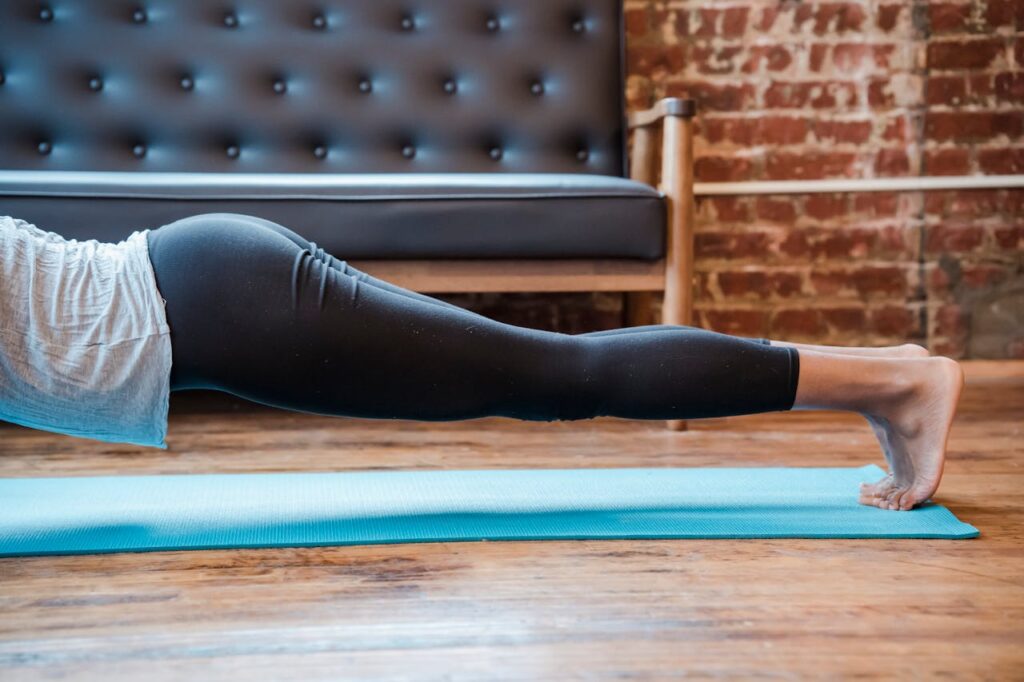
This is why scientific and clinical guidance consistently points toward moderate ranges rather than extremes. Beginners tend to benefit most from holding a plank for about twenty to thirty seconds per set, long enough to establish control without overwhelming the stabilizing system. As coordination improves, many people progress into a range of thirty to sixty seconds, where the body can maintain alignment across repeated efforts. More advanced practice usually stays close to sixty seconds, with progress coming from changes in difficulty rather than extending time further. These ranges are not about limitation. They reflect how the nervous system learns best through repeated, well organized effort.
Age based benchmarks often echo these same time frames, but age itself is not the deciding factor. What matters is whether alignment and muscle engagement can be maintained from the beginning of the hold to the end. Someone with refined movement control may sustain longer efforts regardless of age, while someone else may benefit more from shorter, cleaner holds. When time is treated as a guide rather than a challenge to conquer, the plank becomes a tool for learning how the body supports itself.
Progress follows the same principle. A thoughtful routine focuses on repeated exposure to controlled tension rather than aggressive increases in duration. Performing two or three sets within manageable time ranges, allowing adequate rest, and only increasing duration when control remains consistent helps the body adapt without compensating. For those dealing with back pain, recent surgery, or joint discomfort in the shoulders or wrists, standard planks may not be appropriate. In these cases, modified positions or alternative stabilization exercises can offer similar benefits with less stress. Strength grows when the body is asked to organize itself well, not when it is pushed past the point where organization can be maintained.
What the Plank Reveals About How You Handle Pressure
One of the most overlooked aspects of the plank is how clearly it exposes the way a person responds to pressure. With no movement to distract from the effort, the body’s habits become obvious. Breathing may tighten. The jaw may clench. The shoulders may rise. These reactions are not about strength alone. They reflect how the nervous system responds when demand increases and there is nowhere to escape it.
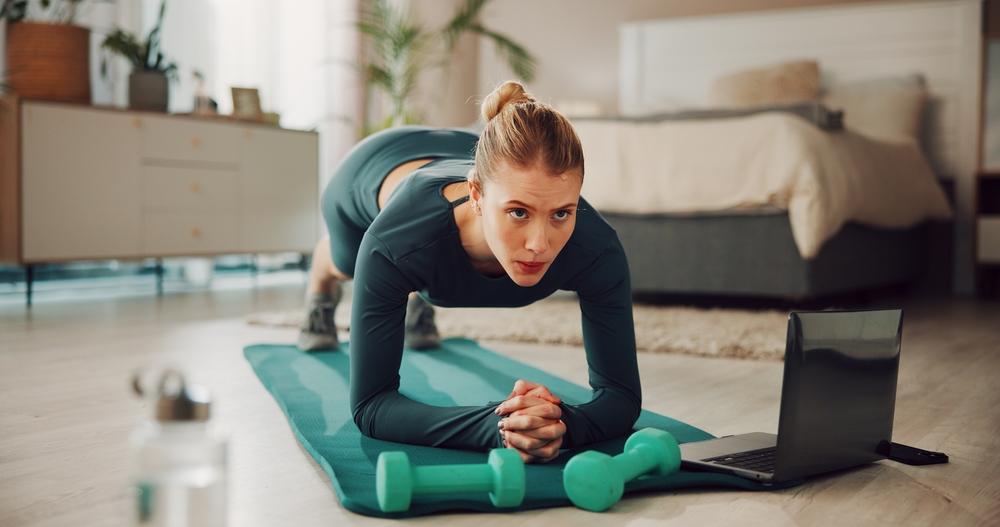
Research on stress and motor control shows that under sustained physical demand, the body often defaults to familiar tension patterns. In a plank, those patterns show up immediately. Some people brace excessively, holding their breath and overloading certain muscles. Others lose focus and allow alignment to drift. Neither response is a failure. Both are signals. The plank creates a controlled environment where these responses can be noticed rather than ignored.
Seen this way, the exercise becomes a form of feedback. It shows how pressure is managed in the body, not just in the gym, but in everyday situations where demands accumulate quietly. Learning to stay present, breathe steadily, and maintain control during a plank trains more than physical stability. It builds the capacity to remain organized when effort is required. That skill carries forward into work, relationships, and moments where the body is asked to hold itself together under weight that is not always physical.
Strength That Carries Beyond the Floor
The plank is not powerful because it is difficult, but because it exposes how the body responds when effort demands presence. It shows whether strength is being built through control or through strain, through awareness or through endurance alone. In that stillness, the body reveals how it organizes itself when there is no momentum to hide behind.
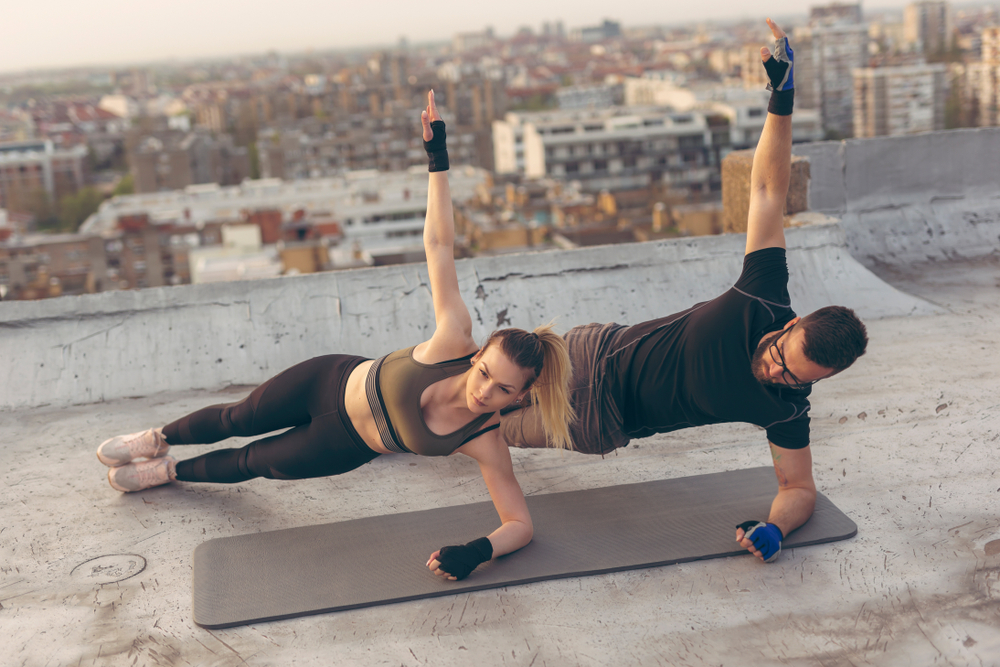
Research makes it clear that useful strength depends on maintaining coordination. Time only matters when it supports alignment, steady breathing, and balanced muscle engagement. Once those elements fade, effort stops serving the body. What looks like determination can quietly become excess stress, especially when the goal is simply to last longer rather than to move or hold well.
When the plank is approached as a dialogue with the body instead of a challenge to defeat, its value expands. It becomes a way to train presence under pressure, reinforcing stability that extends into posture, movement, and the way we carry responsibility in everyday life. Strength, in this sense, is not about how long we hold on, but about how well we remain organized while we do.
Featured Image from Shutterstock