

His Teammate Was Dying Under a Grizzly. Running Was the Smart Choice. He Didn’t Run
Deep in the Wyoming backcountry, about 50 feet separated two college wrestlers on an October afternoon. One of them had just spotted a fresh pile of bear scat. He turned his head to warn his friend. He never finished the sentence.
What happened next on that mountainside near Yellowstone would test everything these two young men believed about loyalty, survival, and what it means to have someone’s back when the cost of showing up might be your life.
Bear Scat and a Split-Second Warning
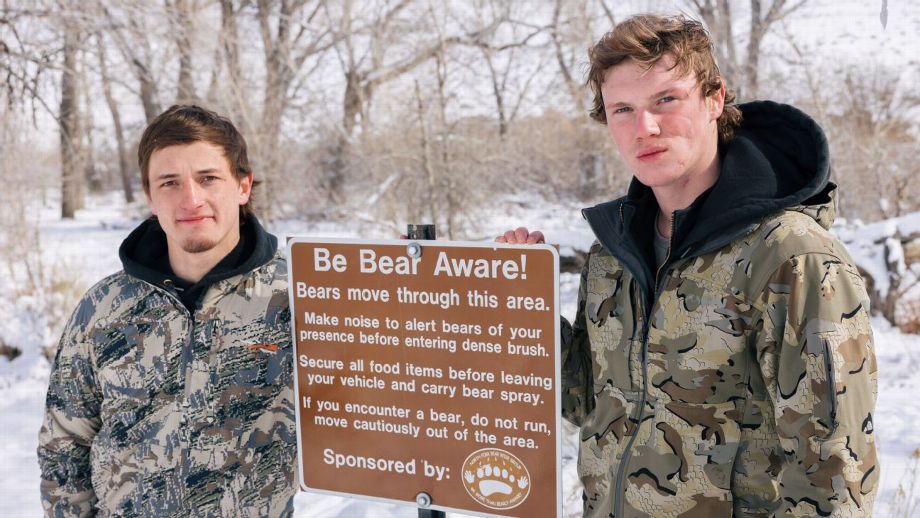
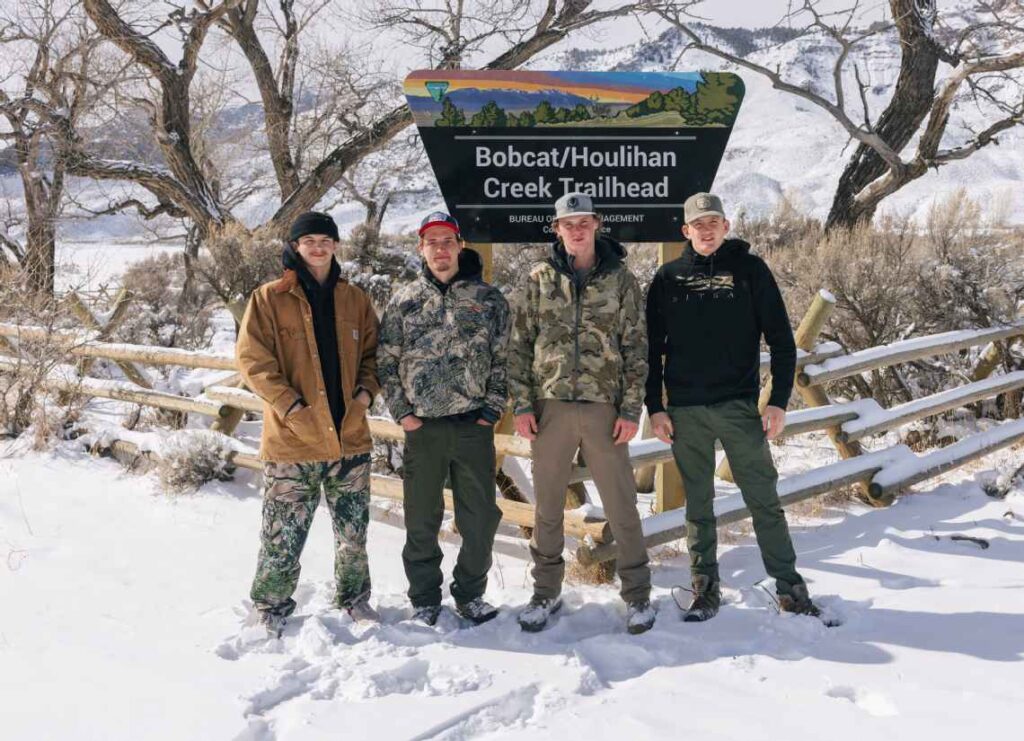
October 15, 2022, started like any other Saturday for four wrestlers at Northwest College in Powell, Wyoming. Brady Lowry, Kendell Cummings, Gus Harrison, and Orrin Jackson finished morning practice and drove 45 minutes into the Shoshone National Forest to go shed hunting. Shed hunting involves scouring mountain trails for antlers dropped by elk, moose, and deer. A good set can fetch $200. A productive afternoon can put $500 in a college kid’s pocket.
On the drive out, they ribbed Gus for wearing a bright red sweatshirt instead of camo. They told him he looked like a blinking food sign for every predator on the mountain. Everyone laughed.
For six hours, the four hiked close to 15 miles along the Bobcat-Houlihan Trail. They crossed stretches of open, jagged rock and pushed through patches of brush so thick they could barely see the ground. By late afternoon, they had collected five or six antlers and noticed bear scat scattered across the trail. No bear, though. Just evidence that one had been close.
As sunset approached, the group split into pairs. Brady and Kendell headed higher up the mountain. Gus and Orrin stayed lower, about half a mile away. Far enough that Brady and Kendell could barely hear their teammates talking below. Brady waded into a wall of dense brush and looked down. A massive pile of fresh bear droppings sat right in front of him. He called back to Kendell. “Hey, watch out for this big pile of bear s—.”
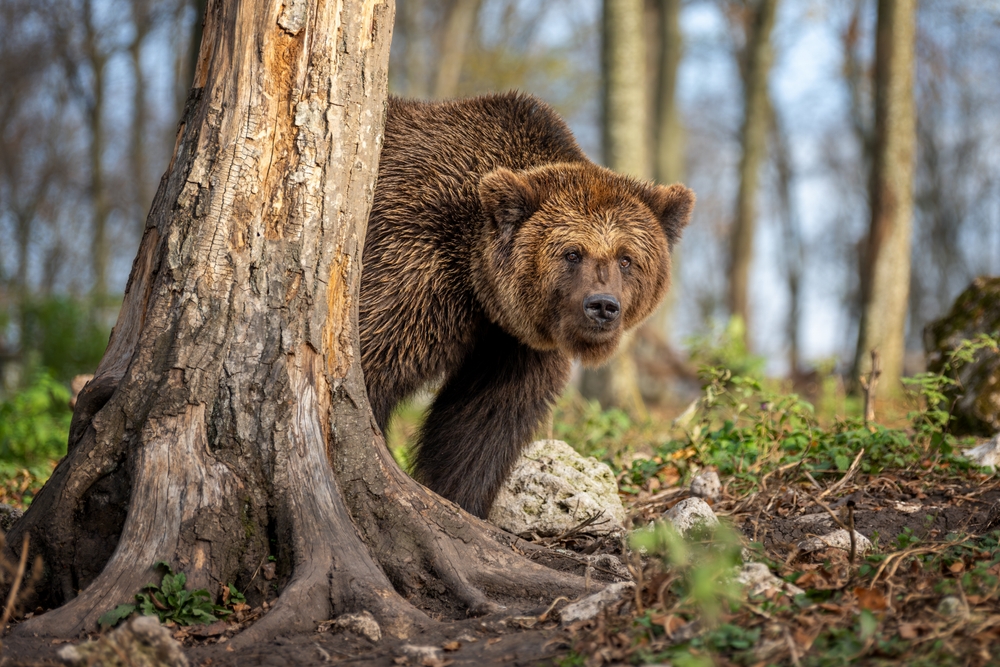
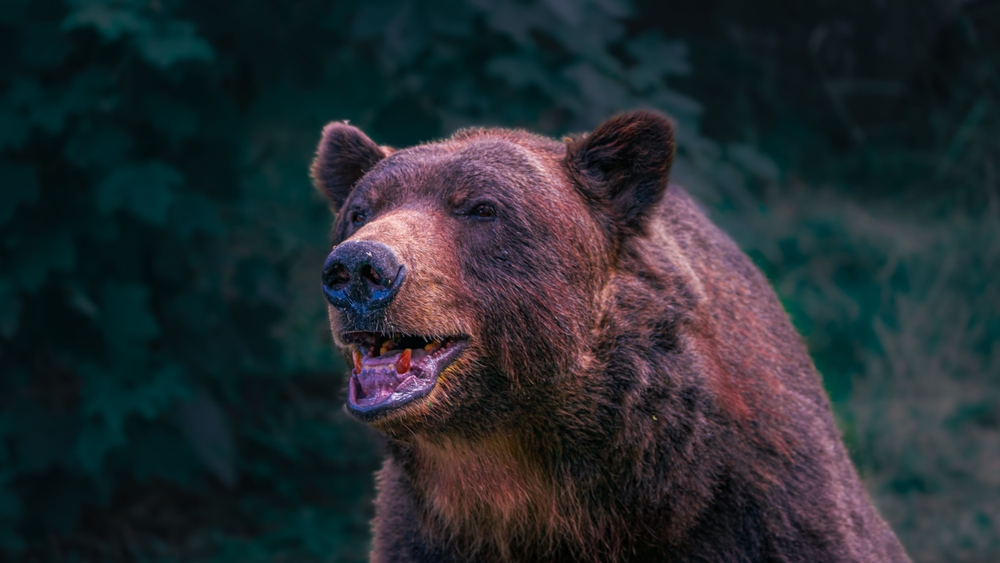
A loud crack ripped through the brush. Brady managed one word before a 500-pound grizzly hit him square in the chest. “Bear!”
Thirty Seconds to Make an Impossible Choice
Brady went airborne. The impact launched him roughly 30 yards across the rocky ground, and the bear ran alongside his tumbling body, clawing and biting as he rolled. When Brady’s body came to a stop, the grizzly began pawing at him, pressing him into the dirt, shaking him by the arm until the bone inside snapped.
Kendell stood 30 yards away, facing the bear’s back. He watched the most violent thing he had ever seen happen to someone he cared about, and his mind raced through options. He could sprint downhill, find Gus and his gun, and come back. Gus was an incredible shot. Maybe that was the smartest play. But Brady had maybe 30 seconds before the bear killed him. Smart wouldn’t be fast enough.
Kendell started yelling. No reaction from the bear. He threw a stick and hit it. Nothing. He threw a rock that landed dead center on the bear’s back. Still nothing. She was locked onto Brady, and noise wasn’t going to break that focus.
So Kendell did what no survival manual would ever recommend. He sprinted at the grizzly, launched his body onto her back, grabbed the fur around her neck, and pulled as hard as he could.
It worked. She released Brady, spun toward Kendell, and he let go and ran. He allowed himself one glance over his shoulder. Two giant strides were all it took. She was on him.
She Came Back Twice
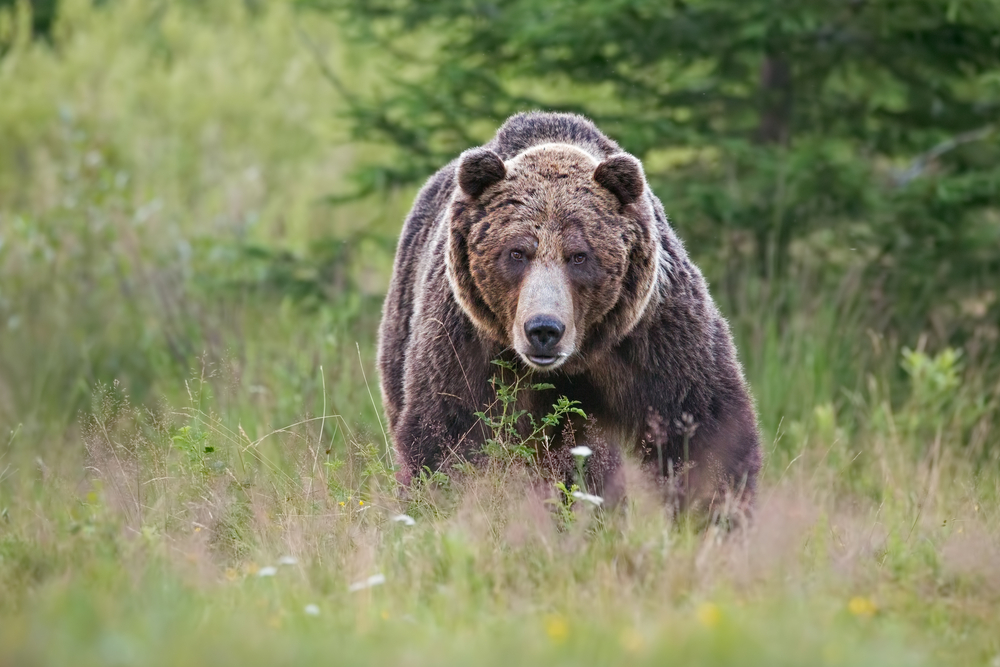
The bear clubbed Kendell to the ground and drove its jaws toward his head. He shoved his hands and arms into her mouth, trying to keep her teeth away from his face. Her breath filled his nostrils, rancid and hot, the smell of an animal that spends its life eating raw meat. Slobber flew across his skin as she bit down again and again.
“I could hear when his teeth would hit my skull, I could feel when he’d bite down on my bones and they’d kind of crunch,” Cummings later recalled.
He went limp. She studied his motionless body for a few seconds, then lumbered away. Kendell opened his eyes, blood pouring down his face so heavily he could barely see. He needed to know if Brady was alive. He called out his friend’s name. And that sound brought the bear crashing back through the brush.
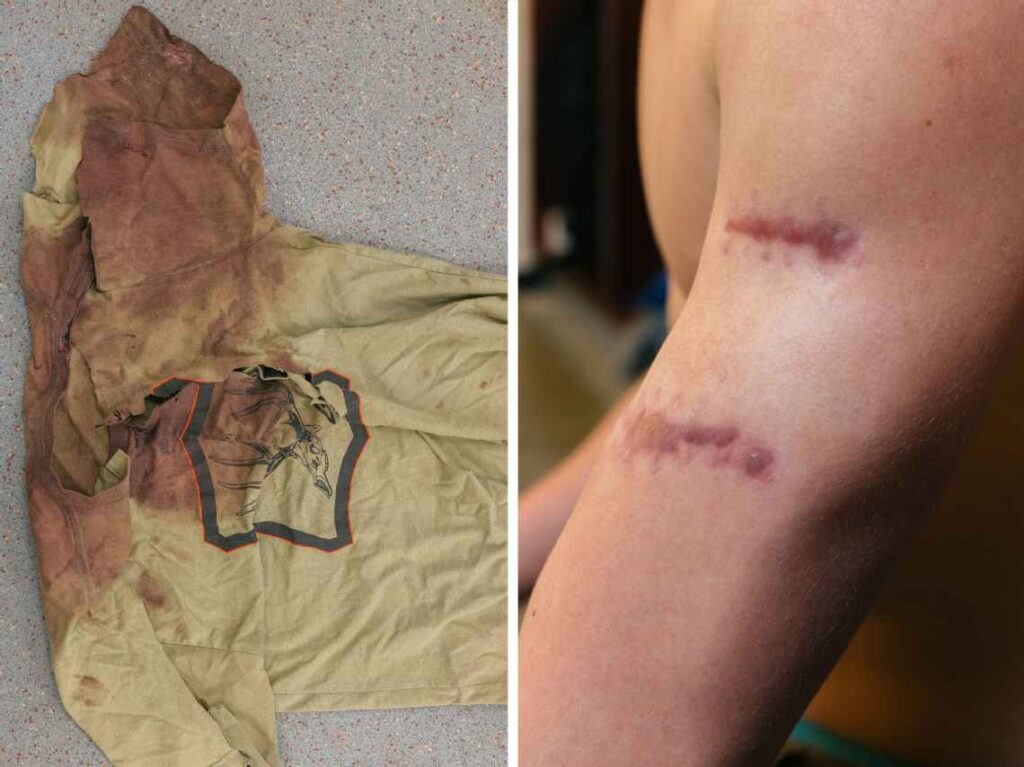
She struck him again. Bit into his skull, his cheek, his shoulders. At one point, she lifted his entire body off the ground by his head. Kendell had nothing left. His bicep on one arm had been torn from the bone. Puncture wounds covered his legs and torso. He lay still and waited to die.
But his backpack, stuffed with the antlers they had collected that day, kept the bear from rolling him over. She tried again and again, pressing her paw into his side, but the bulky pack held him in place. After 30 seconds of failed attempts, she began scooping dirt over his body. Kendell believes she was burying him as a meal to return to later.
He waited. When the sounds of her movement faded, he unclipped his backpack, rolled onto his stomach, and dragged himself down the trail.
A Red Sweatshirt Changes Everything
While the bear focused on Kendell, Brady scrambled to his feet. His forearm was broken so badly that a bone jutted through the skin. He cradled the arm against his body like it no longer belonged to him and pulled out his phone. Somehow, he got a signal and dialed 911.
Looking downhill, he spotted a flash of red. Gus Harrison’s sweatshirt, the same one they had mocked him for wearing that morning, was now the brightest and most beautiful thing on the mountain. Brady screamed and waved his good arm.
Gus, 200 yards below, smiled and waved back. He thought Brady was joking around. Only when Brady wobbled closer, clearly carrying his arm like a broken thing, did Gus realize something terrible had happened. He drew his gun and sprinted uphill.
Orrin reached Brady and grabbed the phone from his hand. A 911 operator told them to leave the area and wait for rescue. Orrin gave a five-word answer and hung up. “We’re not leaving.”
Gus found Kendell stumbling down the trail, drenched in blood, barely able to stand. He crouched, hoisted Kendell onto his shoulders in a fireman’s carry, and ran. A 157-pounder carrying 150 pounds of dead weight over rocky terrain. When they met up with Brady and Orrin, Brady turned away. He couldn’t look. His brain refused to process that his friend was alive.
They limped together for about a mile before farmers in a vehicle picked them up and drove them to emergency responders. Brady finally looked at Kendell. Tears came. He ran over and wrapped his one functioning arm around the man who had saved his life. Both of them were bleeding, both with arms hanging uselessly, both alive against every reasonable expectation.
Sixty Staples, a Shattered Arm, and a Baja Blast
A helicopter airlifted Kendell to the trauma center in Billings, Montana. Surgeons found fragments of the bear’s teeth embedded inside his mouth. They used skin grafts from his legs to reconstruct a hole the grizzly had bitten clean through his cheek. Sixty staples closed two long gashes across his skull. Sutures ran up and down both arms and legs.
Brady arrived by ambulance later that night. Doctors placed him in the bed next to Kendell. Neither was allowed food or water before surgery, so they lay there with dry mouths, eating ice chips, making small talk, and staring at each other in disbelief.
Brady’s father, Dallas, flew in from Utah. A wrestling coach himself, he walked into the hospital room and found his son surrounded by the entire Northwest College wrestling team. Every teammate and their coach, Jim Zeigler, had made the 90-minute drive to sit at their bedside. They stayed past midnight.
Dallas looked at Kendell, battered and barely able to smile, and told him he had saved his son’s life. Kendell’s response was simple and absolute. “I would have rather died than have gotten away and known I could have helped,” Kendell told him.
When the nurses finally allowed Kendell a drink, he asked for one thing. A Baja Blast from Taco Bell. Dallas found a location 10 minutes away and came back with a large cup of green soda. Kendell downed it and prepared for surgery.
Move Forward
About 100 days after the attack, Brady stepped onto a wrestling mat for the first time in two years. He lost his first match back, running out of gas in the third period after an adrenaline dump early on. Kendell met him at the edge of the mat and leaned in with two words that had become their shared mantra. “Move forward.”
They had declined the school’s offer of counseling. Talking about the past felt like moving backward. Instead, they built their own version of therapy. They went back into the woods.
Weeks after the attack, Brady and Kendell drove into the Wyoming wilderness together. They stayed close, shoulder to shoulder, scanning every patch of brush, hair standing on end the entire time. At one point, they found an elk carcass, a potential sign of a nearby bear. Kendell threw stones at it and into the surrounding brush. After a tense few minutes, they moved on. By the end of the afternoon, they had found antlers and something more important. Proof that the woods had not taken their courage permanently.
Brady went on to qualify for the NJCAA national tournament as an unseeded wrestler with a 1-4 record. Nobody expected him to win a single match. He pinned the 12th seed. Then the 5th seed. Then the 4th seed. He reached the semifinals before falling and finished fifth in the country, earning All-American honors and the NJCAA sportsmanship award, all four months after a grizzly nearly killed him. Both wrestlers got tattoos afterward. Brady chose a grizzly bear face on his chest. Kendell went with a small bear paw print.
No Anger. Just Understanding.
Perhaps the most remarkable part of the story is how little bitterness either man carries. Brady says he understands why the bear attacked. She had cubs nearby, and two humans stumbled into her space. He does not frame it as malice. He frames it as instinct.
“We were in its house,” Brady said with surprising calm. “It had the same fight-or-flight instinct we have if somebody comes in our house.” Kendell, who absorbed the worst of the violence, was asked if he felt anger. He paused for five seconds. “Kind of. Sort of. She roughed me up.” Then he added, without a trace of sarcasm, that she was protecting her cubs and did her job.
Coach Zeigler, watching his wrestlers clean up the gym one evening after a dual meet, put the story into a larger frame. He pointed to a door at the far end of the gym, roughly the same distance Kendell had been from Brady when the bear attacked. If you knew a grizzly was on the other side of that door, mauling your friend, would you go through it?
Most people would hesitate. Most people would call for help. Most people would freeze. Kendell Cummings did not hesitate. He grabbed the bear by the fur and pulled. And when it was over, when the staples and sutures and surgeries were behind them, when the mats were mopped, and the chairs were stacked, two young men who had known each other for only six weeks before the worst day of their lives walked out of that gym the way they walk out of everything now. Forward.