

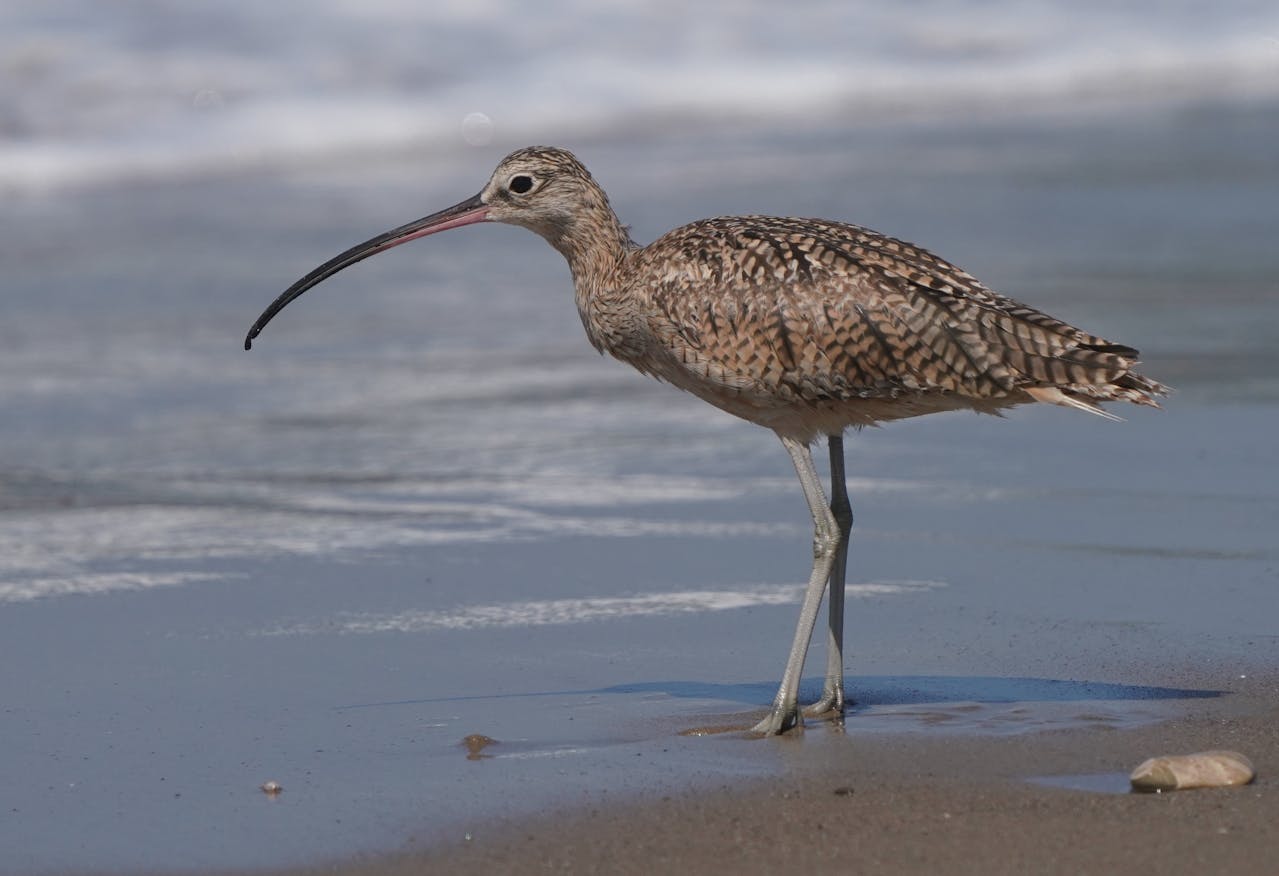
How One Bird’s 13,500 Kilometer Journey Across the Pacific Stunned Researchers
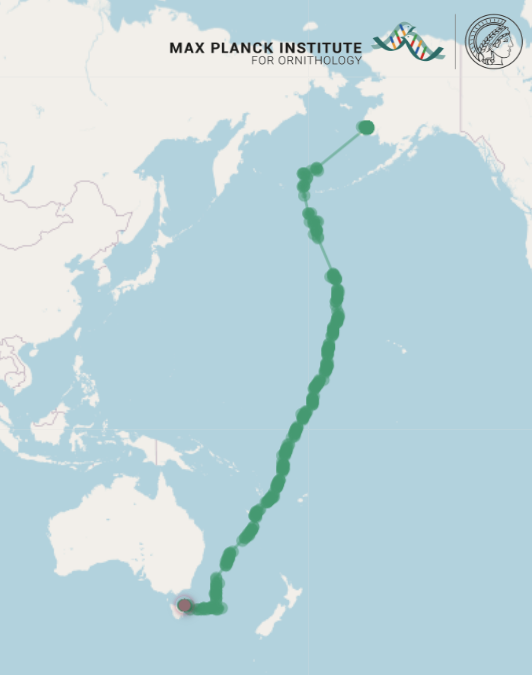
Every year, billions of birds migrate across the planet, navigating oceans, mountains, deserts, and rapidly changing climates. These journeys are among the most remarkable natural phenomena on Earth, with some birds traveling thousands of kilometers between breeding and wintering grounds. Yet even in a world full of astonishing migrations, one recent journey has left scientists and the internet equally stunned. A young bar tailed godwit completed a nonstop flight from Alaska to Tasmania, traveling roughly 13,500 kilometers without landing even once.
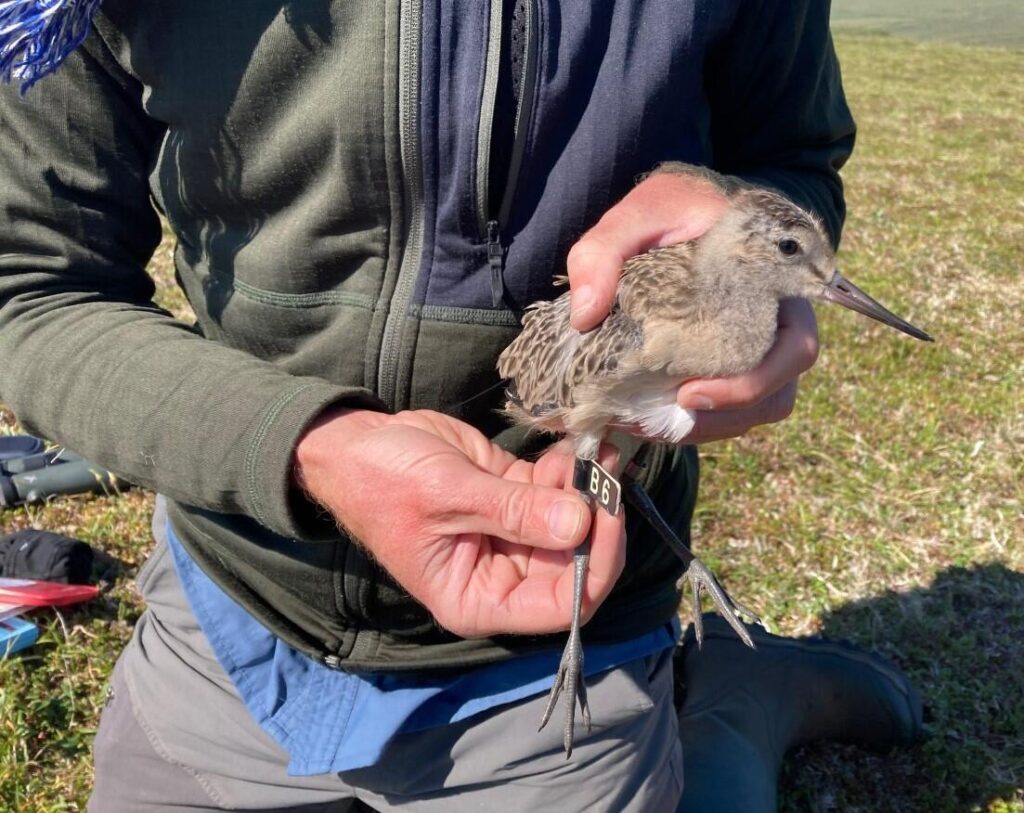
The bird, known as B6, was tracked by scientists using satellite telemetry technology designed to monitor long distance migrations. When the data was finally confirmed, it revealed a journey that broke existing records and pushed the known limits of animal endurance. The migration took place across the vast Pacific Ocean, an environment with no safe resting points for a land bird. Survival during such a journey depends entirely on careful preparation, favorable winds, and extraordinary biological efficiency.
The story quickly spread across international news outlets and social media platforms. People around the world were fascinated not only by the sheer distance but also by the biological mystery behind the flight. Many readers found themselves asking the same question again and again. How could a bird sustain such an intense journey for days without rest, food, or water while crossing one of the largest oceans on Earth?
While researchers have been studying migratory birds for decades, this particular flight has opened new discussions about endurance, navigation, and the extraordinary abilities of wildlife. It also highlights how much scientists are still learning about migration patterns through modern tracking technology. The journey has sparked a simple yet powerful question across the internet and within the scientific community. How is something like this even possible?
The Record Breaking Journey That Shocked Scientists
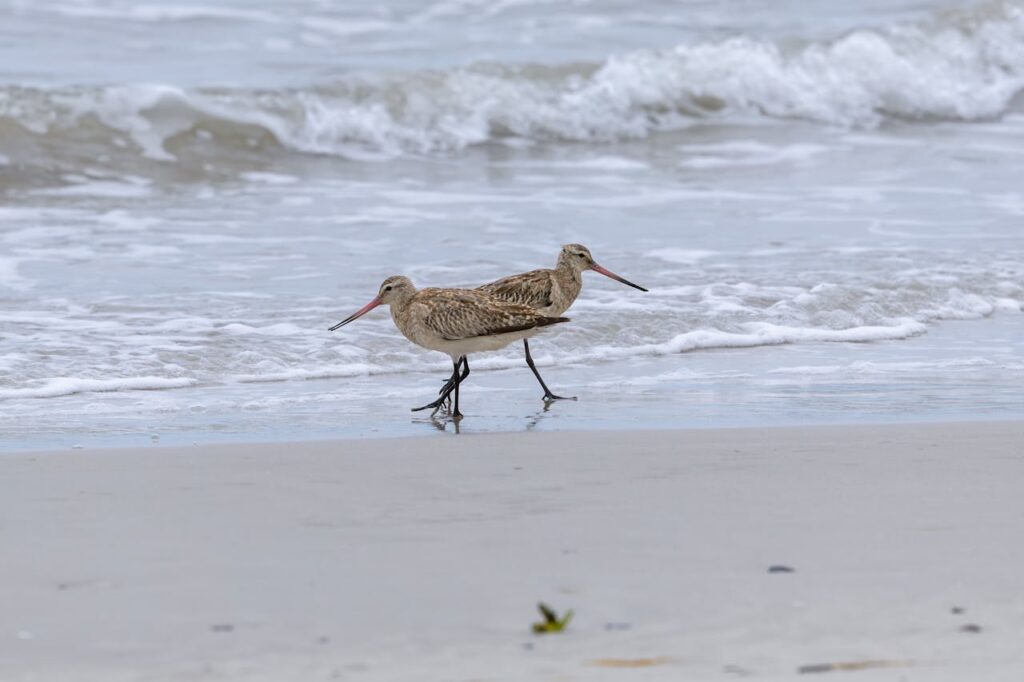
The remarkable journey was recorded by researchers working with the United States Geological Survey Alaska Science Center. According to the USGS report, the juvenile bar tailed godwit identified as B6 departed from Alaska during the autumn migration season and traveled directly toward Tasmania in Australia. Satellite tracking confirmed the bird flew approximately 13,560 kilometers without stopping. The route carried the bird across the open Pacific Ocean, one of the longest stretches of uninterrupted water on the planet.
What makes the journey even more impressive is that B6 was a juvenile bird making its first migration. Many migratory birds learn routes through experience or by following older birds that guide them along established paths. However, juvenile godwits often begin their first migration alone. Scientists believe that much of their migratory route is guided by innate biological programming encoded in their instincts rather than by learned behavior.
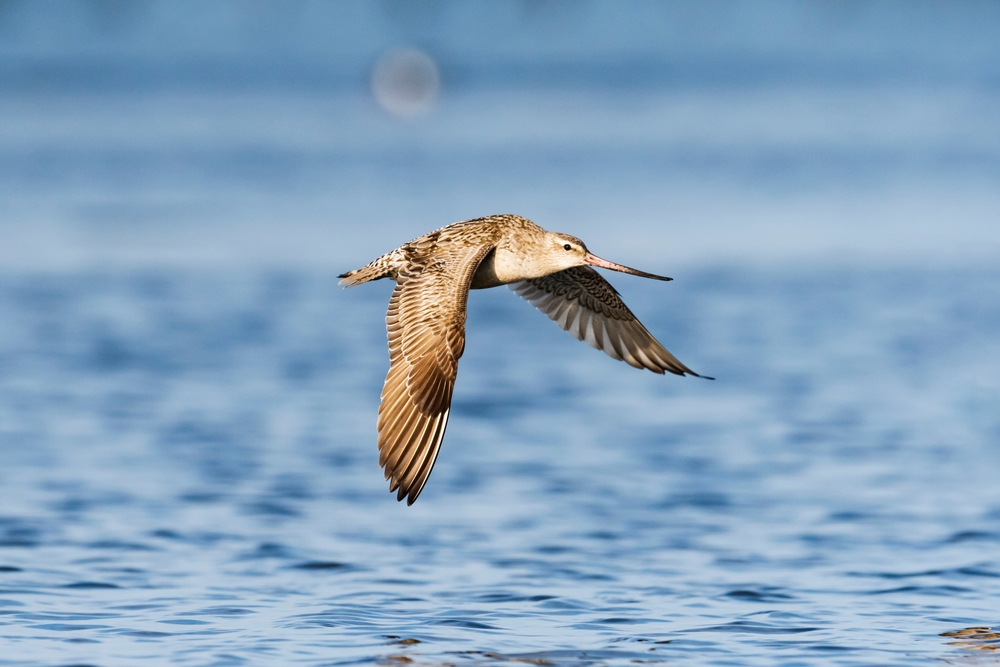
The flight lasted more than eleven days, requiring the bird to remain in continuous motion throughout the entire journey. During this time, the godwit crossed the entire Pacific Ocean while encountering changing wind systems, storms, and fluctuating atmospheric conditions. Unlike birds that migrate in stages and stop along coastlines to feed and rest, this godwit had no opportunity to pause or replenish energy during the trip.
The journey eventually ended in Tasmania, where the tracking signal confirmed that the bird had landed safely after completing its record breaking flight. The successful completion of this nonstop migration immediately drew global scientific attention. Researchers recognized that the flight represented the longest recorded continuous migration ever documented for a bird using satellite tracking data.
Recognition by Guinness World Records
The extraordinary flight did not go unnoticed outside the scientific community. Guinness World Records officially recognized the achievement, identifying the bar tailed godwit as the bird responsible for the longest recorded nonstop migration. The recognition helped bring the story into the global spotlight and highlighted the incredible endurance of migratory birds.
Guinness explained that the tracked bird flew roughly 13,560 kilometers between Alaska and Tasmania without a single landing. This distance exceeded previously recorded migrations and confirmed what many ornithologists had suspected for years. Bar tailed godwits are among the most capable long distance flyers in the animal kingdom, able to travel extraordinary distances across open oceans.
The recognition also helped bring the story to a much wider audience. While bird migration research is often discussed primarily within scientific circles, the confirmation by Guinness World Records transformed the journey into a viral scientific story. People who had never heard of the species before suddenly became fascinated by the bird’s extraordinary achievement.
Importantly, the record was not simply a moment of curiosity. Scientists emphasized that the achievement was documented through years of careful research and technological innovation. Modern satellite transmitters are now small enough to be safely attached to migratory birds, allowing researchers to observe migration patterns with far greater accuracy than ever before.
The Science Behind Extreme Migration
Researchers have spent years studying how birds prepare for extraordinary journeys like the one completed by B6. One of the most important biological adaptations involves energy storage before migration begins. In the weeks leading up to departure, bar tailed godwits dramatically increase their body weight by accumulating large fat reserves that will serve as fuel during the journey.
Fat functions as the primary energy source during long distance flight. Studies referenced in migration research journals suggest that godwits can nearly double their body weight before beginning migration. This stored energy allows them to remain airborne for extended periods without needing to eat or drink. Essentially, the bird carries all the fuel it needs for the entire journey inside its body.
Another fascinating adaptation involves temporary changes within the bird’s internal anatomy. Some studies indicate that certain organs shrink before migration begins. Organs related to digestion become smaller because the bird will not be eating during the flight. At the same time, muscles responsible for sustained flight performance become stronger and more efficient.
Navigation is another remarkable element of the journey. Scientists believe migratory birds rely on several environmental cues, including the position of the sun, star patterns, magnetic fields within the Earth, and large scale wind systems. These combined navigation tools allow birds to maintain a precise route across thousands of kilometers of open ocean without becoming disoriented.
What Research Studies Reveal About Godwit Migration
Scientific research has played a crucial role in understanding how birds like the bar tailed godwit complete such migrations. A study published in the United Tasmania Group Journal highlighted how these birds rely heavily on wind patterns to optimize their long flights across the Pacific region. By taking advantage of favorable wind conditions, the birds are able to conserve valuable energy during flight.
According to the study, favorable tailwinds can significantly extend the range of migrating birds. When wind conditions align with a bird’s intended direction of travel, it allows the bird to maintain high travel speeds while expending less energy. This natural advantage can determine whether a migration succeeds or fails.
The research also highlights the importance of precise timing during migration seasons. Birds often depart during short weather windows when atmospheric conditions are most favorable. These carefully timed departures suggest that migratory birds respond to subtle environmental signals that indicate the best moment to begin their journey.
The study further emphasizes that long distance migration is not simply a physical feat. It represents a sophisticated interaction between biology, environmental awareness, and evolutionary adaptation developed over thousands of years. Each successful migration reflects a finely tuned system shaped by natural selection.
Why This Story Captured the Internet’s Attention
When the story first appeared in major news outlets such as CBC News, it quickly attracted global attention. Readers were fascinated by the idea that a relatively small bird could travel across an entire ocean without stopping. The combination of scientific discovery and natural wonder made the story highly shareable online.
One reason the story resonated so strongly is that it challenges common assumptions about the limits of animals. Many people assume that creatures need regular rest and food in order to survive long journeys. The godwit’s migration challenges this assumption and demonstrates the extraordinary adaptations that some species possess.
Social media discussions also raised broader questions about migration and climate change. Some users wondered whether changing wind patterns or rising global temperatures might influence future migrations. Others expressed admiration for the resilience of wildlife and the hidden complexity of natural systems.
Ultimately, the viral reaction reflects a deeper human curiosity about nature. Stories like this remind people that the natural world is filled with remarkable events that often go unnoticed. Even in an age of satellites and advanced technology, nature continues to reveal surprises that capture global attention.
What This Migration Teaches Us About Nature
The flight of the bar tailed godwit highlights the extraordinary capabilities of migratory animals. While humans rely heavily on airplanes, fuel, and navigation systems to travel long distances, many species accomplish similar journeys using instinct and biological adaptation. The godwit’s migration demonstrates how evolution has shaped animals to survive in challenging environments.
The migration also emphasizes the importance of preserving global ecosystems. Birds like the godwit depend on specific coastal habitats to prepare for migration and recover afterward. These locations provide critical feeding grounds where birds can build the energy reserves needed for long flights.
Scientists often view migratory birds as indicators of environmental health. Changes in migration patterns can signal shifts in climate, food availability, or habitat stability. By monitoring these birds, researchers gain valuable insights into the broader health of ecosystems across continents.
In the case of B6, the record breaking journey stands as a reminder of how much remains to be discovered about wildlife. Even a single bird’s migration can provide important clues about biology, evolution, and environmental resilience. Each discovery adds to our understanding of the delicate systems that sustain life on Earth.
A Journey That Redefines the Limits
The story of the juvenile bar tailed godwit that flew from Alaska to Tasmania represents one of the most extraordinary migrations ever recorded. Covering approximately 13,500 kilometers without landing, the journey demonstrates a level of endurance that continues to astonish scientists and the public alike.
Recognition from Guinness World Records helped highlight the achievement, while ongoing research studies continue to reveal the biological mechanisms that make such journeys possible. From energy storage to navigation strategies, the godwit represents a remarkable example of natural adaptation shaped by evolution.
Perhaps the most powerful aspect of the story is the sense of wonder it inspires. In a world where many natural systems face growing environmental pressure, stories like this remind people of the resilience and complexity of wildlife.
The internet’s big question about how such a journey is possible may not have a single simple answer. Instead, it reflects a deeper appreciation for the mysteries of migration and the incredible abilities of the natural world.
Featured Image Credit: Photo by Richard Block | Pexels
Sources
- The record-breaking bird that flew from Alaska to Australia without stopping. (2023, January 3). Guinness World Records. https://www.guinnessworldrecords.com/news/2023/1/the-record-breaking-bird-that-flew-from-alaska-to-australia-731576
- Frontiers | Recent advances in research of understudied bird migration systems. (n.d.). Frontiers. https://www.frontiersin.org/research-topics/67882/recent-advances-in-research-of-understudied-bird-migration-systems