

Man Revived After Being ‘Dead’ for Minutes Reveals Exactly What He Saw
We spend our entire lives running from the silence that awaits us at the end, imagining death as a terrifying switch that simply turns off the lights. But what if the moment the heart stops is not an exit into nothingness, but an entrance into something far more profound?
Emerging stories from those who have crossed the threshold, backed by startling new data on the dying brain, suggest that our final seconds may actually be the most vivid, electric, and peaceful moments of our entire existence.
The View From the Other Side
Comment
by u/HumbleBumble77 from discussion
in AMA
We spend our entire lives running from one inevitability. We build walls of distraction to ignore the silence that awaits us at the end. But what if that silence is not empty? What if the moment the heart stops is not an absolute ending, but a different kind of beginning?
Consider the account of a healthcare professional who crossed that threshold. Sharing his experience on a public forum, this man was pronounced dead for several minutes and placed on life support. His body was in a chaotic state, fighting against a mechanical ventilator in the ICU. To the outside observer, it looked like a violent, physical struggle for survival.
Yet, his internal experience was profoundly different. There was no pain. There was no fear. He recalls a sensation of absolute comfort even as his body rejected the ventilator. While his physical shell fought, his consciousness drifted into a space of serenity. He describes seeing his grandmother, a woman who had passed away in 2004. Her message to him was simple yet earth-shattering. She told him to turn around. She said, “My time here is just beginning.”
This was not a scene of horror. It was a reunion. Even as a man of science who works in clinical research, he remains convinced this was not a hallucination born of medication. It was a glimpse into a reality that defies our current understanding. It suggests that the final breath is not a curtain closing, but perhaps, a door opening.
A Final Symphony of the Mind

Steve Jobs, the visionary behind the screens we stare at daily, left this world with three simple words: “Oh wow, oh wow, oh wow.”
For decades, the medical consensus was that death is a shutdown. We imagined it as a computer being unplugged, where the screen simply goes black and the hard drive stops spinning. However, modern neuroscience is beginning to paint a radically different picture. The brain does not merely fade away; it lights up.
Researchers at the University of Michigan, led by Dr. Jimo Borjigin, analyzed the electrical activity in the brains of patients during their final moments. Contrary to the conventional wisdom that the brain gives up when the heart stops, the data showed the opposite. Just seconds after life support was removed, the researchers observed a massive surge of coordinated neural activity.
Specifically, the brains of these patients exploded with gamma waves. These are not random sparks of dying neurons. Gamma waves are the fastest and most subtle brain waves, associated with high-level cognitive functioning, deep meditation, and intense focus. Dr. Borjigin notes that the dying brain is “hyper-activated” during this transition.
This phenomenon suggests that the moment of death is not a descent into darkness, but a period of heightened lucid consciousness. The hardware of the body may be failing, but the software of the mind is running faster than ever. It appears that in our final seconds, we are not sleeping. We are more awake than we have ever been.
The Brain’s Final Gift
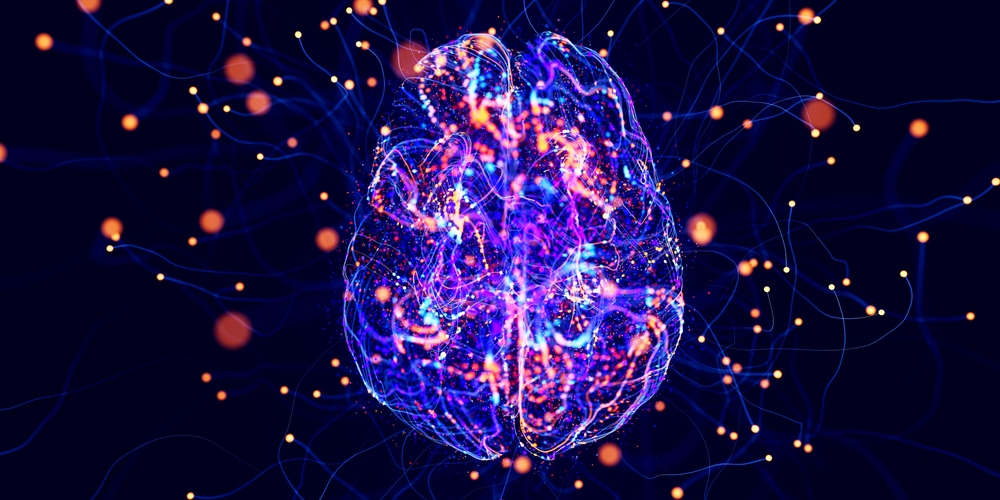
We have all heard the phrase that your life flashes before your eyes. It sounds like a scene from a movie, a dramatic montage of your greatest hits. But science is discovering that this cinematic ending might be a biological reality.
When the heart stops beating, the brain enters a state of hypoxia, or oxygen deprivation. Dr. Ajmal Zemmar, a neurosurgeon, describes a “triphasic wave of death.” This is not a silent shutdown. It is a neural fireworks display. As brain cells lose their energy, they release a flood of neurotransmitters and ions. This massive surge of electricity connects different parts of the brain, specifically the areas responsible for memory.
Dr. Jimo Borjigin suggests that this specific activity aligns with reports of people seeing their loved ones or reliving pivotal moments. Even though the eyes are closed and the room is empty, the mind is accessing deep storage.
Why would nature design us this way? Why waste energy on memories when the body is dying?
Dr. Charlotte Martial proposes that it could be an evolved defense mechanism, similar to how animals “play dead” when threatened. It is a way for the brain to detach from the physical pain of the moment. Dr. Zemmar adds that this process allows us to “pull yourself out of that scary place” and enter a state that brings safety. In the end, our biology seems wired to protect us from fear, offering a final moment of comfort rather than terror.
Fading Like a Sunset

Society teaches us to look at the clock. We see the flatline on the monitor and declare a “time of death.” We believe that when the heart stops, the person is gone. But this is a misconception of human understanding.
Dr. Ajmal Zemmar argues that death is not a specific time. It is a process. The line between life and death is not as sharp as we think. The heart may stop beating, but the brain does not immediately follow. In fact, real brain death occurs later, often minutes after the heart has ceased its rhythm.
During this window, the brain is not passive. Dr. Jimo Borjigin discovered something profound in her studies of rats. She found that the dying brain sends signals to the heart that actually accelerate the shutdown. It appears the brain might be actively suppressing the heart, coordinating the end of physical life.
This changes the entire narrative. We are not simply machines that run out of battery. We are complex systems undergoing a transition. The rippling spread of neuronal activity continues even when the blood stops flowing. We do not vanish in an instant. We fade like a sunset, slowly and deliberately transitioning from one state to the next. The “time of death” is just a label for the living; for the dying, it is a journey that continues.
The Highlight Reel You Are Filming Today

Science has given us a glimpse into the final curtain, and it is not a scene of despair. It is a moment of clarity, memory, and peace. But this discovery carries a weight that falls squarely on the shoulders of the living. If the brain’s final act is to replay the most significant moments of your life, you must ask yourself a difficult question: What are you recording right now?
Dr. Ajmal Zemmar poses a challenge that cuts through the noise of our daily grind. He asks, “What was the last emotional conversation you had with a friend or with your partner? Those are the things that matter.”
The brain does not seem to prioritize the hours spent scrolling on a phone or the stress over a deadline. In those final seconds, the biology of the mind sifts through the noise to find the signal. It looks for connection. It looks for love. It looks for the moments that made life worth living.
Do not wait until the lights go out to find peace. Do not wait for the end to appreciate the beauty of the people standing right in front of you. You are the director of this movie. Every single day is a scene that will either make the final cut or be left on the floor. Make sure your life is a film worth watching. Make sure that when the screen finally fades to black, you are left with a masterpiece.
Featured Image Source: Shutterstock