


Watch: A Husband Dives Every Week for 14 Years Searching for His Wife Lost in the Japan Tsunami
How far would you actually go for the person you love? Most of us promise to be there through sickness and health, but few of us are tested by the absolute limits of human endurance. For one man in Japan, the vows he made did not end when a massive tsunami swept his wife into the Pacific Ocean. While the rest of the world eventually moved on from the tragic headlines of 2011, he chose a path of quiet, freezing determination that few can comprehend.
The Search for Yuko
On a Friday morning in March 2011, Yasuo Takamatsu drove his wife, Yuko, to her job at the bank. It was a normal commute. They talked about dinner plans and daily chores, never imagining that the world was about to shift under their feet. That afternoon, the ground shook violently for six minutes. Then came the ocean. A massive wall of black water surged over the seawalls of Onagawa, Japan, swallowing buildings and sweeping cars away like loose gravel.
Yuko and her coworkers fled to the roof of the bank as the water rose. Stranded and watching the tide engulf the town, she did not write a panic-filled manifesto. She reached for her phone to check on the person she loved most. At 3:21 p.m., Yasuo received a text: “Are you O.K.? I want to go home.”
The water eventually receded, but Yuko was gone. She was swept out to sea along with thousands of others. Months later, Yasuo found her pink flip phone in the debris of a parking lot. He flipped it open and found one last, unsent draft written minutes after the first message. It simply read, “So much tsunami.”
She had been alive, scared, and thinking of him until the very end. Yasuo was safe on dry land, but he could not shake the feeling that his wife was still out there, cold and alone. She said she wanted to go home, and he decided right then that he would do whatever it took to bring her back.
Into the Depths
Yasuo spent the first two years searching the land. He hiked through mountain forests and combed the debris-scattered beaches of Onagawa. He returned to the site of the bank again and again, hoping the earth had caught her. It had not. If he wanted to find her, he had to go where the water took her.
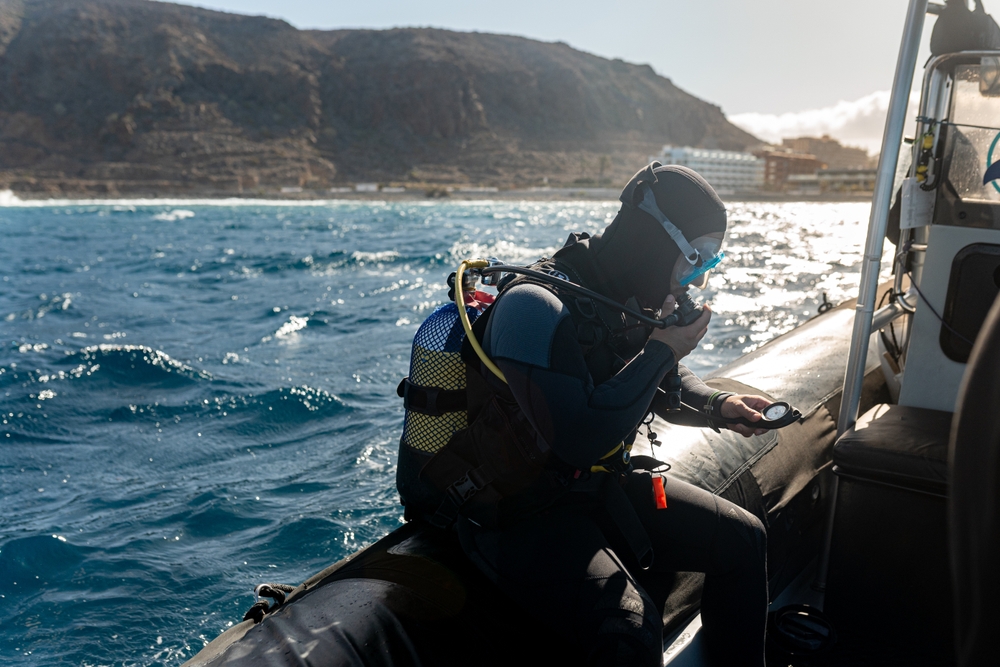
At fifty-six years old, Yasuo walked into a local dive shop. He was terrified of the ocean. He worried about his mask flooding, about the freezing temperatures, and about the dark. Yet, he told the instructor, “I am trying to find my wife in the sea.” He began training not for a hobby, but for a mission.
He soon found he was not alone in this quiet desperation. Masaaki Narita, a fifty-seven-year-old father, was also looking for someone. His daughter, Emi, was twenty-six and had been on that same roof with Yuko. Masaaki had tried to find peace on land, but he knew Emi was in the water.
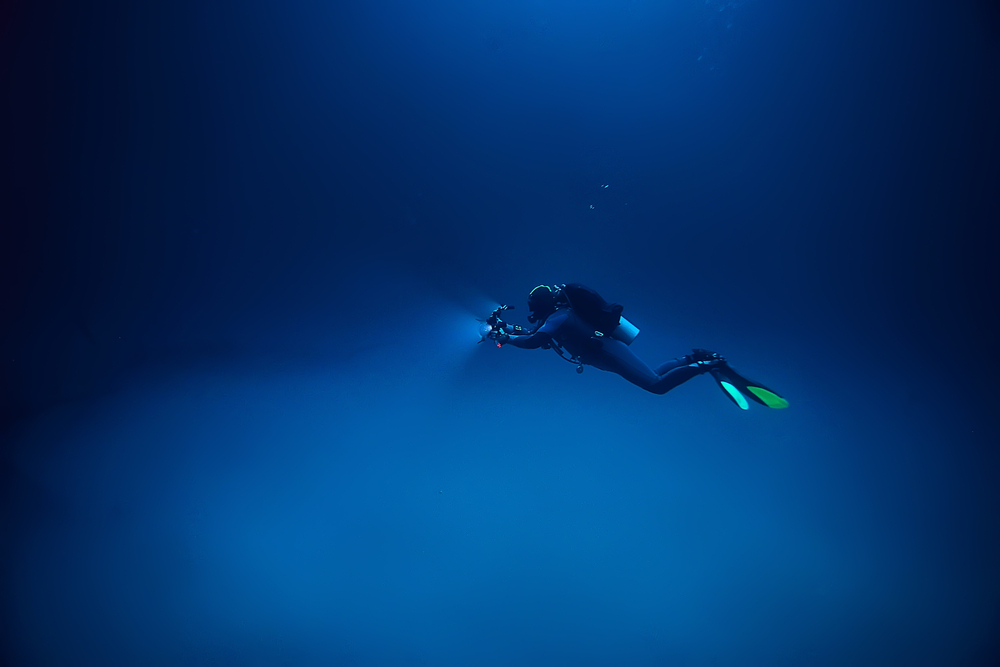
Together, these two men committed to the deep. Masaaki struggled with buoyancy and back pain, while Yasuo fought against his own panic. They were not professional divers. They were a husband and a father who refused to let the ocean keep their loved ones. They strapped on heavy tanks and descended into the very element that had destroyed their lives, driven by a love that fear could not touch.
City beneath the Waves

The ocean floor off the coast of Onagawa is not a coral reef teeming with life. It is a silent, murky graveyard of a town that once was. One expert described the scene below as if a big city had been put into a grinder and thrown into the water.
Yasuo and Masaaki swim over a landscape of debris covered in thick mud. They drift past twisted cars, refrigerators, and television sets that sit eerily still in the darkness. In the gloom, their flashlights catch glimpses of daily life that were violently interrupted. They have found a child’s calligraphy box, a wedding album, and wallets filled with money that no longer matters.
Yasuo learned to read the water. He learned that on stormy days, the world turns brown, and on sunny days, it shifts through shades of blue. He described the sound of the ocean depth not as peaceful, but as chirichiri, a sound like hair burning or a snake hissing.
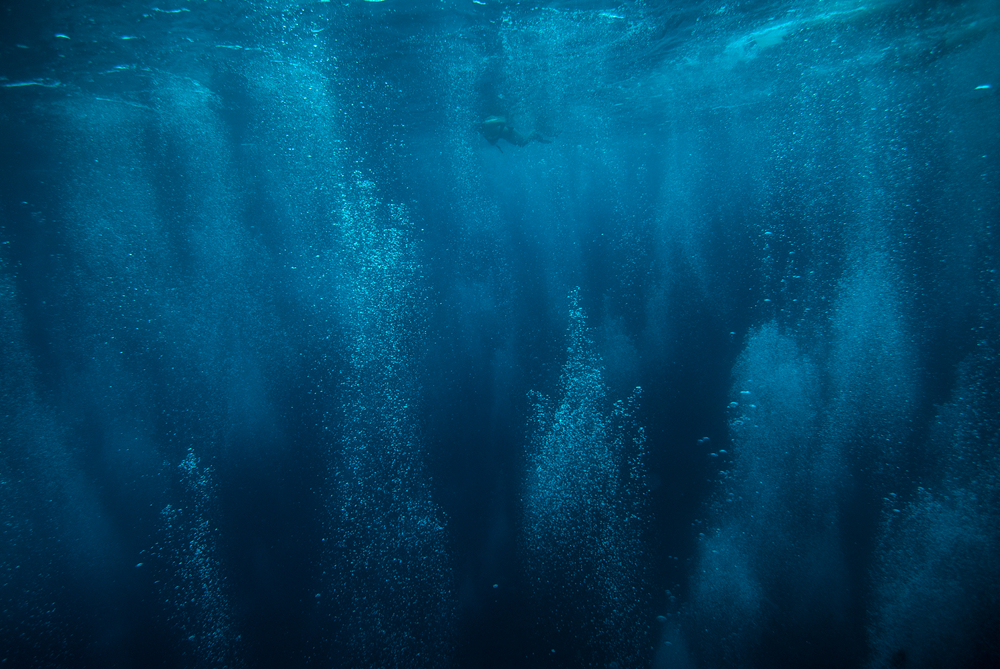
Every dive is a heavy physical exertion, but the emotional weight is heavier. They are not treasure hunters. They are looking for a clue, a bone, or a piece of jewelry that proves their loved ones existed. In this underwater ruin, they are searching for closure among the wreckage of their neighbors’ lives.
A Deeper Kind of Devotion

Time is the enemy of the search. Science tells us that the ocean reclaims everything eventually. Forensic experts explain that bodies lost at sea decompose or drift on currents that no one can predict. After more than a decade, the likelihood of finding an intact body is practically nonexistent. Yasuo knows he is likely looking for bones, or perhaps just a ring or a piece of clothing that survived the salt and the tides.
Despite these impossible odds, the dives continue. Yasuo and Masaaki have recovered items that brought closure to other neighbors in Onagawa. They have surfaced with wallets, bank books, and photographs that could be restored. Each item returned is a small victory against the erasing power of the tsunami.
For Yasuo, the search has evolved beyond a simple recovery mission. He admits that while he knows Yuko is gone, he cannot bear the thought of her being alone in the cold dark. He dives not because he expects a miracle every time he hits the water, but because the act of searching is his way of still caring for her. He feels closest to her when he is submerged in the same ocean that took her. It is a painful, quiet intimacy found eighty feet below the surface.
Love Is the Only Thing That Survives the Waves
Most people believe that healing requires letting go. Society tells us to move past grief, to close the chapter, and to step back into the light of the living. Yasuo Takamatsu and Masaaki Narita offer a different truth. For them, healing is found in the refusal to forget. Every week, when they strap on their tanks and descend into the gray water, they are not just looking for remains. They are actively loving the people they lost.
Yasuo stated simply, “I have no choice but to keep looking for her.” It is a devotion that ignores the logic of time. It challenges us to look at our own relationships differently. We often wait for a catastrophe to realize the value of the person sitting next to us. We assume there will be another dinner, another Friday, another text message. But nothing is promised.
The ocean is vast and indifferent, yet one man dives into it weekly because his wife is there. The world never looks as big as when someone is lost, but the human heart is big enough to keep searching. Do not wait for the tide to rise to appreciate what matters. Love fiercely now, speak the words today, and hold on tight to the ones you cherish. In the end, love is the only thing that survives the waves.