

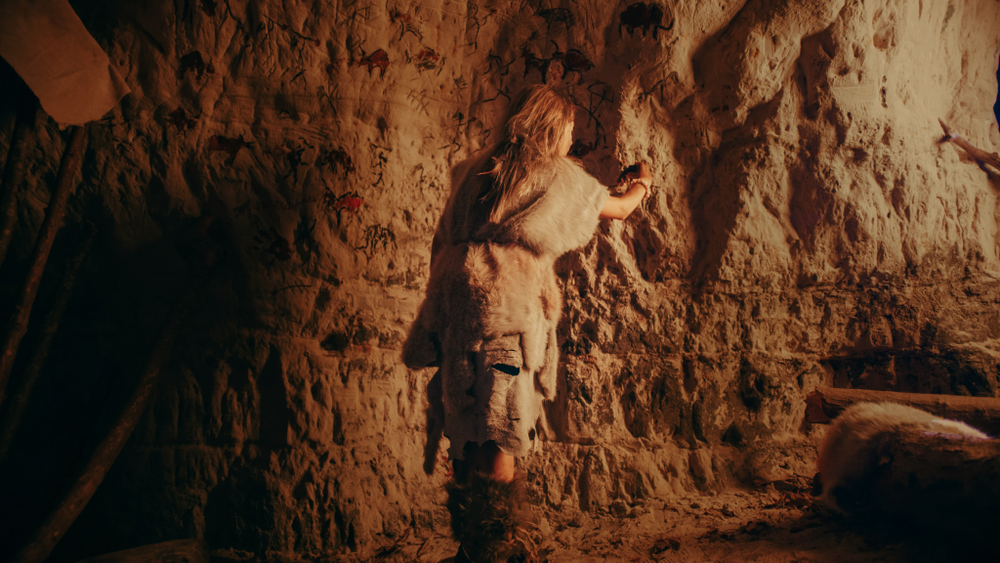
New Study Uncovers the First Documented Case of Down Syndrome in Neanderthals
We are taught that human history is a brutal, unforgiving race where only the strongest make it to the finish line. We picture freezing climates, sharp spears, and a ruthless fight for basic survival. But what if the defining trait of our ancient ancestors was not their raw physical power, but their gentle hearts? Deep inside a quiet cave in Spain, a tiny, overlooked fragment of bone has just rewritten the entire story of human evolution. It points to a profound level of love and sacrifice that science never expected to find in the ancient world, challenging everything we thought we knew about who we really are.
What Truly Makes Us Human?
Have you ever stopped to think about what makes us truly human? Is it our ability to build tools, or is it our capacity to care for one another?
Recently, researchers uncovered something that will deeply change how you look at our ancient ancestors. Inside Cova Negra, a cave located in Valencia, Spain, scientists took a closer look at a tiny fossil excavated back in 1989. For years, this small cranial fragment of a right temporal bone sat quietly in an archive. But thanks to modern micro-computed tomography scans, it finally told its profound story.
This bone belonged to a Neanderthal child affectionately named “Tina.”
Tina was not your average child trying to navigate the harsh environment of the Stone Age. The three-dimensional models of her inner ear revealed a congenital pathology directly associated with Down syndrome. Researchers determined that Tina suffered from severe hearing loss and disabling vertigo. She could not balance well. She could not easily hear the approaching dangers of the wild.
Yet, against all odds, Tina survived to be at least six years old.
In a world where basic survival was a daily struggle, a highly vulnerable child lived well past infancy. Mercedes Conde-Valverde, lead author of the study from the University of Alcalá, points out that the mother alone could not have provided all the necessary care. The entire group had to step in. As Conde-Valverde beautifully stated, “What was not known until now was any case of an individual who had received help, even if they could not return the favor… That is precisely what the discovery of ‘Tina’ means.”
Tina did not survive by accident. She survived because her community chose to protect her.
Beyond Survival of the Fittest
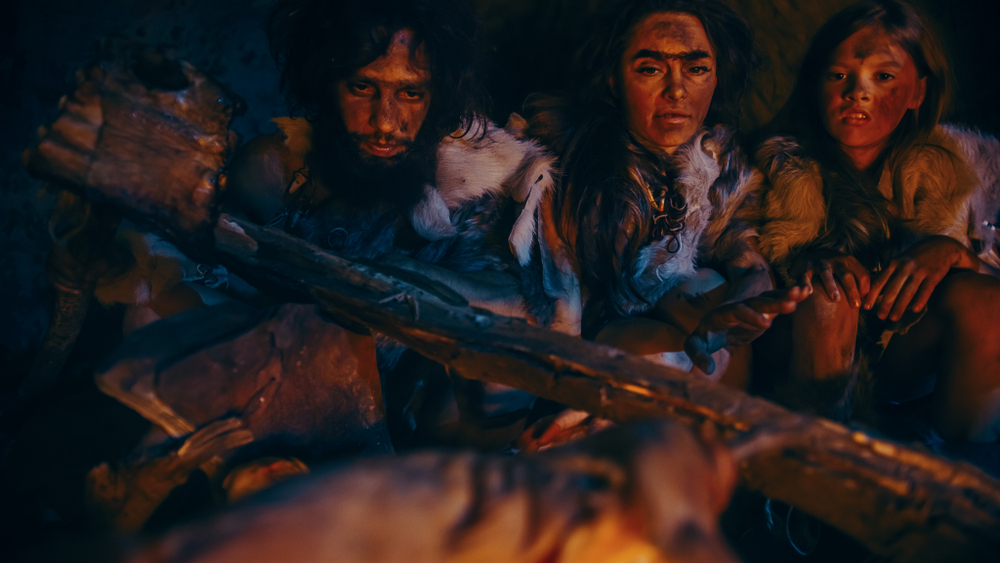
To truly grasp the weight of this discovery, you have to picture the chaotic world she lived in. Neanderthals were highly mobile hunter-gatherers. They were constantly on the move, tracking animal herds and navigating unforgiving landscapes. Moving a camp is exhausting on its own. Now imagine doing it while carrying and comforting a growing child who suffered from severe dizziness and could not walk independently.
In the past, scientists have found evidence of Neanderthals caring for injured adults. Skeptics often brushed this off as a practical transaction. They called it reciprocal altruism. The theory was simple: you heal a wounded hunter so they can eventually hunt for you again.
But this child changes everything. With profound physical and developmental challenges, she could not offer protection or gather food for the tribe. There was no practical benefit or future payoff for keeping her alive. Her community did not protect her because they expected a return on their investment. They protected her because she was theirs.
The group had to adjust their travel speeds and share their hard-earned food. They made daily sacrifices. They loved her, they carried her, and they adapted their entire way of life to make sure she was safe.
Anatomical Proof of Compassion
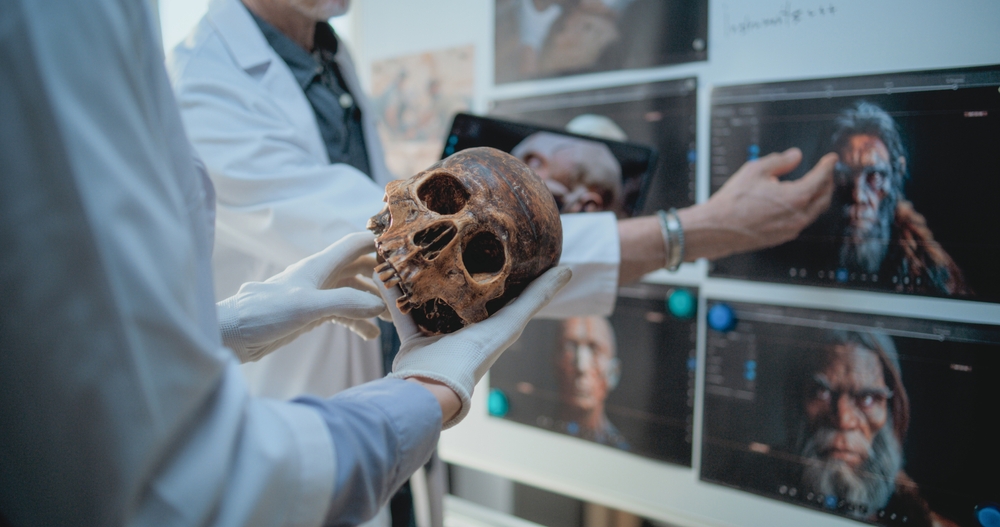
For over three decades, the small fragment of Tina’s right temporal bone sat quietly in a collection. To the naked eye, it might have looked unremarkable. But modern science has a powerful way of illuminating the dark. Using advanced micro-computed tomography, researchers were able to peer deep inside the bone and digitally reconstruct the delicate structures of her inner ear.
What they found was groundbreaking. The scans revealed severe abnormalities in the semicircular canals, the exact area responsible for our balance and spatial orientation. It also showed malformations that would have led to profound hearing loss.
This was not a guess. It was anatomical proof of a congenital pathology directly linked to Down syndrome. By diagnosing her condition with such precision, scientists did something incredible. They linked a physical fossil directly to a complex social behavior.
Think about the magnitude of that. We are no longer just looking at old bones to see what Neanderthals ate or what tools they used. We are using medical imaging to understand how they loved. Her six years of life serve as empirical data. It proves that a highly organized system of social care was a permanent fixture in their society. The evidence of their compassion was locked away in a tiny bone, waiting tens of thousands of years for us to finally listen.
A Mirror for Modern Society

Take a hard look at the world we live in today. We have instant communication, rapid delivery services, and advanced medical care. We are more connected digitally than at any other point in human history. Yet, many people feel incredibly isolated. We often complain about minor inconveniences while turning a blind eye to the most vulnerable individuals in our own neighborhoods.
Now, look back at the Neanderthals who raised Tina. They faced freezing temperatures, unpredictable predators, and constant physical exhaustion. They did not have social safety nets or modern medicine. But they had each other.
This fossil record is not just a scientific milestone. It is a mirror held directly up to our modern society. It asks us a deeply uncomfortable question. If a group of ancient nomads could pause their fierce struggle for survival to carry and comfort a child with severe disabilities, what is our excuse?
We have built massive cities, but somewhere along the way, we started to lose the foundational blueprint of our own species. That blueprint is community. The survival of that little girl was a collective agreement that every single life held value.
When we marginalize people with physical or mental challenges, or when we leave the lonely to fend for themselves, we are not acting like advanced humans. We are actually moving away from the exact trait that ensured our survival in the first place. Our ancient relatives understood a universal truth that we desperately need to remember today. True progress is not measured by the technology we invent. It is measured by how we treat the weakest among us.
The Call to Reconnect

Tina’s story is not just a fascinating piece of prehistoric trivia. It is a direct challenge to every single one of us living today. Her small fossil is calling out across thousands of years of history, asking us to remember what actually matters. It is a powerful reminder that our greatest evolutionary advantage was never our sharp spears or our strong muscles. Our greatest advantage was our ability to love unconditionally.
Who in your community is struggling? Who is standing on the margins, feeling invisible, or fighting a battle they cannot win on their own? You do not have to brave the harsh conditions of the Ice Age to show compassion. You just have to be willing to slow down your fast-paced life long enough to reach out your hand. Check on your strong friends, support the vulnerable, and choose empathy over convenience.
We have the power to honor Tina’s legacy every single day. Let us stop measuring our humanity by the smart devices in our pockets or the followers on our screens. Instead, let us measure it by the depth of our care for one another. True humanity is not something you are simply born with. It is something you practice. It is time we start practicing it again.
Featured Image Source: Shutterstock
Source:
- Conde-Valverde, M., Quirós-Sánchez, A., Diez-Valero, J., Mata-Castro, N., García-Fernández, A., Quam, R., Carretero, J. M., García-González, R., Rodríguez, L., Sánchez-Andrés, Á., Arsuaga, J. L., Martínez, I., & Villaverde, V. (2024). The child who lived: Down syndrome among Neanderthals? Science Advances, 10(26), eadn9310. https://doi.org/10.1126/sciadv.adn9310