


Ancient Comet Fragments Return for Dramatic Solar Encounter
In early January, a small team of amateur astronomers operating a remote telescope in Chile’s Atacama Desert noticed something unusual moving against the background of stars. The object was faint, distant, and traveling on an extreme path toward the inner solar system. Within days, it had a name: C/2026 A1, also known as MAPS. Within weeks, it had something more powerful than a name. It had anticipation.
This newly discovered comet is not just another icy visitor drifting harmlessly through space. It belongs to a dramatic lineage known as the Kreutz sungrazers, a family of comet fragments that dive dangerously close to the Sun. In early April, MAPS will pass within roughly 120,000 kilometers of the solar surface. If it survives that encounter, it may brighten enough to be seen in broad daylight.
At the same time, another striking object, the green-glowing C/2024 E1 Wierzchoś, is passing through the inner solar system for what may be the only time in its existence before being ejected into interstellar space. And recently, the interstellar comet 3I/ATLAS completed its own fiery dance with the Sun before speeding away forever.
Astronomy tells us these events are natural, cyclical, and governed by gravity. Astrology suggests that when rare celestial visitors arrive together, they mirror deeper transitions unfolding within the collective psyche. When ice meets fire in the heavens, something within us often begins to melt, ignite, or transform.
The Science Behind the Sungrazer
C/2026 A1 MAPS is part of the Kreutz family of sungrazing comets. These comets are fragments of a giant progenitor that likely broke apart more than two thousand years ago after passing extremely close to the Sun. Over centuries, those fragments have continued returning on elongated orbits, sometimes producing some of the brightest comets in recorded history.
Two of the most famous were C/1965 S1 Ikeya-Seki and C/1882 R1. The former, officially designated as C/1965 S1 (Ikeya–Seki), became the brightest comet of the twentieth century. It was visible in daylight and rivaled the brightness of the full Moon. The latter, C/1882 R1, was even more extraordinary, dazzling observers for months and achieving astonishing luminosity near the Sun.
MAPS appears to be traveling on a similar path. What makes it especially intriguing is that it was detected farther from the Sun than any previously discovered Kreutz sungrazer.
That suggests it may be a larger fragment than usual, although modern detection technology also plays a role in early discovery. Since its identification, astronomers have observed it steadily brightening, an encouraging sign that it may be holding together rather than disintegrating prematurely.
Its fate, however, remains uncertain. Sungrazers are notoriously fragile. Many fragment before or during their closest approach to the Sun, torn apart by tidal forces and intense heat. Yet sometimes, fragmentation itself produces a sudden brightening, creating an even more spectacular show.
From a purely scientific standpoint, the question of whether MAPS will become visible in broad daylight depends on its size, structural integrity, and the timing of any break-up. From an astrological perspective, the symbolism of a body plunging into solar fire is already potent, regardless of the final brightness.
Fire as Initiation
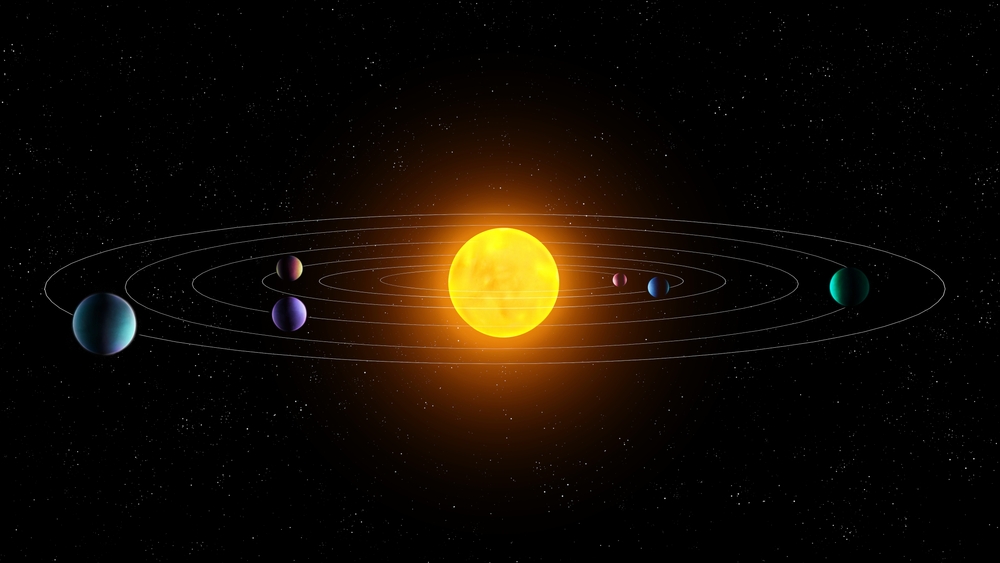
In astrology, the Sun represents the core self. It symbolizes vitality, identity, consciousness, and purpose. A comet that dives toward the Sun carries an archetypal message of confrontation with the center of being.
Throughout history, comets were rarely interpreted as neutral. They were seen as omens, markers of upheaval, or heralds of transformation. Ancient astrologers did not fully understand orbital mechanics, but they recognized that comets were different from the steady movements of planets. They appeared suddenly and behaved unpredictably. They disrupted the regular order of the heavens.
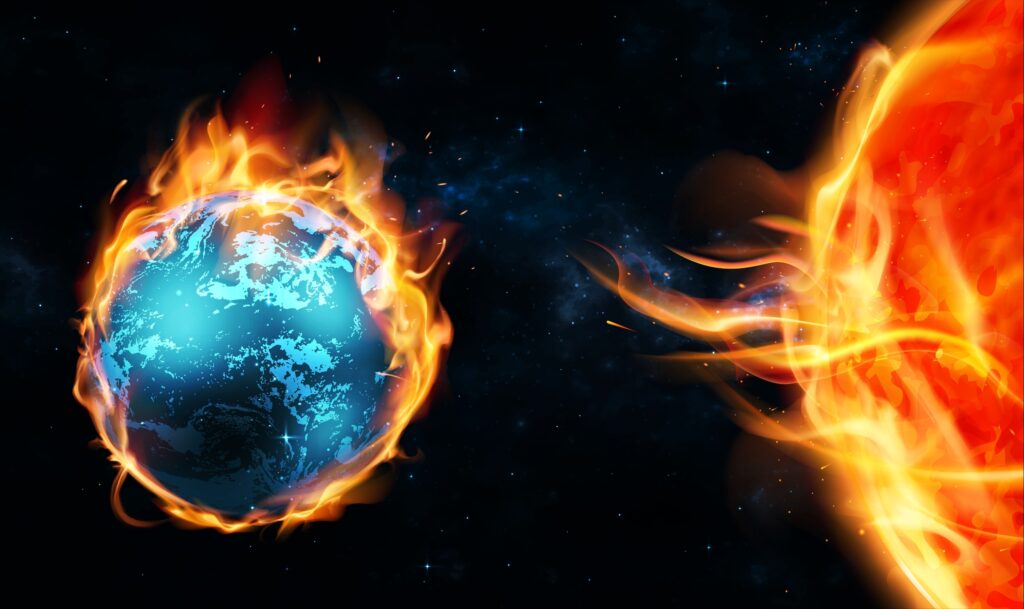
A sungrazer intensifies this symbolism. It does not simply pass by the Sun at a safe distance. It approaches the threshold of annihilation. In early April, MAPS will reach perihelion, the point of closest approach, skimming just above the solar surface. In astronomical terms, that is a near impossibility for survival. In symbolic terms, it resembles initiation through fire.
Fire purifies and destroys. It also reveals. When ice approaches intense heat, it cannot remain unchanged. Either it dissolves, or it erupts into brilliance.
On a collective level, sungrazing comets often coincide with periods of revelation. Hidden tensions surface. Long-standing structures are tested. Individual identities may undergo pressure, leading to clarity or crisis. The potential visibility of MAPS in daylight carries its own symbolism. Daylight belongs to the realm of conscious awareness. If a comet becomes visible against the brightness of the Sun, it suggests that something previously hidden or peripheral has become impossible to ignore.
The Emerald Wanderer

While MAPS dives inward, another comet tells a different story. C/2024 E1 Wierzchoś, officially designated as C/2024 E1 (Wierzchoś), is glowing with a distinctive green hue as it travels through the inner solar system.
This comet likely originated in the distant Oort Cloud, a vast spherical reservoir of icy bodies that surrounds our solar system at enormous distances. It may have been drifting inward for one to three million years. After passing perihelion in January, it is expected to be flung outward again, potentially leaving the solar system forever on a hyperbolic trajectory.
Its green glow is thought to result from carbon-based molecules in its coma, the cloud of gas and dust surrounding its nucleus. Observations have revealed carbon dioxide and other organic compounds, reminding us that comets carry some of the raw ingredients associated with life.
Symbolically, Wierzchoś embodies the archetype of the traveler who never returns. Unlike periodic comets that revisit the inner solar system, this one may be on a one-way journey. It enters, brightens, and departs into interstellar space.
In astrology, this aligns with themes of karmic encounters and fleeting catalysts. Certain people, events, or ideas enter our lives briefly but leave lasting change. Their influence is not measured in duration but in intensity.
The green coloration adds another layer. Green is often associated with the heart, growth, and renewal. A comet glowing in that color while preparing to leave suggests growth through release. Sometimes evolution requires departure. Sometimes illumination precedes farewell.
The Interstellar Precedent
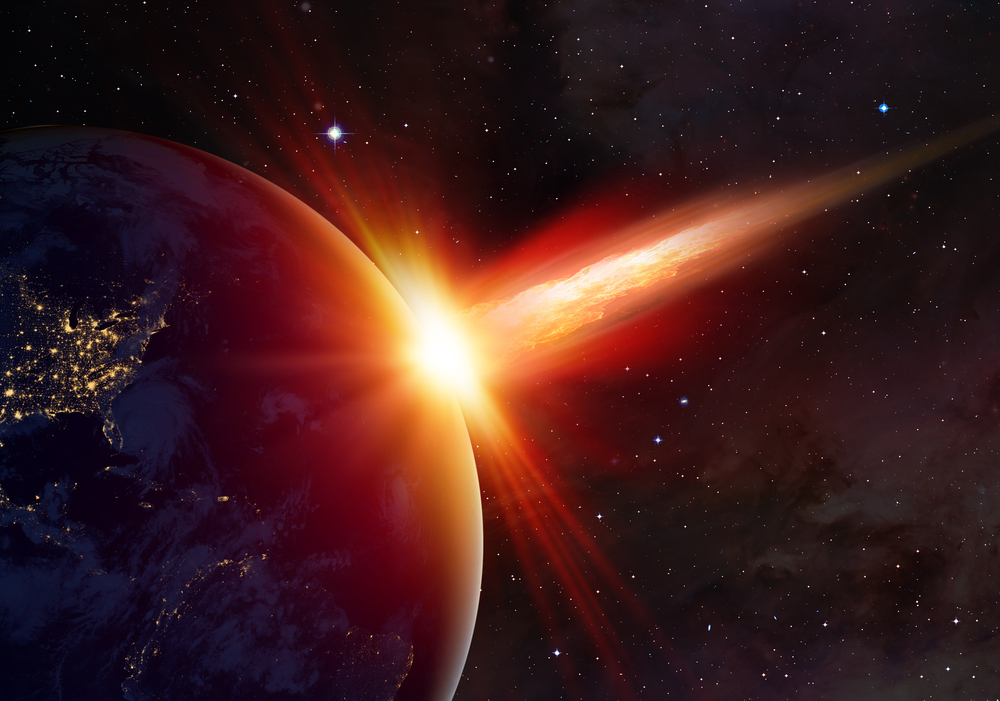
In 2025, astronomers closely observed 3I/ATLAS, officially known as 3I/ATLAS. It was only the third confirmed interstellar object ever detected passing through our solar system. After reaching its closest point to the Sun, it experienced a delayed brightening event. Deep ices, long shielded beneath a radiation-processed crust, began sublimating and releasing organic molecules.
This delay is scientifically explained by thermal penetration. The Sun’s energy takes time to reach deeper layers of a comet’s nucleus. But symbolically, the phenomenon is striking. Exposure does not always produce immediate reaction. Sometimes the most profound changes surface only after a period of integration.
3I/ATLAS demonstrated that transformation can continue even as an object is leaving. As it sped away at immense velocity, it was still revealing new information about its composition and origins.
Placed alongside MAPS and Wierzchoś, this interstellar visitor completes a narrative arc. One comet dives toward the Sun, one glows briefly before departing, and one erupts even as it exits. Together, they reflect cycles of initiation, illumination, and release.
Comets in the Astrological Tradition
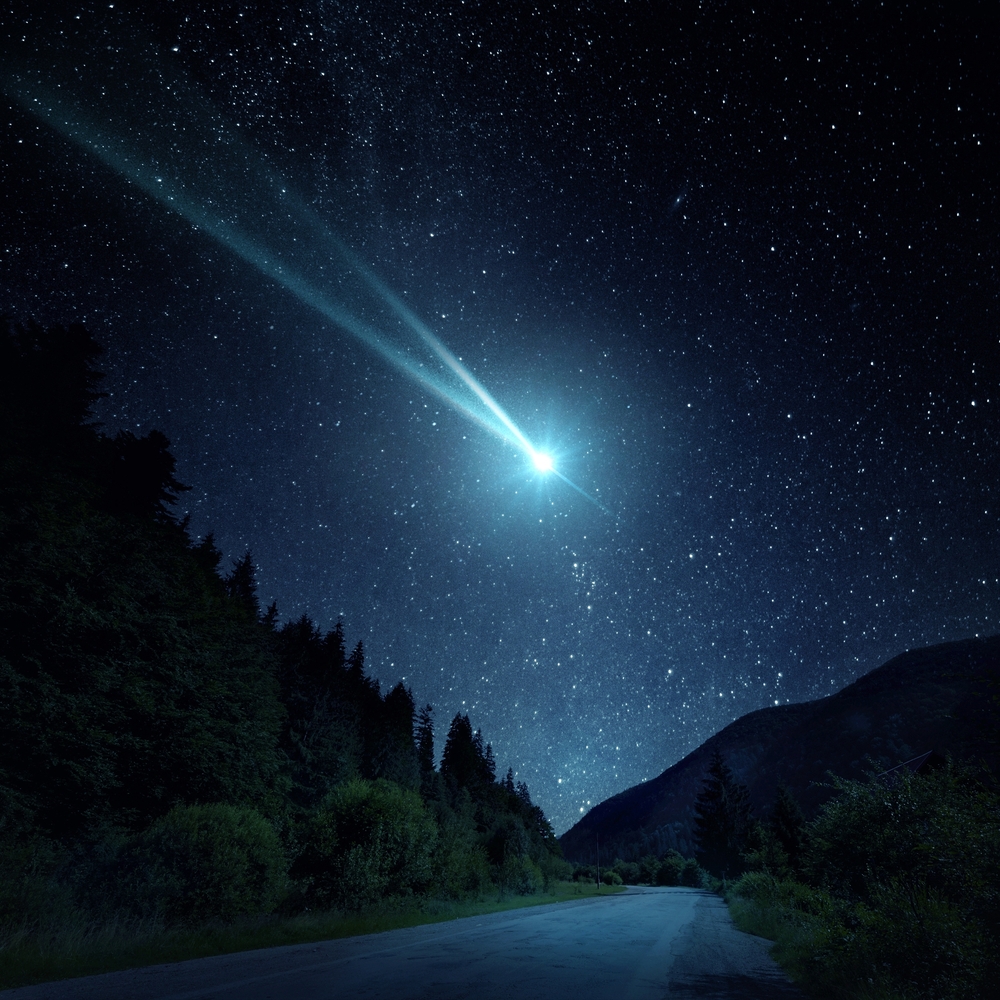
Historically, comets were associated with kings and empires. Ancient Chinese astronomers meticulously recorded their appearances, interpreting them as celestial portents. European astrologers often linked comets to political upheaval or natural disasters.
Modern astrology approaches them with more nuance. Rather than predicting catastrophe, contemporary practitioners see comets as amplifiers of existing trends. They highlight what is already building beneath the surface.
Because comets travel on highly eccentric orbits, they spend most of their existence far from the Sun, only briefly entering the inner solar system. Their appearance interrupts the regular dance of planets. In this sense, they represent anomalies, disruptions, and awakening forces.
When multiple significant comets appear in close temporal proximity, the symbolism intensifies. There is a sense of acceleration, as though dormant energies are being stirred simultaneously from different directions.
For individuals, this can manifest as sudden clarity about long-standing issues, unexpected endings that lead to new beginnings, or creative breakthroughs that follow periods of stagnation. On a collective level, it can correspond with revelations in science, politics, or culture that shift the trajectory of public discourse.
Will It Truly Be Visible in Daylight

The practical question remains compelling. Will C/2026 A1 MAPS become visible in broad daylight?
Astronomers remain cautious. The brightness of a comet depends on multiple factors, including the size of its nucleus, its composition, and how it responds to intense solar heating. If MAPS survives perihelion intact, it may reach significant brightness. If it fragments at the right moment, it could flare dramatically. If it disintegrates too early, it may fade before offering a spectacle.
Even if it does not become visible to the naked eye during the day, spacecraft such as SOHO will capture detailed images of its close solar passage. Observers in the Southern Hemisphere will likely have the best chance of seeing it in the evening sky after perihelion.
From an astrological viewpoint, the symbolic daylight threshold is already meaningful. Daylight represents conscious awareness. A comet visible against the brightness of the Sun suggests the emergence of truths that can no longer remain hidden.
Whether or not MAPS reaches that level of luminosity, its journey invites reflection. It is a fragment of an ancient cosmic body, returning after centuries to brush the Sun. Its path is extreme and temporary. Its existence in our skies is brief.
The Deeper Rhythm
Comets remind us that the solar system is not static. It is dynamic, permeable, and occasionally dramatic. Objects from the distant Oort Cloud drift inward. Interstellar visitors pass through. Ancient fragments reappear after millennia.
Astrology interprets this dynamism as a mirror of human evolution. Just as comets carry primordial material from the edges of the solar system, we carry old patterns, memories, and potentials from the edges of consciousness. When circumstances bring us close to our own inner Sun, those contents can ignite.
April’s sungrazer, January’s green comet, and last year’s interstellar traveler form a triad of archetypes. Fire, heart, and departure. Initiation, growth, and transcendence.
The sky is not issuing a warning. It is offering a reflection. Ice meets fire and either dissolves or shines. Ancient layers warm and release hidden chemistry. Wanderers arrive and leave, altering the system in subtle but lasting ways.
C/2026 A1 MAPS may or may not blaze in broad daylight. C/2024 E1 Wierzchoś may soon vanish into the depths of space. 3I/ATLAS is already gone, carrying with it the memory of its radiant outburst.
What remains is the reminder that transformation often occurs at the edge of survival. Light penetrates slowly but persistently. Encounters, even brief ones, can redirect trajectories that have been unfolding for millions of years.
When a new comet is discovered, astronomers calculate its orbit. Astrologers contemplate its meaning. Both are watching the same sky. One sees gravitational equations. The other sees archetypal stories written in light.
This April, as MAPS approaches its fiery appointment with the Sun, we watch and wait. Not with fear, but with awareness that the cosmos continues to perform its ancient dance of approach and release. Whether or not the comet becomes visible in daylight, its message has already entered the collective field.
Sometimes the most powerful illumination happens at the very edge of disappearance.