

Ozempic Was Made for Diabetes, but New Research Suggests It May Also Rebuild Arthritic Joints
Somewhere in the world right now, a person is lying awake at three in the morning because their knees hurt too much to sleep. Another person is gripping a handrail on a staircase; they used to bound up without thinking. Another has stopped walking the morning route they loved because the pain that follows them home takes days to fade. Osteoarthritis does not announce itself all at once. It arrives gradually, stealing movement in small increments, and what makes it genuinely cruel is that medicine has never found a way to give any of that movement back. Doctors can reduce the pain. They can slow the decline. But no approved drug has ever been shown to repair what osteoarthritis destroys inside a joint, until a study published in March 2026 suggested that a drug millions of people already take for an entirely different reason may be doing exactly that.
A Disease With No Real Fix
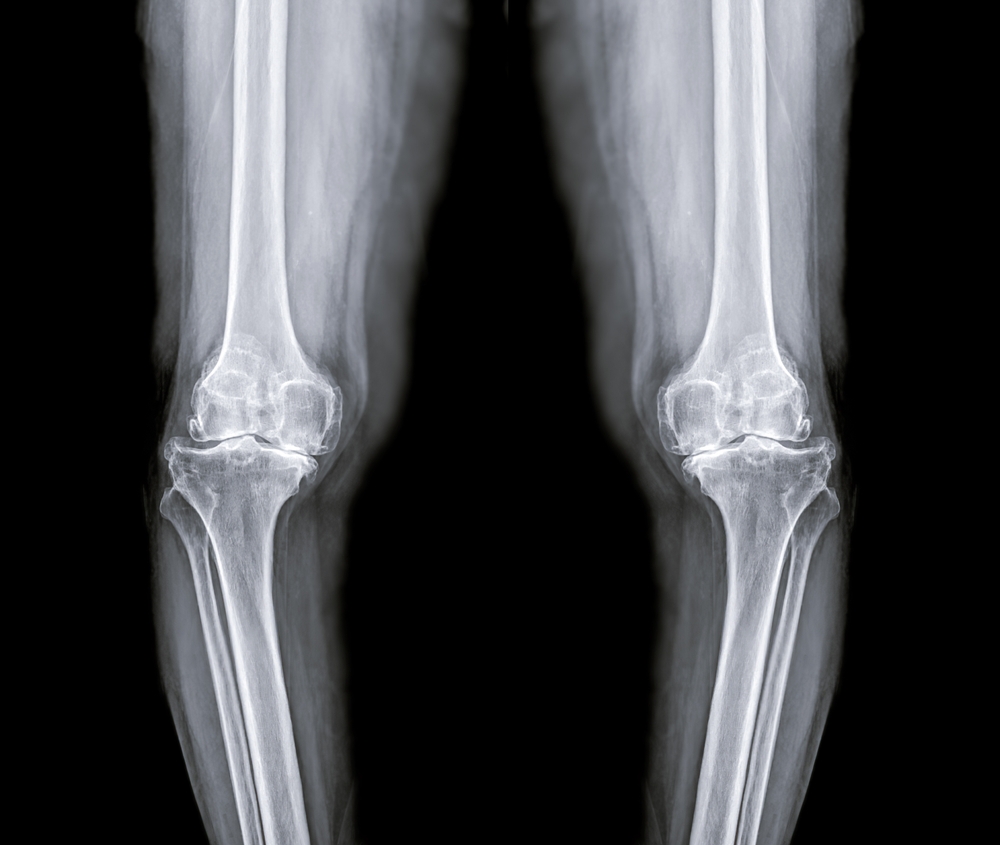
Around 600 million people currently live with osteoarthritis, and researchers project that number will reach one billion by 2050. Age brings it to many people, but it now appears with growing frequency in people in their thirties and forties, particularly those living with obesity, diabetes, or other metabolic conditions. What happens inside the body when osteoarthritis develops is not a mystery. Cartilage, the cushioning tissue that lines the ends of bones inside a joint, begins to break down. Without that cushion, bones press against each other. Bone spurs form. Inflammation spreads to the lubricating membrane that lines the joint. Pain and stiffness arrive, then reduced range of motion, then, in many cases, years or decades of disability that reshape how a person moves through their life.
What makes osteoarthritis so resistant to treatment is not just its scale but its biology. Cartilage has almost no capacity to repair itself. It contains very few cells and no blood vessels, which means it cannot mount any meaningful healing response on its own once serious damage sets in. Every treatment that currently exists for osteoarthritis works on the symptoms. Pain relief, anti-inflammatory injections, joint lubricants, and eventually surgery can all reduce what the patient experiences, but none of them address what is actually happening at the cellular level inside the joint. Medicine has been searching for a disease-modifying drug for osteoarthritis for decades. Finding one has remained out of reach.
Ozempic Was Not Supposed to Do This

Semaglutide, the active ingredient in Ozempic and Wegovy, was developed to manage blood sugar in people with type 2 diabetes and to help people lose weight by reducing appetite. For people living with osteoarthritis, weight loss has long been recognized as one of the most effective ways to reduce joint stress, because excess body weight places mechanical load on cartilage with every step a person takes. So when researchers began noticing that people on semaglutide reported improvements in joint pain, the assumption was straightforward: less weight meant less pressure on the joint, and that was where the benefit came from.
A new study published in the journal Cell Metabolism by a research team from China and the United States set out to test whether that explanation was the whole story. What they found suggested it was only part of it, and the other part turned out to be far more interesting.
Weight Loss Is Not the Whole Story

Researchers worked with obese mice that had been given osteoarthritis through a surgical procedure designed to replicate how the condition develops. One group of mice received semaglutide. A second group, the control, ate the same amount of food as the semaglutide group and lost a comparable amount of weight, but received no drug. Both groups ended the experiment at similar body weights. On paper, any joint benefit should have been roughly equal between them, since the mechanical load on their joints had changed by the same degree.
That is not what happened. Only the mice receiving semaglutide showed real cartilage protection. Treated animals had less cartilage degradation, fewer bone spurs, less severe damage to the membrane lining their joints, and lower pain scores. Researchers compared cartilage tissue from treated and untreated mice and detected changes in the expression of nearly 8,300 proteins between the two groups, a finding that speaks to how deeply semaglutide was reaching into joint biology. Animals that lost the same amount of weight without the drug showed none of those benefits. Weight loss was not producing these results. Semaglutide was operating through a completely separate mechanism.
What the Drug Actually Does Inside the Joint
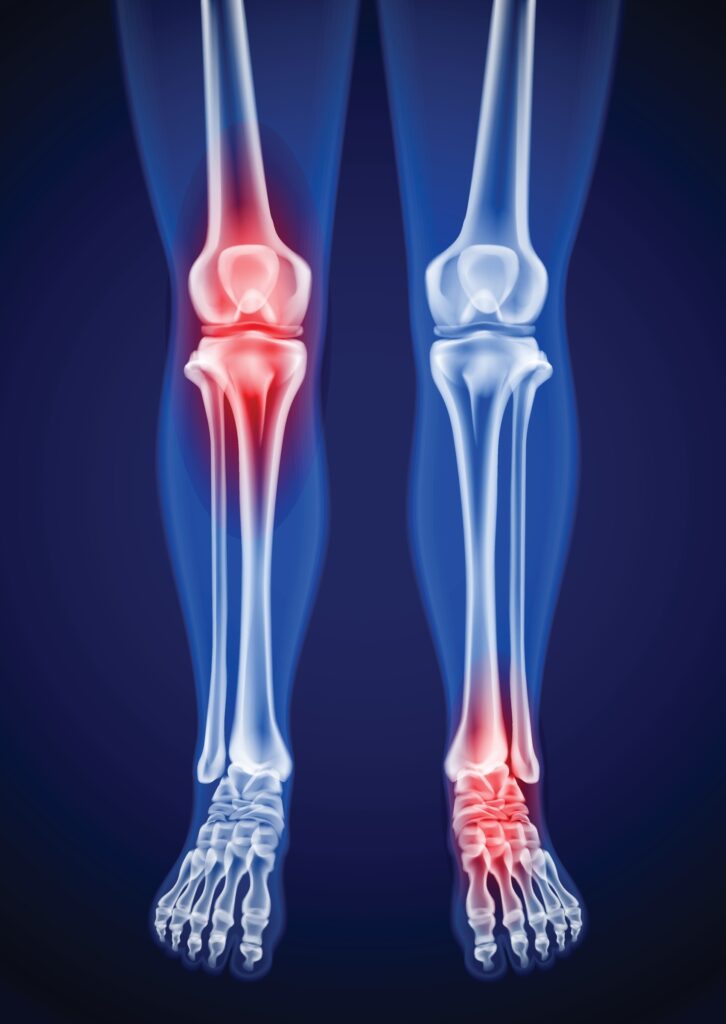
To understand why that matters, you need to spend a moment with what goes wrong inside arthritic cartilage at a cellular level. Cartilage cells called chondrocytes are responsible for maintaining and repairing the tissue around them, but they need adequate energy to do that work. In a healthy joint, these cells run on an energy production process that generates substantial fuel from each glucose molecule they consume. As osteoarthritis takes hold, chondrocytes shift to a far less efficient energy process, one that produces only two energy units per glucose molecule, barely enough to keep the cells functioning, let alone repair damage. Starved of energy, chondrocytes begin to die off, cartilage loses its maintenance crew, and the breakdown accelerates.
Semaglutide appears to reverse that shift. By activating a specific chain of biological signals inside the joint, a pathway researchers identified as the GLP-1R-AMPK-PFKFB3 axis, the drug switches chondrocytes away from their inefficient energy source and back toward a far more powerful one that produces up to 36 energy units per glucose molecule. With that fuel restored, cartilage cells can survive longer and do the repair work that osteoarthritis had been preventing them from doing. “This work not only highlights the potential off-target effect of semaglutide as an effective drug to treat metabolic osteoarthritis but also reveals a weight loss-independent repair mechanism that targets metabolic pathways and mediators essential to cartilage repair under osteoarthritis conditions,” the research team wrote in their published paper. That sentence carries more weight than it might first appear, because no drug in clinical use has ever been shown to do this.
What Happened When They Tested It in People
Animal studies generate hypotheses. Human trials test whether those hypotheses hold up in the bodies of actual patients, and so the research team recruited twenty people between the ages of fifty and seventy-five, all living with both obesity and osteoarthritis. Participants were divided into two groups. One received sodium hyaluronate, a joint lubricant widely used in osteoarthritis treatment. A second group received that same lubricant combined with semaglutide. Both groups continued treatment for twenty-four weeks, and researchers measured changes in pain, joint function, and cartilage structure at regular intervals.
By the end of the study, the semaglutide group showed physical function improvements at roughly double the rate of the control group. MRI scans revealed cartilage thickening of around seventeen percent in the weight-bearing areas of the knee joint, regions that absorb the physical stress of walking, standing, and climbing stairs every day of a person’s life. Among participants in the control group, cartilage thickness changed by less than one percent. In some scans from the semaglutide group, new cartilage growth appeared in areas where osteoarthritis had been doing its damage.
New cartilage growth. In joints where medicine has never managed to produce anything more than a delay in the inevitable.
Matthew Baker, MD, an assistant professor of medicine in immunology and rheumatology at Stanford University, was not involved in the study but offered an assessment that captures why that finding lands so hard. “Most current therapies target symptoms such as pain rather than the underlying structural drivers of disease,” he said. “As a result, truly disease-modifying osteoarthritis drugs have remained elusive despite decades of research.”
Who Stands to Gain the Most

Osteoarthritis hits hardest in people already living with obesity, type 2 diabetes, and metabolic dysfunction, and those are precisely the populations most likely to be prescribed semaglutide for those conditions in the first place. If semaglutide is repairing joint tissue as a secondary effect in patients who take it for weight or blood sugar, millions of people may already be receiving a benefit they do not know about, one that was never listed on the prescription.
Beyond that population lies an even more significant possibility. If the mechanism through which semaglutide protects cartilage operates independently of weight loss, it may eventually offer a path to people with osteoarthritis who are not overweight at all, a group that currently has almost no disease-modifying options available to them. Baker described cartilage as having “Osteoarthritis is difficult to treat because cartilage has very limited intrinsic healing capacity due to its avascular, low-cellularity structure,” which is the clinical language for a tissue that cannot fix itself and has historically resisted every attempt to fix it from outside. A drug that works on the metabolic processes inside cartilage cells, rather than the mechanical load on top of them, opens a door that has been closed for as long as medicine has been looking for it.
A Drug That Keeps Expanding Its Resume
Semaglutide has been appearing in unexpected places for several years now. Research has connected GLP-1 drugs to reduced risk in heart failure, kidney disease, liver disease, sleep apnea, rheumatoid arthritis, and several neurological conditions. Each finding points toward the same underlying reality, which is that GLP-1 receptors exist throughout the body, and activating them through drugs like semaglutide appears to produce effects on fundamental metabolic processes that researchers are still working to fully map. Osteoarthritis now joins that growing list, and given how many people carry the condition and how few real treatment options exist, it may be among the most consequential discoveries yet.
Keep the Excitement, Lose the Certainty
Twenty people are not a large clinical trial, and the researchers themselves were clear on that point. Mouse results do not always carry over to human outcomes. Longer studies with larger populations and higher-resolution imaging are needed before any treatment guidelines can change, and the team that conducted this research was careful to say so. “The protective effects of semaglutide on the human knee joint should be interpreted with caution and require further validation by clinical trials,” they concluded. Seeking semaglutide for joint protection outside of its current approved uses is not something any medical authority recommends on the basis of a single pilot study, and the side effects and concerns that come with semaglutide use are real and worth knowing before anyone considers any course of treatment.
Caution here is not pessimism. It is respect for the process that turns a promising finding into something doctors can actually prescribe with confidence.
What this study offers is not a cure. What it offers is something medicine has not had before in the fight against osteoarthritis, which is a plausible biological mechanism for reversing damage at the cellular level, supported by human data, however preliminary. For the hundreds of millions of people who have been told that their cartilage cannot be recovered, that what has been lost is gone for good, that the best medicine can do is slow what is coming, that represents a real shift in what might be possible.
A drug built to manage blood sugar and reduce appetite may be doing something far more fundamental inside arthritic joints. Science is still piecing together everything semaglutide can do, and if these findings hold up at scale, the question of what kind of drug this actually is may eventually need a new answer altogether.
Reference: Qin, H., Yu, J., Yu, H., Zhou, C., Yuan, D., Wang, Z., Zhu, Z., Wei, G., Ou, P., Li, Z., Jiang, H., Shen, J., Xiao, G., Bai, X., Wang, H., Zhang, H., Speakman, J. R., Chen, D., & Tong, L. (2026). Semaglutide ameliorates osteoarthritis progression through a weight loss-independent metabolic restoration mechanism. Cell Metabolism, 38(3), 582-597.e6. https://doi.org/10.1016/j.cmet.2026.01.008