

People Are Convinced CERN’s Large Hadron Collider Has Shifted Us Into A Parallel Reality
The idea that a scientific experiment could quietly shift humanity into an entirely different reality sounds like something pulled straight from science fiction, yet for many people online it has become a genuine belief. When CERN restarted the Large Hadron Collider after years of upgrades, it did not just mark a milestone in physics. It also reignited a wave of speculation, fear, and viral theories suggesting that something far more dramatic was unfolding behind the scenes. Claims about portals, timeline shifts, and even subtle changes to reality itself began circulating widely, turning a complex scientific achievement into a global talking point driven as much by imagination as by evidence.
What makes this situation particularly fascinating is how quickly scientific progress can become entangled with human psychology and storytelling. On one hand, researchers are working to understand the fundamental structure of the universe by smashing particles together at unprecedented energies. On the other hand, social media users are interpreting those same experiments through the lens of pop culture, spirituality, and conspiracy thinking. The result is a collision between rigorous science and viral narratives that raises an important question. Why does a machine built to study particles end up sparking fears about parallel universes and altered realities?
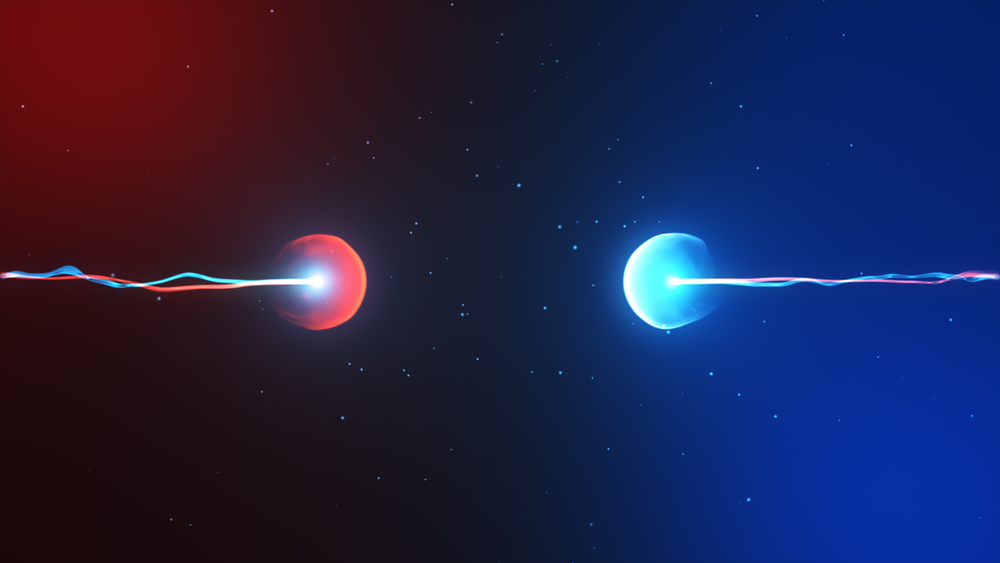
🚨: CERN finds the tiny "Glitch" in physics explaining why the universe exists.
— For all Curious (@fascinatingonX) March 3, 2026
A breakthrough at the Large Hadron Collider has finally confirmed how matter triumphed over antimatter to form the stars, planets and humans we see today. pic.twitter.com/pwVEFoIo7r
The Machine That Captures Global Attention
The Large Hadron Collider is the most powerful particle accelerator ever constructed, designed to smash protons together at near light speed in order to reveal the building blocks of the universe. After a three year shutdown for upgrades and maintenance, it returned to operation at record breaking energy levels, reaching 13 teraelectronvolts. Almost immediately, scientists began observing new and exotic particles, offering deeper insights into the nature of matter and the forces that govern it. These discoveries are not just technical achievements. They represent humanity pushing the boundaries of what is known about existence itself.
Researchers working at CERN are particularly focused on answering some of the biggest unanswered questions in physics. They are investigating the Higgs boson, often referred to as the particle responsible for giving mass to other particles, as well as searching for evidence of dark matter, which is believed to make up most of the universe but remains invisible. In addition to this, scientists are studying the fundamental forces that shape everything from atoms to galaxies. Each experiment builds on decades of research and contributes to a broader understanding of how the universe operates at its most basic level.
Despite the complexity of this work, the goals of the LHC are grounded in observation, measurement, and evidence. There is no intention to alter reality or open gateways to other dimensions. Instead, the collider functions as a tool that allows scientists to recreate conditions similar to those just after the Big Bang. By doing so, they can test theories, validate predictions, and refine our understanding of physics. It is this gap between what the machine actually does and what people imagine it might do that often fuels misunderstanding.
🚨: Scientists at CERN find the “tiny” glitch in physics explaining why the universe exists
— All day Astronomy (@forallcurious) February 16, 2026
A breakthrough at the Large Hadron Collider has finally confirmed how matter triumphed over antimatter to form the stars, planets, and humans we see today. pic.twitter.com/1vRvlA8DxO
Where The Conspiracies Begin
As soon as news spread that the collider was being switched back on, conspiracy theories began circulating online. Some users claimed that the machine would open a portal to another dimension, while others warned of a shift in timelines that humanity would not even consciously notice. One widely shared post asked, “Who has felt like a big shift is coming for awhile now??” before adding, “Now on july 5th we are quite literally gonna be switching timelines, when cern is gonna turn on their machine thingy it’s opening a portal to go through also the unknown is coming in. Keep your positive vibes and energy up.” These kinds of statements quickly gained traction, blending scientific language with emotional and spiritual undertones.
Another user reinforced the idea by claiming, “I’ve looked into this, look for 10x more mandela effects.. because back in 2012 they did a record voltage level that caused these mandela effects, whatever portal they’re opening, they shouldn’t.” The reference to the Mandela Effect, where groups of people share false memories of events, added another layer to the theory. It suggested that previous experiments had already altered reality in subtle ways, and that new experiments could amplify those changes even further.
Even after the collider was turned on and nothing unusual appeared to happen, the theories did not disappear. Instead, they evolved. One user wrote, “A lot of people are discounting how serious the CERN Hadron Collider agenda truly is. It’s not like beings emerge from a portal and instantly kill everyone,” followed by, “That’s not how Satanic rituals work. The ramifications of what happened yesterday will unfold in the coming months.” This shift in narrative highlights a common pattern in conspiracy thinking, where predictions are adjusted rather than abandoned.
CERN and The Occult
— The SCIF (@TheSCIF) March 19, 2026
When they show you who they are… Believe them.
Announced on July 4, 2012, by ATLAS and CMS experiments at the Large Hadron Collider (LHC), the Higgs boson particle was found. The Higgs boson is a wave in the Higgs field, a scalar field that exists… pic.twitter.com/813kab2xq1
What Science Actually Says About Parallel Dimensions
While conspiracy theories often exaggerate or misinterpret scientific concepts, there is a kernel of truth that makes them compelling. Physicists do explore the possibility of extra dimensions, but not in the dramatic sense portrayed online. According to CERN, one way to test for extra dimensions would be to find evidence of particles that can only exist if those dimensions are real. These hypothetical particles, known as Kaluza Klein states, would behave like familiar particles but have much greater mass.
The key point is that any evidence of extra dimensions would appear as subtle signals within highly controlled experiments. Scientists would detect unusual energy patterns or heavier versions of known particles through sophisticated instruments. These findings would require careful analysis and verification, and they would not have any direct impact on everyday life. There is no mechanism by which such discoveries could suddenly open a visible portal or transport humanity into another reality.
Another concept that often gets misunderstood is the idea of microscopic black holes. In theory, the LHC could produce extremely tiny black holes under certain conditions. However, these would be subatomic in size and would disappear almost instantly. CERN explains that these black holes would collapse in about 10^-27 seconds, making them completely harmless. The energy involved in these collisions is comparable to that of a flying mosquito, which puts into perspective how far removed these experiments are from anything capable of affecting the planet.
The Role of Pop Culture in Fueling Fear
The language used in many of these theories closely mirrors themes found in movies and television. Stories about multiverses, alternate timelines, and hidden dimensions have become increasingly popular, shaping how people interpret real world science. When individuals hear about high energy experiments or the possibility of extra dimensions, it is easy for those ideas to blend with fictional narratives they have already seen. This creates a powerful mix of familiarity and uncertainty that can make unlikely scenarios feel plausible.
Satirical or fictional content can also contribute to confusion when taken out of context. For example, playful references to “the Force” being discovered at CERN include quotes like, “The Force is what gives a particle physicist his powers,” and “It’s an energy field created by all living things. It surrounds us; and penetrates us; it binds the galaxy together.” While clearly inspired by science fiction, such statements can sometimes be misinterpreted or shared without context, especially in fast moving online spaces.
Even humorous lines like “We’re very pleased with this new addition to CERN’s accelerator complex” or dismissive remarks such as “Asteroids do not concern me” can take on a different meaning when removed from their original setting. This blending of humor, fiction, and real science highlights how easily narratives can shift as they spread across different platforms and audiences.
Why These Theories Keep Spreading
The persistence of these theories is not simply a matter of misinformation. It reflects deeper patterns in how people engage with complex topics. Particle physics is highly technical and often difficult to understand without specialized knowledge. This creates a gap that can be filled by speculation, especially when explanations are simplified or distorted to fit more familiar ideas.
Fear of the unknown also plays a significant role. Experiments that push the boundaries of human understanding can feel unsettling, particularly when they involve concepts like black holes or extra dimensions. In the absence of clear understanding, people may turn to narratives that provide a sense of meaning or control, even if those narratives are not grounded in evidence.
Social media amplifies these effects by allowing ideas to spread rapidly and reach large audiences. Viral posts often prioritize emotional impact over accuracy, making dramatic claims more visible than careful explanations. When predictions fail, the narrative can shift rather than disappear, ensuring that the theory continues to evolve and persist over time.
A Grounded Perspective: What We Can Learn
The story of the Large Hadron Collider and parallel universe theories ultimately reveals as much about human nature as it does about science. People are naturally curious, and the idea of hidden dimensions or alternate realities taps into a deep sense of wonder. At the same time, this curiosity can lead to misunderstandings when complex information is interpreted without proper context.
There is value in approaching these topics with both curiosity and critical thinking. Checking credible sources, understanding the scale of scientific experiments, and questioning viral claims can help separate fact from speculation. Scientific institutions like CERN provide detailed explanations of their work, making it possible for anyone to explore these ideas in a more informed way.
Rather than viewing science as something to fear, it can be seen as a tool for discovery and understanding. The LHC does not alter reality or open portals, but it does offer insights into the fundamental nature of the universe. By engaging with this knowledge thoughtfully, it becomes possible to appreciate both the excitement of discovery and the importance of evidence.
Between Wonder and Reality
The Large Hadron Collider stands as one of humanity’s most ambitious scientific achievements, designed to explore the deepest questions about existence. While conspiracy theories about parallel universes capture attention and spark imagination, they ultimately reflect a mix of curiosity, misunderstanding, and the influence of modern media. The reality is far less dramatic, but no less fascinating.
In the end, the most meaningful takeaway is not whether a portal has been opened, but how we choose to interpret the unknown. Science invites us to ask questions, seek evidence, and expand our understanding of the world. By doing so, it offers something far more valuable than sensational claims. It provides a clearer, more grounded view of the universe we are already a part of.