


People With Anxiety Often Share One Overlooked Brain Difference, Researchers Say
Anxiety has a way of making people feel as though their own minds are working against them. Thoughts repeat themselves without warning, worries linger long after a situation has passed, and even routine decisions can feel mentally exhausting. For many, anxiety feels isolating and difficult to explain, especially when it does not have an obvious external cause. It often gets framed as overthinking or being unable to relax, which can leave people feeling misunderstood or dismissed. Yet researchers have increasingly shown that anxiety is not just an emotional state or a mindset problem. It is a condition that affects how the brain operates, how it responds to stress, and how it manages the resources it needs to function properly over time.
New research from UC Davis Health is adding another piece to that puzzle by pointing to differences in a key brain nutrient called choline. Choline plays a crucial role in memory, mood regulation, and maintaining the structure of brain cells, and scientists say people with anxiety disorders tend to have lower levels of it in certain brain regions. The findings do not suggest that anxiety can be fixed through diet alone or that people should rush to change their eating habits. Instead, they suggest that prolonged stress and anxiety may slowly alter brain chemistry, leaving measurable traces that help explain why anxiety can feel so persistent and hard to control.

Image Credit: Shutterstock
Choline Is Essential for Everyday Brain Function
Choline is not a nutrient that most people think about regularly, yet it is deeply involved in how the brain works on a daily basis. It helps maintain the integrity of cell membranes, supports the production of neurotransmitters, and plays a role in memory formation and emotional regulation. These processes are constantly active, meaning the brain relies on a steady supply of choline just to maintain normal function. When levels are lower than expected, it may place additional strain on systems that are already working hard.
The body produces only a small amount of choline on its own, so most of it must come from food. Egg yolks, fish, beef, chicken, soybeans, and dairy products are among the most common dietary sources. Despite this, research has shown that many people in the United States do not reach the recommended daily intake of choline, even when their diets appear balanced in other ways. This widespread shortfall has raised questions among researchers about how subtle nutrient gaps might interact with stress and mental health.
Because choline supports so many foundational brain functions, scientists have long suspected that it could be affected by chronic stress. Anxiety places continuous demands on the brain, especially in regions responsible for monitoring threats and regulating emotions. Over time, those demands may influence how nutrients like choline are used and distributed, making it an important area of study for understanding anxiety disorders more fully.
What the UC Davis Analysis Examined
To better understand this connection, researchers at UC Davis Health conducted a large meta analysis that combined results from 25 earlier brain imaging studies. Rather than relying on a single dataset, the team reviewed existing research to look for consistent patterns across different populations, imaging methods, and anxiety diagnoses. This approach allowed them to identify trends that might not be obvious in smaller studies.
The analysis compared 370 individuals diagnosed with anxiety disorders to 342 people without anxiety. Researchers focused on neurometabolites, which are chemicals produced during brain metabolism and are essential for normal brain activity. To measure these chemicals, the studies used a non invasive MRI based method known as proton magnetic resonance spectroscopy, which allows scientists to assess chemical composition within brain tissue rather than simply observing structure.
Across the combined data, the researchers found that people with anxiety disorders had about an 8 percent reduction in choline levels in specific areas of the brain. This reduction was most apparent in the prefrontal cortex, a region involved in emotional regulation, planning, and decision making. These are the same functions that many people with anxiety report struggling with, particularly during periods of heightened stress.

Image Credit: Shutterstock
Why an Eight Percent Difference Matters
On paper, an 8 percent difference may not seem dramatic. In the brain, however, even relatively small changes can reflect meaningful shifts in how cells function. Brain chemistry operates within narrow ranges, and disruptions often indicate that a system is under strain or working harder than usual.
“An 8 percent lower amount doesn’t sound like that much, but in the brain, it’s significant,” said Dr. Richard Maddock, senior author of the study and a research professor at the University of California, Davis.
The brain uses large amounts of choline simply to keep itself running. When anxiety keeps stress circuits activated for long periods, the metabolic demand on those regions increases. Over time, this heightened workload may reduce available choline levels, particularly in areas responsible for managing fear responses, emotional balance, and perceived threats. The reduction may be less about deficiency and more about sustained overuse.
Anxiety Disorders Are Common and Often Untreated
Anxiety disorders are the most common mental health condition in the United States, affecting about 30 percent of adults at some point in their lives. Despite how widespread they are, many people struggle in silence for years without receiving adequate care. Symptoms are often normalized or minimized, leading people to believe their anxiety is something they should simply push through.
“Anxiety disorders are the most common mental illness in the United States, affecting about 30 percent of adults,” Maddock said. “They can be debilitating for people, and many people do not receive adequate treatment.”
These disorders include generalized anxiety disorder, panic disorder, social anxiety disorder, and phobias. While each has its own characteristics, they often involve a heightened sense of threat, persistent worry, and difficulty regulating emotional responses. Over time, this constant state of alert can take a toll not just emotionally, but biologically as well.
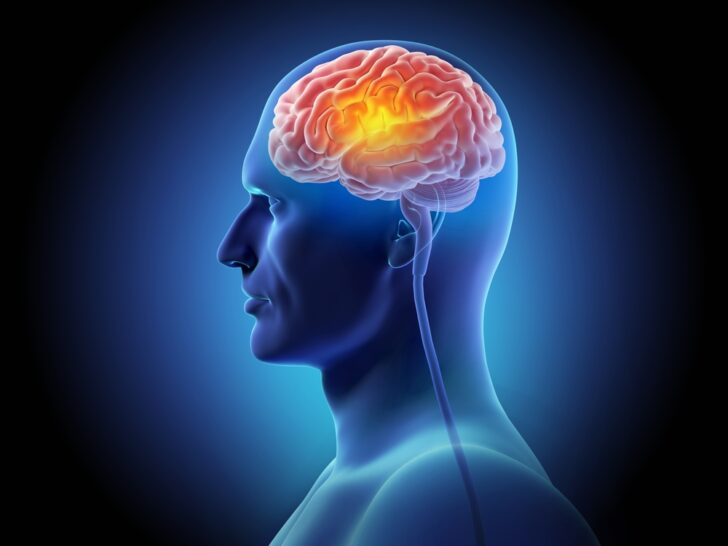
Image Credit: Shutterstock
Stress May Be the Real Connection
The researchers behind the study are careful not to suggest that low choline causes anxiety. Instead, they believe chronic stress is the more likely explanation for the chemical differences observed in the brain. Anxiety disorders are associated with prolonged activation of stress responses, which increases the brain’s metabolic workload over extended periods.
This ongoing demand may gradually reduce choline levels in regions that are already working harder to regulate emotion and decision making. In this context, lower choline levels are not a trigger for anxiety, but a reflection of how intensely the brain has been operating under stress. It is a sign of wear rather than a single point of failure.
Other experts share this cautious interpretation. Dr. Nona Kocher, a board certified psychiatrist who was not involved in the research, described the reduction in choline as “not trivial,” but emphasized that it should be viewed as a marker of metabolic strain rather than definitive proof of cause.

Image Credit: Shutterstock
What This Means for Diet and Supplements
Although choline is obtained through food, the researchers stress that the findings do not mean people should attempt to manage anxiety by taking supplements. High doses of choline can cause side effects, and there is currently no strong evidence showing that supplementation reduces anxiety symptoms.
“We don’t know yet if increasing choline in the diet will help reduce anxiety. More research will be needed,” Maddock said. He also warned against attempting to self treat anxiety with large amounts of choline supplements.
Instead, experts emphasize the importance of overall nutritional balance and comprehensive mental health care. Previous research has shown that most people in the United States do not meet recommended choline intake levels, regardless of mental health status. A well balanced diet supports brain health, but it is only one part of a much larger picture.

Image Credit: Shutterstock
A Broader Perspective on Anxiety
This research adds to a growing body of evidence showing that anxiety leaves real, measurable traces in the brain. Changes in brain chemistry, metabolic demand, and neural circuits all play a role in how anxiety develops and persists over time.

Rather than offering a simple explanation or solution, the findings highlight the complexity of anxiety disorders. They reflect long term interactions between stress, biology, and brain function that cannot be reduced to a single cause.
For people living with anxiety, the most important takeaway may be validation. Anxiety is not a personal weakness or a lack of effort. It is a condition that affects the brain in tangible ways, and understanding those changes is an important step toward better treatment, compassion, and support.
Featured Image Credit: Shutterstock