


New Telescope Detects 800000 Changes Across The Universe In One Night
On a quiet February night in 2026, computers belonging to astronomers across the world suddenly lit up with an overwhelming stream of notifications. Within hours, more than 800,000 alerts had been distributed. Each alert represented a change somewhere in the universe. A star that flickered brighter. A new asteroid moving through the Solar System. A distant explosion marking the death of a massive star.
The flood of signals came from the Vera C. Rubin Observatory in Chile, a next generation astronomical facility designed to watch the sky continuously and report every change it detects. On its very first night of operating its public alert system, the observatory delivered a staggering number of discoveries in real time. What once took astronomers days or weeks to identify now appears on screens within minutes.
The milestone marked the beginning of a new era in astronomy. Instead of treating the night sky as a static picture, scientists are beginning to experience it as a dynamic stream of events unfolding in real time.
A Telescope Built To Watch A Changing Universe
The Rubin Observatory sits high in the Chilean Andes, where clear, dark skies provide ideal observing conditions. At the heart of the facility is the Simonyi Survey Telescope and the LSST Camera, the largest digital camera ever built for astronomy. With 3.2 gigapixels of resolution, the camera can capture enormous portions of the sky while still detecting extremely faint objects.
Every forty seconds during nighttime observations, the telescope points to a new region of the sky and records a fresh image. These observations generate an enormous amount of information. According to the teams involved in the project, roughly ten terabytes of image data are produced every night.
The images are immediately transmitted from Chile to the United States Data Facility at SLAC National Accelerator Laboratory in California. There, specialized software processes the data and compares each new image to previous observations of the same region of space.
If something appears where nothing existed before, if a known object has shifted position, or if a star changes brightness even slightly, the system identifies the difference. Once confirmed, the system generates an automated alert and distributes it to astronomers around the world.
This entire process takes about two minutes.
For researchers who study brief and unpredictable cosmic events, that speed is transformative.
The Night The Alerts Began
On February 24, the Rubin Observatory officially began issuing real time alerts to the global scientific community. Almost immediately, the system revealed how active the universe really is.
By the end of the first night, around 800,000 alerts had been generated. Each one represented a measurable change detected between new images and older reference images.
Many of these alerts corresponded to known categories of astronomical activity. Scientists saw signals from variable stars whose brightness naturally fluctuates over time. They also detected supernovae, the enormous stellar explosions that occur when massive stars collapse or when white dwarfs destabilize in binary systems.
Other alerts came from objects closer to home. Asteroids moving through the Solar System appeared as tiny shifting points of light between images. Some were already known objects whose positions were being updated, while others represented new detections.
There were also signals from active galactic nuclei, the energetic centers of distant galaxies where supermassive black holes feed on surrounding matter. These regions can brighten and dim over time as material spirals inward, producing sudden flashes that are visible across vast cosmic distances.
The sheer number of alerts surprised even scientists who had spent years preparing for the system.
Researchers had expected the numbers to be large. But seeing hundreds of thousands of changes recorded in a single night made the dynamic nature of the cosmos impossible to ignore.
From Static Pictures To A Live Cosmic Feed
For most of the history of astronomy, studying the sky meant comparing observations separated by long intervals of time. A telescope might photograph a region of space and scientists would analyze the data days, weeks, or even months later.
This method worked well for studying stable objects such as galaxies or planetary systems. But it made it difficult to capture events that occur quickly.
Some cosmic phenomena last only hours. Others fade within days. If astronomers did not observe them at exactly the right moment, they could miss critical information about how those events begin and evolve.
The Rubin Observatory changes that approach entirely.
Instead of waiting to process data long after observations are complete, Rubin continuously scans the sky and reports changes almost immediately. Scientists can then redirect other telescopes to investigate the event while it is still unfolding.
For example, if Rubin detects the early stages of a supernova, observatories around the world can rapidly begin follow up observations. This allows researchers to capture the explosion in its earliest moments, providing clues about the physics of stellar death that were previously difficult to obtain.
The same strategy applies to other transient events such as gamma ray bursts, black hole flares, and unusual stellar activity.
In effect, the sky has become something closer to a live broadcast.
The Technology Behind The Alert Pipeline
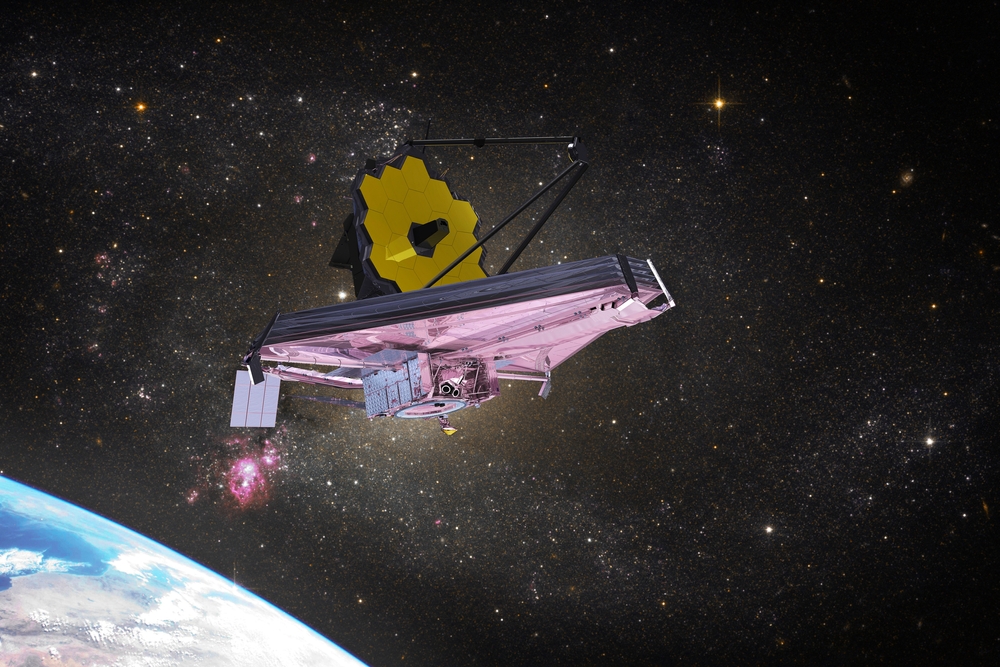
Producing alerts on this scale required years of technical development. The system responsible for generating the alerts is known as the Alert Production Pipeline, a sophisticated software platform built through collaborations between multiple institutions.
Researchers at the University of Washington played a central role in designing and implementing the pipeline. Teams of scientists and software engineers spent nearly a decade developing algorithms capable of analyzing enormous quantities of astronomical data quickly and reliably.
The process begins when the telescope captures a new image. That image is transmitted across continents and enters a processing chain that performs several steps in rapid succession.
First, the system calibrates the image and corrects for instrumental effects. Next, it compares the new observation with a template image constructed from previous observations of the same region.
The comparison effectively subtracts the old image from the new one. What remains are the differences.
If a new point of light appears, if an object has moved, or if brightness has changed significantly, the software identifies the anomaly and records it as a potential alert. Automated checks verify the reliability of the detection before the alert is released to the scientific community.
Once distributed, the alert contains information about the object, its location, the measured change, and links to the relevant images.
The entire process is designed to operate at extraordinary speed while maintaining scientific accuracy.
A Network Of Scientists And Intelligent Software

Handling hundreds of thousands of alerts each night presents its own challenge. No single research group could manually analyze that much information.
To address this problem, astronomers rely on specialized software systems known as brokers. These platforms receive the stream of alerts and filter them according to scientific priorities.
Many brokers use machine learning algorithms to classify events. They can distinguish between categories such as supernovae, variable stars, or Solar System objects. They also cross reference alerts with existing astronomical catalogs to determine whether an object has been previously observed.
Researchers can subscribe to alerts relevant to their interests. A team studying supernovae might receive only alerts related to exploding stars. Another group investigating asteroids might monitor moving objects within the Solar System.
The brokers allow scientists to focus on the most relevant discoveries without becoming overwhelmed by the massive flow of data.
At the same time, the system leaves room for unexpected discoveries. Rare or unusual events that do not match known categories can still surface through the alert stream.
These anomalies may ultimately lead to entirely new areas of research.
Opening The Door To Citizen Science
One of the most notable features of Rubin’s alert system is that it is public. The data are not restricted to a small group of professional astronomers.
Students, educators, and amateur sky watchers can also access the alerts through community platforms and research tools.
Projects such as Zooniverse will allow volunteers around the world to help classify objects and analyze images. Citizen scientists have already contributed to numerous astronomical discoveries over the past two decades. With Rubin’s constant stream of observations, those contributions could become even more significant.
The approach reflects a broader trend in modern science. Large data sets often require many eyes to identify patterns and unusual phenomena.
Opening access to the alert stream means that the next important discovery might come from anyone with curiosity and a computer.
A Decade Long Survey Of The Southern Sky
The alert system is only the beginning of Rubin Observatory’s scientific mission. Later in 2026, the telescope will begin its flagship program known as the Legacy Survey of Space and Time.
Over the course of ten years, Rubin will repeatedly scan the entire southern sky. Each region will be observed hundreds of times, creating a detailed time lapse record of cosmic activity.
By the end of the survey, the observatory is expected to detect roughly forty billion objects and record tens of trillions of individual observations.
The scale of the project is unprecedented in optical astronomy. Scientists anticipate that Rubin will capture images of more objects in its first year than all previous optical observatories combined.
This enormous data set will help researchers investigate some of the deepest questions in physics and cosmology.
Astronomers hope the survey will reveal new insights into dark matter and dark energy, two mysterious components that together make up most of the universe but remain poorly understood.
The data may also uncover previously unknown classes of cosmic phenomena.
Why Transient Events Matter
Many of the most dramatic processes in the universe occur suddenly and change rapidly. These are known as transient events.
Supernovae are one of the most famous examples. When a massive star exhausts its nuclear fuel, its core collapses and triggers an explosion that can briefly outshine an entire galaxy.
But supernovae are only one type of transient phenomenon. Young stars can flare as material falls onto their surfaces. Black holes can release bursts of radiation when they consume nearby matter. Entire galaxies can brighten when gas funnels toward their central black holes.
Because these events evolve quickly, observing them from the very beginning is essential for understanding their underlying physics.
Rubin’s ability to detect changes within minutes gives astronomers a powerful new tool for capturing those early stages.
Even events that occur rarely may become easier to study. If a phenomenon has a one in a million chance of appearing in a given observation, a survey that examines billions of objects dramatically increases the odds of detecting it.
What once seemed extraordinarily rare may become a regular part of the scientific record.
Watching The Solar System In Motion
Rubin’s observations are not limited to distant galaxies. The telescope will also play a critical role in studying objects much closer to Earth.
Asteroids and comets constantly move through the Solar System, and tracking their paths is important for both scientific and practical reasons.
Some asteroids cross Earth’s orbit and could pose potential impact risks in the distant future. Detecting these objects early allows scientists to calculate their trajectories and evaluate any possible hazards.
The Rubin Observatory is expected to discover millions of new asteroids during its decade long survey. Many will be small and faint objects that were previously invisible to existing surveys.
By repeatedly imaging the sky, Rubin will track how these objects move over time, helping astronomers refine their orbits and understand the structure of the Solar System.
A New Perspective On The Night Sky
To the human eye, the night sky appears calm and unchanging. Stars seem fixed in place and the patterns of constellations remain the same year after year.
In reality, the universe is constantly in motion.
Stars pulse, explode, and evolve. Asteroids drift through space. Black holes consume matter and release energy. Entire galaxies interact and merge over millions of years.
The Rubin Observatory’s alert system reveals this hidden dynamism. By capturing images every forty seconds and reporting every detectable change, the telescope transforms our understanding of the sky from a static scene into a living environment.
Scientists often describe Rubin’s observations as a kind of cosmic time lapse movie. Instead of seeing isolated snapshots, researchers will be able to watch how objects evolve over time.
This shift may lead to discoveries that traditional observation methods would never reveal.
A Turning Point In Modern Astronomy
The release of 800,000 alerts during the Rubin Observatory’s first night of operations offered a striking preview of the scientific future ahead. The flood of signals demonstrated both the scale of the universe and the power of modern technology to monitor it.
Over the coming decade, the observatory will expand that stream of information dramatically. Engineers expect the system to eventually generate as many as seven million alerts each night.
Behind each alert lies a moment of change somewhere in the cosmos. A star reaching the end of its life. A new asteroid appearing in the Solar System. A distant galaxy flickering as matter spirals toward a black hole.
By capturing these moments and sharing them with scientists around the world within minutes, the Rubin Observatory is transforming astronomy into a field that observes the universe as it happens.
For researchers and curious observers alike, the night sky is no longer just a distant backdrop. It has become a constantly updating record of cosmic activity unfolding in real time.