


Scientists Discover the First Unconventional Superconductor Found in Nature
For decades, superconductors have occupied a strange space in the climate and energy conversation. They are often described as futuristic materials with enormous promise, capable of transmitting electricity without energy loss and enabling technologies that could drastically reduce waste across power grids, transportation systems, and computing infrastructure. At the same time, they have remained frustratingly impractical for everyday use because most only function at temperatures close to absolute zero. This limitation has kept superconductors largely confined to laboratories, hospitals, and specialized research facilities, rather than widespread deployment in sustainable energy systems.
That long standing picture has now shifted in a subtle but important way. Scientists have identified the first unconventional superconductor whose chemical composition is also found in nature, a rare mineral known as miassite. While the discovery does not suddenly unlock room temperature superconductivity, it challenges the assumption that unconventional superconductivity is purely a man made phenomenon. By revealing that nature itself can produce a material with these unusual properties, researchers believe miassite could help explain how unconventional superconductors work and, in the long run, help guide the design of more efficient and environmentally friendly technologies.

Understanding Superconductivity and Its Environmental Relevance
Superconductivity is a physical state in which a material conducts electricity with zero electrical resistance. Under normal conditions, energy moving through power lines is partially lost as heat due to resistance in the wires. Superconductors eliminate that loss entirely, allowing electrical currents to flow indefinitely once established. This property alone makes them highly attractive for energy efficiency and climate focused applications.
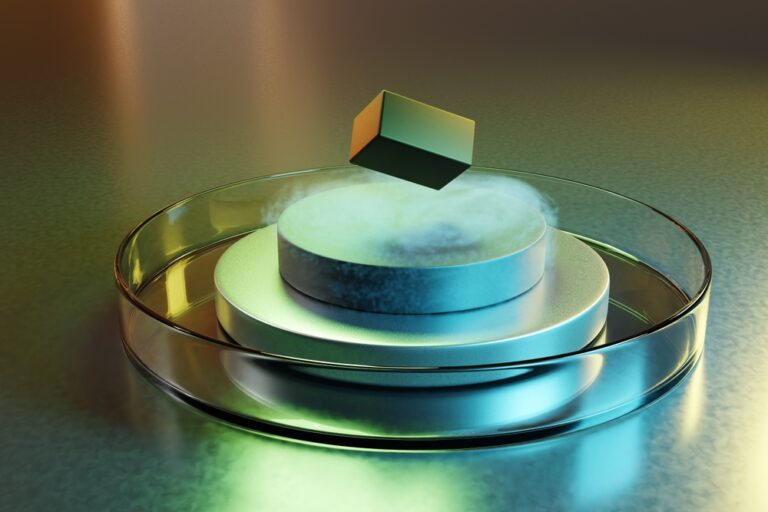
In addition to zero resistance, superconductors expel magnetic fields from their interior, a phenomenon known as the Meissner effect. This combination of properties allows superconductors to generate powerful, stable magnetic fields, which are essential for technologies such as MRI scanners, particle accelerators, and magnetic levitation systems. These same characteristics also make them promising candidates for next generation power grids that could move renewable energy over long distances without waste.
From an environmental perspective, the appeal is clear. If electricity generated by wind farms or solar plants could be transmitted without losses, fewer power stations would be needed overall. That efficiency would translate into lower emissions, reduced infrastructure demands, and a smaller environmental footprint. The main obstacle has always been temperature, since most superconductors only operate under extreme cooling that itself consumes large amounts of energy.
Conventional and Unconventional Superconductors Explained
Scientists divide superconductors into two broad categories based on how they behave at the microscopic level. Conventional superconductors follow a well established framework known as Bardeen Cooper Schrieffer theory. In these materials, electrons form paired states called Cooper pairs, which move through the material without resistance. While this mechanism is well understood, it typically only occurs at temperatures very close to absolute zero.

Unconventional superconductors also display zero resistance and magnetic field expulsion, but the mechanism behind their superconducting state is different and remains one of the biggest open questions in condensed matter physics. Many unconventional superconductors operate at higher temperatures, sometimes above 77 Kelvin, which is the boiling point of liquid nitrogen. Although still extremely cold, these temperatures are far more practical than those required for conventional superconductors.
Since their discovery in the 1980s, all known unconventional superconductors have been artificially grown in laboratories. This led to a widely held belief that unconventional superconductivity does not occur naturally. Miassite directly challenges that assumption by showing that nature can produce a material with these complex and unexpected properties.
Miassite and Why Its Existence Is So Surprising
Miassite is a rare mineral composed of rhodium and sulfur, with a chemical formula of Rh17S15. It was first identified near the Miass River in Chelyabinsk Oblast, Russia, but remained largely obscure due to its rarity and unusual structure. The elements that make up miassite tend to react readily with oxygen, which makes the mineral difficult to preserve and even harder to study in its natural form.
Because miassite does not typically grow into well formed crystals in nature, scientists were unable to analyze its physical properties directly from natural samples. High quality crystals had to be synthesized in the laboratory to determine whether the mineral could exhibit superconductivity. Even then, many researchers doubted that a material with such a complex composition could exist naturally at all.
As senior author Ruslan Prozorov from Ames National Laboratory put it, “Intuitively, you think that this is something which is produced deliberately during a focused search, and it cannot possibly exist in nature,” before adding, “But it turns out it does.” That realization alone marked a significant shift in how scientists think about the boundary between natural and engineered materials.
How Scientists Confirmed Miassite Is Unconventional
To study miassite’s behavior, researchers cooled the lab grown crystals to temperatures just above absolute zero, in some cases as low as 50 millikelvins. At these extreme conditions, the material entered a superconducting state, allowing the team to perform detailed measurements of its properties. One of the most important tests involved measuring what is known as the London penetration depth.
The London penetration depth determines how far a weak magnetic field can penetrate into a superconductor. In conventional superconductors, this depth remains essentially constant at low temperatures. In unconventional superconductors, however, it changes with temperature. Miassite displayed the latter behavior, strongly indicating that it belongs to the unconventional category.
The team also tested how miassite responded to structural damage by bombarding it with high energy electrons. This process creates defects in the crystal lattice. Conventional superconductors are largely insensitive to such defects, while unconventional superconductors are highly sensitive to them. In miassite, both the critical temperature and the critical magnetic field changed in exactly the way predicted for unconventional superconductors.

Implications for Sustainable and Efficient Technology
Although miassite itself has a very low critical temperature of about minus 267.75 degrees Celsius, its significance does not lie in immediate applications. Instead, it offers scientists a rare opportunity to study unconventional superconductivity using a material that nature itself has produced. This could help researchers better understand the mechanisms that allow superconductivity to emerge at higher temperatures.
Uncovering those mechanisms is essential for developing superconductors that are more practical and less energy intensive to use. As Prozorov explained, “Uncovering the mechanisms behind unconventional superconductivity is key to economically sound applications of superconductors.” If scientists can learn how to replicate or enhance these mechanisms, the resulting materials could dramatically reduce energy losses across many industries.
From a climate standpoint, even modest improvements in superconducting technology could have outsized impacts. More efficient power transmission would support the expansion of renewable energy, reduce the need for excess generation capacity, and lower overall emissions. In this sense, miassite represents a small but meaningful step toward a more sustainable energy future.
A Broader Lesson From a Rare Mineral
Miassite also highlights the importance of curiosity driven research. The mineral was not studied because it promised immediate technological breakthroughs, but because scientists were exploring unusual chemical systems where interesting properties might emerge. As Professor Paul Canfield of Iowa State University and Ames Lab described the discovery process, “It’s like finding a hidden fishing hole that is full of big fat fish. In the Rh-S system we discovered three new superconductors. And, through Ruslan’s detailed measurements, we discovered that the miassite is an unconventional superconductor.”
This type of foundational research often lays the groundwork for future innovations, even if its practical benefits are not immediately obvious. Many of today’s clean energy technologies began as theoretical or experimental work with no clear application at the time. Miassite now joins that lineage as a natural curiosity with potentially far reaching implications.

While the mineral itself will remain rare and impractical, the insight it provides could help reshape how scientists search for and design superconducting materials. In a world grappling with climate change and rising energy demands, even discoveries made at temperatures near absolute zero can ultimately help move society toward a more efficient and sustainable future.