


Scientists Identify and Sequence Elusive Fungus Behind LSD-Related Compounds
For nearly a century, scientists have grappled with a biological contradiction embedded within one of the world’s most familiar flowering plants. Morning glories, commonly seen climbing fences and blooming in gardens, were known to contain lysergic acid derivatives that closely resemble compounds involved in the creation of LSD. The problem was not identifying the chemicals themselves, but understanding how they came to exist inside a plant at all. Such compounds are produced exclusively by fungi, not plants, which left researchers with a lingering question that resisted resolution despite advances in chemistry, botany, and molecular biology. The gap between what scientists could measure and what they could physically observe became one of the quietest long-running mysteries in plant science.
That gap has now been closed through the discovery and sequencing of a previously unknown fungal species living entirely within morning glory plants. The finding confirms suspicions that date back to the early twentieth century and demonstrates how much of nature’s complexity remains hidden even in species humans believe they understand well. Rather than emerging from a large-scale expedition or an industrial research program, the discovery came from patient laboratory work and careful observation, underscoring how scientific progress often depends less on spectacle and more on attention, persistence, and curiosity.
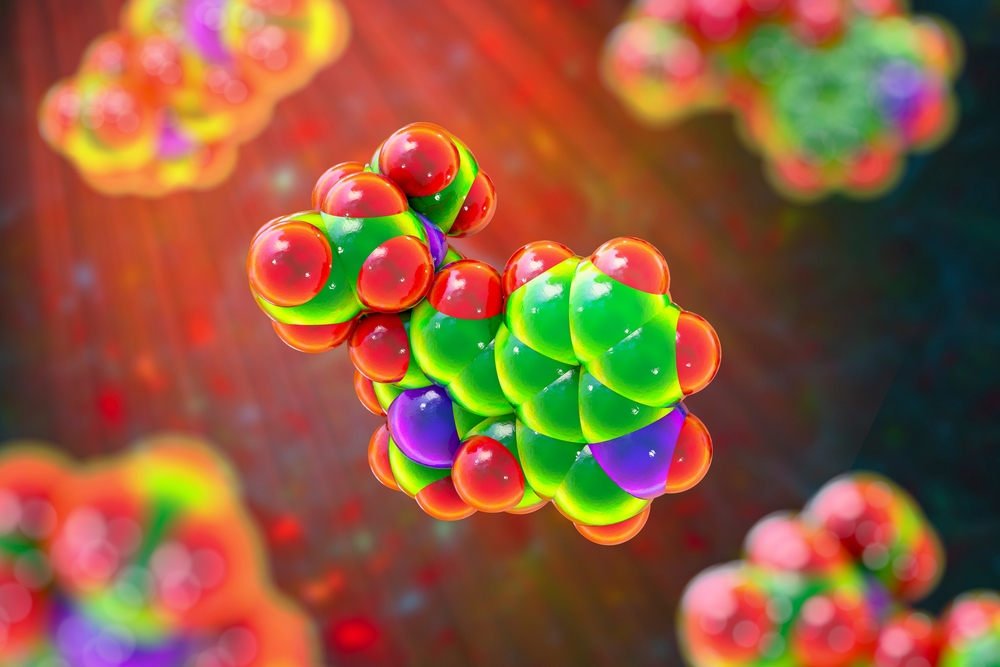
Image Credit: Shutterstock
A Fungus Living Where No One Thought to Look
Morning glories have long drawn scientific interest because of the unusual chemicals detected in their tissues, particularly in their seeds and roots. Researchers repeatedly identified ergot alkaloids, a class of compounds historically associated with fungi that infect grains such as rye. These chemicals are known for their strong biological effects, capable of acting as both toxins and medicines depending on how they are used. Despite repeated confirmation of their presence, the source of these alkaloids within morning glories remained unexplained.
Scientists widely suspected that a fungal partner must be responsible, but conventional methods failed to reveal any obvious organism. The assumption grew that if a fungus existed, it must live entirely within plant tissues, leaving no external signs of growth. This type of internal symbiosis made the organism exceptionally difficult to detect and allowed it to remain hidden even as laboratory techniques became increasingly sophisticated.
The turning point came when Corinne Hazel, an environmental microbiology major at West Virginia University, was studying how morning glories move protective chemicals through their roots. While examining seed coats from plants kept in the lab, she noticed something unexpected. “We had a ton of plants lying around and they had these tiny little seed coats,” she said. “We noticed a little bit of fuzz in the seed coat. That was our fungus.” What initially appeared insignificant proved to be the physical evidence researchers had sought for decades.
Sequencing a Species That Eluded Identification
Once the fungus was isolated, Hazel worked alongside Daniel Panaccione, Davis-Michael Professor of Plant and Soil Sciences at West Virginia University, to prepare genetic material for sequencing. Funding for the work came through a WVU Davis College Student Enhancement Grant, allowing the team to send a DNA sample for full genome analysis. The results confirmed that the organism was not only fungal, but an entirely new species previously unknown to science.
The fungus was named Periglandula clandestina, a name chosen to reflect how effectively it had remained concealed from researchers for generations. Its genome has now been deposited in a gene bank, formally documenting its existence and preserving its genetic information for future study. “Sequencing a genome is a significant thing,” Panaccione said. “It’s amazing for a student.” The achievement marked both a scientific milestone and a notable moment in undergraduate research.
Beyond confirming the fungus’s existence, genome sequencing provided insight into how Periglandula clandestina produces ergot alkaloids so efficiently and in large quantities. Understanding this process is essential for researchers interested in how such compounds might be studied, modified, or managed in controlled settings without relying on guesswork or incomplete biological models.
Resolving a Theory Linked to LSD’s Origins
The discovery carries historical significance because it confirms a theory proposed nearly a century ago by Swiss chemist Albert Hofmann. Hofmann, who first synthesized LSD in the late 1930s after studying ergot alkaloids from fungi growing on rye, suspected that similar compounds found in morning glories must also originate from a fungal source. While chemical analyses supported this idea, the organism itself remained invisible.
According to Panaccione, “Morning glories contain high concentrations of similar lysergic acid derivatives that give them their psychedelic activities.” He explained that this observation inspired Hofmann and others to search for a fungus related to ergot fungi that might be responsible. “They found very similar chemicals, but they could never find the fungus itself.” The identification of Periglandula clandestina finally provides the missing biological confirmation.
This resolution reshapes how scientists understand morning glories, not as independent chemical producers, but as participants in a long-evolved biological partnership. It demonstrates how plant traits that appear intrinsic can, in reality, depend entirely on hidden organisms working alongside them.
Image Credit: Shutterstock
Why Ergot Alkaloids Have Long Mattered
Ergot alkaloids have played a complicated role in human history. In uncontrolled forms, they have caused poisoning in people and livestock when contaminated grain entered food supplies, sometimes with devastating consequences. These events cemented their reputation as dangerous substances long before their chemistry was fully understood.
At the same time, controlled and modified versions of ergot alkaloids have been used in medicine for decades. Clinicians have employed them to treat migraines, uterine hemorrhaging, Parkinson’s disease, and dementia, while compounds related to LSD have become part of modern clinical research into depression, post-traumatic stress disorder, and addiction. Their usefulness has always depended on precision, dosage, and context.
Panaccione emphasized this balance by noting, “Many things are toxic. But if you administer them in the right dosage or modify them, they can be useful pharmaceuticals. By studying them, we may be able to figure out ways to bypass the side effects. These are big issues for medicine and agriculture.” The natural efficiency of Periglandula clandestina offers researchers a clearer model for understanding how these compounds behave biologically.
A Quiet Example of Symbiosis in Nature
The relationship between morning glories and Periglandula clandestina is an example of symbiosis that operates entirely out of sight. The fungus produces chemical compounds that help protect the plant from pests and herbivores, while the plant provides nutrients and a stable environment in which the fungus can survive. Neither organism functions in the same way without the other.

Image Credit: Shutterstock
Such partnerships are common throughout nature, yet they often go unnoticed because they lack visible markers. Fungi and microbes frequently shape plant health, chemical defenses, and growth patterns in ways that only become apparent when something goes wrong or when researchers look closely enough.
This discovery reinforces the idea that understanding ecosystems requires attention to organisms that are easily overlooked. The most influential biological relationships are not always the most obvious ones, and losing sight of them can limit scientific understanding as much as habitat loss itself.
A Student Discovery With Lasting Impact
One of the most notable aspects of the discovery is that it was made by an undergraduate student. Hazel’s work demonstrates how meaningful scientific contributions can emerge from academic environments that encourage curiosity and hands-on research. Her findings have already reshaped understanding in microbiology, plant science, and pharmacology.
The name Periglandula clandestina reflects the fungus’s ability to avoid detection for decades. “I think that’s the perfect name,” Panaccione said. “And I love that we did this project together. Corinne has a ton of talent. It’s about students recognizing the opportunities, seizing them and having the skill and the brain power to bring this work to fruition.”
Hazel has continued studying how to culture the slow-growing fungus and whether similar organisms exist in other species of morning glory. “I’m lucky to have stumbled into this opportunity,” she said. “People have been looking for this fungus for years, and one day, I look in the right place, and there it is. I’m very proud of the work that I’ve done at WVU.”

Image Credit: Shutterstock
What the Discovery Leaves Us With
The sequencing of Periglandula clandestina does not represent an endpoint, but rather a foundation. It provides researchers with concrete biological evidence that connects decades of chemical observations to a living organism. This clarity allows future work to proceed without speculation or assumption.

Image Credit: Shutterstock
More broadly, the discovery serves as a reminder that even familiar plants can harbor unseen partners that shape their biology in profound ways. Scientific understanding often advances not by uncovering something entirely new, but by finally seeing what has been present all along.
Featured Image Credit: Shutterstock