

Scientists Just Discovered Oxygen Is Being Created in Total Darkness — And It Changes Everything
What if one of the most basic lessons we learned in school is only part of the story? For generations, we have been taught a clear and elegant narrative about life on Earth: plants produce oxygen, sunlight powers photosynthesis, and the breathable world begins with light. That explanation has shaped not only biology textbooks but also our imagination about where life can exist and how it must function. It feels complete, almost unquestionable.

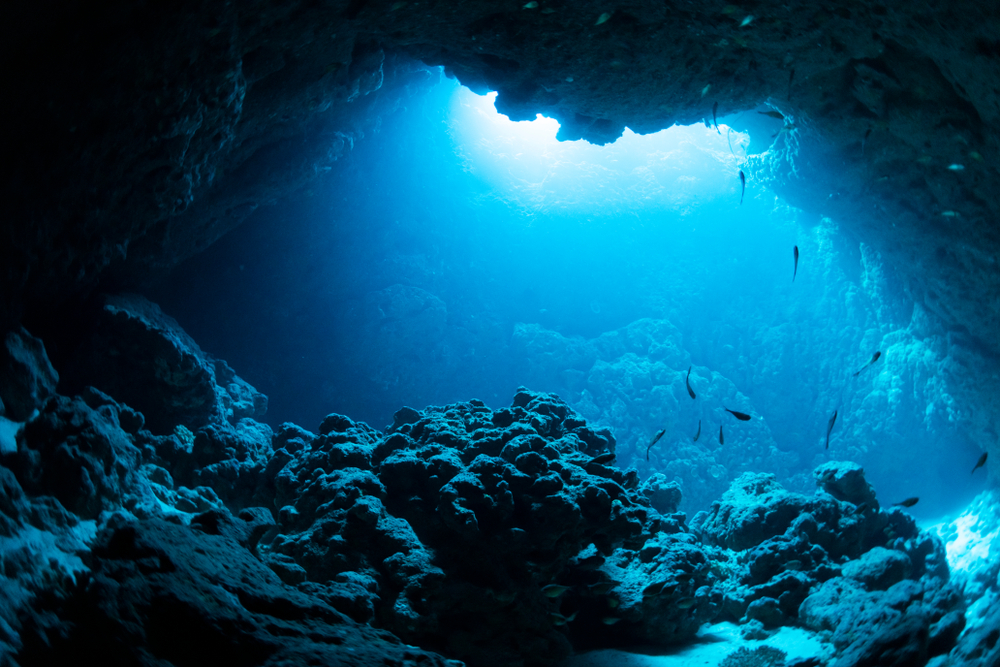
Yet nearly 13,000 feet beneath the surface of the Pacific Ocean, in a region where sunlight has never reached and never will, scientists have uncovered evidence that complicates that certainty. Oxygen, it appears, may be produced in total darkness. If this evidence continues to withstand scrutiny, it does more than refine an academic theory; it invites us to look downward, into one of the least explored regions of our planet, and reconsider how life begins, how ecosystems endure in hidden places, and how cautiously we must approach environments we barely understand.
A Discovery in Absolute Darkness
In a study published in Nature Geoscience by researchers led by the Scottish Association for Marine Science, scientists describe what they call “dark oxygen,” formed deep in the ocean without the presence of photosynthesis. Rather than remaining an abstract scientific claim, this finding is rooted in a specific and extraordinary environment that demands closer examination.
The discovery was made in the Clarion‑Clipperton Zone, a vast abyssal plain stretching between Hawaii and Mexico. This region lies nearly 4,000 meters below the ocean’s surface, in conditions defined by crushing pressure, near‑freezing temperatures, and complete darkness. Sunlight cannot penetrate to these depths, and for decades the assumption has been that oxygen present in such regions ultimately derives from photosynthetic activity occurring near the surface.
While surveying the seafloor, researchers identified polymetallic nodules—small, potato‑sized rocks rich in metals such as cobalt and nickel. These nodules are not new to science; they have long attracted industrial interest because of their value in battery production and modern electronics. What is new, however, is the evidence suggesting that these nodules may function as natural “geobatteries.” According to the study, they appear to carry electrical charges capable of driving seawater electrolysis, a chemical reaction that splits water (H2O) into hydrogen and oxygen. In other words, geological processes alone may be generating oxygen in the absence of sunlight.
For centuries, scientific understanding has maintained that oxygen production is inseparable from photosynthetic organisms such as plants, algae, and cyanobacteria. The notion that rocks on the ocean floor could contribute to oxygen generation expands that narrative. It does not diminish the central role of photosynthesis in shaping Earth’s atmosphere, but it suggests that the story of oxygen may be more complex than previously believed.
Reconsidering the Origins of Life
If oxygen can form without sunlight, even in localized environments, the implications for early Earth are profound. The prevailing model of planetary history emphasizes the Great Oxidation Event, which occurred approximately 2.4 billion years ago when photosynthetic organisms dramatically increased atmospheric oxygen levels. This transformation enabled the evolution of complex aerobic life and reshaped Earth’s chemistry.
However, the existence of geological oxygen production raises the possibility that small pockets of oxygen may have existed in deep‑sea environments prior to widespread photosynthesis. If so, certain aerobic organisms might have evolved in isolated oceanic niches long before atmospheric oxygen accumulated at scale. While this hypothesis requires further investigation, it broadens scientific inquiry into how and where life first adapted to oxygen.
The implications extend beyond Earth. If oxygen can be generated through non‑photosynthetic processes here, scientists may reconsider how they search for life on other worlds. Subsurface oceans on icy moons or distant planets with limited sunlight could, in theory, host chemical processes capable of producing oxygen locally. The discovery does not confirm extraterrestrial possibilities, but it widens the lens through which researchers examine habitability.
What this ultimately reveals is the provisional nature of scientific knowledge. Science evolves not because it was wrong, but because it continues asking deeper questions. Each discovery refines the map, reminding us that certainty must always make room for curiosity.
The Green Energy Tension
Yet this breakthrough carries a complicated reality. The same polymetallic nodules that may be contributing to oxygen production are also primary targets for deep‑sea mining. Their cobalt and nickel content makes them attractive resources for manufacturing electric vehicle batteries and renewable energy storage systems. As the global community accelerates efforts to reduce carbon emissions and transition away from fossil fuels, demand for these materials continues to grow.
On the surface, extracting such minerals appears aligned with environmental progress. Cleaner transportation and renewable energy infrastructure are essential components of climate mitigation strategies. However, the deep ocean remains one of the least understood ecosystems on the planet. If these nodules play a role in oxygenating abyssal habitats or sustaining delicate biological communities, their removal could carry ecological consequences not yet fully understood.
The study itself does not claim definitive ecological outcomes, but it underscores the need for caution. Industrial activity in the Clarion‑Clipperton Zone is already under consideration, and regulatory frameworks are still developing. The tension here is not between progress and stagnation; it is between speed and understanding. When ecosystems have taken millions of years to form, irreversible disruption is a risk that must be weighed with exceptional care.
Humility in the Face of Complexity
There is a symbolic dimension to this discovery that extends beyond chemistry and policy. For much of modern science, light has represented life and darkness has represented absence. Yet the deep ocean demonstrates that absence of light does not equate to absence of process. Even in darkness, energy flows, reactions occur, and ecosystems persist.
This insight invites humility. When we assume that our current understanding is complete, we risk overlooking mechanisms operating quietly beyond our awareness. Environmental decision‑making, particularly in fragile and unexplored regions, demands an attitude of respect for complexity. Climate change is urgent and real, and the transition to renewable energy is necessary. At the same time, sustainability cannot be reduced solely to carbon metrics; it must account for biodiversity, ecosystem resilience, and long‑term planetary health.

According to the National Oceanic and Atmospheric Administration (NOAA), more than 80 percent of the ocean remains unmapped, unobserved, and unexplored. That statistic alone should temper any impulse to industrialize the seafloor without comprehensive scientific assessment. When knowledge is incomplete, caution is not weakness; it is wisdom.
Innovation With Responsibility
The path forward is not to abandon renewable energy initiatives, nor to reject technological advancement. Rather, it is to expand the scope of responsibility that accompanies innovation. Thorough environmental impact assessments must precede large‑scale deep‑sea mining operations. Independent scientific review should evaluate ecological risks, particularly in abyssal ecosystems that may recover only over geological timescales. Investment in battery recycling technologies and alternative materials can reduce reliance on virgin mineral extraction, while international governance mechanisms must ensure transparency and accountability in international waters.

Institutions such as the International Seabed Authority are currently working to establish regulations governing deep‑sea mining activities. The policies crafted in the coming years will shape not only industrial practices but also the health of ocean ecosystems for generations. This is not merely a technical debate about resource management; it is a reflection of how humanity chooses to engage with environments it scarcely understands.
Darkness Is Not Empty
Beyond policy and science, there is a broader reflection worth considering. We often equate what we cannot see with what does not matter. Yet the deep ocean reveals that unseen systems can be essential. Microbial communities regulate nutrient cycles, plankton influence atmospheric carbon levels, and chemical processes unfold continuously beneath the waves. The stability of life on Earth depends on networks that operate far from human visibility.

Recognizing this reality shifts perspective. It encourages us to approach both nature and society with attentiveness to the hidden layers that sustain visible outcomes. When we disregard what is out of sight, we risk undermining the very foundations upon which our progress depends.
A Conscious Way Forward
The discovery of oxygen production in total darkness challenges a central assumption about life on Earth. It reminds us that the planet is more intricate and inventive than our simplified narratives suggest. At the same time, it places responsibility squarely in our hands. As we pursue cleaner energy systems and technological advancement, we must ensure that solutions to one crisis do not create another in places we have barely begun to study.

True progress integrates knowledge with restraint, innovation with humility, and ambition with stewardship. The deep ocean has offered a powerful reminder that life’s processes are not always visible, yet they are profoundly significant. Whether we respond with curiosity and care or with haste and extraction will shape not only ecosystems in the abyss but also the ethical legacy of our generation.
Sometimes the most transformative discoveries are not those that alter nature itself, but those that alter how we see our role within it.
Featured Image from Shutterstock