

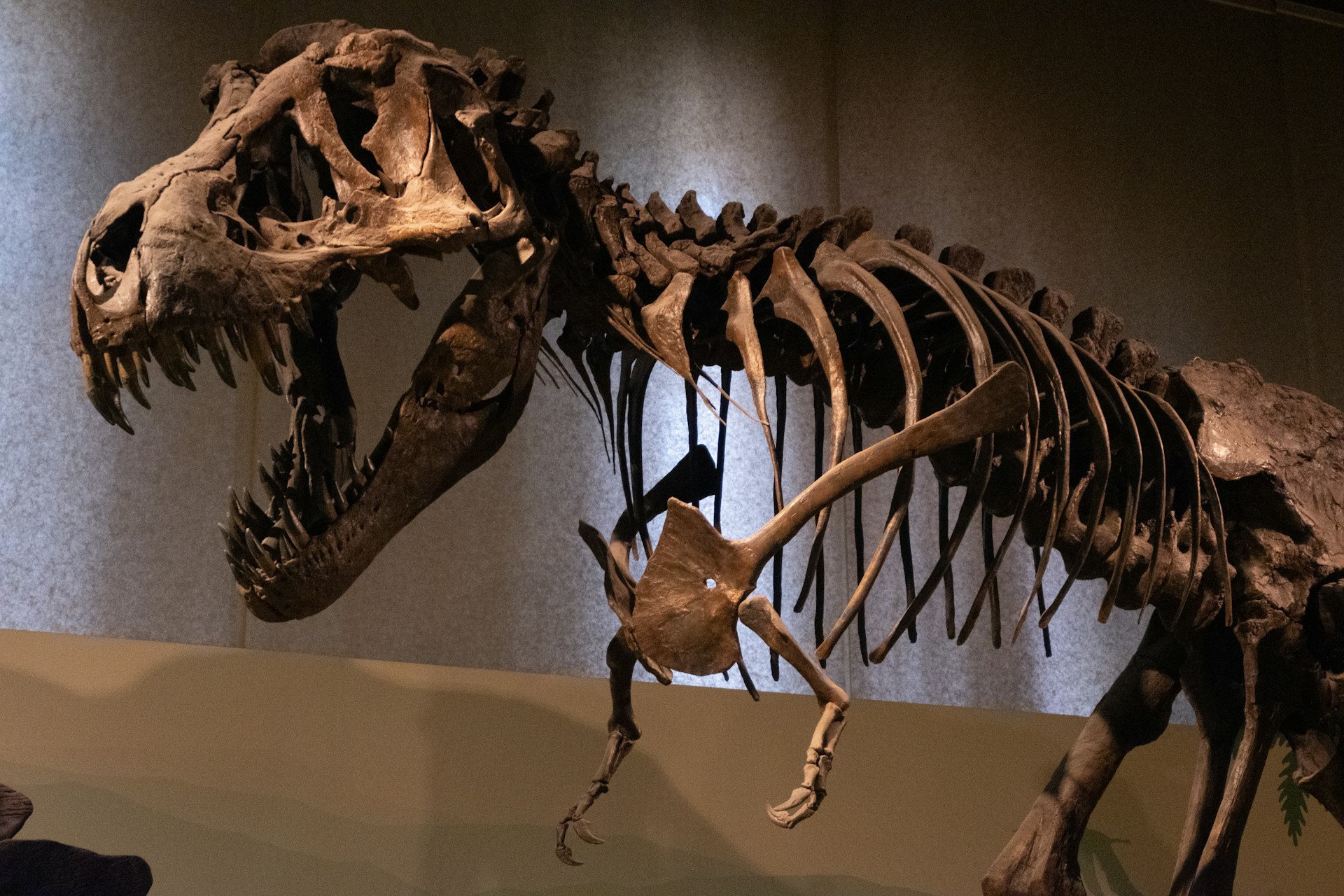
Scientists Reveal Britain’s Most Complete Dinosaur Fossil in 100 Years
The United Kingdom has just stepped into the global scientific spotlight with a discovery that feels straight out of a Jurassic epic. Paleontologists have confirmed that the most complete dinosaur fossil found in the UK in more than one hundred years has been uncovered on the Isle of Wight. The find has been hailed as one of the most important British dinosaur discoveries of modern times, not only because of its exceptional preservation but because it offers rare insight into a previously unknown species.
This fossil discovery is more than just a collection of ancient bones. It is a window into a world that existed roughly 125 million years ago during the Early Cretaceous period, when the landscape of southern England was dominated by floodplains, rivers, and dense vegetation. Scientists believe this dinosaur lived during a period of intense evolutionary change, making the find particularly valuable.
What makes this discovery resonate beyond academic circles is its human story. The fossil was originally found by a dedicated amateur collector whose sharp eye and persistence made the scientific breakthrough possible. Years later, researchers have now confirmed the fossil’s significance, transforming a quiet coastal discovery into an international scientific headline.
The Isle of Wight’s Long History With Dinosaurs
The Isle of Wight has earned a global reputation among paleontologists as one of Europe’s richest dinosaur hunting grounds. Its eroding cliffs continuously expose layers of rock from the Early Cretaceous period, creating ideal conditions for fossil discoveries. Over the years, the island has yielded thousands of fossilized remains, including bones, footprints, and plant material.
Despite this abundance, most dinosaur finds in the UK tend to be fragmentary. Single bones or partial skeletons are far more common than complete specimens. This makes the newly discovered fossil extraordinary, as it represents a rare example of a dinosaur skeleton preserved largely intact.
Geologists explain that the Isle of Wight’s unique geology plays a crucial role in preservation. Ancient river sediments buried the dinosaur rapidly after death, protecting the bones from scavengers and environmental damage. Over millions of years, these sediments hardened into rock, locking the skeleton in place until coastal erosion revealed it.
The island’s importance to British paleontology cannot be overstated. Many of the UK’s most significant dinosaur species were first identified there, and this latest discovery reinforces the Isle of Wight’s status as one of the most scientifically valuable fossil sites in Europe.
The Discovery That Changed British Paleontology
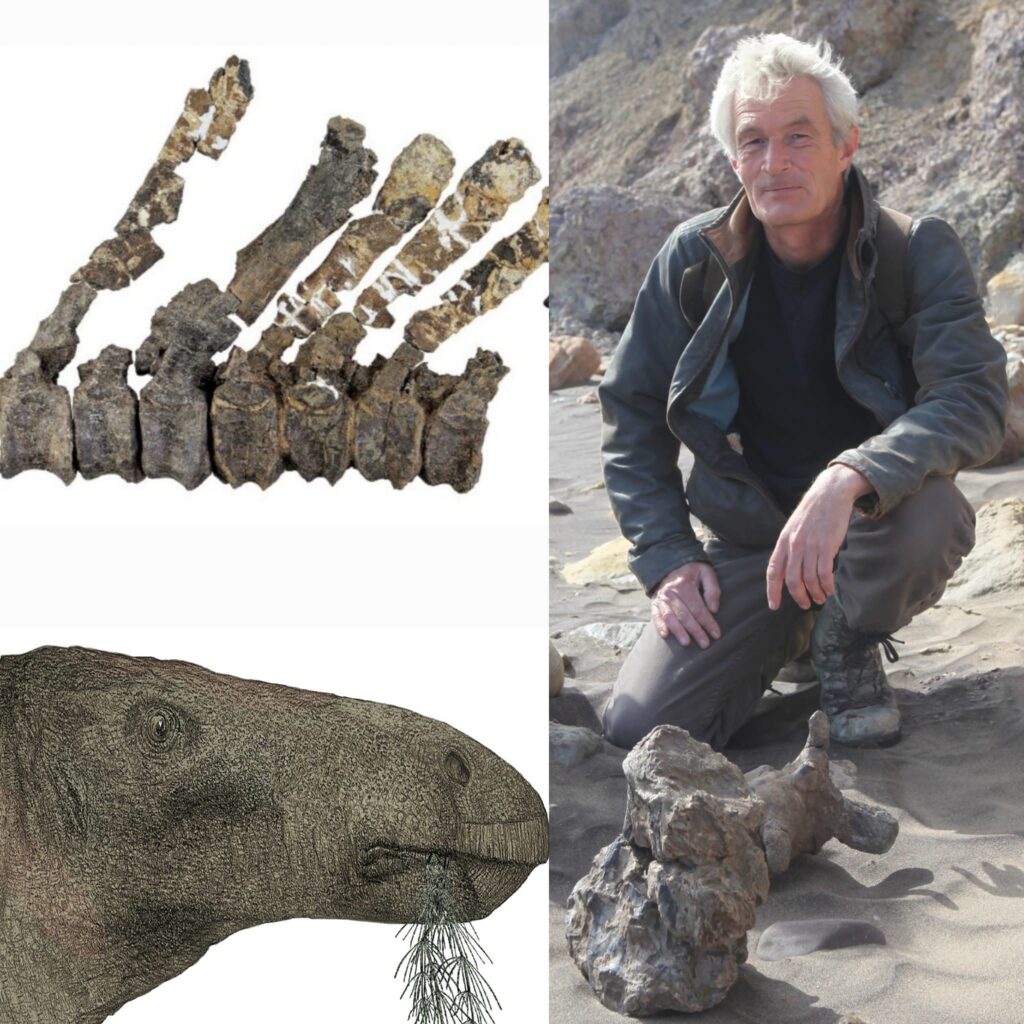
The fossil was first discovered in 2013 at Compton Bay by amateur fossil hunter Nick Chase. Known locally for his dedication and expertise, Chase spent countless hours searching the island’s cliffs for fossils. When he noticed bones emerging from the rock face, he immediately recognized that this find was something special.
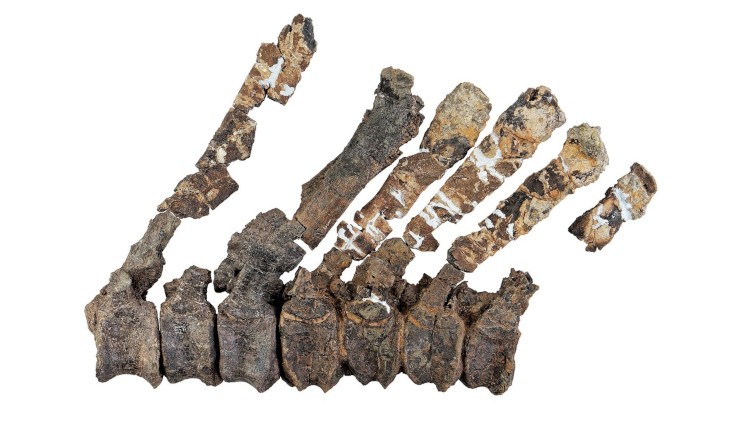
Over time, nearly 150 individual bones were carefully recovered from the site. These included parts of the skull, spine, ribs, pelvis, and limbs. The sheer completeness of the specimen set it apart from almost every other UK dinosaur find of the last century.
Sadly, Nick Chase passed away before the fossil could be fully studied. In recognition of his contribution, scientists named the new species in his honor, ensuring his legacy will live on in scientific literature. The naming reflects the vital role that citizen scientists continue to play in advancing paleontology.
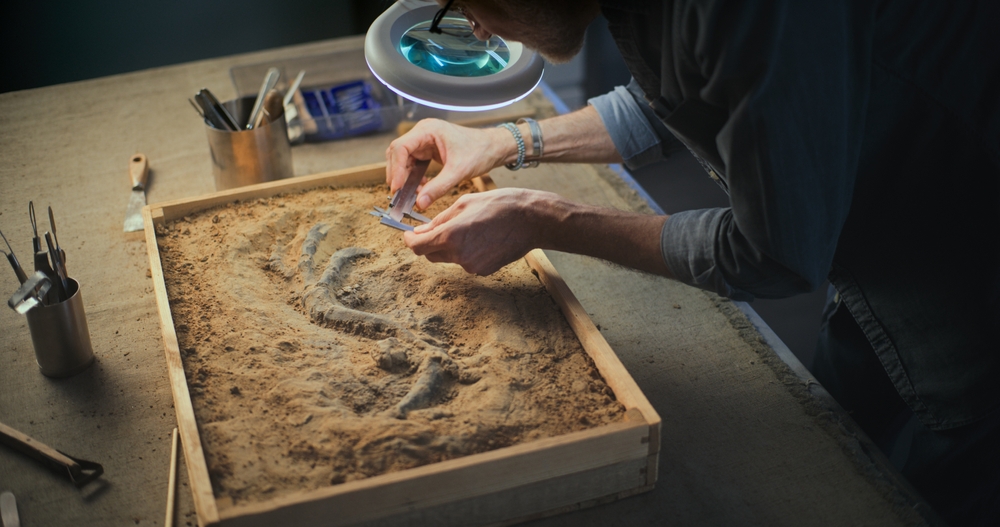
Once the fossil was transferred to experts for analysis, researchers spent years cleaning, cataloging, and studying each bone. Their work revealed that the skeleton did not match any known dinosaur species, confirming that the discovery represented an entirely new genus.
Meet Comptonatus chasei
The newly identified dinosaur has been named Comptonatus chasei. It was a large herbivorous dinosaur belonging to a group known as iguanodontians, which were among the most successful plant eating dinosaurs of the Early Cretaceous period.
Comptonatus chasei is estimated to have weighed around 900 kilograms and measured approximately eight meters in length. Its powerful limbs and broad body suggest it was well adapted for life in a landscape filled with dense vegetation and roaming predators.
Detailed analysis of the skeleton revealed distinctive features in the skull, teeth, and hip bones that clearly set it apart from related species. These differences indicate that iguanodontians were more diverse than previously believed, with multiple species occupying similar environments.
Scientists believe Comptonatus likely lived in herds, a behavior inferred from fossil trackways and bone structure. Herd living would have offered protection against predators and improved foraging efficiency, increasing the species’ chances of survival.

Why This Fossil Is So Scientifically Important
The completeness of the Comptonatus chasei fossil provides researchers with an unprecedented opportunity to study dinosaur anatomy in detail. Complete skeletons allow scientists to understand how different parts of the body worked together, offering insights into movement, posture, and behavior.
This discovery also helps fill gaps in the evolutionary record. Many dinosaur species are known from only a handful of bones, making it difficult to understand how they evolved over time. A nearly complete skeleton provides a much clearer picture of evolutionary relationships.
The fossil also sheds light on the ecosystem of Early Cretaceous Britain. By studying wear patterns on teeth and bone structure, scientists can infer diet, feeding behavior, and even seasonal movement patterns. These details help reconstruct ancient environments with greater accuracy.
Additionally, the find highlights the scientific value of the UK’s fossil sites. It demonstrates that even in well studied regions, major discoveries are still possible, challenging assumptions about how much remains to be uncovered.
A Reminder of the Role of Amateur Fossil Hunters
One of the most inspiring aspects of this discovery is the role played by an amateur fossil hunter. Nick Chase was not a university trained scientist, yet his careful observation and respect for the science made this discovery possible.
Across the UK, many significant fossil finds have been made by members of the public who work closely with museums and researchers. These partnerships ensure that discoveries are properly documented and preserved for future study.
Experts emphasize that responsible fossil collecting is essential. Reporting finds to local authorities and museums allows scientists to study fossils in context, which is critical for accurate interpretation.
The story of Comptonatus chasei serves as a powerful reminder that scientific breakthroughs are not limited to laboratories. Passion, curiosity, and patience can lead to discoveries that reshape our understanding of history.
What This Discovery Means for the Future
The identification of Comptonatus chasei opens new avenues for research into dinosaur diversity and evolution in Europe. Scientists now plan to reexamine other fossils from the Isle of Wight to see if additional undiscovered species may be hiding in museum collections.
The fossil is expected to become a centerpiece of public exhibitions, inspiring a new generation of scientists and dinosaur enthusiasts. Seeing such a complete specimen helps bring prehistoric life into sharper focus for the public.
This discovery also underscores the importance of protecting fossil rich sites. Coastal erosion both reveals and destroys fossils, making careful monitoring and conservation efforts essential.
Ultimately, the most complete dinosaur fossil found in the UK in a century is more than a scientific milestone. It is a story of curiosity, collaboration, and the enduring human desire to understand the deep past.
Featured Image Credit: Photo by Tofan Teodor | Unsplash