

Shocking Scans Reveal Parasite-Infested Body Of Woman Who Ate Raw Pork For 10 Years
At first glance, the CT scan almost does not register as a medical image at all. The woman’s legs appear crowded with hundreds of bright white flecks, packed so tightly into the muscle tissue that they resemble grains of rice embedded deep beneath the skin. It is the kind of image that forces even experienced clinicians to pause, because nothing about it looks subtle or incidental. This was not a rare teaching case pulled from an archive, nor a theoretical example used in medical school lectures. It was the real scan of a living patient whose body had slowly become home to a parasitic infection that had spread over years without obvious warning, leaving behind visible evidence in nearly every inch of muscle that was examined.
The images were later shared publicly by an emergency room doctor who regularly posts real medical cases online to educate people about the kinds of emergencies that often go misunderstood or ignored. What was intended as an educational moment quickly turned into something far more unsettling, as thousands of people reacted with shock, disbelief, and fear. Many assumed that infections like this were relics of another era or something that only happened in distant parts of the world with poor healthcare access. Instead, this case revealed how an everyday habit, eating raw or undercooked pork, can quietly lead to a devastating medical condition that develops unnoticed until the damage is already extensive.
A body riddled with parasites as a result of eating raw pork over the years. The condition was discovered by accident after the patient came in for an X-ray for a hip fracture.
— Creepy.org (@creepydotorg) January 30, 2025
In this case, the tapeworm larvae migrated to muscles and soft tissue in the hips and legs, forming… pic.twitter.com/XgRKKVtLiT
A Scan Doctors Called One Of The Most Shocking They Had Seen
The case became widely known after an emergency room physician from the University of Florida Health Jacksonville posted the scan on X, describing it as “one of the craziest CT scans I’ve ever seen.” The image showed the patient’s leg muscles filled with dense calcifications that were evenly distributed throughout the tissue, rather than clustered in a single location. This pattern immediately signaled to doctors that the condition was systemic, meaning it had spread throughout the body rather than originating from a single injury, tumor, or localized disease process.
Dr. Sam Ghali, the physician who shared the scan, is known for using social media to teach followers about emergency medicine by presenting anonymized real world cases. He often challenges his audience to identify the diagnosis before revealing it himself. In this case, the guesses poured in quickly, with many people suggesting rare cancers, muscular disorders, or genetic conditions. Very few suspected a parasitic infection, a reaction that underscored how unfamiliar many people are with diseases that remain common globally but are rarely discussed openly.
When Dr. Ghali eventually revealed the diagnosis, the response shifted from curiosity to genuine alarm. Viewers realized they were not looking at abstract medical damage, but at the physical aftermath of living organisms that had once traveled through the woman’s bloodstream, settled into her tissues, and remained there long enough to calcify and permanently alter her body.
A girls body in China was riddled with parasites after eating raw pork for a long time pic.twitter.com/g3vnl6We6B
— Humans Being Wholesome (@UNIVERSE_FEEDS) June 13, 2025
The Diagnosis Was Cysticercosis
Dr. Ghali later explained that the patient had been diagnosed with cysticercosis, a parasitic infection caused by the pork tapeworm. In a detailed explanation shared with his audience, he stated, “Humans become infected with T. solium by ingesting cysts that can be found in undercooked pork.” While many people associate tapeworms with digestive discomfort or intestinal symptoms, cysticercosis behaves very differently once the larvae enter the body.
He went on to explain that the larvae “penetrate the intestinal wall and invade into the bloodstream and from there can spread to literally anywhere in the entire body.” Once in the bloodstream, the parasites are no longer confined to the gut. They can lodge themselves in muscle tissue, beneath the skin, inside the eyes, or within vital organs, forming cysts that may remain undetected for years.
On CT scans, these cysts appear as tiny white flecks known as “rice grain calcifications.” These calcifications represent the remains of cysts that formed as the parasites embedded themselves into tissue, slowly hardening over time and creating the disturbing visual pattern that shocked so many people online.

Image Credit: Shutterstock
A Decade of Eating Raw Pork
According to information shared by the doctor, the woman had reportedly been eating raw or undercooked pork for around 10 years. This prolonged exposure likely allowed the infection to spread gradually, giving the larvae repeated opportunities to enter her body and migrate into different tissues. Because the process happens slowly, the body often adapts in ways that delay obvious symptoms.
One of the most dangerous aspects of cysticercosis is how quietly it can progress. Early symptoms are often vague or entirely absent, making it easy for people to dismiss subtle signs or never notice them at all. Some individuals may develop small lumps under the skin or mild muscle discomfort, while others feel completely normal for years as the parasites continue to spread internally.
Although undercooked pork is a primary source of infection, cysticercosis can also be transmitted through contaminated food, water, or contact with tapeworm infected human feces. Poor hand hygiene is a significant risk factor, meaning that even people who never eat pork can still be exposed under certain conditions.

Image Credit: Shutterstock
When Parasites Reach The Brain
Doctors warn that cysticercosis becomes far more dangerous when the parasites spread to the brain or spinal cord, a condition known as neurocysticercosis. This form of the disease is one of the leading causes of adult onset epilepsy worldwide and is often only discovered after a patient experiences seizures with no clear explanation.
Symptoms can include chronic headaches, seizures, confusion, vision changes, and fluid buildup in the brain. In many cases, patients are treated for neurological conditions for extended periods before doctors identify the underlying parasitic infection as the true cause.
Dr. Ghali also explained that after five to twelve weeks, the ingested cysts can even evolve into mature adult tapeworms. Once this occurs, the risk of long term complications increases significantly, and treatment becomes more complex and medically demanding.
How Common And How Dangerous it Really Is
Despite how shocking the scans appeared, cysticercosis is far more widespread than many people realize. Dr. Ghali explained, “The prognosis for cysticercosis is generally good but unfortunately some cases are fatal.” The condition remains a serious global health issue, particularly in regions with limited sanitation and food safety infrastructure.
He added that it is estimated “around 50 million people worldwide are infected each year resulting in ~50,000 deaths.” These numbers highlight how significant the disease remains, even as modern medicine continues to advance. Global travel, migration, and interconnected food systems mean that cases are not confined to any one region.
As a result, awareness and prevention remain critical everywhere. Access to healthcare alone does not eliminate risk if basic hygiene and food safety practices are overlooked.

Image Credit: Shutterstock
Treatment Is Possible But Not Simple
Treating cysticercosis requires careful medical planning because killing the parasites can trigger severe inflammation as the body reacts to dying larvae. This inflammatory response can worsen symptoms, particularly when cysts are located in the brain or near vital structures.
Treatment options may include anti parasitic therapy, steroids to reduce inflammation, anti epileptic medications for seizure control, and in some cases surgical removal of cysts. Patients with neurocysticercosis often require long term monitoring and follow up even after active treatment has ended.
Outcomes depend heavily on how early the infection is detected and which parts of the body are affected. Early diagnosis significantly improves the chances of recovery and reduces the likelihood of permanent neurological damage.
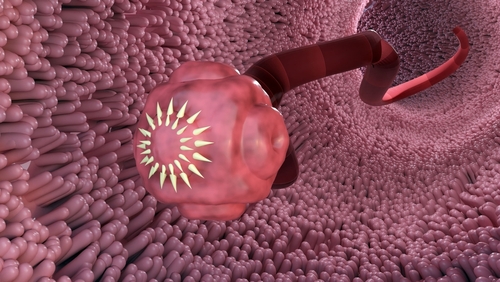
Image Credit: Shutterstock
The Warning Doctors Want People to Remember
After sharing the case, Dr. Ghali offered a clear warning for the public. “So the moral of the story here is do your best to keep clean, always wash your hands, and never, ever eat raw or undercooked pork,” he wrote.
Doctors emphasize that cases like this are almost always preventable. Proper food handling, thorough cooking of meat, regular handwashing, and avoiding cross contamination in kitchens dramatically reduce the risk of infection.
This woman’s story is disturbing not only because of the images, but because of how silently the infection developed. It stands as a reminder that some of the most serious health threats do not arrive suddenly, but grow unnoticed over time until modern imaging finally exposes the damage that has already been done
Featured Image Credit: Shutterstock