


Something Invisible Wraps Around Our Planet (And We Built It By Accident)
Somewhere up there, invisible to your eyes, something extraordinary wraps around our entire planet. You helped build it. I helped build it. None of us meant to.
Here’s what fascinates me about being human. We spend so much time worrying about the damage we cause. Climate change. Pollution. Deforestation. And yes, those concerns are real and deserve our attention. But somewhere along the way, while we were busy living our lives, talking to each other across oceans, and sending signals through the deep, we accidentally constructed something in space. Something protective.
I’m not talking about a satellite network or a space station. I’m talking about an invisible barrier that pushes dangerous radiation away from Earth. And until recently, we had no idea it existed.
How does something like that happen? How do billions of people, going about their daily routines, accidentally change the very structure of space around their home planet?
Let me take you on a journey. Because the answer might just change how you see yourself and what we’re capable of as a species.
Earth Already Has Its Own Shield
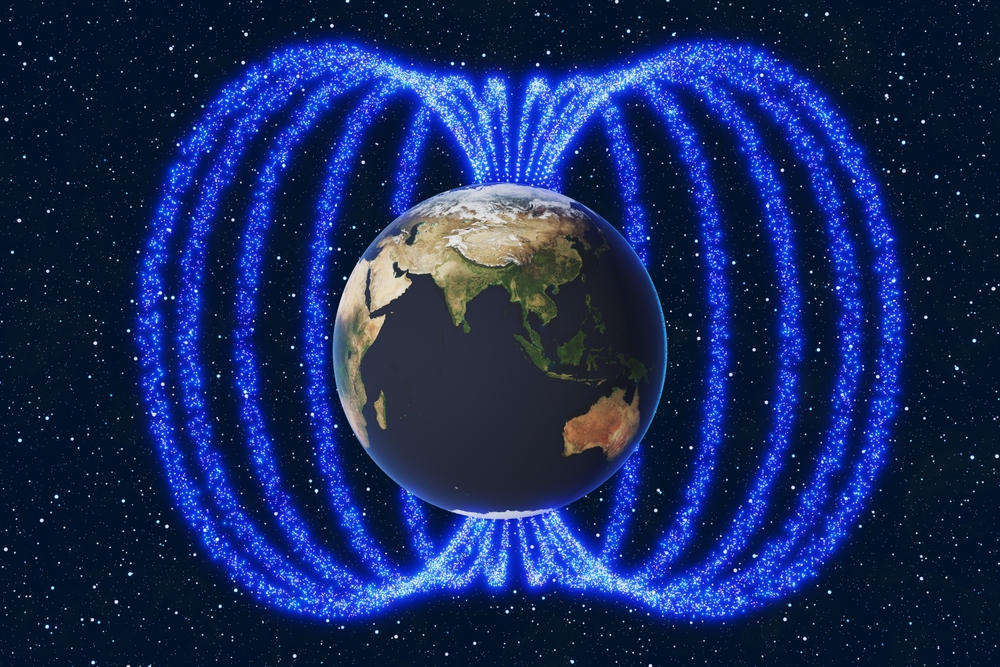
Before we get to what we built, you need to understand what was already there. Our planet doesn’t just float through space unprotected. Earth carries a magnetic field that wraps around it like an invisible cocoon. Picture a force that reaches thousands of miles into the void, pushing back against cosmic rays and solar winds that would otherwise bombard our atmosphere.
Without it, life as we know it wouldn’t exist. Charged particles from the sun race toward us constantly. Most get deflected by our magnetic shield. Some follow the field lines down toward the poles, where they collide with our atmosphere and create something beautiful. You’ve seen pictures of them. Maybe you’ve witnessed them in person. We call them the Northern and Southern Lights.
But not all particles escape or create light shows. Some get trapped. Back in the 1950s, scientists discovered bands of radiation caught in Earth’s magnetic embrace. We named them the Van Allen belts after the scientist who found them. Imagine two giant donuts made of charged particles circling our planet. One sits between 1,000 and 6,000 kilometers above the surface. Another, larger, and less stable stretch between 13,000 and 60,000 kilometers up.
For decades, we studied these belts. We learned they shift and change based on interactions between the sun and Earth. We sent probes to measure them. We mapped their boundaries. And then we discovered something nobody expected.
NASA Found Something Strange

NASA launched a mission called the Van Allen Probes to study these radiation belts up close. Until the mission ended in 2019, these spacecraft collected data that would rewrite our understanding of the space around Earth.
Scientists learned that depending on particle energy, the belts look radically different than our simple donut model suggested. But that wasn’t the strangest finding.
Researchers noticed something at the inner edge of the radiation belts. A boundary. A limit that the radiation seemed unable to cross.
At first, they assumed it was natural. Perhaps some feature of Earth’s magnetic field created this barrier. But as they dug deeper into the data, a different picture emerged. We were causing it. Not with rockets. Not with satellites. Not with any deliberate space technology. We were doing it with radio waves.
Radio Waves Meant for Submarines Are Reaching Space
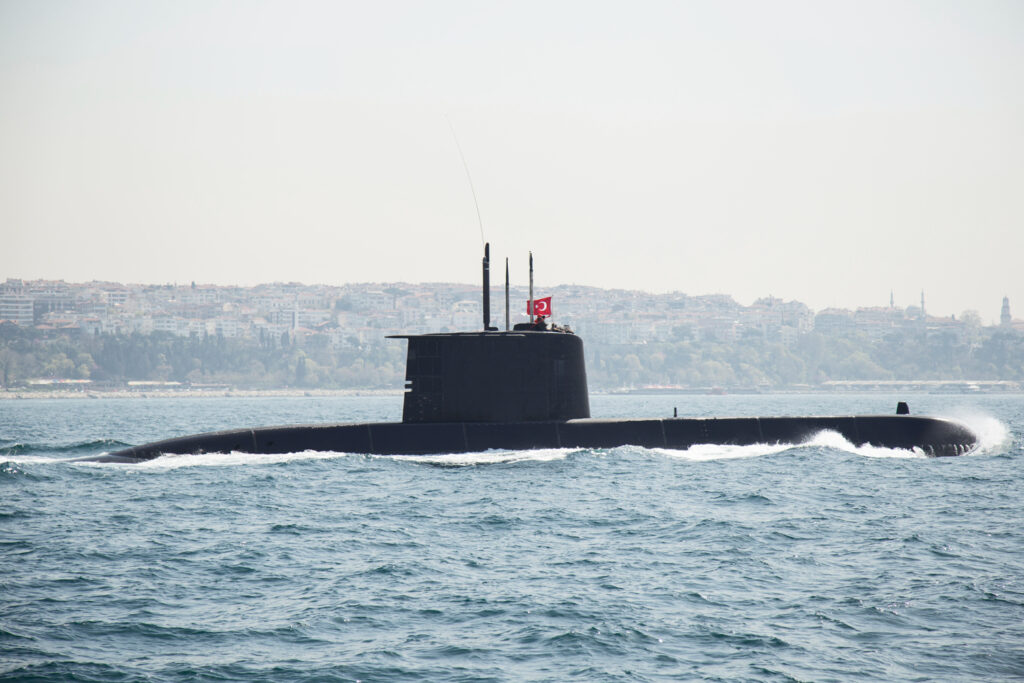
Let me ask you something. Have you ever thought about how submarines communicate while deep underwater? Regular radio signals can’t penetrate the ocean depths. So militaries around the world built massive ground stations that transmit at very low frequencies. VLF, they call it.
VLF signals require enormous power to push through miles of water. And that power doesn’t just go down. It goes everywhere. Including up.
“A number of experiments and observations have figured out that, under the right conditions, radio communications signals in the VLF frequency range can in fact affect the properties of the high-energy radiation environment around the Earth,” explained Phil Erickson, assistant director at the MIT Haystack Observatory. Read that again. Radio signals we send to communicate with submarines are changing the radiation environment around our entire planet.
VLF transmissions extend far beyond our atmosphere. They create a bubble around Earth. And spacecraft flying high above our world can detect this bubble as clearly as they detect the radiation belts themselves. We built a structure in space using radio waves. And we had no clue we were doing it.
Our Radio Bubble Matches Something Remarkable
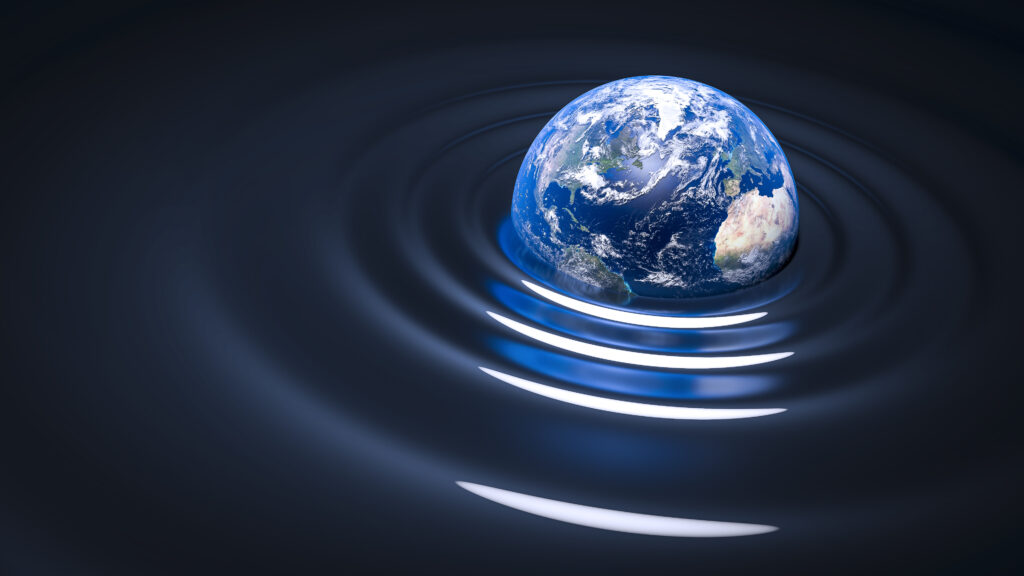
When scientists compared the outer edge of our VLF bubble to the inner edge of the Van Allen radiation belts, they found something stunning. The two boundaries line up almost perfectly.
Dan Baker, director of the University of Colorado’s Laboratory for Atmospheric and Space Physics, gave this lower limit a name. He called it the “impenetrable barrier.” Think about that phrase for a moment. Impenetrable barrier. And we made it by accident.
Baker and his colleagues believe that without human VLF transmissions, radiation would extend much closer to Earth’s surface. Our radio waves are literally pushing dangerous particles away from our planet.
You’re not just a person living on Earth. You’re part of a species that accidentally built a protective barrier in space. Every time a submarine receives a message, every time those massive VLF stations pulse with power, we strengthen something we never intended to create.
Proof From Our Past
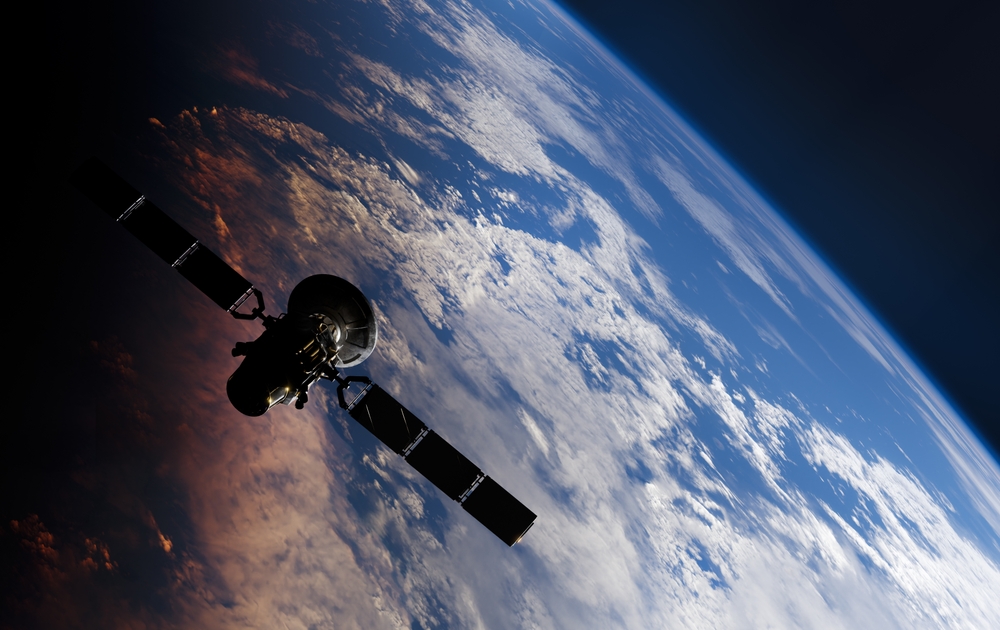
Scientists love evidence. And the Van Allen Probes provided exactly that. When researchers compared modern measurements of the radiation belts to satellite data from the 1960s, they found a significant difference. Decades ago, the inner boundary of the radiation sat much closer to Earth than it does now.
What changed between then and now? Our VLF transmissions grew. In the 1960s, fewer stations existed. Less power flowed through them. VLF usage was limited compared to modern levels. As we expanded our submarine communication networks and pumped more radio energy into the air, the barrier grew. Year by year, decade by decade, we pushed radiation farther from our home without realizing it.
Some might call that luck. I call it something worth paying attention to. Because if we can do something like that by accident, imagine what becomes possible when we act with intention.
Could We Protect Ourselves on Purpose?
Scientists are already asking this question. If VLF waves can push radiation away accidentally, can we use them deliberately to protect specific areas of our planet?
“Plans are already underway to test VLF transmissions in the upper atmosphere to see if they could remove excess charged particles — which can appear during periods of intense space weather, such as when the sun erupts with giant clouds of particles and energy.” NASA wrote.
Solar storms pose real threats. When the sun erupts, it sends waves of charged particles racing toward Earth. Our magnetic field blocks most of them, but strong storms can overwhelm our defenses. They can damage satellites. Disrupt power grids. Affect communication systems.
What if we could tune our VLF transmissions to clear away excess radiation during these events? What if the same technology we use to talk to submarines could become a shield we activate when the sun gets angry?
Researchers are running tests. Experiments are underway. And the technology already exists. We just need to learn how to use it with purpose.
We Shape More Than We Know
I want you to sit with something for a moment. Our species has been on this planet for a tiny fraction of cosmic time. We’re young. We make mistakes. We cause damage we don’t intend. But we also do things like this. We eradicate diseases that kill millions. We move asteroids. NASA’s DART mission proved we can change the course of celestial bodies. We build international cooperation and send robots to other worlds.
And apparently, we create invisible barriers in space without even trying. I’m not telling you this to dismiss the real harm we cause. Climate change demands our attention. Pollution threatens ecosystems. We have work to do, and we cannot ignore our responsibility.
But I am telling you this because I think we underestimate ourselves. You are part of a species that accidentally built protection around its own planet. Right now, as you read these words, radio waves are pushing radiation away from the world you love. A barrier you helped create surrounds Earth.
Most people will never know about this. They’ll go through their days unaware that humanity did something this remarkable without planning it. But you know now. And knowing changes things.
What else might we be capable of when we choose to act with awareness? What barriers could we build on purpose? What protection could we create for ourselves, for each other, for generations we’ll never meet?
We shaped space itself by accident. Imagine what becomes possible when we try. I look up at the sky differently now. I see the stars and the darkness and everything beyond our atmosphere. But I also see something invisible. Something we made together. A barrier. A bubble. A reminder that even our smallest actions ripple outward in ways we cannot predict.
Pay attention to what you do. Pay attention to what we do together. Because somewhere out there, in the space between us and the stars, our choices become real in ways we’re only beginning to understand.