

Something Reached Earth From Deep Space and Challenged What We Think We Know
Sometimes the universe taps us on the shoulder to remind us how small our understanding really is. Not with a roar, not with destruction, but with a quiet signal that slips through the sky and leaves scientists staring at their instruments in disbelief. In 2021, something like that happened. A single particle reached Earth carrying more energy than anything seen in decades, a visitor from deep space that did not announce where it came from or why it arrived with such force.
What made this moment unsettling was not just the power of what hit our atmosphere, but the silence that followed. No clear source. No obvious explanation. Just questions hanging in the air. After more than a hundred years of studying these space born particles, this one reminded researchers that knowledge is still incomplete. They gave it a name drawn from myth, Amaterasu, but names do not solve mysteries. They simply mark the moment when certainty gives way to curiosity, and when science is forced to admit that there is still much it does not yet see.
Reading the Message Written in the Sky
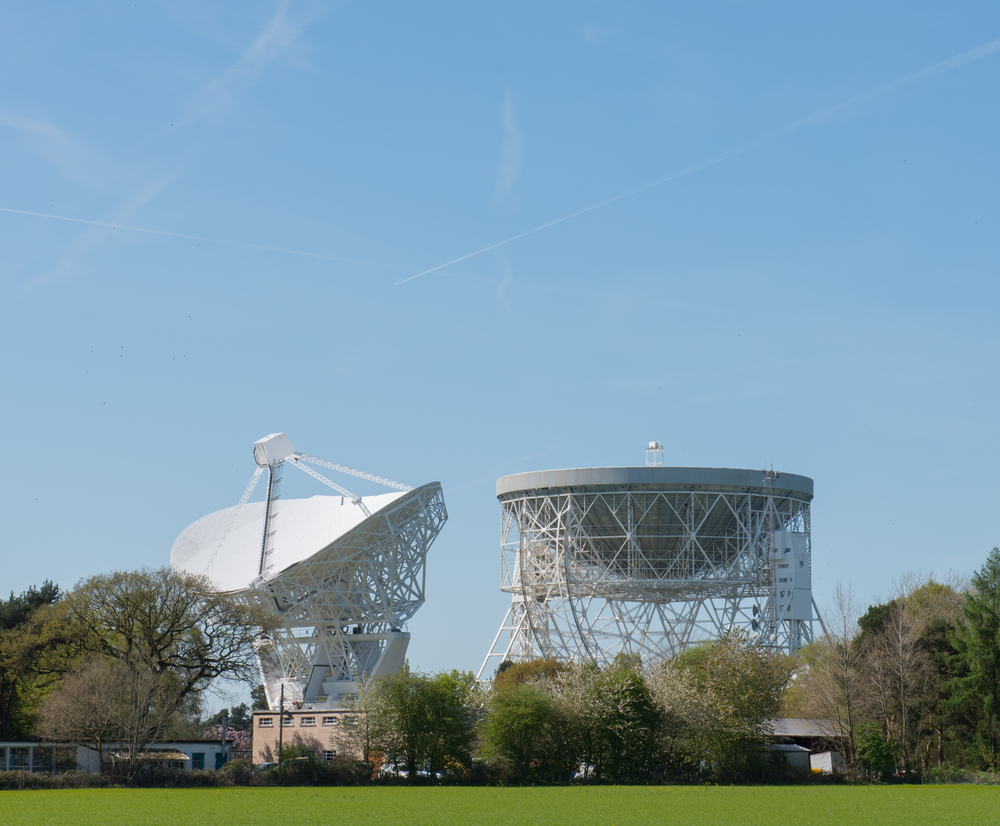
What scientists encountered was not a flash of light or a visible object crossing the sky, but a trail of evidence left behind after an encounter far above Earth. In Utah, an enormous scientific installation known as the Telescope Array sits quietly across the desert, waiting for rare moments when space interacts with our atmosphere. Its role is not to capture cosmic visitors directly, but to read the signals they leave behind. When a high energy particle collides with molecules in the upper atmosphere, it sets off a chain reaction, releasing a flood of secondary particles that spread outward and reach the ground. By measuring how those particles arrive across hundreds of detectors, researchers can reconstruct the original event with precision.
When scientists analyzed this particular signal, the numbers demanded attention. The particle carried an estimated energy of about 240 exa electron volts, or 2.4 × 10²⁰ electron volts, placing it among the most powerful cosmic rays ever recorded. This was not a single data point taken at face value. The measurements were verified using established analytical methods to rule out equipment malfunction or interference from atmospheric conditions. Everything about the signal held up under scrutiny, forcing researchers to accept that what they were seeing was real.
The structure of the particle shower offered another important clue. Its spread matched what physicists expect from a single proton rather than a heavier atomic nucleus, which would have produced a broader and more complex pattern. Even so, the result was difficult to accept at first. Toshihiro Fujii of Osaka Metropolitan University, who led the analysis, described that moment of disbelief clearly when he said, “When I first discovered this ultra-high-energy cosmic ray, I thought there must have been a mistake, as it showed an energy level unprecedented in the last 3 decades.” That reaction captured the gravity of the finding. The instruments had spoken, and the message they delivered challenged what scientists thought they understood about the limits of nature.
The Particles We Rarely Think About
Cosmic rays are part of the unseen environment we live in. They are charged particles that originate far beyond Earth and move through space at extraordinary speeds. Most are simple protons, while others are heavier atomic nuclei stripped of their electrons. Because they carry electric charge, their paths bend as they pass through magnetic fields spread across the universe, which makes it difficult to trace them back to a single, clear source.
Scientists have studied these particles for more than a century, not by observing them directly, but by examining what happens when they collide with Earth’s atmosphere. Those collisions create cascades of secondary particles that reveal the original particle’s energy and type. Most cosmic rays detected near Earth fit within energy ranges that can be explained by known cosmic processes. A much smaller number arrive with extreme energies that challenge existing explanations and force scientists to reconsider what kinds of environments can accelerate particles to such limits. Physicist John Matthews of the University of Utah captured that gap clearly when he said, “Things that people think of as energetic, like supernovae, are nowhere near energetic enough for this. You need huge amounts of energy, really high magnetic fields to confine the particle while it gets accelerated.”
When Known Forces Are No Longer Enough
To understand what could have created a particle like this, scientists have to think in terms of extremes. Accelerating a charged particle to such an enormous energy is not just about power. The environment must also hold the particle in place long enough for that acceleration to happen without letting it escape. In practical terms, this requires regions of space with intense magnetic fields and a steady supply of energy acting over time. Without both conditions working together, the particle would never reach the level that was observed.
Researchers first turn to the most violent and energetic objects they know. Supernova remnants are efficient at accelerating particles, but current models show they fall short at the highest energies. Active galactic nuclei and black hole mergers can generate far more extreme conditions, yet no nearby examples line up clearly with this event. Pulsars and other dense stellar remnants also produce strong electromagnetic fields, but again, there is no obvious match between known objects in our cosmic neighborhood and the properties of this particle.
When familiar explanations fail, scientists are forced to widen the frame. Toshihiro Fujii acknowledged this directly when he said the particle could come from “unknown astronomical phenomena and novel physical origins beyond the Standard Model [of physics].” Others have gone even further, not to claim answers, but to show how open the question remains. John Belz of the University of Utah captured that uncertainty when he said, “It could be defects in the structure of spacetime, colliding cosmic strings. I mean, I’m just spit balling crazy ideas that people are coming up with because there’s not a conventional explanation. It’s a real mystery.” In moments like this, science is not about certainty. It is about recognizing when the universe is pointing beyond the edges of what we currently understand.
Learning to Stand Steady in an Uncertain World
What this discovery offers us is not just a scientific puzzle, but a mirror. Here was something real, measurable, and undeniable that arrived without explanation. The data was solid, yet the answers were missing. Instead of forcing certainty, scientists chose to sit with the unknown and keep asking better questions. That response matters, because it reflects a skill we all need. Life often delivers moments that do not fit our expectations, moments that cannot be traced neatly back to a cause or resolved quickly. Growth does not come from pretending we understand everything. It comes from learning how to respond when we do not.
Human resilience is not about control. It is about adaptability. When researchers encounter a result that challenges long held assumptions, they do not discard the evidence just because it is uncomfortable. They adjust their thinking. They refine their models. They remain open. That same mindset can reshape personal journeys. When plans fall apart or clarity disappears, the instinct is often to resist or retreat. But resilience grows when we acknowledge uncertainty without letting it paralyze us, when we accept that not every answer arrives on our timeline, and when we keep moving forward with curiosity instead of fear.
Embracing discoveries like this reminds us that uncertainty is not a weakness in the system. It is part of how progress happens. In science, unanswered questions drive deeper understanding. In life, they can push us toward better choices, more thoughtful decisions, and a stronger sense of agency. When we stop demanding perfect explanations before taking action, we begin to adapt. We listen more closely. We question old assumptions. And we make room for change, not because we are lost, but because we are still learning.
Progress Begins Where Certainty Ends
One of the most overlooked parts of this story is not the mystery itself, but how scientists responded to it. Faced with data that refused to fit existing explanations, they did not rush to simplify it or force it into a familiar box. They accepted that their current understanding was incomplete and allowed the evidence to stand on its own. That choice matters. It shows that progress does not come from defending what we already believe, but from being willing to revise it when reality demands more from us.

This mindset has direct relevance beyond science. Many people stay stuck not because they lack ability, but because they cling to explanations that no longer serve them. Old beliefs about who they are, what is possible, or what they deserve can quietly limit growth. Embracing uncertainty creates space for change. It allows new information to reshape decisions, habits, and direction. Just as this discovery pushes scientists to rethink long held assumptions, moments of disruption in life can become opportunities to update how we move forward. Not by abandoning structure, but by staying flexible enough to evolve when the evidence points somewhere new.
Amaterasu and the Choice to Keep Moving Forward
Amaterasu is more than the name given to an extraordinary particle. It represents a moment when evidence arrived without explanation and understanding had to pause before certainty. Scientists confirmed what they saw, measured it carefully, and resisted the urge to rush toward easy answers. In doing so, they honored the process rather than the outcome. That restraint is what allowed the discovery to matter, not just as a data point, but as a turning point that expands how questions are allowed to exist.
The lesson here is not about space alone. Amaterasu reminds us that progress often begins when we accept that something real has entered our lives without a clear origin story. Whether in science or in personal growth, the willingness to sit with uncertainty creates room for wiser choices. Instead of reacting out of fear or forcing conclusions, we learn to observe, adjust, and move forward with intention. Like the researchers who chose to follow the evidence rather than deny it, we are invited to stay open, stay grounded, and keep learning even when the answers are not yet in view.
Featured Image from Pexels