


As Easter brings millions of Christians together in churches, homes, and communities around the world, one extraordinary claim has once again reignited one of history’s most fiercely debated questions: did Jesus really rise from the dead? A new study is now making waves after arguing that the resurrection of Jesus Christ should be treated not simply as a matter of personal faith, but as the most “coherent and probable” explanation for what happened after the crucifixion. For some readers, that conclusion will feel deeply affirming. For others, it will sound like a dramatic overreach. But either way, it has pulled one of the oldest and most emotionally charged debates in human history back into public conversation at the exact time millions are already reflecting on the meaning of Easter.
The reason this story is spreading so quickly is because it touches something much bigger than theology alone. The resurrection has never been just a church teaching or a line from scripture. It sits at the centre of questions people have wrestled with for centuries about death, hope, suffering, truth, and what people are willing to believe when history and faith collide. Now, with this study claiming there is serious reason to view the resurrection as a real historical event, the discussion has once again exploded far beyond religious circles. It has become a viral flashpoint, not only because of what it says about Jesus, but because of what it asks every reader to confront for themselves.
A new study has thrown one of Christianity’s biggest claims back into the spotlight
The study, written by Pearl Bipin, an engineer with the National Institute of Technology in Goa, India, attempts to test what is often called the “resurrection hypothesis.” Instead of focusing on one isolated argument, it reportedly pulls together a range of evidence that has been debated by theologians, historians, sceptics, and believers for generations. That includes the empty tomb, post-death appearances, the transformation of Jesus’ followers, the conversion of doubters, and references to Jesus in non-Christian historical writings. By bringing all of those strands together, the study argues that the resurrection offers the strongest explanation for what happened after Jesus was crucified and buried.
That is an enormous claim, and one that instantly raises the stakes. Christianity stands or falls on the resurrection more than almost any other belief it holds. If Jesus truly rose from the dead, then Easter represents not just remembrance, but vindication, triumph, and the foundation of the Christian faith. If he did not, then one of the most influential religions in human history is built around an event that never actually happened. That is why every new attempt to defend or challenge the resurrection tends to attract attention far beyond academic circles.
What makes this study especially shareable is the confidence of its conclusion. It does not simply say the resurrection is a possibility. It goes much further by arguing that it should be taken seriously as the most likely explanation for the rise of Christianity itself. That is the kind of framing that naturally grabs attention online, especially at Easter, when millions are already thinking about the crucifixion, the empty tomb, and the meaning attached to both.

Why the resurrection has always been one of the hardest claims to prove
The resurrection has always occupied a strange place in history because it is both central and difficult at the same time. Historians can investigate ancient sources, compare testimonies, assess context, and look at what explanation best fits the known facts. But miracles do not sit comfortably inside ordinary historical method. A historian can examine whether Jesus existed, whether he was crucified, and whether people genuinely believed they saw him afterward. What history cannot do in a simple or universally accepted way is “prove” a supernatural event in the same way it can confirm a battle, a political assassination, or a royal succession.
That is why debates around Easter have lasted for nearly 2,000 years. For believers, the resurrection is not an abstract academic puzzle. It is the defining event of Christianity. For sceptics, it represents the point where history gives way to theology. The disagreement is not always about whether something significant happened after Jesus’ death. Often, it is about what kind of explanation people are willing to accept. Some are open to the miraculous. Others are not, no matter how compelling the surrounding evidence may appear.
That tension is exactly what gives stories like this their staying power. People are not just arguing about an ancient event. They are arguing about how truth works, how evidence should be weighed, and whether there are moments in human history that can only be understood if something beyond ordinary explanation took place. That is part of why every Easter season seems to revive the same conversation with fresh intensity.
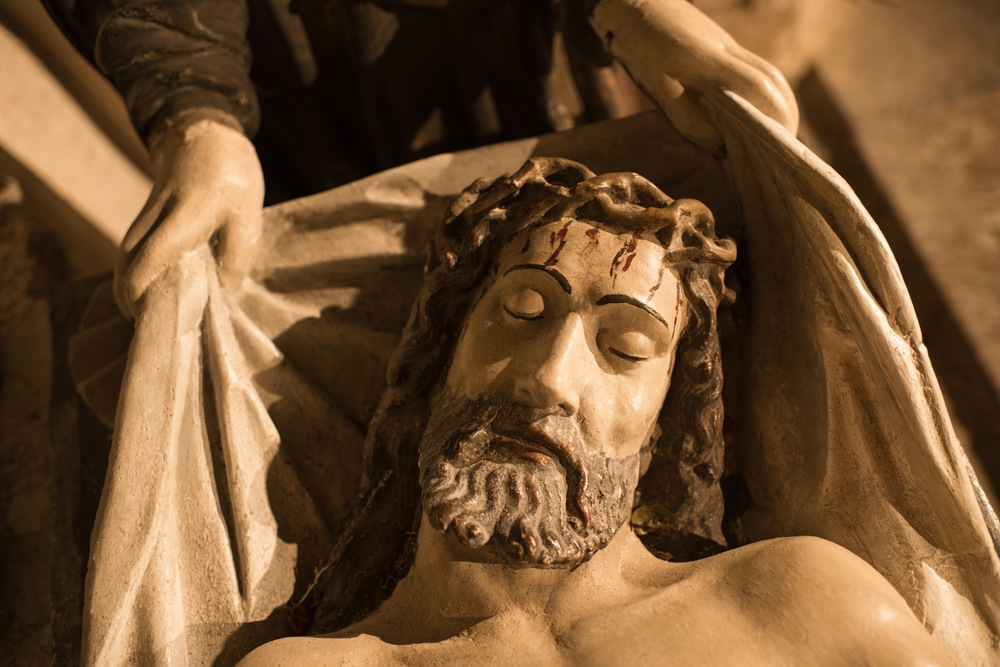
The study leans heavily on the historical case that Jesus really died
One of the strongest points in the wider resurrection argument has always been the claim that Jesus truly died by crucifixion. That matters because if Jesus did not actually die, then there is no resurrection to explain. Many scholars across a wide range of religious and non-religious backgrounds already agree that Jesus of Nazareth was a real historical figure and that he was executed under Roman authority. This study reportedly leans into that consensus and argues that the historical evidence around his death is far stronger than some alternative theories suggest.
Among the figures often brought into this discussion are the Roman historian Tacitus and the Jewish historian Flavius Josephus. Tacitus wrote in the early second century that a figure known as “Christus” was executed during the reign of Emperor Tiberius under Pontius Pilate. Josephus also wrote about the world around Jesus and early Christianity, and his work is often used in broader historical discussions about the origins of the movement. These references do not prove the resurrection, but they do help reinforce the broader framework that Jesus lived, was killed, and that belief in him spread rapidly afterward.
The study reportedly treats these third-party accounts as important because they move the conversation beyond Christian scripture alone. For supporters of the resurrection case, that matters a great deal. It means the discussion is not just about whether believers wrote stories about Jesus, but whether independent historical references help establish the key starting point: that Jesus was a real person who suffered a real execution, and whose followers soon began making extraordinary claims about what happened next.
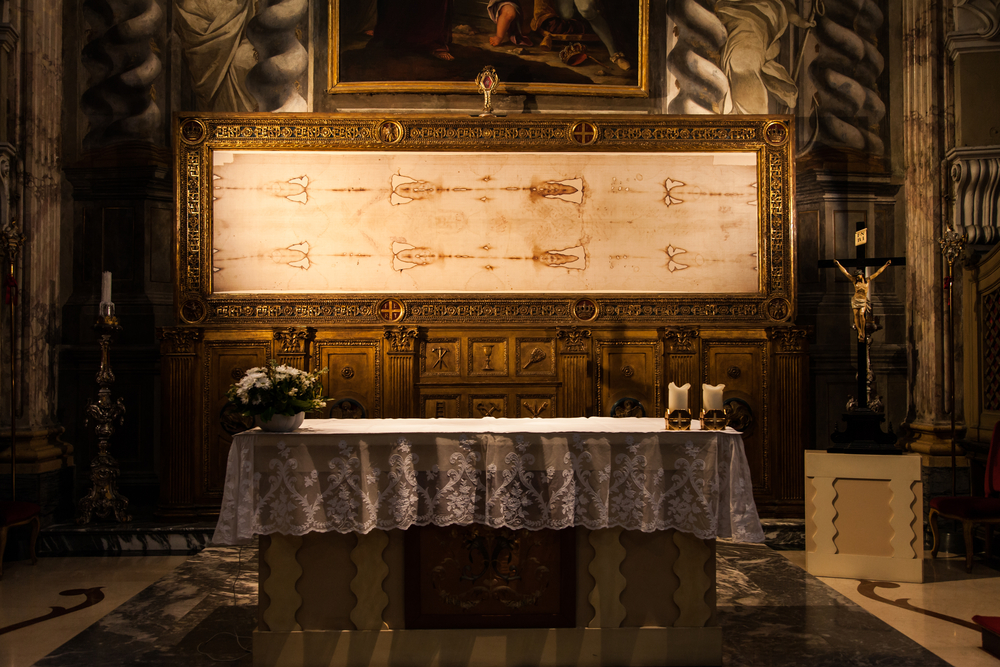
The medical argument may be one of the most talked-about parts of the study
One of the most striking details highlighted in the report comes from the Gospel of John, where a Roman soldier is said to have pierced Jesus’ side and “blood and water” came out. According to Bipin, that detail could align with the possibility of fluid buildup around the lungs and heart caused by severe trauma, heart failure, and the physical consequences of crucifixion. In other words, the study argues that this description could support the conclusion that Jesus had fully died, rather than merely collapsing or slipping into unconsciousness.
That point matters because one of the oldest non-miraculous explanations for the resurrection is the so-called swoon theory. This is the idea that Jesus did not actually die on the cross, but instead survived, later recovered, and was then mistakenly believed to have risen from the dead. It is a theory that has circulated for generations because it offers a natural explanation without requiring belief in the supernatural. But the study rejects that possibility strongly and says the physical evidence makes it highly unlikely.
In one of the most memorable passages, the study states: “If Jesus had swooned and appeared to the disciples, he would have looked like a man half-dead, desperately in need of medical attention.” It then adds: “As David Strauss, a German liberal Protestant theologian, noted in the 1800s, such a figure could not possibly have inspired the disciples to proclaim him the ‘Prince of Life’ and the conqueror of death. His survival would have elicited pity, not worship.” That quote is likely to be one of the most repeated parts of the story, because it gets right to the emotional and psychological heart of the debate.
The empty tomb and post-death appearances remain the centre of the argument
No matter how many historical or medical details are introduced, the resurrection case ultimately keeps circling back to two core claims: that Jesus’ tomb was found empty, and that multiple people later claimed to have seen him alive. Those two points have always formed the backbone of Christian belief in the resurrection. If both are accepted as historically meaningful, then the resurrection becomes easier for many believers and some scholars to defend. If either one is dismissed, the entire argument begins to weaken.
The difficulty, of course, is that ancient testimony is rarely simple. The New Testament contains several resurrection appearance accounts, but they do not all describe events in exactly the same way. Critics often see those differences as signs of inconsistency or later theological shaping. Supporters, on the other hand, often argue that slight variation is exactly what you would expect from multiple testimonies that were not artificially scripted to match perfectly. In that sense, the same details that make one person doubtful can make another person more convinced.
This is where the debate stops being only historical and becomes deeply interpretive. Were these appearances physical encounters, visionary experiences, symbolic stories, or some combination of all three? How soon were the accounts written down? How much was shaped by oral tradition before it reached the page? These are the kinds of questions scholars continue to wrestle with, and they are part of the reason why the resurrection remains one of the most argued-over events in religious history.
Why this story is exploding online right now
It is not hard to see why this study is getting traction at Easter. Timing alone makes it powerful. During Holy Week, Easter Sunday, and Easter Monday, public attention naturally shifts back toward the crucifixion and resurrection story. That creates the perfect conditions for a headline claiming there is “evidence” Jesus rose from the dead to spread quickly across social media. It is provocative, emotionally loaded, and immediately tied to one of the most widely recognised religious holidays in the world.
But the story is going viral for another reason too: it is not just about religion. It taps into universal themes that resonate even with people who are not Christian. Hope after suffering. Life after death. The possibility that despair is not the end of the story. Whether someone approaches Easter through faith, curiosity, scepticism, or cultural familiarity, the emotional pull of resurrection is difficult to ignore. That is what makes stories like this so sticky. They are not just about facts. They are about what people want to believe is possible.
There is also something especially internet-friendly about a claim this big. Headlines that suggest science, scholarship, or a new study has finally “proven” something ancient and mysterious tend to travel fast. They invite immediate reaction. People want to argue, affirm, mock, defend, question, and share. That is exactly the kind of emotional and intellectual friction that turns a niche religious study into a viral conversation piece.
Sceptics will almost certainly push back hard
Even though the study is being framed in eye-catching terms, sceptics are unlikely to see it as a final answer. In reality, many of the arguments reportedly included in the paper are not entirely new. Christian apologetics, historical Jesus scholarship, and philosophical theology have all spent decades, and in some cases centuries, engaging with these same questions. That does not make the study meaningless, but it does mean critics will probably argue that it is part of a much older debate rather than a shocking new breakthrough.
One likely point of criticism is the framework the study appears to use. It reportedly concludes: “Conversely, the resurrection hypothesis, when situated within a theistic philosophical framework supported by arguments from consciousness and modern verification of miracles, emerges not merely as a possibility, but as the most coherent and probable explanation for the rise of the Christian faith.” For believers or readers already open to the supernatural, that may sound persuasive. For those committed to a strictly secular historical method, it may sound like the conclusion depends too heavily on prior belief.
That is probably the real dividing line in this conversation. Not whether Jesus existed. Not even whether he died. But whether a miracle is allowed into the explanation at all. For many people, that is the question underneath every argument about Easter. And it is also why no study, no matter how passionately argued, is likely to end the debate for everyone.
What this says about why people still care so deeply about Easter
At first glance, this may look like just another viral religion story built for shares and comments. But the reason it lands so strongly is because it touches something deeply human. The resurrection has never been only about doctrine. It is about whether death gets the final word. It is about whether suffering can be transformed into something meaningful. It is about whether there is any reason to believe hope can survive even after apparent defeat.
That is why stories like this keep resurfacing year after year. Even in a world driven by technology, speed, and endless distraction, people are still drawn to the same ancient questions. What happened after death? Can broken things be restored? Is there more to reality than what can be measured and explained? Those questions do not disappear just because society becomes more modern. If anything, they often become louder.
Whether readers see this study as convincing evidence, a faith-affirming argument, or simply an interesting Easter headline, it has done something powerful: it has forced people to stop scrolling and confront one of the biggest claims ever made. And maybe that is why the story feels so compelling. Not because it settles everything once and for all, but because it reminds people that some questions are too big, too emotional, and too deeply human to ever fully go away.