


The Most Stressed Generation Isn’t Weak — They’re Just Carrying What Others Can’t See
There is a kind of strength the world rarely notices, a quiet resilience that does not demand attention and does not wait for applause. It does not trend online or announce itself loudly, yet it shows up every day in the lives of people who continue to carry responsibility, pressure, and entire families on their backs without complaint. This kind of strength is not performative or visible at a glance, but it is steady, enduring, and deeply human.

If you are part of Generation X, or if you love someone who is, then you already understand this reality on a personal level. While conversations continue about which group has it the hardest, this generation has been quietly holding things together for years, often without recognition and without the space to express just how heavy that responsibility truly is.
The Generation That Learned to Stand Alone
Generation X, those born between 1965 and 1979, came of age during a cultural and economic shift that quietly reshaped what childhood looked like. According to a 2004 marketing study cited in the source article, this generation “went through its all-important, formative years as one of the least parented, least nurtured generations in U.S. history.” This was not simply a matter of household structure, but a broader societal transition as dual income families became more common while institutional support systems such as structured afterschool care had not yet fully developed. Research from the U.S. Census Bureau highlights how increases in working parents and evolving childcare arrangements reshaped how children experienced supervision and independence during this period.
As a result, independence was not introduced gradually but absorbed early and often without guidance. Many learned to manage their time, solve problems, and make decisions without immediate adult input, developing a form of self direction that was practical rather than idealistic. This environment did not necessarily foster emotional expression or structured mentorship, but it did cultivate a quiet competence and an internal sense of accountability. Over time, that experience shaped how this generation approaches challenges, not by seeking external validation, but by relying on their own judgment and adaptability in situations where clear instructions are absent.
What makes this foundation distinct is not just the independence itself, but the context in which it formed. It emerged in an era where cultural identity was shifting, authority was increasingly questioned, and traditional pathways were becoming less predictable. That combination produced individuals who are comfortable operating without a blueprint, capable of navigating uncertainty without needing constant reassurance. This is not about hardship for its own sake, but about how early conditions can shape a lifelong approach to responsibility, decision making, and resilience in ways that are often overlooked.
Stress Didn’t Suddenly Appear — It Was Always There
What we are witnessing today is not a sudden spike in pressure, but the continuation of a pattern that has been building quietly over time. A Penn State study found that Generation X had an average stress level of 5.8 out of 10, significantly higher than Millennials at 3.4 and Baby Boomers at 4.4. This gap is not incidental. It reflects how stress accumulates across life stages, particularly during midlife, when professional demands, financial responsibilities, and long term planning converge. Research in psychology consistently shows that stress tends to peak during these years, as individuals face the highest concentration of competing expectations without a proportional increase in support systems.

Years later, the pattern remained consistent rather than fading with time. In 2021, 22 percent of Generation X reported experiencing daily stress, compared to 17 percent of Millennials, 14 percent of Gen Z, and 8 percent of Baby Boomers. This persistence suggests that the issue is not temporary or situational, but structural. It reflects how economic uncertainty, shifting workplace demands, and long term financial pressures intersect in ways that disproportionately affect those in this life stage. The data does not simply highlight who feels stress, but reveals how certain phases of life concentrate it in ways that are often underestimated.
So the question is not just why this generation feels more pressure, but why that pressure has remained so consistent over time. When stress is sustained rather than episodic, it changes how people function, how they make decisions, and how they carry themselves in the world. It becomes less visible not because it disappears, but because it becomes normalized. And that normalization is what makes it so easy to overlook, even when the numbers have been telling the same story for years.
The Invisible Weight of Being the Bridge
What defines this stage of life is not simply responsibility, but simultaneity. Generation X is navigating a period where multiple long term obligations converge at once, creating a sustained level of pressure that is both practical and psychological. Many are part of what researchers call the “sandwich generation,” a group responsible for supporting both aging parents and dependent children at the same time. According to the Pew Research Center, about one in four adults in this position provides financial support to both generations, while also offering emotional and logistical care. This dual role is not temporary but often extends across years, requiring constant adjustment without clear resolution.
What makes this weight particularly complex is that it is not confined to a single domain. It exists across time, attention, and identity. Decisions are rarely isolated, as choices made for one generation often impact another, creating a continuous balancing act that leaves little room for recovery. At the same time, this period coincides with peak career expectations, where individuals are often expected to lead, produce, and remain competitive in rapidly changing environments. The result is not just a heavier workload, but a fragmentation of focus, where personal needs are consistently deprioritized in order to maintain stability for others.

This is why the metaphor of being a bridge is not just symbolic but structurally accurate. A bridge is designed to distribute weight, absorb pressure, and remain stable under constant use, yet it is rarely acknowledged unless it fails. In the same way, this generation often becomes the point of connection between past and future, managing transitions that others depend on but do not always see. The challenge is not simply endurance, but the expectation of continuity, of holding steady without interruption even as the demands increase. And over time, that expectation becomes internalized, turning responsibility into something that feels less like a role and more like a permanent state of being.
Silent Strength Forged Through Experience
To understand why this generation often remains quiet about what it carries, it helps to look at how that silence was formed. Many grew up in environments where composure was expected and vulnerability was rarely encouraged, so stress became something to manage internally rather than express. Over time, that habit did not disappear, it solidified, shaping a way of moving through life where endurance is private and stability is presented outwardly. What appears as calm is often discipline, and what looks like ease is often the result of years spent learning how to hold pressure without letting it show.
That instinct did not develop in isolation. It was reinforced by repeated exposure to instability across different moments in history, from public health crises to economic downturns and global uncertainty. These experiences did not just demand adjustment, they normalized it, creating a mindset where adapting quickly and continuing forward became second nature. As noted in the source article, when Nike analyzed this generation, it found their defining traits were “flexibility,” “innovation,” and “adaptability,” adding that “They have developed strong survival skills and the ability to handle anything that comes their way.” This was not a temporary response but a pattern shaped over time.

The result is a form of strength that is consistent but often overlooked. It is expressed through reliability, through presence, and through the ability to keep functioning even when circumstances are far from ideal. Silence, in this context, is not the absence of struggle but the presence of control. It reflects a learned way of carrying difficulty without externalizing it, a strength that is steady, practiced, and rarely acknowledged.
Rethinking What Strength Really Looks Like
Strength is often misunderstood because it is associated with visibility, recognition, and outward confidence. It is commonly imagined as something bold and expressive, something that draws attention and earns praise. But in reality, the most enduring form of strength is far quieter and far more consistent. It is the ability to remain steady under pressure, to continue showing up without acknowledgment, and to hold things together even when circumstances feel unstable. Generation X reflects this kind of strength not through declarations, but through persistence, through adaptation, and through the simple act of continuing forward regardless of who is watching.
What their experience reveals is that resilience is not something people are born with, but something developed through repeated exposure to challenge. It shows that independence, while valuable, carries a cost when it becomes the default response to every difficulty. It reminds us that silence should never be mistaken for ease, because many struggles are carried privately and managed internally. Most importantly, it highlights that adaptability is not just a useful trait, but a necessary one in a world where change is constant and often unpredictable.

This perspective shifts the conversation from admiration to understanding. It invites us to look beyond appearances and recognize the forms of strength that do not seek attention but sustain lives. It also challenges us to apply these lessons more consciously, not by glorifying endurance alone, but by balancing it with awareness, support, and the willingness to acknowledge when something is heavy. Because true strength is not just about carrying on, it is about knowing how to carry wisely.
A Message and a Reminder for Those Carrying So Much
If you are part of Generation X, or simply someone who has been holding more than feels manageable, it is important to recognize that exhaustion is not a sign of failure but a natural response to sustained responsibility. Feeling the weight does not mean you are weak, it means you have been strong for a long time. Strength is not defined by never bending, but by continuing with intention even when the pressure is real and persistent. As Tupac Shakur said, “And it’s crazy, it seems it’ll never let up, but please, you got to keep your head up.” That message still holds, but it is only part of the truth.
Keeping your head up should not come at the cost of carrying everything alone. There is equal strength in pausing, in asking for support, and in giving yourself permission to acknowledge what you have been holding in silence. The ability to endure is powerful, but so is the ability to release, to speak, and to redistribute what was never meant to rest on one person indefinitely. Recognizing your limits is not a weakness, it is a form of awareness that protects the very strength you rely on.
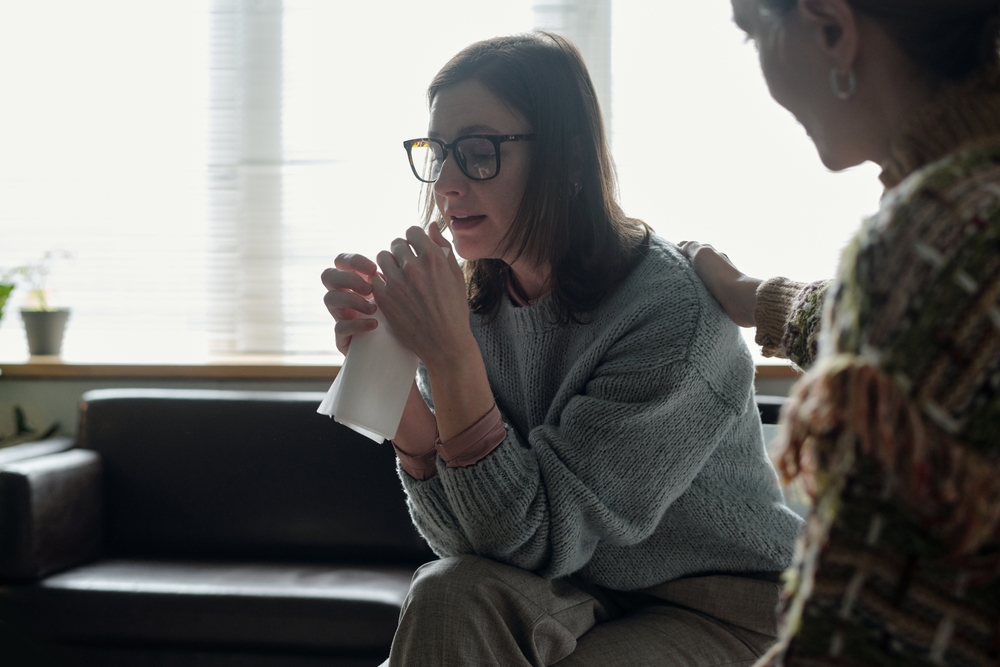
Every generation faces its own challenges, shaped by different circumstances and pressures, but the experience of carrying quietly over time deserves to be seen and understood. The question is no longer whether this generation can endure, because that has already been proven through years of consistency and resilience. The more important question is whether that endurance will finally be met with recognition, support, and space to breathe. Because often, the people who appear the strongest are not the ones who need less, but the ones who have simply learned how to ask for it the least.
Featured Image from Shutterstock