

The Planet Is Humming Louder, and So Is Your Anxiety. Here’s What’s Actually Happening.
You wake at 3 a.m. for the third night this week. A thin, high whine sits behind your right ear, the kind of sound that was not there yesterday. Your head feels packed with wet cotton. You reach for your phone, because of course you do, and somewhere between the second scroll and the fourth, a post stops you cold.
Earth’s heartbeat has spiked. People everywhere are reporting ringing ears, dizziness, broken sleep, and a fog they cannot shake.
Something in your chest loosens. You are not alone. You are not losing your mind. The planet itself is off its rhythm, and you happen to be sensitive enough to feel it.
Before you rest your whole story on that one sentence, I want to walk you somewhere quieter. What you are feeling is real. Where it comes from may not be what the timeline is telling you. And the truth, when we get there, will ask more of you than a solar flare ever could.
What Is This Heartbeat Everyone Keeps Talking About?
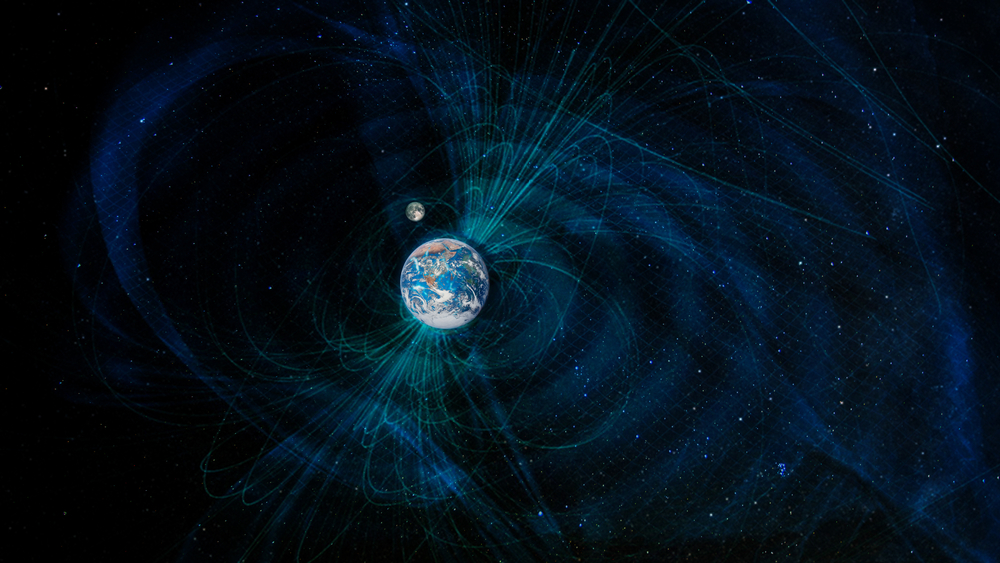
Earth hums. Not metaphorically. Actually. Lightning strikes hit our planet roughly a hundred times every second. Each strike releases electromagnetic energy that bounces inside a kind of natural chamber, the gap between our planet’s surface and a charged layer of atmosphere called the ionosphere, sitting about 60 miles above your head. These waves settle into specific frequencies, like a bell ringing at the same note every time you strike it.
Scientists call them Schumann Resonances, after the German physicist Winfried Schumann who predicted them in the 1950s. The fundamental tone sits around 7.83 Hz. Harmonics ripple upward at roughly 14.3, 20.8, 27.3, and 33.8 Hz. Together they form a quiet, planet-wide chord that has been playing since long before any human stopped to listen.
You cannot hear it with your ears. Its amplitude lives in the picotesla range, faint enough that picking it up requires specialized equipment. Yet it is everywhere on Earth, all the time, softly present beneath every moment of your life. That part is true. That part is beautiful, even.
Why Everyone’s Suddenly Talking About It
Over the past several weeks, space weather monitors flagged unusual activity. Sites like MeteoAgent and Schumann Resonance Today reported the planet’s natural electromagnetic signal climbing higher than usual. A moderate solar flare, then a cluster of flares between April 3 and April 9, including a stronger M-class burst, rattled our upper atmosphere.
Here is where the internet took a turn. Posts started pairing these fluctuations with a scale running from zero to nine, with higher numbers painted as ominous. Four days last month crossed a reading of 5.0. Commenters declared themselves sensitive to the shift, blaming it for headaches, insomnia, mood swings, and that stubborn ringing in their ears.
Here is what most of those posts leave out. Scale readings of zero to nine typically refer to the planetary Kp index, which NOAA uses to summarize geomagnetic disturbance in three-hour windows. Kp measures conditions that can affect satellites, power grids, and radio signals. It is not a Schumann scorecard. Two different phenomena, measured with two different tools, were blended into one frightening number so a post could go viral. When the science gets blurred, the panic gets sharper. And panic spreads faster than correction ever will.
The Seductive Overlap
Now for the part that genuinely pulls thoughtful people into the theory. Our brains produce electrical rhythms that happen to sit in overlapping territory with Schumann frequencies.
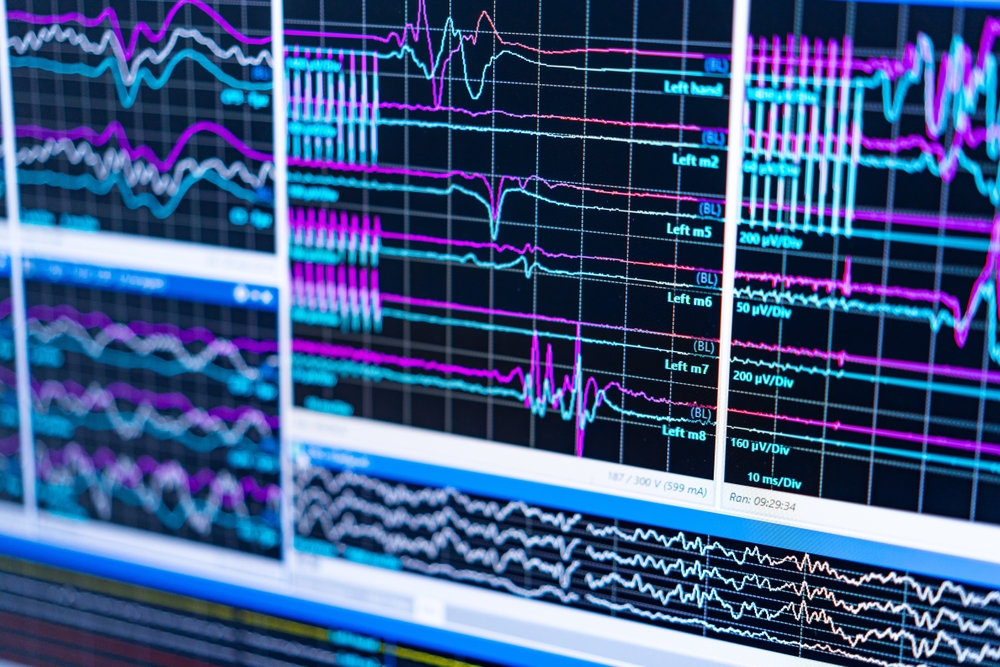
Delta waves, from about 0.5 to 4 Hz, show up in deep sleep. Theta waves, from 4 to 8 Hz, appear in drowsiness and early sleep stages. Alpha, from 8 to 13 Hz, rides the wave of quiet wakefulness. Beta, from 14 to 30 Hz, fires during focus and active thought.
Notice something? Earth’s fundamental hum at 7.83 Hz sits right at the border between theta and alpha. The human brain and the planet appear to share a neighborhood on the frequency map.
That coincidence is where the mystical reading takes off. If the planet’s rhythm syncs with our sleep waves, the logic goes, any spike must jolt us awake, scatter our focus, and leave our nervous systems frayed.
Coincidence of range is not proof of causation. Two radio stations broadcasting on nearby frequencies do not control each other. A violin and a human voice can hit the same note without either commanding the other. Overlap tells us where to look. It does not finish the story.
What the Real Research Actually Found
Scientists have taken this question seriously. The findings are interesting, far more modest than any viral post suggests. A study in Urausu, Hokkaido, Japan, tracked 56 adults wearing ambulatory blood pressure monitors for seven straight days. Researchers compared their readings on normal Schumann days against days with enhanced signal intensity. What they found surprised them. On enhanced days, group means systolic and diastolic blood pressure ran slightly lower, not higher. Men showed stronger reactivity than women. People with existing illnesses showed stronger responses than healthy participants.
As the authors put it directly in their paper, “it has been acknowledged by the international scientific community that exposure to low-frequency, low-intensity electromagnetic fields can produce biological effects”. That sentence is careful on purpose. It says a biological effect is plausible. It does not say your ringing ears tonight are proof.
Other research echoes this same cautious tune. Heart rate variability studies have found small correlations between Schumann power and parasympathetic activity. A Spanish epidemiological paper clustered certain hospital admissions around specific Schumann frequencies. Each finding is real. Each is correlational. Sample sizes stay small. Researchers themselves call for bigger, longer studies before drawing any confident line from planet to person.
Science is whispering maybe, partly, in some bodies, sometimes. The internet is shouting this is why you cannot sleep. Those are not the same sentence.
So Why Are Your Ears Really Ringing?

Tinnitus has a deeply unglamorous list of causes, and almost none of them require a solar flare. Hearing loss. Noise exposure from concerts, earbuds cranked too loud, or years of traffic. Earwax buildup. Certain medications, including some antibiotics and higher doses of aspirin. Jaw tension and TMJ issues. Neck muscle tightness from hunching over screens. High blood pressure. Dehydration. Anxiety itself can generate or amplify the sound, creating a loop where the ring causes worry and the worry amplifies the ring.
Researchers have examined links between tinnitus and self-reported electromagnetic hypersensitivity. The findings lean toward association rather than causation, and the association often tracks more with anxiety and heightened attention to bodily sensations than with any clean geophysical trigger.
Consider your last month honestly. How many nights did you sleep for fewer than seven hours? How much caffeine after 2 p.m.? How many hours on screens between dinner and bed? How much news consumption, how many arguments in your head at 11:47 p.m. while you tried to wind down? How much water, actually, did you drink today? The boring answers usually do more damage than the cosmic ones.
Why We Want the Planet to Be the Answer
Here is the part I find tender. When someone tells you that Earth itself is off-kilter and that is why you feel terrible, something inside you exhales. It is not your fault. It is not your habits. It is not the quiet grief you have been carrying or the job that is slowly hollowing you out. It is the sky.
That framing offers a strange kind of dignity. Your suffering becomes cosmic, not personal. You are not a tired human with unchecked stress. You are a sensitive instrument picking up planetary disturbance. The story elevates the pain, and in elevating it, spares you the harder work of examining your own life.
I understand this pull. I have felt it. Anyone who has lived through a stretch of unexplainable heaviness knows the relief of finally having a name for it, even a wrong one. Meaning, any meaning, feels kinder than chaos.
Yet here is the quiet trap. If the planet is the cause, only the planet can be the cure. You become a passenger in your own body, waiting for the magnetic storm to pass so you can feel human again. The agency slipped out the back door while you were busy checking the Schumann chart. The hunger for cosmic meaning is not stupid. It is human. The problem begins when it replaces the mirror.
What NASA Is Actually Asking
The story gets more interesting when you listen to the scientists doing the real work. A 2021 NASA white paper by Stolc, Ohayon, Freund, and Loftus raised a genuinely striking question. If Earth’s hum has been part of the human nervous system’s environment for all of human history, what happens when astronauts travel far enough away that the hum disappears entirely?
The Apollo astronauts experienced this briefly. Future moon missions will last far longer. Researchers are proposing heart rate variability studies, EEG studies, and sleep studies using the Berlin Magnetically Shielded Room in Germany, a specialized facility with eight-layer walls that can block Earth’s hum for controlled experiments.
The paper itself puts the stakes plainly. “For NASA, the absence of the Schumann Resonances (SR) field in spaceflight beyond low Earth orbit may pose a risk to astronauts, especially during long duration missions.”
Notice the careful language. May pose a risk. Worth studying. Worth investigating with real instruments and real controls. Real science moves slowly, asks humble questions, and admits what it does not yet know. Viral posts skip straight to verdicts. One of those approaches respects your intelligence. The other sells you anxiety and a dopamine hit.
What to Actually Do If You Feel Awful This Week
Start with the ordinary, because the ordinary is where most suffering actually lives. Check your caffeine window. If you drink coffee past 2 p.m., your body is still metabolizing it at bedtime. Audit your screens. Blue light and algorithmic stimulation thirty minutes before sleep do measurable damage to how quickly you drop into rest. Drink more water than you think you need. Check your jaw and shoulders right now as you read this. Most people are clenching something they did not realize they were holding.
If your ears have been ringing for more than a week, see a doctor. Not a timeline. A doctor. The cause is almost always something fixable or manageable, and early attention prevents small problems from becoming permanent ones.
Name your mental state honestly. Anxiety and burnout often arrive wearing disguises, including tinnitus, broken sleep, and fog that no amount of sleep seems to clear. If your life has been too loud, too fast, or too lonely for too long, your body will find a way to say so. Listen before it has to shout.
None of this is glamorous. None of it makes for a viral post. All of it works better than waiting for a solar flare to finish its business.
The Hum Inside You
Yes, Earth hums. Yes, we are rhythmic beings in a rhythmic universe, and the science suggesting some gentle coupling between the two is genuinely beautiful. I do not want to strip the poetry out of your world. I want to put it in the right place.
All three can be true at once. What doesn’t follow is that your insomnia this week is proof of planetary scrambling. The frequency shaping your day most powerfully is not 7.83 Hz. It is the one you carry in your own chest, the one that quickens when you argue with a stranger online, slows when you walk without your phone, sharpens when you eat real food, breaks down when you run yourself ragged for weeks on end.
Blaming Earth lets you off the hook. Trusting your own rhythm puts you back in the driver’s seat, which is hard and also the only place where anything real can change.
So before you hand your suffering to a solar flare, ask a braver question. What has your life been quietly asking you to change? What rhythm inside you has gone unlistened to, until your body had to start ringing a bell to get your attention?
Earth’s heartbeat will continue to do what it has done for millions of years. Your heartbeat is the one asking you to come home.
Featured Image Source: Shutterstock